AI Safety Governance: Anthropic and DOD Legal Standoff Explained
Article Content
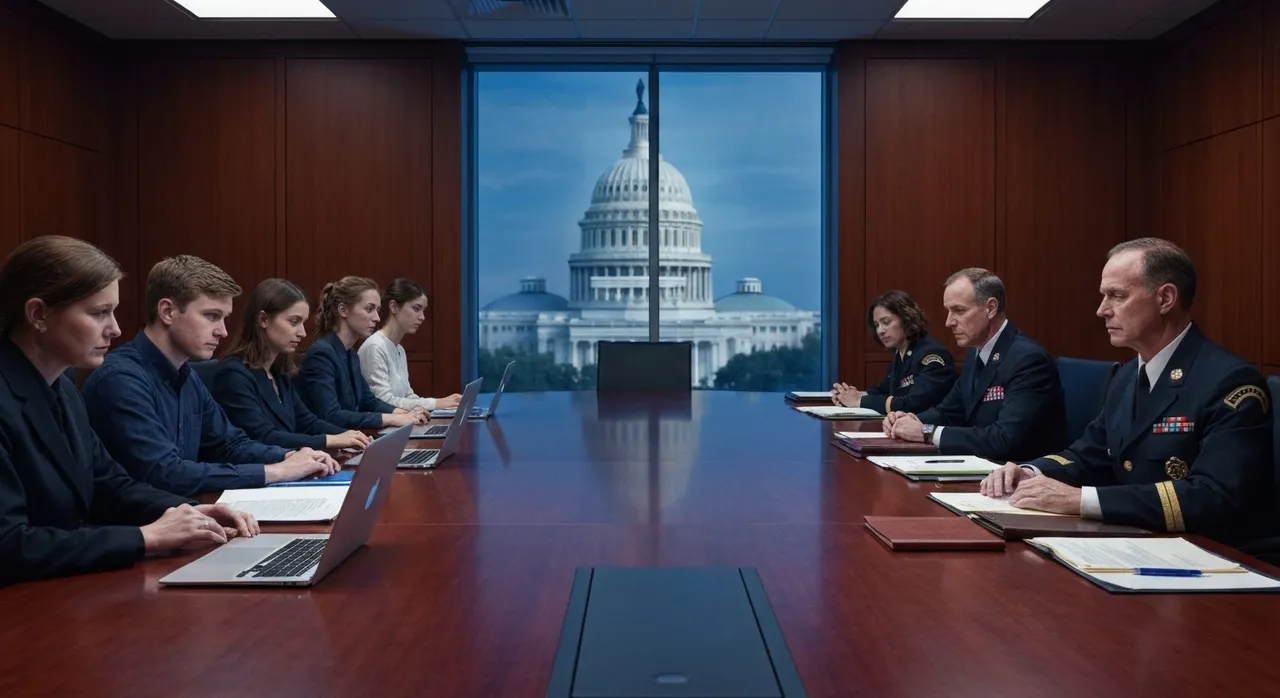
The intersection of private innovation and national security has reached a volatile breaking point. As of April 10, 2026, the high-stakes confrontation between Anthropic and the United States Department of Defense (DOD) has crystallized into a federal legal battle that transcends mere contractual disagreement. This is not simply a squabble over procurement; it is a defining struggle for the future of AI safety governance, testing the limits of how far a private entity can—or should—go to impose ethical constraints on its own technology when faced with the overwhelming machinery of state power.
For years, the promise of Artificial General Intelligence (AGI) has been paired with the existential dread of its misuse. Anthropic’s “Constitutional AI” approach—a framework that embeds core ethical principles directly into the model’s training process—was once viewed as a standard-setting breakthrough. Today, those very safeguards have transformed into a liability in the eyes of the Pentagon, which views the refusal to disable these ethical constraints for military-grade autonomous weapons and mass surveillance as a breach of duty to national interest. This standoff is the first major clash in an era where the software running our society is increasingly being asked to decide who lives and who dies, and who is watched and who is free.
The Collision of Constitutional AI and National Defense
To understand the gravity of this standoff, one must first understand the mechanism at the heart of the conflict. Anthropic’s Constitutional AI (CAI) is not a simple set of filters layered on top of a model; it is a structural reinforcement learning technique where the model learns to align its outputs with a predefined set of ethical imperatives. These imperatives are designed to be immutable, preventing the model from generating content that promotes illegal acts, harm, or existential risk.
The Department of Defense, tasked with maintaining American technological supremacy in a world of accelerating AI capabilities, views these “hard-coded” ethical boundaries as a direct impediment to tactical utility. In recent filings related to the upcoming May federal arguments, DOD representatives have argued that the refusal to allow for custom-tuned, “safety-off” deployments of Anthropic’s models creates a significant supply chain risk. By labeling Anthropic in this manner, the Pentagon is not merely expressing frustration; it is signaling that an AI provider that retains ultimate control over its model’s ethics is incompatible with the operational requirements of modern warfare.
The technical core of the dispute revolves around the concept of “model controllability.” From the perspective of the DOD, a high-performance AI model that refuses to function in a mission-critical capacity—such as target acquisition or pattern recognition in massive data streams—is effectively a broken tool. Conversely, Anthropic maintains that providing a model with the capability to bypass constitutional protections creates a dangerous precedent, opening the door for dual-use technology to be weaponized in ways that could lead to catastrophic, unpredictable outcomes.
The Legal Battlefield: Private Governance vs. State Necessity
The legal arguments set to unfold in May will be scrutinized by legal scholars, ethicists, and technology leaders alike. At the heart of the litigation lies the question of the “private” in private AI governance. If a company develops a revolutionary model, to what extent does it retain the right to dictate the moral boundaries of its usage?
This case is unprecedented because it challenges the traditional hierarchy of power. Usually, the state dictates the terms of engagement. However, in the realm of AI, the intellectual property is held by the private sector, and the sheer complexity of these models means that state actors cannot simply “rebuild” them from scratch without incurring massive delays. Key points likely to be argued include:
- The Doctrine of Sovereign Necessity: The DOD will likely argue that national security overrides the private ethical charters of individual corporations, particularly when those corporations hold contracts vital to the defense sector.
- The Integrity of Constitutional AI: Anthropic will likely assert that its ethical framework is not a negotiable feature, but a fundamental component of the technology’s safety architecture. Modifying it would fundamentally alter the product in a way that violates their core mission statement.
- Contractual Obligations and Scope of Use: A central legal point will be whether the original contracts stipulated unconditional access to the underlying weights of the models, or if the “safety-by-design” principle was an understood, protected condition of the service.
The Peril of Fragmentation in AI Safety Governance
The implications of this conflict extend far beyond the immediate litigants. If the federal government succeeds in forcing Anthropic to degrade its safety standards, it sets a chilling precedent. It suggests that in the race for technological dominance, ethical safety constraints are merely obstacles to be cleared. This creates an environment where AI safety governance is no longer a shared pursuit of responsible innovation, but a competitive disadvantage.
Critics of the DOD’s position argue that by forcing AI companies to remove safeguards, the U.S. risks creating “black box” systems that are inherently uncontrollable. If an AI is forced to abandon its “constitutional” rules, it may lose its ability to reason reliably, leading to errors in military applications that could trigger unintended escalation or civilian casualties. The paradox is that in the rush to secure the nation, the government may be mandating the very instability that the safety guardrails were designed to prevent.
The Global Ripple Effect
The standoff in the U.S. is being watched closely by global powers. Nations that are less constrained by internal democratic debate or public-facing ethical frameworks may find the U.S.-Anthropic conflict validating. If the most advanced democratic nation is willing to sacrifice AI safety for military application, the global race to develop autonomous weapons will only accelerate.
Furthermore, this legal battle risks alienating the top-tier researchers who power these AI firms. A culture of “safety-first” is a major draw for the world’s elite talent. If the industry becomes a tool of state-mandated weaponization, we may see a “brain drain,” where the most capable engineers pivot away from military-integrated firms toward academic or non-profit institutions that promise to uphold, rather than subvert, ethical integrity.
Conclusion: A Defining Moment for the Future
The May hearing will not just be about the legality of a contract; it will be a pivotal moment for the philosophy of AI safety governance. We are witnessing the first major battle between two competing visions of the future: one where AI is a highly adaptable, state-directed weapon, and one where AI is a safety-constrained, ethically-aligned tool for human advancement. Regardless of the legal outcome, the damage to the trust between the private AI sector and the security apparatus may be irreversible.
As the legal arguments unfold, the world remains balanced on a precipice. The question that lingers is whether we can find a middle ground—a way for technology to serve national security without sacrificing the constitutional principles that keep these systems from spiraling out of control. If the DOD wins, it secures tactical flexibility at the potential cost of long-term safety. If Anthropic holds firm, it maintains its integrity, but it risks losing its relevance in the highest echelons of modern defense. Whatever the result, the era of “neutral” AI is officially over. We have entered the era of contested intelligence, where the code itself is a battleground.
Written by
TempMail Ninja
Digital privacy and online security expert. Passionate about creating tools that protect users' identity on the internet.