AI Val Kilmer Performance Sparks Intense Hollywood Ethics Debate
Article Content
The lights dimmed at the Caesars Palace Colosseum during CinemaCon on April 18, 2026, but the chill that swept through the audience wasn’t from the air conditioning. It was the voice—raspy, weathered, and unmistakably that of the late Val Kilmer. On the massive screen, a digital resurrection of the legendary actor, who passed away in 2025, appeared in the first trailer for the historical drama As Deep as the Grave. While the visual fidelity was staggering, the industry’s reaction has been anything but welcoming. We are no longer debating the possibility of digital ghosts; we are now witnessing the birth of the AI Val Kilmer performance as a standardized, commercial product, and Hollywood is tearing itself apart over the bill of sale.
The Resurrection of Father Fintan: Technical Feat or Moral Failure?
Directed by Coerte and John Voorhees, As Deep as the Grave tells the story of archaeologists Ann and Earl Morris in 1920s New Mexico. Kilmer was originally cast to play Father Fintan, a Catholic priest and Native American spiritualist, years before his health finally failed him. Following his death from pneumonia-related complications on April 1, 2025, the Voorhees brothers faced a choice: recast the role or utilize the very technology Kilmer himself had embraced during his final years. They chose the latter, sparking a firestorm that has eclipsed the film itself.
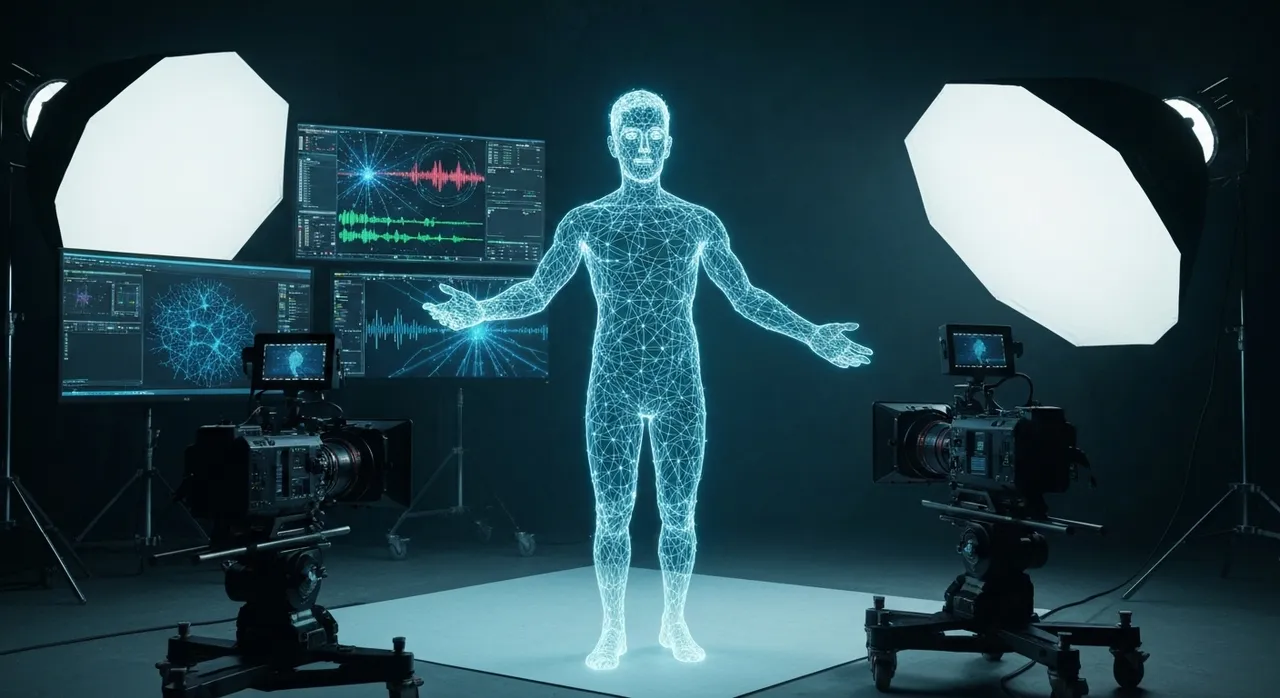
The technical execution of the AI Val Kilmer performance is a masterclass in modern neural networking. According to production notes, the filmmakers utilized a sophisticated “audiovisual joint generation” pipeline. This involved:
- High-Fidelity Generative Video: Using diffusion-based models trained on decades of Kilmer’s archival footage—ranging from The Doors to Heat—to maintain visual consistency across various “ages” of the character.
- Voice Synthesis via Sonantic: Replicating the specific timbre of Kilmer’s voice, including the nuanced “post-tracheotomy” gravel that defined his later years, to ensure the dialogue felt authentic to his physical history.
- Rapid Iteration: Producer John Voorhees revealed at CinemaCon that once the base model was trained, specific scenes could be rendered in as little as seven minutes, a terrifyingly efficient turnaround that threatens the traditional timelines of human performance.
While the Voorhees brothers argue that Kilmer is on screen for over 77 minutes of the film, critics argue that the “performance” is merely a statistical average of a dead man’s movements, devoid of the spontaneous “spark” that made Kilmer a generational talent.
“Capitalizing on Death”: The Jackson Rathbone Backlash
The industry response was immediate. Actor Jackson Rathbone, best known for the Twilight saga, took to social media to lead a vitriolic charge against the production. Rathbone’s critique was not focused on the technology, but on the soul of the industry. “Are you sorry for your loss?” Rathbone asked in a public post directed at Kilmer’s children. “Or are you capitalizing on your father’s death for your own financial gain?”
Rathbone’s outrage highlights a growing sentiment among working actors: the 2023 SAG-AFTRA strikes, which ostensibly protected against “digital replicas,” may have left a gaping loophole the size of a Hollywood soundstage. If a performer’s estate—in this case, Kilmer’s children, Mercedes and Jack—provides post-mortem consent, the union’s protections effectively evaporate. Rathbone slammed the move as a betrayal of the labor rights fought for in 2023, questioning whether any actor’s legacy is safe if their heirs can simply sign away their “digital soul” for a royalty check.
Other creatives have joined the fray. Screenwriter William Gerald suggested that there are always artistic alternatives to “digital necromancy,” citing David Lynch’s decision to turn the late David Bowie’s character into a giant teapot in Twin Peaks: The Return rather than use a deepfake. “Finality gives an actor’s time on stage irreplaceable value,” Gerald argued. “When we erase the end of a life, we erase the meaning of the work.”
The Legal Frontier: Post-Mortem Consent and Digital Personhood
The AI Val Kilmer performance has pushed the legal system into uncharted territory. At the heart of the debate is the concept of Digital Personhood. In 2026, the law still largely treats an actor’s likeness as property, similar to a trademark or a real estate asset. This “Right of Publicity” can be inherited, allowing estates to license a deceased star’s image for perfume ads or t-shirts. However, As Deep as the Grave represents the first time a lead “performance”—requiring emotional range, dialogue, and interaction—has been fully synthesized after an actor’s passing.
The Voorhees brothers defend their path as “transparent and ethical,” leaning on three pillars established during the 2023 negotiations:
- Consent: Full legal authorization from the Kilmer estate.
- Compensation: Ensuring that the estate is paid a “human-scale” salary, theoretically removing the financial incentive to replace living actors with cheaper AI ghosts.
- Collaboration: Working with Kilmer’s daughter, Mercedes, who provided personal photos and archival tapes to “guide” the AI’s training.
But legal scholars argue that post-mortem consent is a paradox. Can a family truly consent to a performance their father never gave? While Kilmer used AI to regain his voice in Top Gun: Maverick, that was a tool used by a living actor to overcome a physical disability. Using that same tech to create a 77-minute lead role in a new movie is an entirely different beast. We are moving toward a world where “Digital Personhood” might need to be legally decoupled from the estate’s property rights to prevent the eternal exploitation of the deceased.
The Ghost in the Machine: Kilmer’s Own Precedent
Perhaps the most complex layer of this debate is Val Kilmer himself. Before his passing, Kilmer was a pioneer in the use of AI. After losing his voice to throat cancer, he partnered with Sonantic to recreate his speaking voice for personal use and for his cameo as “Iceman” in the 2022 blockbuster Top Gun: Maverick. His daughter, Mercedes Kilmer, has frequently stated that her father viewed these emerging technologies with “optimism” and saw them as tools to expand the possibilities of storytelling.
This “pre-existing intent” is the shield the Voorhees brothers use against their critics. They argue that they aren’t yanking a corpse out of the ground; they are fulfilling the creative journey Kilmer started before he became too ill to film. “Val Kilmer influenced this performance,” Coerte Voorhees noted, pointedly refusing to call it a “creation.”
However, the AI Val Kilmer performance in As Deep as the Grave goes far beyond what Kilmer authorized in life. It depicts him at multiple ages, performing scenes he never rehearsed, and delivering lines he never read. For many in Hollywood, this is the “Uncanny Valley” of ethics—where the tech is so good it becomes repulsive. The “Seven Minute” rendering cycle mentioned by the producers only adds to the unease; it suggests a future where actors are not just “resurrected,” but “mass-produced” at a speed no human could ever match.
Conclusion: The Sunset of the Human Element?
As As Deep as the Grave seeks distribution, the fallout from the April 18 reveal at CinemaCon will likely shape the next decade of film production. If the film is a critical and commercial success, it will normalize the use of dead actors for “unfinished” or “legacy” projects. If the backlash from the likes of Jackson Rathbone and the wider public holds firm, it may force a legislative reckoning that restricts how far an estate can go in selling the likeness of the dead.
The AI Val Kilmer performance is a mirror reflecting Hollywood’s deepest fears. It is the fear that “visual consistency” has replaced the “human spark.” It is the fear that acting is being reduced to a “script-to-video workflow” where the talent is just another layer of data. Most of all, it is the fear that in our quest to never say goodbye to our icons, we are stripping them of the one thing that made their art meaningful: their mortality.
As the “Ninja Editor,” I see the writing on the wall. The tech is here, and it is flawless. But as the 2026 debate intensifies, Hollywood must decide if it wants to be a museum of digital puppets or a living, breathing art form. If death no longer ends a career, does life still define one?
Written by
TempMail Ninja
Digital privacy and online security expert. Passionate about creating tools that protect users' identity on the internet.