Anonymity Stack: The 2026 Guide to OHTTP-MASQUE and PQ-WireGuard
Article Content
By late April 2026, the digital landscape has shifted from a battleground of encryption to a war of visibility. Traditional Virtual Private Networks (VPNs), once the stalwarts of online privacy, have largely been rendered obsolete by advanced AI-driven traffic analysis and “Harvest Now, Decrypt Later” (HNDL) strategies employed by state actors and high-tier surveillance entities. In response to this existential threat to digital sovereignty, a new architectural gold standard has emerged: the Anonymity Stack.
This 2026 configuration represents the most extreme privacy posture available to the general public, moving beyond simple encryption to achieve true “invisible browsing.” The stack is not a single tool, but a multi-layered defensive posture that integrates OHTTP-MASQUE for identity-request decoupling, PQ-WireGuard for post-quantum resilience, and Behavioral Noise Injection to defeat the latest AI-driven fingerprinting models. This guide provides a definitive technical breakdown of why this stack is necessary and how its components function to ensure total user opacity.
The Evolution to the OHTTP-MASQUE Architecture
For over a decade, the primary weakness of the VPN model was the “centralized trust” problem. Even with a “no-logs” policy, a single provider maintained the technical capability to correlate a user’s real IP address with their outgoing traffic. In 2026, the Anonymity Stack solves this through the integration of Oblivious HTTP (OHTTP) and MASQUE (Multiplexed Application Substrate over QUIC Encryption).
Decoupling “Who” from “What”
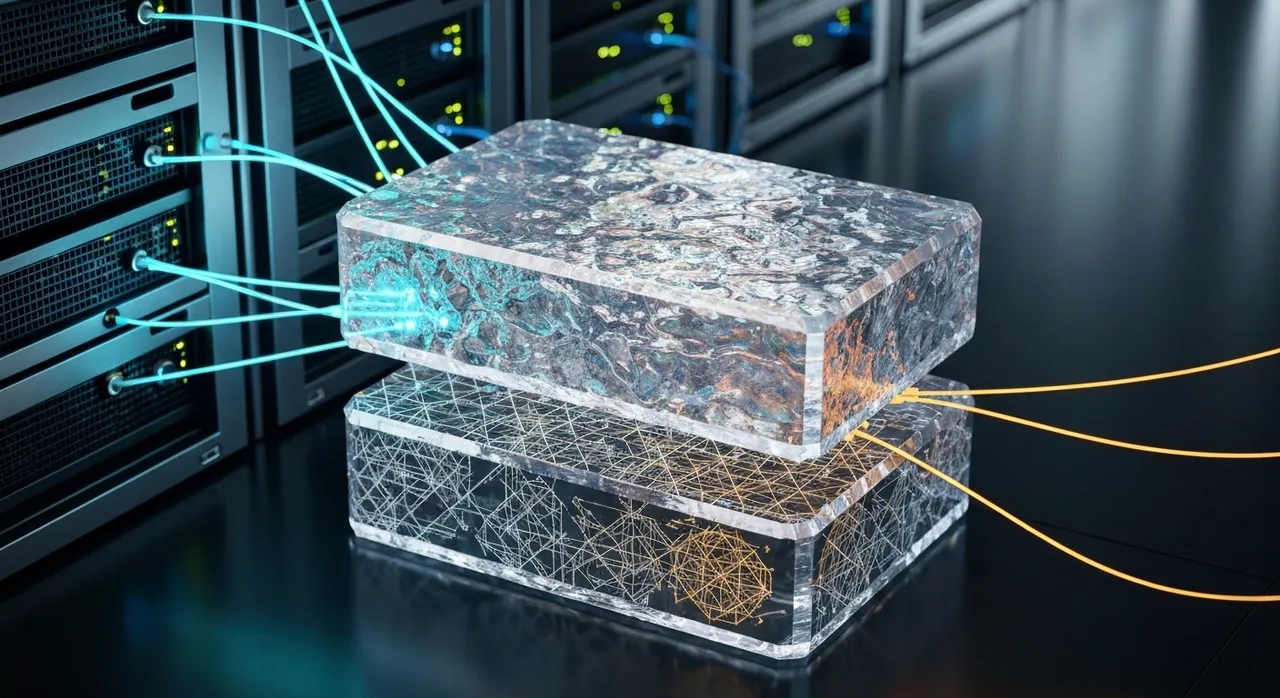
The OHTTP-MASQUE architecture utilizes a “double-blind” relay system that effectively separates a user’s identity from their data. Unlike a traditional VPN, which acts as a single proxy, this setup involves three distinct entities:
- The Client: Encapsulates the HTTP request using Hybrid Public Key Encryption (HPKE), specifically targeting the Gateway’s public key.
- The Relay: Receives the encrypted packet from the client. The Relay sees the user’s original IP address but, because of the HPKE layer, cannot decrypt the payload.
- The Gateway: Receives the payload from the Relay. It possesses the private key to decrypt the request and forward it to the final destination, but it only sees the Relay’s IP address—never the user’s.
By utilizing the MASQUE protocol over a QUIC substrate, this entire process is multiplexed. This means that multiple streams of data are handled within a single encrypted session, preventing network observers from using packet timing or size to perform “side-channel correlation attacks.” In the 2026 Anonymity Stack, MASQUE ensures that all traffic—whether UDP, TCP, or even ICMP—is tunneled through an HTTP/3 connection that is indistinguishable from standard web traffic to any ISP or middlebox.
PQ-WireGuard: Defending Against the Quantum Horizon
The second pillar of the 2026 Anonymity Stack is the transition to PQ-WireGuard. While the original WireGuard protocol was celebrated for its efficiency and modern primitives (like ChaCha20 and Curve25519), it remained vulnerable to the “Harvest Now, Decrypt Later” threat. This attack involves adversaries capturing and storing encrypted traffic today in anticipation of using future cryptanalytically relevant quantum computers (CRQCs) to break the key exchange.
ML-KEM and Post-Quantum Handshakes
PQ-WireGuard integrates ML-KEM (Module-Lattice Key Encapsulation Mechanism), a NIST-standardized algorithm (formerly known as Kyber). The 2026 update to the stack specifically recommends ML-KEM-1024 (Level 5 security) to provide a quantum-resistant handshake. This ensures that even if a quantum computer eventually becomes available, the session keys generated during a 2026 browsing session will remain mathematically intractable.
The technical challenge of PQ-WireGuard has always been the size of post-quantum keys. Standard WireGuard packets are designed to stay within a 1280-byte MTU to avoid fragmentation. The Anonymity Stack utilizes a specialized “split-service” architecture or “Reinforced KEMs” (RKEMs) to compress the handshake data. This allows the high-security ML-KEM exchange to occur without the performance penalties or fragmentation issues that plagued early post-quantum VPN experiments in 2024 and 2025.
Defeating AI Behavioral Fingerprinting
Perhaps the most significant addition to the Anonymity Stack in 2026 is the response to AI-driven behavioral analysis. Research published earlier this year proved that even with a hidden IP and encrypted traffic, 85% of “anonymous” users can be re-identified within 60 seconds of interaction based on their behavioral fingerprint. This fingerprint is composed of unique patterns in mouse movement, keystroke latency, and scroll rhythms.
Behavioral Noise Injection (BNI)
To counter this, the stack introduces Behavioral Noise Injection at the browser or OS kernel layer. This technique works by injecting synthetic electronic “noise” into the event loop of the device. The process involves:
- Temporal Jitter: Introducing micro-delays (ranging from 1 to 5 milliseconds) in keystroke reporting to break the “rhythm” that AI models use to identify specific typists.
- Synthetic Event Buffering: Generating “ghost” mouse movements and scrolls that appear to the website’s JavaScript as organic interactions but are actually randomized patterns designed to poison the profiling data.
- Event Loop Normalization: Ensuring that all user interactions are snapped to a standardized grid of timing intervals, making every user of the stack appear to have the exact same behavioral “cadence.”
By poisoning the data at the source, BNI makes it impossible for server-side AI models to build a stable profile of the user. In the 2026 threat environment, hiding your location is useless if your typing rhythm acts as a digital DNA strand. The Anonymity Stack ensures that your behavior is as anonymous as your IP.
Hardware Cloaking: SensorID and Abstracted Enclaves
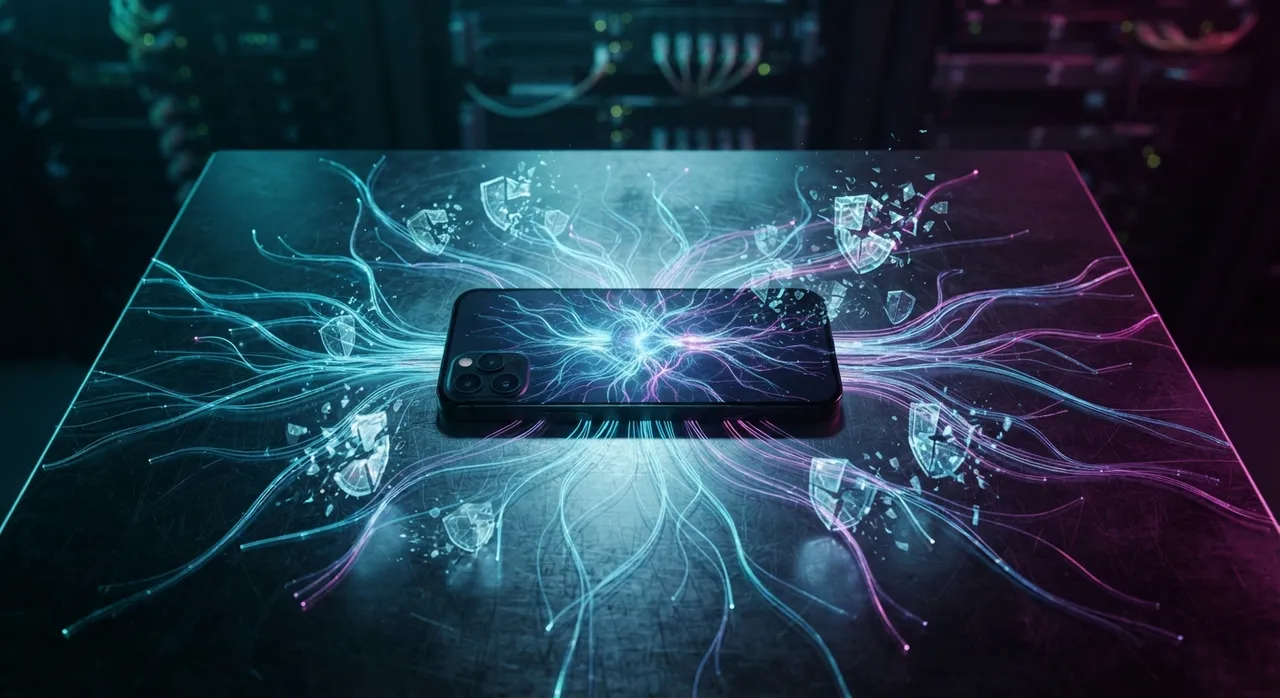
The final frontier of tracking in 2026 is SensorID. Every mobile and desktop device contains microscopic manufacturing defects in its hardware—specifically in the accelerometers, gyroscopes, and magnetometers. These defects create a “unique noise signature” in the raw data stream provided by the sensors. Websites and apps can query these sensors (often without explicit permission) to generate a permanent hardware ID that persists even across factory resets or OS reinstalls.
Hardware-Abstracted Enclaves and Sensor Fuzzing
To mitigate this, the Anonymity Stack leverages Hardware-Abstracted Enclaves. This system intercepts all calls to hardware sensors at the kernel level and passes the data through a “fuzzing” layer. Sensor fuzzing introduces high-frequency, low-amplitude noise into the accelerometer and gyroscope data. This noise is calculated to be just strong enough to mask the manufacturing defects (the SensorID) without interfering with the functional utility of the sensor for things like screen rotation or basic navigation.
Furthermore, for high-security tasks, the stack recommends running the entire browser environment within a Confidential Computing Enclave. Using technologies like Intel SGX or AMD SEV-SNP, the Anonymity Stack ensures that even if the host operating system is compromised, the memory containing the encryption keys and the behavioral noise generator remains encrypted and inaccessible to the kernel itself.
Conclusion: The New Gold Standard for Privacy
The 2026 Anonymity Stack is a recognition that the era of “simple” privacy is over. We no longer live in a world where a single toggle switch can hide a user from a determined adversary. True anonymity in the mid-2020s requires a holistic approach that addresses the network, the protocol, the behavior, and the physical hardware.
By combining OHTTP-MASQUE, PQ-WireGuard, Behavioral Noise Injection, and Hardware-Abstracted Enclaves, this stack creates a defensive perimeter that is resilient against both the classical surveillance of today and the quantum-AI threats of tomorrow. For those who require absolute digital invisibility, this configuration is no longer optional—it is the definitive requirement for maintaining sovereignty in the age of the AI panopticon.
Written by
TempMail Ninja
Digital privacy and online security expert. Passionate about creating tools that protect users' identity on the internet.