Apple CEO Succession: John Ternus to Lead as Tim Cook Steps Down
Article Content
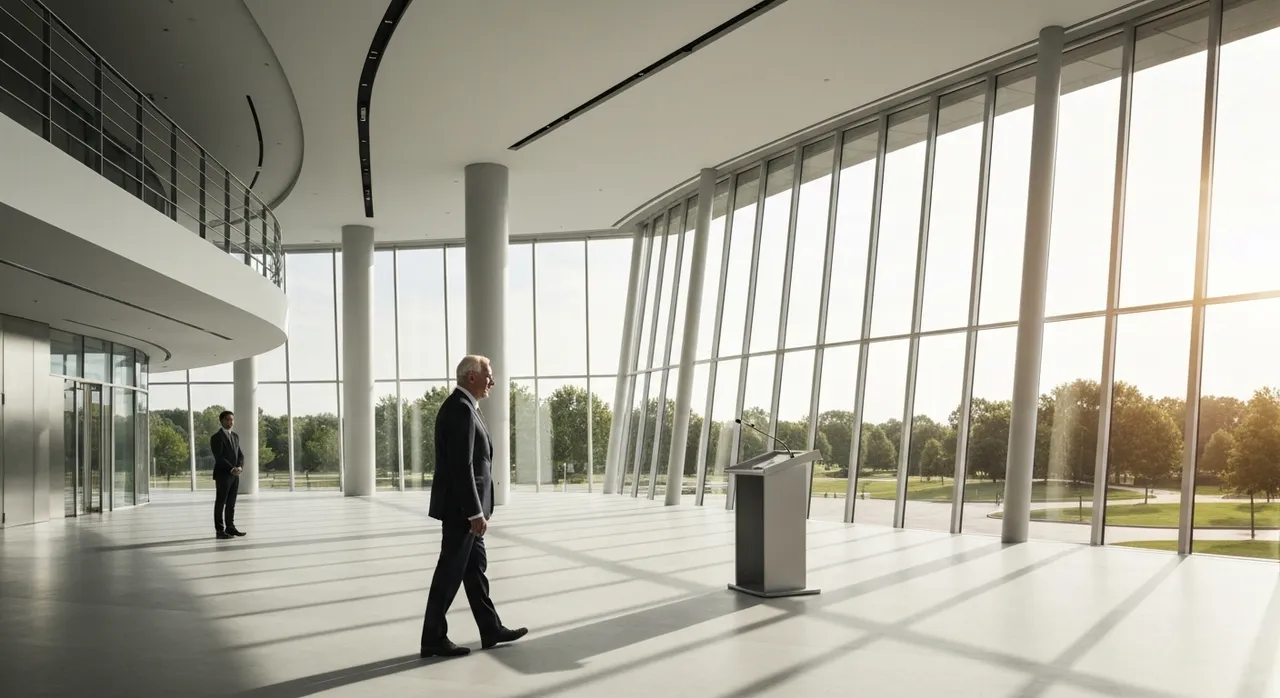
On April 20, 2026, the tech industry witnessed the conclusion of one of the most successful leadership tenures in corporate history. In a carefully choreographed announcement that resonated from Cupertino to Wall Street, Apple Inc. confirmed that Tim Cook will step down as Chief Executive Officer on September 1, 2026. This Apple CEO succession marks a generational shift, as John Ternus, the current Senior Vice President of Hardware Engineering, prepares to take the helm of a company that recently breached the staggering $4 trillion market valuation. While Cook will remain as Executive Chairman of the Board, the appointment of Ternus signals a strategic return to “product-first” leadership, emphasizing Apple’s aggressive trajectory into silicon-driven artificial intelligence and spatial computing.
The Cook Era: A Retrospective on Operational Mastery
To understand the gravity of the Apple CEO succession, one must reflect on the landscape Cook inherited in 2011. Succeeding a founder like Steve Jobs was widely considered an impossible task, yet Cook did more than maintain the status quo; he industrialized innovation. Under his guidance, Apple’s market capitalization grew from approximately $350 billion to over $4 trillion by early 2026. His legacy is defined by three core pillars:
- The Services Pivot: Transitioning Apple from a hardware-reliant entity to a services powerhouse, with Apple Music, iCloud, and the App Store generating over $100 billion in annual revenue by 2024.
- Supply Chain Resilience: Navigating complex geopolitical tensions and a global pandemic by diversifying manufacturing into India and Vietnam, ensuring the “designed in California” brand remained insulated from single-source vulnerabilities.
- Privacy as a Human Right: Solidifying the “Walled Garden” not just as a business model, but as a moral differentiator, using end-to-end encryption and App Tracking Transparency to build unprecedented consumer trust.
As Cook transitions to the role of Executive Chairman, his focus will shift toward global policy engagement and the company’s burgeoning privacy initiatives. This move allows Apple to retain its “Chief Diplomat” while freeing the new CEO to focus on the technical rigors of the AI-integrated hardware era.
Who is John Ternus? The Architect of the Silicon Era
The selection of John Ternus as the next CEO was the result of a multi-year, secret succession plan aimed at finding a leader who embodies Apple’s technical soul. Joining the company’s product design team in 2001, Ternus has been a central figure in nearly every major hardware breakthrough of the last two decades. As the head of Hardware Engineering since 2021, he oversaw the teams responsible for the iPhone, iPad, Mac, and the highly ambitious Vision Pro ecosystem.
Ternus is perhaps best known within the industry as a key leader in the Apple Silicon transition. By moving the Mac away from Intel architecture to proprietary M-series chips, Apple achieved a vertical integration that competitors have struggled to replicate. This move didn’t just improve battery life; it laid the architectural foundation for the “Apple Intelligence” framework that now defines the company’s software roadmap.
Technical Contributions and Leadership Style
Unlike the traditional “logistics genius” profile associated with Cook, Ternus is viewed as an engineer’s engineer. His tenure saw the introduction of the A19 Pro and the M5 series chips, which utilized 2-nanometer process technology to enable massive on-device Neural Engine performance. Analysts point to Ternus’s ability to manage complex cross-functional teams—balancing the demands of industrial design with the constraints of thermal physics—as his primary qualification for the CEO role. Colleagues often describe him as “charismatic and well-liked,” a leader who prioritizes collaborative problem-solving over the autocratic styles of the past.
The Strategic Pivot: AI and Spatial Computing in 2026
The Apple CEO succession comes at a critical juncture where the “smartphone peak” has forced the company to seek new frontiers. Ternus will take over a company that has moved beyond basic generative AI toward Agentic AI. With the rollout of Siri 2.0 in late 2025, Apple’s virtual assistant transitioned from a voice-activated search tool to a proactive agent capable of executing complex, multi-app workflows with full on-screen awareness.
This “Terminal-First” AI strategy is a hallmark of the Ternus-led hardware era. While competitors like Google and Meta are spending hundreds of billions on centralized cloud clusters, Apple has focused on:
- On-Device Inference: Utilizing the custom Neural Engines in devices like the MacBook Neo and iPhone 17e to process AI tasks locally, preserving user privacy.
- Private Cloud Compute (PCC): A breakthrough server architecture that allows for complex AI processing in the cloud without Apple ever having access to the raw user data.
- Silicon Optimization: The development of the M6 chip (expected in 2027), which is rumored to feature dedicated “AI-RAM” pathways to eliminate the memory bottlenecks that plagued early generative models.
The Vision Pro Ecosystem: Challenges for the Next Decade
While the iPhone remains the primary revenue driver, the Apple CEO succession will ultimately be judged by the success of Spatial Computing. The Vision Pro 2, launched in mid-2025, addressed many of the first-generation complaints regarding weight and battery life, yet the ecosystem still faces “sluggish growth” among mainstream consumers. Ternus, having led the original development of the headset’s hardware, is uniquely positioned to bridge the gap between niche professional tool and mass-market consumer device.
The 2026 roadmap suggests that Ternus will oversee the launch of a more affordable “Vision Air” model, targeting the $1,500 to $2,000 price point. To achieve this, Apple is expected to leverage OLEDoS display technology with resolutions exceeding 3,000 PPI while offloading certain processing tasks to the iPhone, effectively turning the phone into a pocket-sized compute engine for the glasses. This synergy between the iPhone and the Vision ecosystem will be the cornerstone of the Ternus administration.
Market Reaction and Investor Confidence
Wall Street’s reaction to the announcement was remarkably stable, with Apple (AAPL) shares dipping less than 1% in after-hours trading. This stability is a testament to the “thoughtful, long-term succession planning” that Cook championed. Investors see the transition not as a disruption, but as an evolution. With Johny Srouji taking on an even larger role in hardware technologies and Jeff Williams continuing to lead operations as COO, the core “brain trust” that drove Apple to $4 trillion remains intact.
Financial analysts at Morgan Stanley recently highlighted that Apple’s focus on the “mid-market” through products like the MacBook Neo (priced at $599) is successfully expanding the distribution network for AI services. This strategy ensures that even budget-conscious users are brought into the Apple Intelligence ecosystem, creating a high-margin recurring revenue stream that offsets the slowing growth of hardware upgrade cycles.
Conclusion: The Baton Passes to the Engineer
As Tim Cook prepares to move into his new office as Executive Chairman, he leaves behind a company that is more profitable, more stable, and more influential than it has ever been. The Apple CEO succession is not merely a change in personnel; it is a declaration of intent. By choosing John Ternus, Apple is signaling that the next decade of the “Walled Garden” will be built on the foundation of silicon-led innovation and private, personal intelligence.
The challenges ahead are significant—regulatory pressure in the EU, the continued struggle for VR adoption, and the shifting geopolitical landscape of chip manufacturing. However, with an engineer’s mind at the helm and a logistics genius in the boardroom, Apple appears better positioned than any of its “Magnificent Seven” peers to navigate the complexities of the 2020s. For the millions of users within the ecosystem, the message is clear: the architect of the hardware you love is now the captain of the ship.
Written by
TempMail Ninja
Digital privacy and online security expert. Passionate about creating tools that protect users' identity on the internet.