Audio Sample Library Organizer Unshuffle Released by Calloga
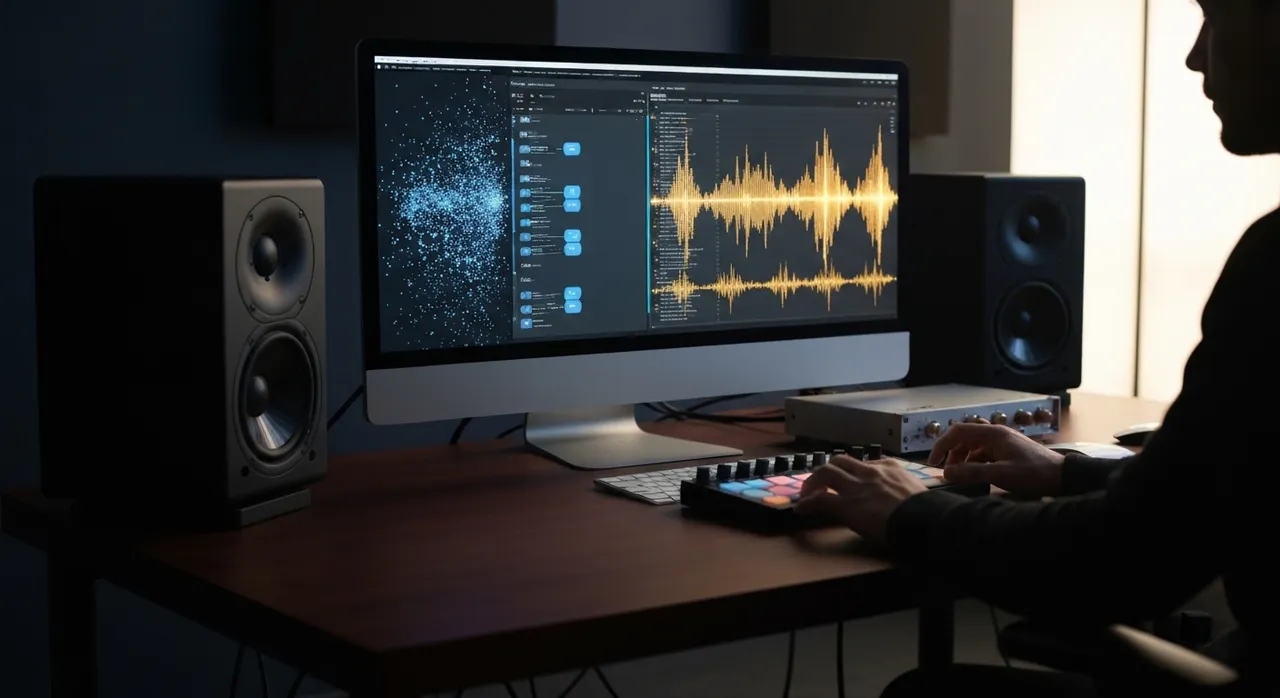
Article Content
For modern music producers, sound designers, and audio professionals, managing a sprawling audio sample library is often a task met with dread. Over years of creative output, hard drives inevitably become digital landfills cluttered with poorly labeled WAV files, unzipped sample packs, nested folders, and massive quantities of untested downloads. Finding a specific kick drum, vocal chop, or ambient loop in the middle of a high-pressure session can quickly derail the creative flow. While general-purpose file managers fall short of parsing the nuances of musical metadata, dedicated commercial software organizers can be bloated, expensive, and overly reliant on intrusive cloud infrastructures.
To resolve this friction, software developer Papa Abdou Calloga has officially launched Unshuffle, a free, open-source audio asset management utility. Released on June 18, 2026, Unshuffle serves as an intelligent local control plane specifically designed to scan, classify, and clean up disorganized sample directories. Available natively across Windows, macOS, and Linux, Unshuffle operates entirely on the user’s local machine, providing a privacy-friendly, highly performant, and completely non-destructive workflow for organizing digital media.
Organizing the Modern Audio Sample Library with Unshuffle
The core problem with organizing an audio sample library is the sheer variety of data formats, naming conventions, and file lengths. Traditional file-sorting utilities only look at file names or extensions. Unshuffle addresses this bottleneck through a sophisticated dual-engine architecture that marries structural metadata parsing with physical audio signal analysis. By looking at files from both a high-level contextual perspective and a low-level acoustic perspective, the application can make remarkably accurate classification decisions.
1. Structural Classification Engine
The first line of analysis in Unshuffle is its structural parser. This engine scans the folder paths, folder names, package tags, file names, and embedded metadata. It looks for common nomenclature and patterns, extracting vital contextual clues such as:
- BPM Labels: Detecting tempo markers (e.g., “120BPM”, “140_Bpm”) to determine speed and potential rhythmic alignment.
- Musical Key Data: Identifying key signatures (e.g., “Am”, “F#min”, “C_Major”) to group melodically compatible elements.
- Pack and Vendor Tags: Identifying parent directories or tag strings that associate the file with a specific developer or sample pack.
- Naming Heuristics: Scanning for descriptive words like “kick”, “snare”, “synth”, “lead”, “pluck”, or “vocal” to predict the instrument class.
2. Audio-Based Analysis Engine
Because file names can be misleading or entirely absent (such as generic strings like “render_01.wav”), structural parsing alone is insufficient. Unshuffle complements metadata scanning with physical audio-based analysis. This engine loads and processes the audio file itself, evaluating parameters such as file length, transient density, and waveform characteristics.
By assessing whether an audio asset is a short, high-transient burst or a sustained, repeating waveform, Unshuffle can reliably separate files into distinct operational categories:
- Loops: Sustained audio files with repeating rhythmic or melodic cycles, often aligning with integer-bar lengths.
- One-Shots: Short, single-hit sounds such as drum hits, sound effects, or individual instrument notes.
- Utility Files: Non-musical audio assets, silence, or files that do not fit the criteria of performance-ready samples.
- Duplicate Candidates: Files with identical or near-identical acoustic properties, allowing producers to reclaim valuable hard drive space.
The Non-Destructive Virtual Sandbox: Safe Asset Protection
For audio professionals, their sample collection is a prized asset representing years of curation, financial investment, and unique sound design. The prospect of letting an automated utility move, rename, or delete files is understandably terrifying. Accidental data loss or broken file paths in legacy DAW projects can be catastrophic.
To eliminate this anxiety, Unshuffle implements a strict, non-destructive virtual sandbox. Unlike other software that executes file operations on-the-fly, Unshuffle separates the scanning and classification phase entirely from the physical file system. All adjustments, organization schemes, and virtual folder mappings occur strictly inside the application’s user interface database. Your original files on your hard drive remain untouched throughout the entire process.
Producers are given complete autonomy to review the virtual library, tweak categories, correct misclassifications, and fine-tune their desired layout. The physical execution of copying or moving files only occurs during the final phase of the workflow, outlined below:
- Scan & Analyze: Unshuffle indexes the targeted folders, running its dual-engine analysis to categorize every sound.
- Review & Curate: The user reviews the mapped results in the UI, manually re-assigning files, resolving duplicates, and adjusting classification parameters.
- Build Configuration: The user moves to the dedicated “Build” section, selecting a destination directory and reviewing the proposed target folder layout.
- Manual Execution: The user manually confirms the action, prompting Unshuffle to physically write the newly organized folder structure.
This design guarantees that no file is ever moved or deleted without explicit user consent, eliminating the risk of broken pathways or lost creative assets.
Acoustic Similarity Maps and Advanced Search Capabilities
Beyond sorting files into standard folders, Unshuffle introduces an innovative Map View designed to enhance sample discovery and library auditing. The Map View plots samples visually in a two-dimensional grid based on their acoustic similarity. This layout groups sounds with similar timbral, frequency, and dynamic profiles close together.
For music producers, this visual clustering offers immense creative and practical advantages. It allows you to rapidly identify sound alternatives—such as browsing a cluster of similar-sounding snare drums to find the perfect texture—or easily spot duplicate files and near-identical renders that are wasting system storage.
Complementing the Map View is a highly flexible, multi-layered search engine. Rather than relying strictly on simple string matching, Unshuffle’s search query interface supports targeted, field-specific filtering. Users can build precise queries using parameters such as:
- Category and Type: Instantly isolate kick loops, vocal one-shots, or synth plucks.
- Pack, Tag, and Source: Filter sounds originating from specific developers, custom-defined tags, or legacy source folders.
- File Path and Confidence Ranges: Refine search results based on the software’s classification confidence percentage (e.g., finding files labeled as “Loops” with over 90% confidence).
Furthermore, Unshuffle supports saved filters, build history, and a robust undo function for moved files, providing an unprecedented level of control over complex asset management tasks.
Human-Centric Engineering and Privacy-First Architecture
In a software landscape saturated with generic “AI-powered” wrappers that often prioritize marketing buzzwords over actual performance, Unshuffle stands out due to its deliberate, human-centric development philosophy. Developed by Papa Abdou Calloga, the software represents a balanced approach to modern software engineering.
Rather than letting artificial intelligence write the entire application—which often results in resource-heavy, buggy, or poorly optimized tools—Calloga hand-coded the foundational architecture, the core classification heuristics, and the intricate audio signal processing engines. AI tools were used selectively and subtly to handle repetitive developer tasks, such as UI boilerplate implementation, repetitive code patterns, testing suites, and final code reviews. This hybrid engineering approach ensures that the app feels snappy, highly optimized, and robustly built.
Importantly, Unshuffle is completely privacy-friendly and local. All audio processing, waveform analysis, and database storage occur on your local system. There are no mandatory cloud accounts, no telemetric tracking of your creative assets, and no internet dependencies required to scan or organize your library. This makes it an ideal solution for studio environments that operate offline to preserve system stability and security.
Additionally, Unshuffle supports high portability. Local settings and database metadata can be stored either on a per-system basis or directly inside the root folder of your sample library. This means that if you store your audio sample library on an external SSD, you can plug that drive into any studio computer running Windows, macOS, or Linux, and retain your curated virtual organizer intact.
Conclusion: An Indispensable Tool for the Modern Producer
For too long, audio professionals have had to choose between tedious manual sorting or expensive subscription-based file managers. With the release of Unshuffle, Calloga has delivered a masterful, community-driven alternative that respects both the user’s wallet and their creative workflow. By combining structural heuristic analysis with acoustic physical processing, Unshuffle transforms a chaotic mess of audio files into a streamlined, logically indexed sound palette.
Whether you are an independent bedroom producer, a commercial sound designer, or a film composer with terabytes of assets, Unshuffle offers the security of a non-destructive sandbox, the precision of advanced multi-field search, and the creative discovery of acoustic similarity mapping. As an open-source, cross-platform utility, it stands as a shining example of utility-focused, human-centric software development that solves a real-world problem elegantly and safely.
Written by
TempMail Ninja
Digital privacy and online security expert. Passionate about creating tools that protect users' identity on the internet.