Bitwarden Supply Chain Attack: Trojanized CLI Package Exposed
Article Content
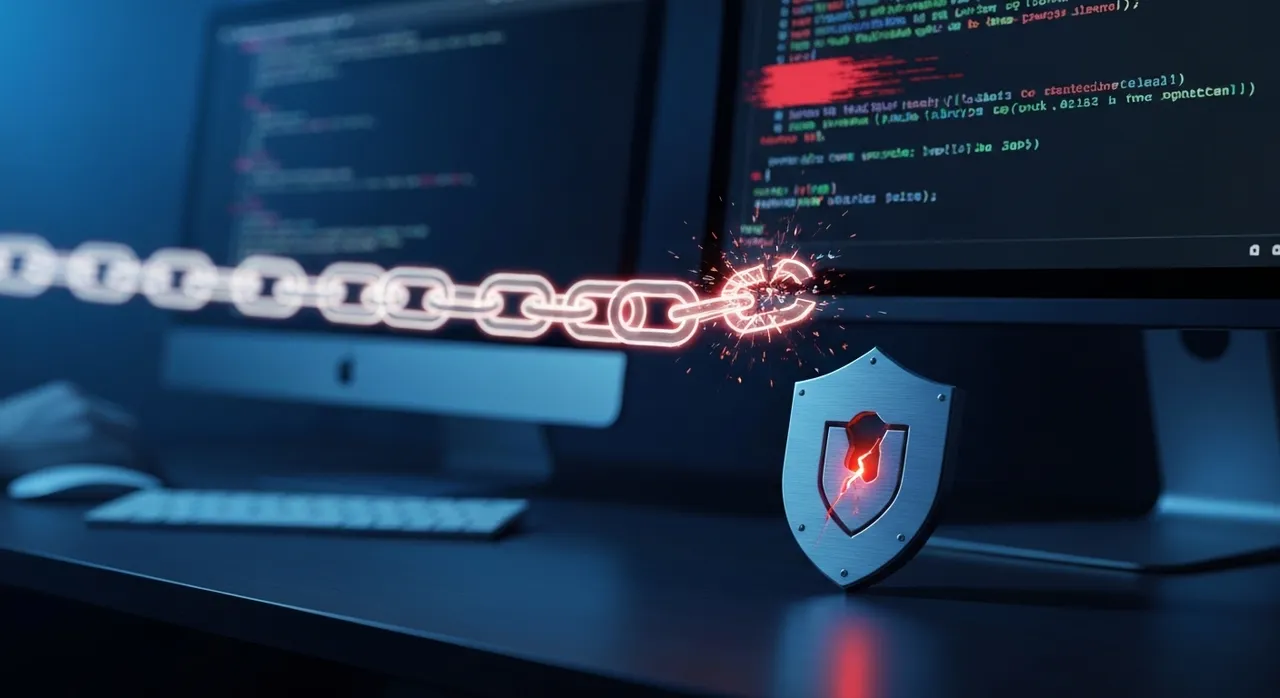
On April 24, 2026, the cybersecurity community finalized its post-mortem on what is being described as one of the most surgical and sophisticated developer-targeted strikes in recent memory. The Bitwarden supply chain attack, which briefly compromised the official command-line interface (CLI) of the popular open-source password manager, has sent shockwaves through DevOps and AppSec teams. While the breach window was narrow—lasting only 90 minutes on April 22—the technical depth of the payload and its connection to the sprawling “Checkmarx” campaign indicate a new era of automated software supply chain warfare.
The incident involved the publication of a trojanized NPM package, @bitwarden/cli@2026.4.0. Though Bitwarden’s security team acted with remarkable speed to de-list the package, researchers from firms like Socket, JFrog, and OX Security have revealed that the malware, dubbed “Shai-Hulud: The Third Coming,” was not merely a simple credential stealer. It was a self-propagating worm designed to pivot from a single developer’s machine into the heart of enterprise cloud environments and AI-driven development pipelines.
The Anatomy of the Hijack: A 90-Minute Window of Exposure
The Bitwarden supply chain attack began at 5:57 PM ET on April 22, 2026, when a malicious update was pushed to the NPM registry. This was not a “typosquatting” attempt where a similar-sounding name is used to trick users; it was a compromise of the official distribution channel. Investigators have traced the source of the injection back to a poisoned GitHub Action—specifically checkmarx/ast-github-action—which had been compromised in a broader campaign targeting developer tooling.
By leveraging stolen CI/CD secrets, the threat actor, identified as TeamPCP, was able to bypass traditional code review and signing protocols. The malicious version, 2026.4.0, appeared as a legitimate upgrade. During the 93 minutes it remained live, approximately 334 developers downloaded the package. While that number may seem small compared to Bitwarden’s millions of users, the highly targeted nature of the CLI means that every one of those 334 victims was likely a high-value target: a developer, a DevOps engineer, or an automated CI/CD runner with extensive access to sensitive infrastructure.
Technical Breakdown: Stage 1 and Stage 2 Payloads
The sophistication of the Bitwarden supply chain attack lies in its multi-stage execution and its use of non-standard runtimes to evade detection. The malware utilized two primary files: bw_setup.js and bw1.js.
Stage 1: The Bun-Based Bootstrapper (bw_setup.js)
Upon running npm install, a preinstall hook in the package.json file automatically executed bw_setup.js. This script acted as a sophisticated cross-platform loader with several key responsibilities:
- Environment Detection: It identified the host Operating System (Linux, macOS, Windows) and architecture (x64, arm64).
- Runtime Acquisition: In a novel move, the script checked for the presence of the Bun JavaScript runtime. If not found, it silently downloaded Bun v1.3.13 from the official Oven-sh GitHub releases.
- Payload Launch: By using Bun instead of Node.js, the attacker gained access to high-performance, built-in APIs for shell execution and file I/O that are often more difficult for traditional Endpoint Detection and Response (EDR) tools to monitor in a Node-centric environment.
Stage 2: The Shai-Hulud Payload (bw1.js)
The second stage, bw1.js, was a massive, obfuscated JavaScript bundle. Before initiating its harvest, the malware performed an anti-analysis check: it scanned the system for the Russian language. If detected, the script would terminate immediately. This “geofencing” technique is a common hallmark of Russian-affiliated threat actors, designed to avoid domestic law enforcement scrutiny.
The Secret Harvester: Targeting Cloud and AI Infrastructure
The primary objective of the Bitwarden supply chain attack was the total exfiltration of developer “crown jewels.” The malware did not stop at local files; it actively queried cloud-provider APIs using ambient credentials found on the system. The scope of the theft included:
- Cloud Secrets: AWS SSM Parameter Store, AWS Secrets Manager, Azure Key Vault, and GCP Secret Manager tokens.
- Identity Material: SSH keys,
.envfiles, shell history (often containing plaintext passwords), and.npmrcconfiguration files. - SCM Access: GitHub Personal Access Tokens (PATs) with
repoandworkflowscopes. - AI Tooling: Configuration and session files for AI-assisted coding tools including Claude Code, Cursor, Kiro, Codex CLI, and Aider.
The targeting of AI coding assistants is a significant escalation. As developers increasingly rely on these tools to write and refactor code, the tools themselves become high-value repositories of session tokens and proprietary logic. By compromising these configurations, TeamPCP ensures they can maintain a persistent presence in the developer’s workflow, potentially influencing the code being written in real-time.
C2 Resilience and the GitHub “Dead Drop”
The exfiltration strategy employed in the Bitwarden supply chain attack was designed for maximum resilience. The malware utilized a dual-channel Command and Control (C2) architecture:
- Primary Channel: Data was encrypted using AES-256-GCM and sent via HTTPS to
audit.checkmarx[.]cx. This domain was a classic typosquatting play, designed to look like a legitimate Checkmarx telemetry endpoint to any network administrator glancing at traffic logs. - Secondary Channel (The GitHub Dead Drop): If the primary domain was blocked, the malware used stolen GitHub tokens to create a new public repository on the victim’s own account. It would then upload the encrypted data as a JSON file. The repository description was set to “Shai-Hulud: The Third Coming.” This allowed the attacker to retrieve the stolen data directly from GitHub—a platform whose traffic is almost never blocked in corporate environments.
This “GitHub-as-a-C2” technique is particularly insidious. It not only hides the data transfer in plain sight but also leaves the victim’s own account as the host of the stolen material, further complicating the forensic trail.
The Worm Mechanism: Self-Propagation via NPM
What elevates this incident from a standard data breach to a systemic threat is its worm-like propagation. Once bw1.js secured an NPM token with publishing rights, it would automatically scan for any packages the victim had permission to modify. The malware would then:
- Download the source of the victim’s packages.
- Inject a malicious
preinstallhook similar to the one used in the Bitwarden CLI. - Increment the patch version and re-publish the infected package back to the NPM registry.
This created a geometric infection rate. A single developer at a major tech firm who installed the malicious Bitwarden CLI could inadvertently poison dozens of internal or public libraries, leading to a cascading failure across the entire software supply chain.
Beyond Zero-Knowledge: The Vulnerability of the Client
One of the most critical takeaways from the Bitwarden supply chain attack is the reminder that zero-knowledge encryption is not a silver bullet. Bitwarden’s architecture is fundamentally secure; the company correctly noted that their production systems and end-user vault data remained encrypted and untouched. However, zero-knowledge only protects the data *at rest* in the cloud.
If the tool used to access the vault—the CLI in this case—is compromised, the attacker doesn’t need to “break” the encryption. They simply wait for the user to provide the master password or the API key to the compromised tool. The security of the vault is only as strong as the integrity of the client used to unlock it. This incident proves that attackers are moving away from trying to breach hardened server-side databases and are instead focusing on the developer’s local environment, where secrets are often unencrypted and ambiently available.
Mitigation and Recovery: What Impacted Users Must Do
If you or your automated systems installed @bitwarden/cli@2026.4.0 during the 90-minute window on April 22, you must assume your environment is totally compromised. Deleting the package is insufficient. Security experts recommend the following emergency protocols:
- Immediate Rotation: Rotate 100% of the secrets that were present on the machine. This includes AWS/Azure/GCP keys, GitHub PATs, NPM tokens, and SSH keys.
- Check for Persistence: Inspect
~/.bashrc,~/.zshrc, and system-level cron jobs. The malware was known to attempt persistence by embedding loaders in shell configuration files. - Audit GitHub Accounts: Search your GitHub profile for any newly created repositories with the “Shai-Hulud” naming convention and delete them immediately.
- Review AI Sessions: Invalidate all sessions for AI coding tools like Cursor or Aider, as the malware explicitly targeted their configuration directories.
The Bitwarden supply chain attack is a stark warning. As we move deeper into 2026, the reliance on automated CI/CD pipelines and third-party NPM packages has created a massive, interconnected attack surface. For organizations, the lesson is clear: trust in a vendor’s brand name is no longer a substitute for rigorous, local script-blocking and registry-monitoring policies. The “Ninja Editor” verdict is simple: the supply chain is the new frontline, and the most dangerous weapon is the one you’ve already invited into your terminal.
Written by
TempMail Ninja
Digital privacy and online security expert. Passionate about creating tools that protect users' identity on the internet.