Cargo Theft Hackers Use ClickFix Tactics to Target Logistics Firms
Article Content
As the global supply chain transitions into a fully digitized ecosystem, the physical security of a 53-foot trailer is no longer the primary concern for logistics executives. Today, the most dangerous threat to the industry is invisible, operating through the same screens used to coordinate millions of tons of freight. A groundbreaking threat report released on April 16, 2026, has revealed a massive surge in cyber-enabled strategic theft, spearheaded by sophisticated cargo theft hackers who have successfully merged traditional organized crime with advanced social engineering.
The report, which highlights a staggering $6.6 billion in losses for the 2025 fiscal year, paints a grim picture of a sector under siege. These are not opportunistic “smash-and-grab” thieves. Instead, they are high-tech syndicates that utilize a technique known as “ClickFix” to bypass traditional cybersecurity perimeters and gain absolute control over a carrier’s digital and physical operations. By compromising the digital marketplaces where the world’s logistics are brokered, these hackers are effectively “signing and driving” away with high-value goods before a single alarm is ever triggered.
Tactical Shift: Why Cargo Theft Hackers Target Digital Load Boards
The primary entry point for these campaigns is the freight load board—digital marketplaces such as DAT, Truckstop, and various proprietary broker portals. These platforms are the lifeblood of the trucking industry, connecting shippers with available carriers. However, for cargo theft hackers, they represent a target-rich environment for reconnaissance and initial access.
The attack sequence typically follows a highly coordinated pattern:
- Account Takeover (ATO): Attackers use stolen credentials or brute-force methods to hijack the accounts of legitimate freight brokers or carriers on popular load boards.
- The “Ghost” Listing: Once inside, hackers post high-value loads—often food and beverage, electronics, or household goods—to attract unsuspecting motor carriers.
- Spear-Phishing in Real-Time: When a legitimate carrier inquires about the load, the hackers respond with an email or chat message containing a “shipping manifest” or “secure rate confirmation” link.
This is where the ClickFix social engineering tactic comes into play. Unlike traditional phishing, which relies on a victim downloading an attachment, ClickFix exploits the user’s desire to “fix” a perceived technical error to facilitate a legitimate business transaction.
Deconstructing ClickFix: The Anatomy of a Clipboard Hijack
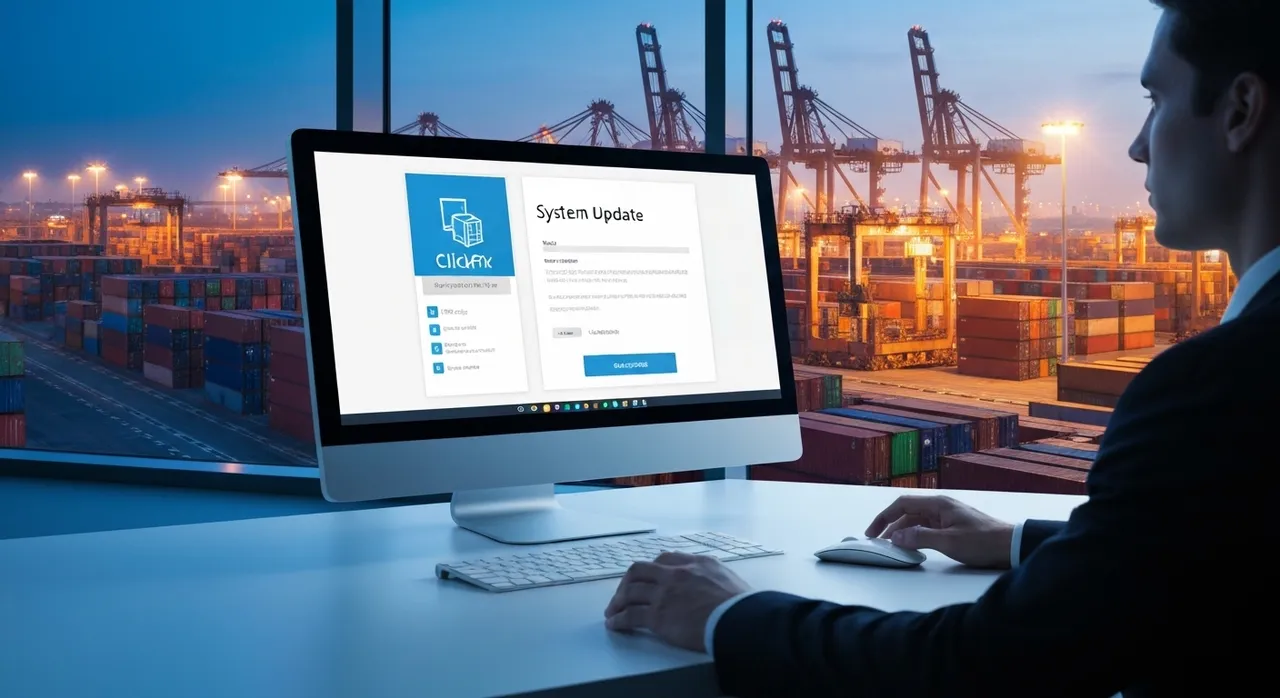
The technical brilliance of the ClickFix tactic lies in its simplicity and its ability to bypass automated endpoint detection and response (EDR) systems. When the victim clicks the link to view the shipping document, they are redirected to a spoofed page that mimics a legitimate service, such as Cloudflare, Microsoft 365, or a Google Chrome update prompt. The page displays a realistic error message, such as “Unable to load document: Browser update required” or a fake CAPTCHA verification failure.
The user is then provided with a set of “easy instructions” to fix the issue. These instructions typically guide the user through the following steps:
- Press Windows + R to open the Windows Run dialog box.
- Press Ctrl + V to paste a “fix code” that has been silently copied to their clipboard by the malicious webpage.
- Press Enter to execute the command.
To the average logistics coordinator or dispatcher, this looks like a standard technical support workflow. However, the clipboard contains an obfuscated PowerShell command. Because the user is manually initiating the command through a native Windows utility (a “Living-off-the-Land” or LotL attack), many antivirus programs do not flag the activity as malicious. Once the Enter key is pressed, a multi-stage infection process begins in the background, siphoning system data and establishing a persistent foothold.
The Malicious Payload: XWorm and ScreenConnect
The ultimate goal of cargo theft hackers is not just to steal data, but to gain total remote control of the logistics firm’s infrastructure. The report indicates that the primary tools deployed in these 2026 campaigns are XWorm and ScreenConnect.
XWorm: The Information Stealer
XWorm is a versatile Remote Access Trojan (RAT) that provides attackers with a comprehensive suite of tools for espionage and theft. Its modules include:
- Keylogging and Credential Harvesting: Capturing every keystroke to steal banking logins, fuel card passwords, and load board credentials.
- File Exfiltration: Searching for PDFs and spreadsheets containing “Bills of Lading” (BOLs), driver identification, and insurance documents.
- DDoS and Botnet Modules: Using the compromised logistics server to launch attacks on other industry targets.
ScreenConnect: The Persistence Mechanism
While XWorm handles the data theft, hackers often install legitimate Remote Monitoring and Management (RMM) tools like ConnectWise ScreenConnect to maintain a permanent “backdoor.” By using a legitimate tool, the attackers can hide in plain sight. They often use modified, “headless” installers that remove all user interface elements, meaning the dispatcher will never see an icon or a pop-up indicating that a third party is watching their screen in real-time.
With ScreenConnect, the hacker can watch the company’s internal workflow, see which loads are being assigned to which drivers, and even intercept payment communications to redirect funds to fraudulent accounts.
From Digital Breach to Physical Theft: The “Ghost” Pick-up
The most devastating phase of the attack occurs when the cargo theft hackers transition from the digital realm to the physical world. Armed with stolen Bills of Lading and a deep understanding of a carrier’s schedule, the criminal syndicate organizes what the industry calls a “Ghost Pick-up.”
Using the carrier’s own hijacked identity, the hackers contact the shipper to announce a “change in driver” or a “rescheduled pick-up time.” They provide flawless documentation—including the correct load number, driver name, and truck ID—that was stolen during the XWorm infection. A “blind” driver, often an unwitting sub-contractor hired by the hackers through a different fraudulent listing, arrives at the warehouse, loads the high-value cargo, and disappears.
By the time the legitimate carrier arrives at the facility three hours later, the cargo is already at a “cross-dock” facility being stripped of its tracking devices and GPS jammers, ready for resale on the black market. In 2025, the average value per incident reached $274,000, with some high-tech and pharmaceutical loads exceeding $1 million in value.
The $6.6 Billion Crisis: Economic and Insurance Fallout
The financial impact of these cargo theft hackers is rippling through the global economy. Beyond the direct loss of goods, the logistics industry is facing a secondary crisis in the insurance market. The 2026 data suggests that insurers are rapidly tightening underwriting standards in response to the “Cyber-Physical” convergence.
Insurance Gaps: Many standard cargo insurance policies contain “Cyber Exclusions” (such as the LMA5403 clause). If a physical theft is initiated via a digital breach or social engineering, some insurers are denying claims, arguing that the loss falls under “Cyber Liability” rather than “Transit Insurance.” This leaves many mid-sized trucking firms effectively uninsured against the industry’s most prevalent threat.
Operational Impact: The stress of these attacks is contributing to a 47% increase in driver turnover in the sectors most targeted—specifically food and beverage. Drivers, fearing for their safety and facing the administrative nightmare of identity theft (as their CDL data is often stolen during the RAT infection), are leaving the industry in record numbers.
Hardening the Supply Chain: Defensive Strategies for 2026
Defending against cargo theft hackers requires more than just updated antivirus software; it requires a fundamental shift in operational security. The report recommends a “Zero Trust” approach to logistics coordination:
- Mandatory Multi-Factor Authentication (MFA): All load board accounts and internal TMS (Transportation Management Systems) must be protected by hardware-based MFA (e.g., YubiKeys) to prevent account takeover.
- Clipboard and PowerShell Restrictions: IT departments should implement Group Policy Objects (GPOs) that restrict the use of the Windows Run dialog and monitor for unauthorized PowerShell execution, specifically those involving the
Invoke-Expressioncommand. - Verbal Verification: Implement a mandatory “two-channel” verification process for any changes to driver assignments or pick-up times. A digital update must be confirmed by a phone call to a pre-verified number.
- AI-Powered Monitoring: Utilizing EDR tools that can identify the “behavioral signatures” of RMM abuse, such as ScreenConnect running in a hidden context without an active IT support ticket.
Conclusion: The High-Stakes Game of Digital Logistics
The emergence of cargo theft hackers using ClickFix tactics marks a new, more dangerous era for global trade. The distinction between “cybersecurity” and “physical security” has effectively vanished. As we move further into 2026, the logistics firms that survive will be those that treat every digital interaction with the same level of scrutiny as a physical warehouse inspection. In a world where a few keystrokes can redirect a multi-million dollar shipment, the “Digital Padlock” has become the most important tool in the fleet.
Written by
TempMail Ninja
Digital privacy and online security expert. Passionate about creating tools that protect users' identity on the internet.