CBP Digital Searches: New Directive 3340-049B Mandates Warrant-Free Inspections
Article Content
On April 29, 2026, the legal and technological boundaries of American border security reached a new flashpoint. Following months of quiet implementation, the full operational scope of CBP Directive 3340-049B has been laid bare, signaling a transformative—and many argue, invasive—era for international travelers. This directive, which became effective in January but has only recently come under intense public scrutiny, codifies the authority of U.S. Customs and Border Protection (CBP) to conduct CBP digital searches without a warrant, probable cause, or even individualized suspicion in most cases.
The policy affects millions of individuals crossing U.S. ports of entry, from major international hubs like JFK and LAX to land crossings and maritime ports. However, the reach of Directive 3340-049B extends far beyond the physical border line, asserting jurisdiction within the “100-mile border zone”—a region inhabited by nearly two-thirds of the American population. As digital footprints become increasingly synonymous with a person’s identity, the “Ninja Editor” breaks down the technical, legal, and survivalist strategies required to navigate this new landscape of digital sovereignty.
The Evolution of the Border Search Doctrine and CBP Digital Searches
To understand the gravity of Directive 3340-049B, one must first grasp the “Border Search Exception.” Rooted in a century of Supreme Court precedent, this doctrine posits that the Fourth Amendment’s protection against unreasonable searches is significantly diminished at the border. The government’s interest in preventing the entry of “unwanted persons and effects” traditionally allowed for the warrantless inspection of suitcases and vehicles. However, in the 2026 context, the definition of “effects” has evolved to include the most intimate details of human life: smartphones, laptops, and even the internal computers of the cars we drive.
The new directive distinguishes between two specific levels of CBP digital searches, each with its own technical threshold and legal requirement:
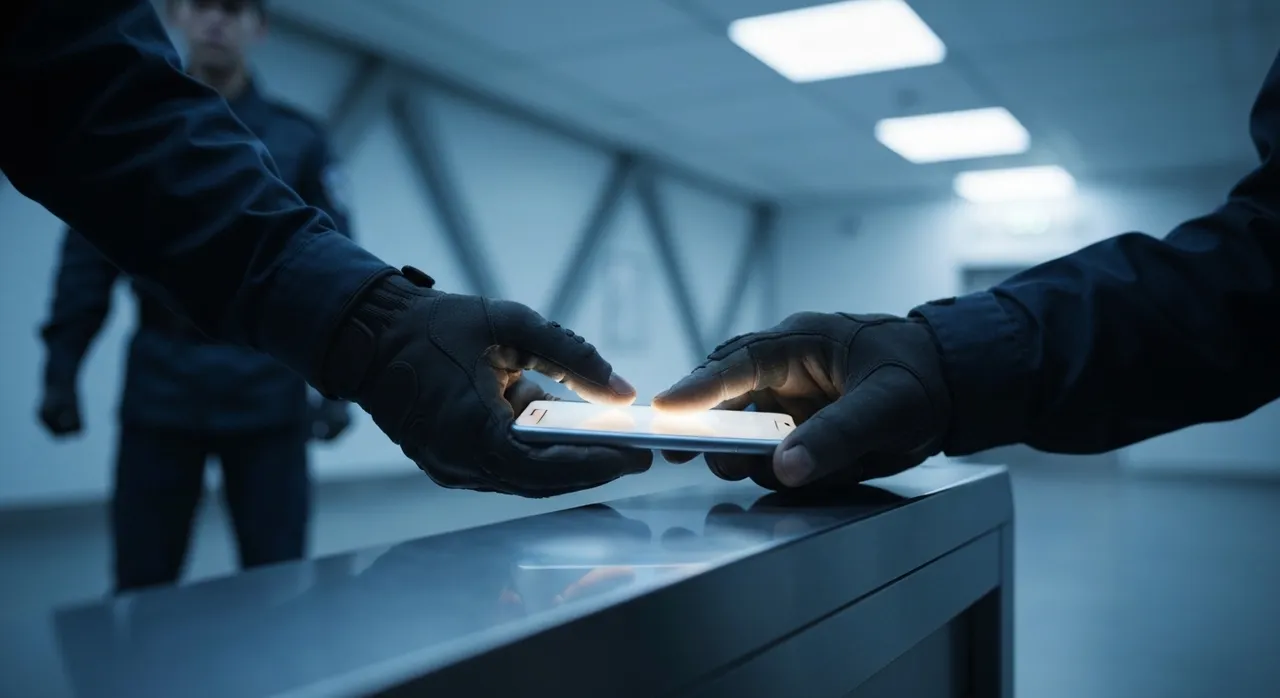
- Basic Searches: Conducted at the officer’s discretion with zero suspicion required. During a basic search, an officer may manually scroll through a device’s resident data, including text messages, social media feeds, photos, and contact lists.
- Advanced Searches: These require “reasonable suspicion” of a violation of law or a “national security concern.” Once triggered, officers may use forensic equipment to image, copy, and analyze the device’s entire storage. This often involves specialized hardware and software capable of extracting deleted files and bypassing standard encryption.
Data from Fiscal Year 2025 indicates that device inspections surged by 18%, reaching over 55,000 recorded instances. While this represents a small fraction of total travelers, the spike highlights a shift toward using digital data as a primary tool for “verifying traveler statements” and identifying undisclosed intent, such as working on a tourist visa.
The Expanded Definition of “Electronic Device”
One of the most aggressive updates in Directive 3340-049B is the technical expansion of what constitutes an “electronic device.” Previous iterations of the policy focused primarily on handheld devices and computers. The 2026 directive explicitly broadens the scope to include:
- Smartwatches and Wearables: These often contain health data, location history, and mirrored copies of messages.
- Unmanned Aircraft Systems (Drones): Officers are increasingly inspecting flight logs and onboard camera data to detect unauthorized border surveillance or smuggling routes.
- Vehicle Infotainment Systems: Perhaps the most controversial addition, these systems are now viewed as “mobile servers” that store call logs, GPS coordinates, and even IP addresses from connected smartphones.
Forensic tools for vehicle digital forensics can extract “Event Data Recorder” (EDR) information, revealing not just where a car has been, but the state of the vehicle at specific times—data that CBP agents use to cross-reference a traveler’s timeline of movement.
Technical Mechanics: Basic vs. Advanced Forensic Imaging
When a traveler is selected for one of these CBP digital searches, the technical process is rigorous. Directive 3340-049B mandates that devices be placed in “airplane mode” or otherwise disconnected from the network to prevent the officer from inadvertently accessing cloud-stored data (which generally requires a warrant under the Riley v. California precedent). However, any data physically resident on the hardware is fair game.
In an advanced search, CBP utilizes forensic tools like Cellebrite or GrayKey. These platforms can perform a “Physical Extraction,” which copies every bit of data from the device’s flash storage, including the “unallocated space” where deleted files may still reside. If a device is encrypted, the directive authorizes officers to “request the individual’s assistance” in providing passcodes. While U.S. citizens cannot be denied entry for refusing to unlock a device, their hardware may be seized for up to 15 days (or longer for active investigations), and foreign nationals may be denied entry entirely for non-compliance.
Social Media Scrutiny and Digital Cross-Referencing
The surge in device inspections is largely driven by a new emphasis on social media footprints. Under Directive 3340-049B, officers are trained to cross-reference a traveler’s oral statements with their online behavior. For example, if a traveler claims to be visiting for a “vacation” but their LinkedIn messages discuss a “client meeting in Manhattan,” the discrepancy provides the “reasonable suspicion” necessary to escalate from a basic search to an advanced forensic imaging process.
Officers are also looking for “digital contraband,” which the directive defines broadly to include child exploitation material, classified information, and intellectual property that violates export control laws. The ability to share this data with other federal, state, and even foreign law enforcement agencies makes the border a “clearinghouse” for domestic intelligence gathering.
Privacy Countermeasures: The “Clean-Device Protocol”
For corporate mobility teams and high-privacy individuals, the response to CBP digital searches has been the development of the Clean-Device Protocol. The philosophy is simple: you cannot search what is not there. As Directive 3340-049B makes “suspicionless” searches the new normal, travelers are adopting rigorous technical defenses to ensure their physical devices are “data-empty” at the point of entry.
1. Factory-Reset and Loaner Hardware
Many corporations now issue “travel-only” laptops and smartphones. Before crossing the border, the device is factory-reset to its original state. The goal is to present a device that contains only the operating system and essential, non-sensitive apps. Once the traveler has cleared the 100-mile border zone and established a secure connection, they can restore their data from an encrypted cloud backup.
2. Encrypted Containers and Hidden Partitions
For those who must carry data, the use of Veracrypt or similar disk encryption tools is becoming a standard countermeasure. Veracrypt allows for the creation of a “Hidden Volume” within an “Outer Volume.” This provides “plausible deniability”:
- The Outer Volume contains “decoy” data (standard travel documents, public photos) that can be opened if an officer demands a password.
- The Hidden Volume, protected by a different password, is mathematically indistinguishable from random data. Even a forensic search would find it difficult to prove the existence of the hidden partition.
3. VPN-Only Cloud Access
To comply with the directive’s focus on “resident data,” privacy advocates suggest moving all sensitive workflows to VPN-only cloud containers. By logging out of all applications—email, Slack, Salesforce—and clearing browser caches before reaching the border, the traveler ensures that even a manual “basic” search yields no access to professional or private data. Access is only restored once the traveler is on a trusted network past the port of entry.
The Legal Battle: The 100-Mile Constitution-Free Zone
The most alarming aspect of the 2026 directive for many Americans is its application within the 100-mile border zone. This area extends 100 miles inland from any U.S. “external boundary,” including the entire coastline. Within this zone, CBP claims the authority to set up checkpoints and conduct warrantless vehicle searches—including the digital data within those vehicles—if they have a reasonable belief that the vehicle is involved in a border violation.
Civil liberties groups, including the ACLU and EFF, have intensified their lobbying efforts in light of 3340-049B, arguing that the “border search exception” was never intended to grant the government a “backdoor” into the private lives of 200 million residents. They contend that because modern devices are “proxies for the human mind,” searching them without a warrant is a fundamental violation of the Fourth Amendment that transcends traditional customs enforcement.
Implications for Global Mobility and Business
For the professional world, Directive 3340-049B creates a significant risk profile. Executives carrying trade secrets, proprietary algorithms, or attorney-client privileged information are now at risk of having that data imaged and shared across federal databases. Corporate legal departments are increasingly advising employees to invoke privilege during CBP digital searches, though the directive states that while CBP will “segregate” privileged material for review by a “filter team,” they are not strictly barred from inspecting it if they suspect a crime.
Conclusion: The Future of Digital Sovereignty
As of late April 2026, the message from the U.S. government is clear: the border is a digital vacuum. CBP Directive 3340-049B has codified a high-tech dragnet that views every bit of data on a traveler’s device as a potential customs item. For the modern traveler, the “digital suitcase” is no longer a private sanctuary; it is a public record subject to forensic scrutiny.
Navigating this environment requires more than just a passport and a visa; it requires digital hygiene. Whether through “Clean-Device Protocols” or the use of sophisticated encryption containers, the burden of privacy has shifted from the law to the individual. As we move further into 2026, the CBP digital searches mandated by this directive will remain a primary battleground for the future of privacy, security, and the right to travel without a digital shadow.
Written by
TempMail Ninja
Digital privacy and online security expert. Passionate about creating tools that protect users' identity on the internet.