Claude Design: Anthropic Debuts Prototyping Tool and $100B AWS Deal
Article Content
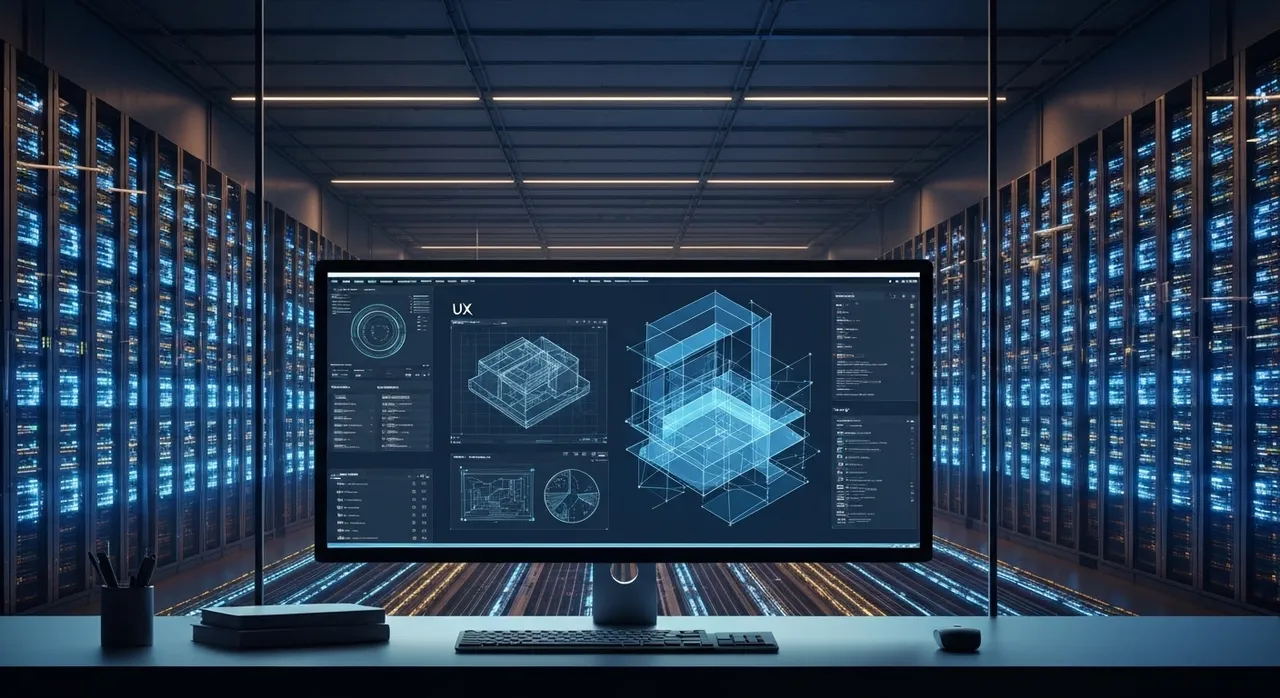
The landscape of generative artificial intelligence has reached a definitive turning point. On April 21, 2026, Anthropic recalibrated the industry’s trajectory by bridging the gap between raw computational power and sophisticated creative execution. With the dual announcement of Claude Design—a revolutionary prototyping ecosystem—and a historic $100 billion compute expansion with Amazon Web Services (AWS), the company has signaled its intent to move beyond text-based assistants toward a comprehensive AI operating environment. Powered by the state-of-the-art Claude Opus 4.7 model, these developments represent more than just incremental updates; they signify a shift toward “agentic creativity” and industrial-scale intelligence infrastructure.
Claude Design: The Conversational Pivot in Creative Workflows
For years, the design industry has relied on a fragmented stack of tools—wireframing in one application, high-fidelity prototyping in another, and handoff documentation in a third. Claude Design seeks to collapse this stack into a single, fluid conversational interface. Unlike previous iterations of AI-assisted design that merely “suggested” layouts, Claude Design acts as a co-creator that understands the semantic logic of user experience. Built on the Claude Opus 4.7 architecture, the tool allows users to describe complex digital products in natural language and watch as the AI generates functional, interactive prototypes in real-time.
The core innovation of Claude Design lies in its ability to synthesize three distinct pillars of creative production:
- Interactive Prototyping: Instead of static images, the tool generates live code-backed environments. A user can say, “Build a fintech dashboard with a dark mode toggle and real-time transaction animations,” and the system renders a working UI that responds to clicks and data inputs.
- Automated Design System Adherence: For enterprise teams, consistency is the greatest challenge. Claude Design can ingest an organization’s existing design system (tokens, components, and brand guidelines) and automatically apply them to any generated output, ensuring that the AI never deviates from established brand identity.
- Multimodal Refinement: Through “inline comments,” designers can highlight specific areas of a generated page and provide feedback like, “Reduce the padding here and make the CTA button more prominent.” The model understands spatial context, making the iterative process feel more like a human-to-human critique than a prompt-engineering exercise.
The Engine Under the Hood: Claude Opus 4.7
The efficacy of Claude Design is rooted in the advancements of Claude Opus 4.7. This model introduces a specialized “Spatial Reasoning” layer that allows the AI to understand visual hierarchy and user flow better than any previous Large Language Model (LLM). Unlike its predecessors, Opus 4.7 treats a user interface not just as a collection of pixels, but as a hierarchical tree of functions and intents. This enables the model to predict user friction points and suggest optimizations before a single line of production code is written. Furthermore, the model’s expanded context window allows it to maintain the integrity of massive, multi-page application architectures without losing “memory” of global navigation patterns.
The $100 Billion Infrastructure Frontier: 5 Gigawatts of Intelligence
While Claude Design captures the public’s imagination, the foundational news lies in the hardware that will power the next decade of AI development. Anthropic’s deepened partnership with Amazon involves a commitment of $100 billion over ten years to secure 5 gigawatts (GW) of compute capacity. To put this in perspective, 5 GW is roughly equivalent to the power output of five nuclear power plants, providing enough energy to support a city of millions—or, in this case, the most dense cluster of AI accelerators ever assembled.
This expansion is not merely about buying more servers; it is a strategic vertical integration. Anthropic has secured early access to Amazon’s Trainium2 and Trainium3 chips. These custom-built silicon solutions are designed specifically for the massive parallel processing required by transformer-based architectures. By moving away from general-purpose GPUs toward specialized AI hardware, Anthropic expects to achieve:
- Reduced Latency: Direct optimization between Opus 4.7 software and Trainium3 hardware will allow for near-instantaneous creative generation in Claude Design.
- Energy Efficiency: The 5GW commitment is paired with a move toward “Compute-on-Demand” sustainability, utilizing AWS’s renewable energy portfolio to offset the massive carbon footprint of training “Mythos” class models.
- Sovereign Compute: The massive scale ensures that Anthropic remains independent of the supply chain volatility that has historically plagued the semiconductor industry.
Scaling to the “Mythos” Class Models
Anthropic’s leadership team has been vocal about the necessity of this scale. The transition from the “Opus” era to the upcoming “Mythos” class models requires a logarithmic jump in both data processing and compute density. The Mythos models are rumored to be the first “agentic-native” systems, capable of not just answering questions but executing multi-step business processes autonomously. The $100 billion AWS expansion provides the “runway” needed to train these models, which are expected to possess reasoning capabilities that rival specialized human professionals in fields like legal analysis, molecular biology, and advanced software architecture.
Economic Trajectory: The $30 Billion Run-Rate
The scale of the AWS deal is justified by Anthropic’s staggering financial performance. The company revealed that its annual run-rate revenue has surged to $30 billion, a testament to the rapid enterprise adoption of “Constitutional AI.” Large-scale corporations are increasingly choosing Anthropic over competitors due to its focus on safety and predictable model behavior. With Claude Design, Anthropic is now tapping into the multi-billion dollar Creative Cloud and CAD markets, positioning itself as a direct competitor to established giants like Adobe and Figma.
The enterprise appeal of Claude Design is particularly potent because it solves the “blank page” problem while maintaining strict security. By running on AWS’s secure infrastructure, corporate design teams can use their most sensitive proprietary data to train internal “design agents” without the risk of data leakage. This $100 billion investment ensures that as these companies scale their AI usage, Anthropic’s infrastructure will never be the bottleneck.
The Collaborative Future: Inline Comments and Team Dynamics
One of the most praised features of the Claude Design rollout is the “Collaborative Workspace” environment. It moves the AI out of a private chat box and into a shared team space. Claude Opus 4.7 can act as a facilitator during design sprints, summarizing feedback from multiple stakeholders and synthesizing it into a single, cohesive prototype. The “inline comments” feature allows human designers to mark up a UI directly, with the AI interpreting the intent behind the comment—whether it’s a request for an aesthetic change or a functional requirement for a new API integration.
Key Collaborative Features Include:
- Version History via Prompting: Teams can “roll back” the design by simply asking, “Go back to the version before we added the sidebar.”
- Cross-Platform Export: Claude Design doesn’t just create images; it generates the production-ready code for React, Vue, and SwiftUI, dramatically shortening the bridge between design and development.
- Brand Safeguards: Real-time alerts if a generated design deviates from the uploaded design system, acting as an automated brand auditor.
Conclusion: The Architecture of Tomorrow
The simultaneous launch of Claude Design and the massive $100 billion AWS compute expansion marks the end of the “experimentation phase” of AI. We have entered the era of industrial-strength, creative-capable intelligence. Anthropic is no longer just a research lab; it is a global infrastructure powerhouse providing the foundational tools for the digital economy. As Claude Opus 4.7 begins to populate the screens of designers worldwide, and the 5GW data centers begin to hum with the training of the Mythos models, the message is clear: the future of creation is conversational, and the scale of that future is unprecedented.
By marrying the delicate nuance of high-end design with the brute-force power of a $100 billion hardware commitment, Anthropic has positioned itself at the epicenter of the next industrial revolution. For businesses and creators alike, the toolset has changed forever. The only question that remains is how quickly the industry can adapt to a world where the distance between an idea and a functional, professional-grade prototype is now just a single sentence.
Written by
TempMail Ninja
Digital privacy and online security expert. Passionate about creating tools that protect users' identity on the internet.