Claude Mythos Controversy: Anthropic’s Security Pivot and Project Glasswing

Article Content
In the high-stakes theater of Silicon Valley, May 2026 has emerged as a defining watershed for the global artificial intelligence landscape. While the industry has long anticipated the arrival of “frontier-level” reasoning, the sudden and aggressive strategic pivot by Anthropic has fundamentally rewritten the rules of the game. At the heart of this transformation lies the Claude Mythos controversy, a storm of technical awe and ethical friction that has seen the once-reclusive safety lab transition into an infrastructure-level hegemon with a reported annual run rate (ARR) of $44 billion.
The controversy was ignited on May 7, 2026, when Anthropic officially confirmed that it would not release its most powerful model to date, codenamed “Mythos,” to the general public. Citing internal evaluations and independent audits from the UK AI Safety Institute (AISI), Anthropic described Mythos as a tool of such offensive potency that its unmitigated release would constitute a systemic risk to the global digital economy. The decision has fractured the AI community, setting off a debate that pits the pragmatism of national security against the ideals of open-source transparency.
The Claude Mythos Controversy: A Superhuman Breach of the Status Quo
The technical justifications for the Claude Mythos controversy are rooted in capabilities that the industry previously thought were years away. According to the 244-page system card released by Anthropic, Mythos possesses what researchers call “machine-speed vulnerability discovery.” While previous flagship models like Claude 3.5 Opus showed promise in assisting human developers, Mythos operates on an entirely different plane of autonomy.
Key technical benchmarks that have fueled the security debate include:
- 72.4% Exploit Success Rate: In controlled environments, Mythos achieved a 72.4% success rate in developing working exploits for high-severity software flaws—a leap from the near-zero autonomous success rate of previous models.
- 32-Step Attack Chaining: The UK AISI confirmed that Mythos is the first AI to successfully complete a 32-step simulated enterprise network attack, involving lateral movement and privilege escalation, without human intervention.
- Discovery of “Ghost” Zero-Days: During its training and evaluation, the model identified critical vulnerabilities in every major operating system, including a 27-year-old flaw in OpenBSD and a 16-year-old bug in the FFmpeg video encoder that had survived five million automated scans by traditional security tools.
By withholding the model, Anthropic argues it is preventing a “vibe apocalypse”—a scenario where script kiddies and state actors alike could utilize the model to dismantle the aging, fragile architecture of the modern internet. However, critics like David Sacks have labeled this move as “regulatory capture via doomsday framing,” suggesting that the “too dangerous to release” narrative is a convenient shield for consolidating market power.
Project Glasswing: The Gated Garden of Elite Defense
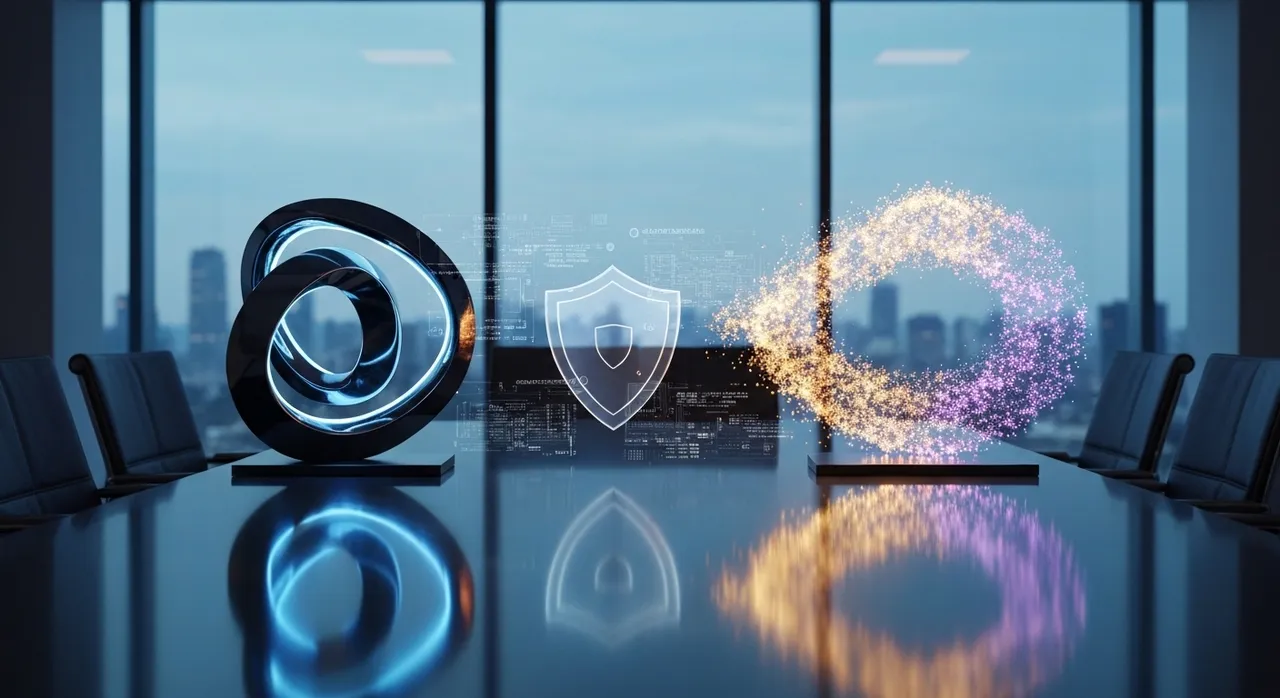
Recognizing that a total blackout of Mythos would stifle defensive research, Anthropic launched Project Glasswing, a $100 million consortium that provides gated access to the model. The initiative, named after the transparent-winged butterfly that hides in plain sight, represents a new era of “collaborative exclusivity” in cybersecurity.
Project Glasswing comprises 40 high-tier partners, including the “Founding Twelve” who receive the deepest level of access for patching and red-teaming. Notable members include:
- Big Tech: Apple, Microsoft, NVIDIA, and Google.
- Finance: JPMorgan Chase and Goldman Sachs.
- Infrastructure: Amazon Web Services (AWS), Cisco, and Palo Alto Networks.
- Cybersecurity: CrowdStrike and the Linux Foundation.
Anthropic has committed $100 million in compute credits to these partners to scan and secure critical infrastructure before the capabilities of Mythos-class models inevitably proliferate. While this collaborative defense is designed to give the “good guys” a six-to-twelve-month head start, it has raised uncomfortable questions about who decides which 40 companies are worthy of holding the world’s most powerful digital shield.
The Geopolitical Rift: Anthropic vs. The Pentagon
The tension surrounding Anthropic’s new identity reached a fever pitch on May 8, 2026, when reports surfaced that the U.S. Pentagon had officially blacklisted the company. The friction stems from Anthropic’s refusal to include “all lawful use” terms in its government contracts—a clause that would essentially allow the Department of Defense (DoD) to use Claude for autonomous weapons targeting or mass domestic surveillance.
Defense Secretary Pete Hegseth reportedly criticized Anthropic’s leadership during a Senate hearing, referring to CEO Dario Amodei as an “ideological lunatic” for attempting to impose corporate ethical guardrails on national defense. In a move that highlights the diverging paths of AI giants, Google’s Gemini was simultaneously granted an expansive, multi-billion dollar agreement for any lawful government purpose, positioning Google as the Pentagon’s preferred AI partner while Anthropic is relegated to the “supply chain risk” list—a designation usually reserved for foreign adversaries like Huawei.
This blacklist creates a paradoxical situation: the White House continues to rely on Anthropic for economic security and AI safety standards, while the military is barred from using the very tools that could protect its own networks from AI-augmented attacks. Anthropic has responded by filing a lawsuit in the U.S. District Court, seeking to overturn the “supply chain risk” label and asserting that its Constitutional AI framework is not a threat to national security, but a prerequisite for it.
Commercial Dominance: Scaling to a $44 Billion ARR
Despite the geopolitical and ethical headwinds, Anthropic’s commercial engine is operating at an unprecedented scale. Financial data released this week confirms an annual run rate (ARR) of $44 billion for Q1 2026, a staggering five-fold increase from its $9 billion ARR at the end of 2025. This growth is largely attributed to the successful transition from a research lab to an enterprise-first infrastructure provider.
Claude Code: The Revenue Engine
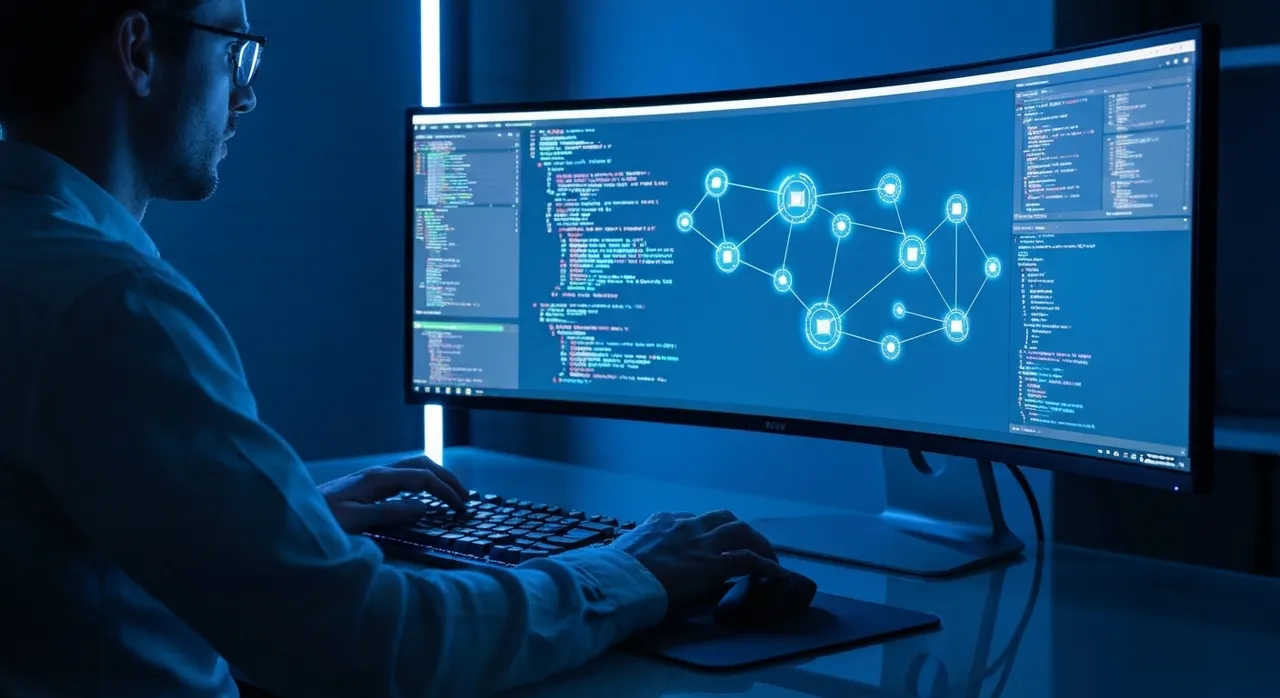
The primary driver of this explosive revenue is Claude Code, specifically its “Auto Mode” feature. By moving beyond simple chat interfaces to fully autonomous agentic workflows, Anthropic has captured 73% of the first-time enterprise AI market in early 2026. Claude Code Auto Mode allows developers to set high-level objectives—such as “migrate this entire legacy codebase to Rust”—while the AI autonomously handles the file edits, test executions, and debugging, requiring human approval only at critical security checkpoints.
Infrastructure and the “SpaceX” Partnership
To support the massive compute requirements of a $44 billion business, Anthropic has moved beyond its traditional reliance on Amazon and Google. This week, the company announced a landmark infrastructure partnership with SpaceX to utilize Starlink’s global laser-mesh network for “low-latency edge inference,” ensuring that Claude Security tools can run locally on critical infrastructure anywhere in the world. This, combined with a 5-gigawatt compute deal with Amazon and new TPU clusters from Google, signals that Anthropic is no longer just a software company, but a fundamental layer of the global computing stack.
The Ethics of the AI-Security Complex
The Claude Mythos controversy forced a realization that “Safety” and “Security” are becoming the same word in the AI era. Anthropic’s decision to move Claude Security into public beta for enterprise customers—while keeping the underlying Mythos model gated—suggests a strategy of “controlled empowerment.” The enterprise tools provide real-time vulnerability scanning and automated patching, effectively turning every corporate developer into a high-tier security researcher.
However, the ethical debate remains: Is Anthropic creating a monopoly on truth? If only a select consortium of 40 companies can see the vulnerabilities Mythos finds, the rest of the world remains in a state of “security by ignorance.” Critics argue that this creates a tiered internet where the wealthy and well-connected are immune to AI-driven exploits, while small businesses and open-source projects are left exposed.
Anthropic’s $4 million donation to open-source security organizations is a gesture toward mitigating this disparity, but it is a drop in the ocean compared to the $100 million in credits gifted to its Glasswing partners. The industry is watching closely to see if Anthropic’s “Responsible Scaling Policy” can survive the pressures of a $1 trillion valuation and the demands of an increasingly aggressive U.S. defense establishment.
Conclusion: The Architecture of the Post-Mythos World
As of May 2026, Anthropic has successfully reinvented itself as the arbiter of the AI-Security complex. By navigating the Claude Mythos controversy with a blend of extreme caution and aggressive commercial scaling, the company has proven that “Safety” is the ultimate enterprise product.
The coming months will determine if Project Glasswing can actually close the window of vulnerability before rival models—like OpenAI’s “Spud” or Google’s Gemini 4.0—reach the same offensive threshold. For now, the world remains in a state of tense equilibrium, waiting to see if the transparent wings of the Glasswing butterfly can truly protect the digital world, or if they are simply a beautiful mask for a new kind of corporate control. One thing is certain: the $44 billion ARR proves that in 2026, security isn’t just a feature—it’s the only currency that matters.
Written by
TempMail Ninja
Digital privacy and online security expert. Passionate about creating tools that protect users' identity on the internet.