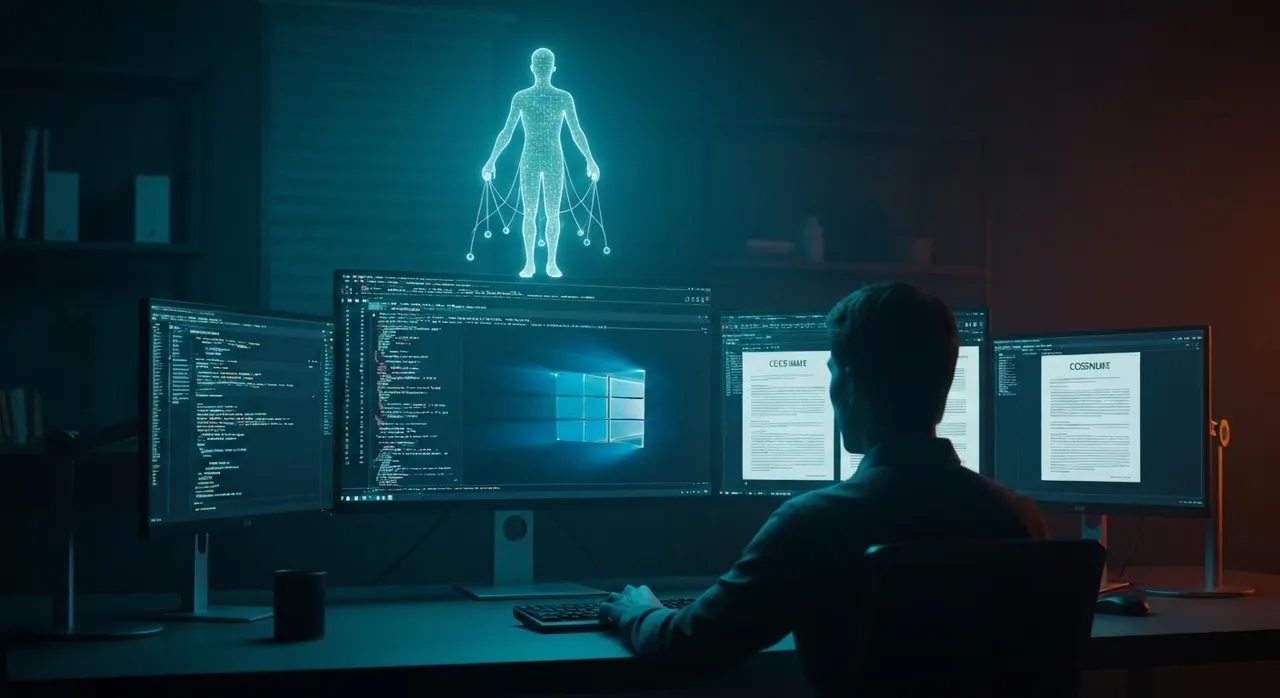
ClickFix Social Engineering: Industrialized Tactics Bypassing Browser Sandboxes
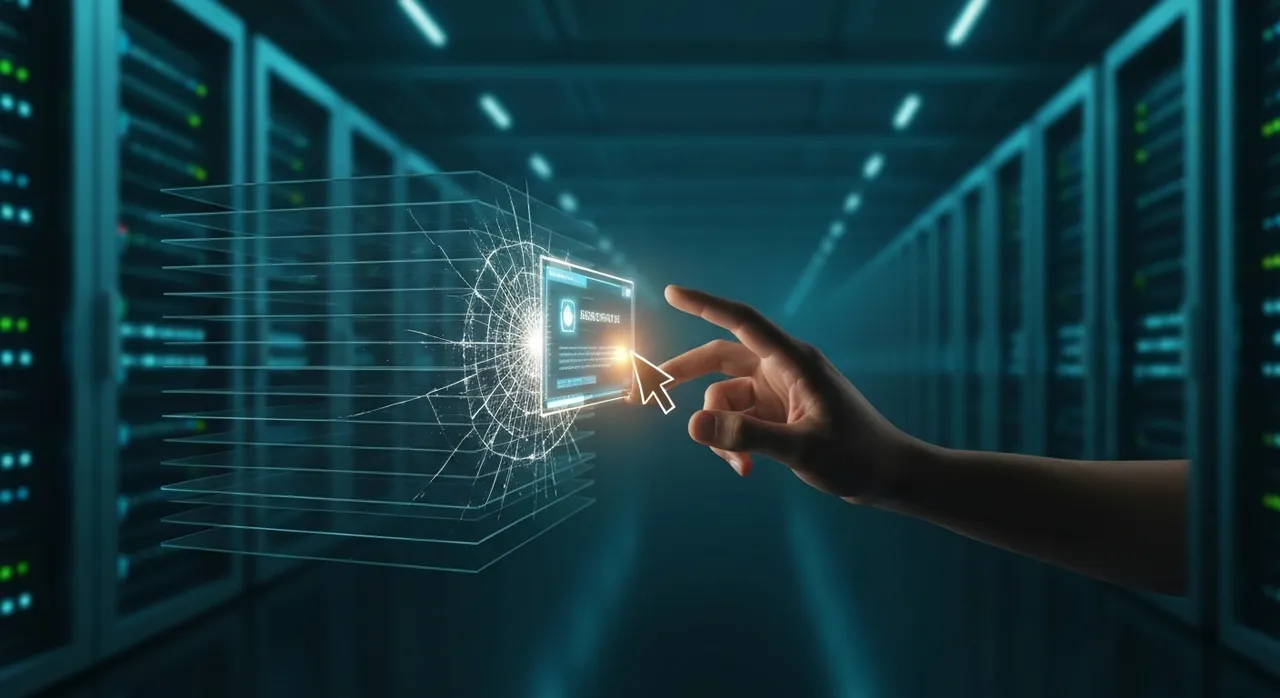
Article Content
For over a decade, the cybersecurity paradigm has focused on reinforcing the digital perimeter. We have built robust browser sandboxes, deployed sophisticated Endpoint Detection and Response (EDR) systems, and implemented Secure Web Gateways (SWGs) to intercept malicious binaries before they ever touch disk. However, the threat landscape of 2026 has witnessed a fundamental pivot. Threat actors have realized that it is far easier to convince a human to bypass security than it is to break the security itself. This realization has birthed the era of ClickFix social engineering, a tactic that has now reached industrial scales, turning the end-user into the primary execution engine for modern malware campaigns.
According to recent telemetry from the April 2026 Barracuda SOC Threat Radar and the 2025 Microsoft Digital Defense Report, ClickFix social engineering has emerged as the dominant initial access vector, accounting for an unprecedented 47% of all observed successful compromises. By masquerading as legitimate technical support or security verification, these campaigns bypass the “automated execution” hurdles that modern defenses are designed to stop. The attack does not exploit a software vulnerability; it exploits the victim’s desire to “fix” a perceived problem, rendering traditional browser isolation and sandboxing entirely moot.
The Anatomy of Industrialized ClickFix Social Engineering
At its core, the ClickFix methodology is a two-stage psychological and technical operation. Unlike traditional phishing, which relies on a victim clicking a link to download a file, ClickFix forces the victim to manually initiate the execution phase. The attack typically follows a meticulously orchestrated sequence:
- The Lure: The victim encounters a compromised website or a fake meeting invitation—often impersonating tier-one brands like Zoom, Teams, or Booking.com. In 2026, these lures have evolved into “CrashFix” variants, where malicious browser extensions intentionally cause a browser hang, followed by a simulated “Critical Error” dialog.
- The “Solution”: The page displays a highly professional dialog (frequently spoofing Cloudflare Turnstile or Google reCAPTCHA) claiming that a “fix” is required to proceed. The instructions are deceptively simple: “Press the button to copy the repair code, then run it on your system.”
- Silent Clipboard Injection: When the user clicks the “Fix” button, a background JavaScript function—specifically utilizing the
navigator.clipboard.writeText()API—silently injects a complex, obfuscated PowerShell or CMD command into the user’s clipboard. - Manual Execution: The user is guided through a series of keyboard shortcuts: Win+R to open the Windows Run dialog, followed by Ctrl+V to paste the command and Enter to execute. Because the user is performing these actions, the operating system treats the execution as an authorized administrative or user-level task.
The technical genius of this approach lies in its out-of-process execution. Because the malicious code is pasted into a native system utility (like cmd.exe or powershell.exe) rather than being executed by the browser process, it bypasses all browser-level security restrictions. The browser’s job is done once the text is in the clipboard; the security sandbox has no visibility into what happens after the user switches windows.
Technical Deep Dive: Why Modern EDRs Struggle to Detect ClickFix
The surge in ClickFix social engineering tactics in 2026 is largely a response to the efficacy of modern EDR and XDR solutions. Traditional malware delivery involves a “hook” (the download) and a “trigger” (the execution of a suspicious binary). Security tools are highly tuned to flag anomalous downloads from unknown domains or the execution of unsigned executables in the %TEMP% folder.
However, ClickFix operates in the “Living off the Land” (LotL) domain. When a user pastes a command into the Run dialog, the resulting process is often a legitimate instance of PowerShell. To an EDR, this looks like a local administrator performing a routine task. Threat actors further complicate detection through several advanced techniques:
1. Advanced PowerShell Obfuscation and Base64 Layering
Modern ClickFix payloads rarely contain plaintext URLs. Instead, they utilize multiple layers of Base64 encoding combined with string manipulation (e.g., character replacement or reversing) to hide the final command. By the time the EDR’s script block logging identifies the intent, the initial stager has already established a persistent connection to the Command and Control (C2) server.
2. The Move Beyond PowerShell: WebDAV and Net Use
As security teams have tightened monitoring on PowerShell execution, 2026 has seen a rise in “FileFix” variants. As detailed by researchers at Atos, new variants now utilize the net use command to mount a remote WebDAV share as a local drive. The user is tricked into pasting a command that mounts a drive, executes a hosted .bat or .cmd file directly from the network share, and then immediately unmounts the drive. This leaves almost no forensic footprint on the local disk, as the primary malicious logic never truly “resides” on the victim’s machine.
3. Cross-Platform Adaptation: macOS and Script Editor Hijacking
The industrialization of ClickFix social engineering is no longer a Windows-only problem. In April 2026, reports from Jamf and Microsoft Threat Intelligence highlighted campaigns by the North Korean group Sapphire Sleet targeting macOS users. When Apple introduced “Terminal Paste Warnings” in macOS Tahoe 26.4, attackers pivoted. New variants now use the applescript:// URL scheme to open the native Script Editor. The victim is tricked into clicking “Execute” within the editor, which then runs an AppleScript to download and deploy infostealers like Atomic Stealer or Vidar.
The 2026 Threat Landscape: Ransomware and Infostealers
The ultimate goal of these industrialized campaigns is rarely just a single infection. ClickFix social engineering has become the “Swiss Army Knife” for Initial Access Brokers (IABs). Once a system is compromised, the payload typically involves an infostealer (like Lumma or StealC) that harvests credentials, browser cookies, and cryptocurrency wallets. This data is then sold on dark web markets to ransomware affiliates.
Recent data indicates that ransomware groups such as Akira and Qilin are now heavily reliant on ClickFix-driven access. Because these groups can move from initial access to full domain encryption in under 40 minutes, the “manual” nature of the ClickFix entry point does not significantly slow down the attack chain. In many cases, the high privileges of the victim (often targeted through SEO poisoning of “IT Tech Tips” or “Professional Software Fixes”) allow for immediate lateral movement across the enterprise network.
Industrialized Scale: ClickFix-as-a-Service
The term “industrialized” is not hyperbole. By mid-2025, security researchers identified the emergence of ClickFix Builders on Russian-speaking underground forums. These kits allow low-skill threat actors to generate a full infection chain by simply providing a C2 URL and choosing a template (Zoom, Cloudflare, Microsoft Teams). These builders automatically handle:
- Geo-Fencing and Bot Detection: Ensuring the malicious page only displays to real human targets in specific regions, evading automated security crawlers.
- Dynamic Lure Generation: Using AI to generate hyper-personalized error messages based on the victim’s browser version and operating system.
- Payload Rotation: Automatically updating the malicious PowerShell script to ensure the final payload has a 0/70 detection rate on multi-scanner platforms.
Strategic Mitigation: Moving Beyond “Don’t Click”
If the primary execution engine is the user, traditional awareness training—while necessary—is insufficient. Organizations must adopt technical controls that address the ClickFix social engineering workflow directly. The 2026 defense-in-depth strategy should include:
- Disabling the Run Dialog: For non-administrative users, the Windows Run dialog (Win+R) can be disabled via Group Policy Objects (GPO). This removes the primary interface used by ClickFix attackers.
- PowerShell Constrained Language Mode (CLM): Implementing CLM prevents the execution of advanced scripts and API calls that are common in ClickFix stagers, significantly reducing the “blast radius” of a successful paste.
- Attack Surface Reduction (ASR) Rules: Enabling Microsoft Defender ASR rules, specifically those that block “process creations originating from office applications” and “untrusted and unsigned processes that attempt to run from communication apps” like Teams or Zoom.
- Browser-Level Monitoring: Newer security tools, such as those from SquareX, operate as browser extensions to monitor for the abuse of the
navigator.clipboardAPI. If a website attempts to write high-entropy PowerShell code to the clipboard, the action is blocked before the user can ever be prompted to “paste.” - Advanced Clipboard Auditing: Security teams should monitor for RunMRU registry key modifications and unusual command-line arguments involving
powershell -encorcmd /c net use, which are hallmark indicators of a ClickFix compromise.
Conclusion
The industrialization of ClickFix social engineering represents a critical shift in the cyber-arms race. By weaponizing the user’s trust and their native system tools, threat actors have found a way to bypass the most expensive automated defenses in the modern enterprise. As we move further into 2026, the distinction between “technical” and “social” vulnerabilities continues to blur. Security leaders must recognize that the browser sandbox is no longer a safety net if the user is willing to step out of it. Resilience in this new era requires a combination of aggressive technical restrictions on native tools and a reimagined approach to user empowerment—where “fixing” a problem doesn’t mean becoming the architect of one’s own compromise.
Written by
TempMail Ninja
Digital privacy and online security expert. Passionate about creating tools that protect users' identity on the internet.