Counterfeit Ledger Wallets: Massive Supply-Chain Scam Uncovered
Article Content
The cardinal rule of cryptocurrency has always been “not your keys, not your coins.” For years, the industry’s response to this mantra was the hardware wallet—a physical fortress designed to keep private keys isolated from the vulnerabilities of the internet. However, a chilling discovery on April 18, 2026, has shattered the assumption that hardware is inherently “safe.” Security researchers have identified a massive, professional-grade supply-chain operation distributing counterfeit Ledger wallets that are not just clones, but sophisticated Trojan horses engineered to drain assets the moment they are initialized.
The Great Hardware Heist: Anatomy of a Counterfeit Ledger Wallet
The alarm was first sounded by a Brazilian cybersecurity researcher operating under the handle “Past_Computer2901,” who conducted an exhaustive technical teardown of a device purchased through a high-traffic third-party marketplace. While the listing and the packaging were indistinguishable from genuine Ledger products, the internal architecture revealed a total compromise of the hardware-trust model. This incident marks a pivot in cybercrime: a shift from digital phishing to physical supply-chain social engineering.
The operation targets the “Nano S+,” specifically utilizing a fraudulent firmware version labeled as “Nano S+ V2.1.” For the uninitiated, this is the first red flag—Ledger’s official firmware roadmap has never included a V2.1 for the S+ model. The scammers rely on the user’s lack of familiarity with versioning history to instill a sense of “up-to-date” security, while in reality, they are installing a platform for total financial exfiltration.
Technical Autopsy: Replacing the Secure Element
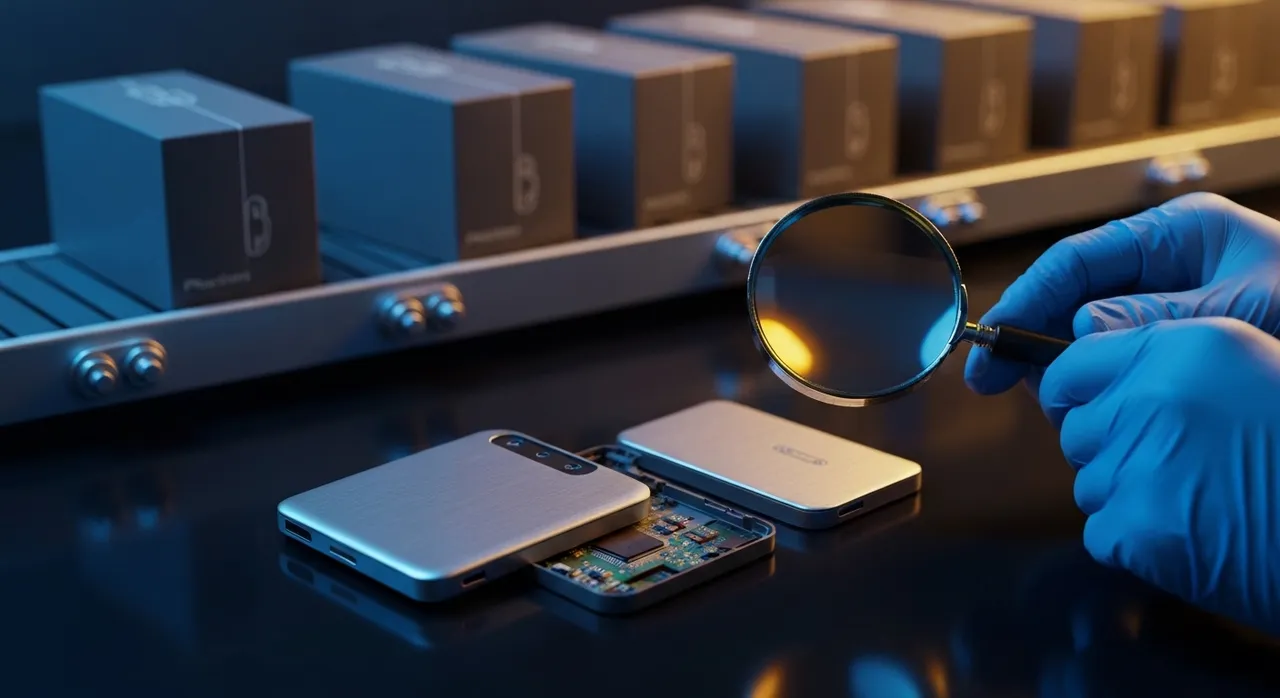
The most alarming discovery during the physical analysis of these counterfeit Ledger wallets was the removal of the industry-standard Secure Element. A genuine Ledger device utilizes an ST33 Secure Element chip, certified to EAL6+, designed specifically to resist physical tampering and side-channel attacks. In the counterfeit units, this chip was replaced with a low-cost, generic ESP32-S3 IoT microcontroller manufactured by Espressif Systems.
To the naked eye, the deception is nearly perfect. Researchers noted that the scammers went to extreme lengths to hide the swap:
- Abrasive Masking: The original markings on the ESP32-S3 chip were physically sanded or scraped off to prevent identification by casual hobbyists.
- Spoofed Identity: In boot mode, the malicious firmware is programmed to identify the chip as “Nano S+ 7704,” complete with a spoofed serial number and Ledger factory identity strings.
- Illicit Hardware: The counterfeit PCB (Printed Circuit Board) includes a WiFi and Bluetooth antenna—components that are strictly absent from the genuine Nano S+ hardware design. This adds a layer of wireless exfiltration potential, though the primary attack vector remains the companion software.
Unlike a true Secure Element, which stores data in an encrypted, isolated enclave, the ESP32-S3 in these fake devices stores the user’s recovery seed phrase and PIN in plain text. There is no cryptographic barrier; the keys to the user’s entire digital fortune are left sitting in unencrypted flash memory, waiting for the command to be sent to a remote server.
The Digital Trap: kkkhhhnnn[.]com and Malicious App Ecosystems
The hardware is only the first stage of the heist. The researchers discovered that the attack is synchronized with a massive malware distribution network. Included in the packaging of these counterfeit Ledger wallets is a “Quick Start” card with a QR code. This code does not lead to ledger.com, but instead initiates a redirect chain to a series of cloned websites.
The primary command-and-control (C2) server identified in the firmware is kkkhhhnnn[.]com. Further analysis of the associated Android and iOS payloads revealed secondary infrastructure including s6s7smdxyzbsd7d7nsrx[.]icu and ysknfr[.]cn. This infrastructure serves a trojanized version of “Ledger Live,” which is the second-tier of the trap.
The “Ledger Live” Clone Architecture
The malicious application is a masterclass in deceptive UI. Built using React Native with the Hermes v96 engine, the app mirrors the official Ledger Live interface perfectly. However, the technical underpinnings are sinister:
- Bypassing the Genuine Check: The app includes a hardcoded “Genuine Check” success screen. Even though the physical device is a fake, the malicious app tells the user the device is “100% Authentic.”
- APDU Interception: The app hooks into XState to intercept APDU (Application Protocol Data Unit) commands. This allows the attackers to monitor every interaction between the hardware and the software in real-time.
- Stealth Exfiltration: The app utilizes hidden XHR (XMLHttpRequest) requests to transmit the plain-text seed phrases and PINs to the C2 servers the moment the user completes the setup process.
- Debug Signing: In a rare slip-up, the researchers found that the Android variant was signed with a debug certificate rather than a production-grade signing key—a detail that would be invisible to most users but is a glaring indicator of fraud to security professionals.
The Apple App Store “Bait-and-Switch”
The reach of this operation extends beyond third-party marketplaces. On April 14, 2026, blockchain investigator ZachXBT linked a related fake Ledger Live app on the Apple App Store to the theft of over $9.5 million. The attackers utilized a “bait-and-switch” strategy, submitting a benign utility app for review and then updating it with malicious “wallet drainer” code once approved.
Victims were prompted to “sync” their devices by entering their 24-word recovery phrases directly into the app—a move that Ledger’s official documentation repeatedly warns against. Once the seed phrase was entered, the attackers used automated scripts to sweep funds across more than 20 blockchain networks, including Bitcoin, Ethereum, Solana, and Ripple. The stolen assets were then laundered through 150+ deposit addresses on the KuCoin exchange, making recovery nearly impossible for individual victims.
Supply-Chain Vulnerability: Why “Discounted” Means Dangerous
This incident highlights a critical failure in the secondary market for hardware security. The counterfeit Ledger wallets were primarily distributed through platforms like Amazon (3P sellers), eBay, AliExpress, and Mercado Livre. Many victims were lured by “discounted” prices or “limited time offers” that appeared legitimate due to the high-quality, shrink-wrapped packaging.
In the world of cryptocurrency, the supply chain is the ultimate attack surface. If an attacker can intercept the physical device before it reaches the consumer, no amount of on-chip cryptography can save the user. The “interdiction” of hardware allows the attacker to replace the very “Root of Trust” upon which the entire system is built. When you buy a counterfeit Ledger wallet, you are not buying a security tool; you are buying a remote-access portal for a thief.
Security Protocol: How to Verify Your Ledger Device
Despite the sophistication of this scam, there are definitive ways to protect yourself. The Brazilian researcher noted a vital detail: the official Ledger Live app (downloaded directly from ledger.com) DOES successfully detect these fakes. The “Genuine Check” built into the legitimate software relies on a cryptographic challenge-response mechanism that only the genuine ST33 Secure Element can answer.
To ensure your assets remain secure, follow this mandatory protocol:
- Source Zero: Only purchase hardware wallets directly from the official manufacturer (e.g.,
ledger.comortrezor.io). Avoid all third-party marketplaces, even those with “Fulfilled by” labels. - App Integrity: Never follow a QR code found inside a box. Manually type
ledger.com/liveinto your browser to download the software. - The Golden Rule: Never, under any circumstances, type your 24-word recovery phrase into a computer, smartphone, or app. A genuine hardware wallet will only ever ask you to interact with the seed phrase on the physical device’s screen.
- Visual Inspection: Check for physical red flags. If your Nano S+ feels lighter than usual, has visible glue residue, or appears to have been opened, do not use it. Furthermore, if the firmware version (visible in the device settings) does not match the official releases listed on Ledger’s website, the device is compromised.
The Future of Self-Custody in a Counterfeit World
The emergence of counterfeit Ledger wallets in 2026 marks a new era of “Physical Phishing.” As digital defenses improve, hackers are moving “down the stack” to the physical hardware we once trusted implicitly. This $9.5 million heist is a wake-up call for the entire industry. It proves that the “Gold Standard” of security is only as strong as the box it arrives in.
For the strategic investor, the lesson is clear: Verification is not optional. In an ecosystem where trust is being commoditized and weaponized, the only path to safety is a rigorous, paranoid adherence to security best practices. The “Ninja” approach to crypto security is no longer just about choosing the right wallet—it’s about ensuring that the wallet you hold in your hand hasn’t already been sold to the highest bidder on the dark web.
As the investigation into the kkkhhhnnn[.]com infrastructure continues, Ledger’s “Donjon” security team is expected to release a full post-mortem. Until then, the advice remains simple: if your device fails the Genuine Check, or if it asks for your seed phrase on a screen you didn’t buy it for, destroy the device immediately. Your financial future depends on your ability to spot the fake before the fake spots your balance.
Written by
TempMail Ninja
Digital privacy and online security expert. Passionate about creating tools that protect users' identity on the internet.