DarkSword iPhone Exploit: Millions of Devices at Risk from Fileless Zero-Day
Article Content
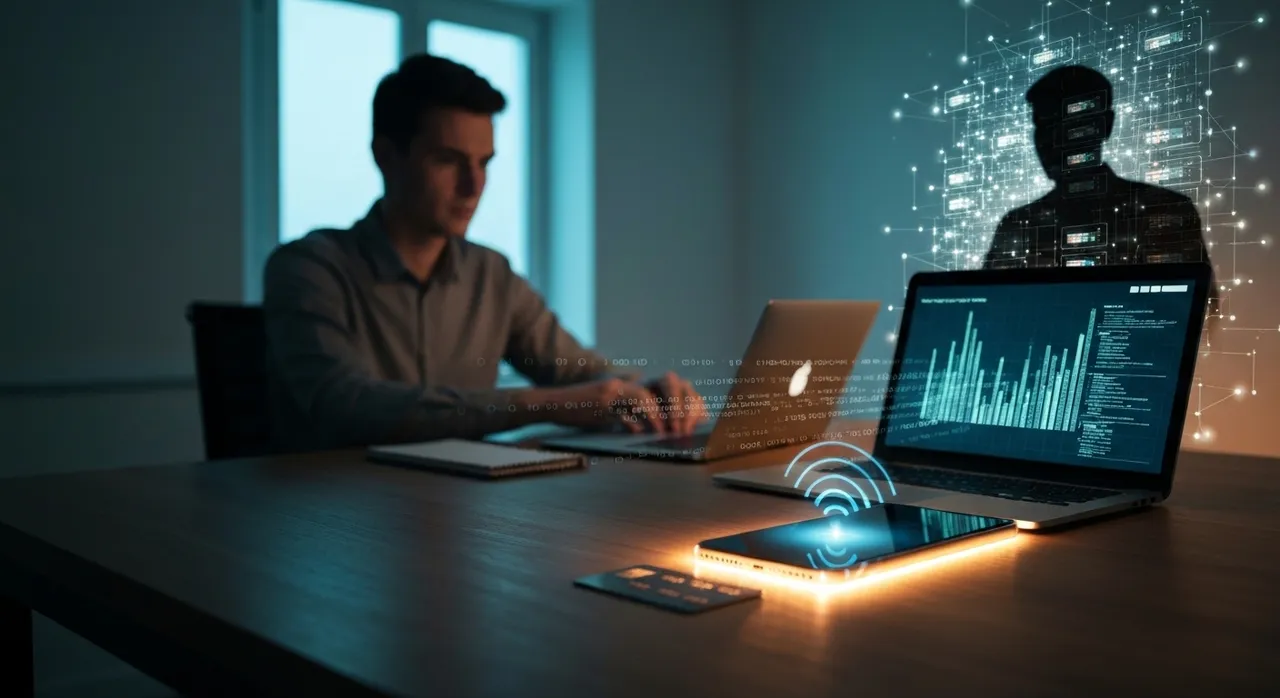
The digital landscape of 2026 has been punctuated by a series of high-stakes cyberattacks, but none have sent a more profound shiver through the mobile security industry than the discovery of the DarkSword iPhone exploit. For years, Apple’s ecosystem was touted as a walled garden—a fortress nearly impenetrable to all but the most well-funded nation-state actors. However, as of April 20, 2026, that narrative has been irrevocably shattered. A critical, fileless zero-day exploit has emerged, and it isn’t just targeting high-profile dissidents or diplomats; it is aiming at the pockets of over 221 million users worldwide.
Discovered through the combined efforts of Google’s Threat Intelligence Group (GTIG), iVerify, and Lookout, the DarkSword exploit represents a paradigm shift in how mobile malware is deployed and executed. Unlike traditional phishing campaigns that rely on a user’s lack of judgment to click a suspicious link or download a malicious attachment, DarkSword utilizes a sophisticated “watering hole” strategy. By compromising legitimate, high-traffic websites, the attackers have effectively turned the internet into a minefield where simply visiting a trusted URL can lead to a total device compromise.
The Anatomy of a Silent Breach: How the DarkSword iPhone Exploit Operates
The DarkSword iPhone exploit is not a single piece of malware but rather a complex, multi-stage exploit chain designed to bypass the most rigorous security layers of iOS. The primary vector identified by researchers involves a “watering hole” attack on a Ukrainian court website—a portal frequently visited by legal professionals, government officials, and citizens alike. When an unpatched iPhone running versions of iOS between 18.4 and 18.7 visits the site, the browser silently encounters a malicious iframe. This is the “hit-and-run” moment: the device is compromised before the page even finishes loading.
What makes DarkSword particularly terrifying is its “fileless” nature. Traditional forensics often look for suspicious files or persistent backdoors in the system’s storage. DarkSword, however, resides entirely within the device’s temporary memory (RAM). Once the data has been exfiltrated, the malware initiates a self-deletion protocol that wipes its own memory footprint, leaving virtually no evidence for traditional security audits to find. This characteristic makes it nearly invisible to standard antivirus or mobile device management (MDM) solutions.
The Technical Chain: Six Vulnerabilities, One Target
To achieve total control, the DarkSword iPhone exploit weaponizes a series of six distinct vulnerabilities across the operating system. Security researchers have broken down the kill chain into several critical phases:
- Remote Code Execution (RCE): The attack begins in the WebKit engine, specifically leveraging CVE-2025-31277 and CVE-2025-43529. These bugs exist in the JavaScriptCore JIT (Just-In-Time) compiler, allowing the attacker to execute initial malicious code within the Safari browser process.
- Sandbox Escape: Once code execution is achieved, the exploit must break out of the browser’s “sandbox”—the restricted environment meant to prevent apps from accessing system data. DarkSword uses CVE-2025-14174 and CVE-2025-43510 to pivot from the WebContent sandbox into the GPU process and then into
mediaplaybackd. - Privilege Escalation and PAC Bypass: To gain the “keys to the kingdom,” the exploit utilizes CVE-2026-20700, a zero-day vulnerability in the Dynamic Link Editor (dyld). This allows the malware to bypass Pointer Authentication Codes (PAC), a fundamental security feature of modern Apple silicon, granting the attacker kernel-level read and write access.
By the time the user has scrolled down the homepage of the compromised site, the DarkSword chain has already granted the attacker the same level of access as a system administrator. From this vantage point, the malware can bypass all software-level encryption and privacy protections.
The Data Siphon: What Is Being Stolen?
The objective of DarkSword is not just surveillance; it is total data harvest. Once the exploit chain is complete, the malware deploys specialized payloads, such as GHOSTBLADE, to begin the exfiltration process. The speed and efficiency of this process are unprecedented. Within seconds, the DarkSword iPhone exploit begins siphoning off the most sensitive portions of a user’s digital life.
According to technical reports from iVerify, the malware focuses on high-value data repositories including:
- iCloud Keychain: Every saved password, credit card number, and two-factor authentication (2FA) recovery code is collected.
- Encrypted Communications: The malware bypasses end-to-end encryption by reading messages directly from the device’s memory, targeting iMessages, WhatsApp, and Telegram.
- Financial Assets: A specific module of DarkSword targets cryptocurrency wallet apps like Metamask, Coinbase, and Binance, seeking out seed phrases and private keys to drain accounts instantly.
- Personal Metadata: Health data (including heart rate and medical history), precise location logs, photos, and browser history are all packaged and sent to command-and-control (C2) servers.
The “hit-and-run” logic of the exploit means that the entire operation, from initial visit to final data upload, can take less than five minutes. Because the malware does not persist after a reboot, it operates with the stealth of a ghost, making it an ideal tool for both state-sponsored espionage and high-level cybercrime.
Global Proliferation and the Underground Market
While the initial discovery focused on the Ukrainian court system, the footprint of the DarkSword iPhone exploit is global. Researchers have identified identical exploit chains being used in Saudi Arabia—where a fake Snapchat lookalike site was used to lure victims—as well as in Turkey and Malaysia. This widespread distribution suggests that DarkSword is no longer the exclusive property of a single elite hacking group.
Intelligence gathered from underground forums indicates that the DarkSword toolkit is being circulated among commercial surveillance vendors and “exploit brokers” who sell to the highest bidder. The suspected Russian-linked group UNC6353 has been identified as a primary actor using the tool for geopolitical espionage in Ukraine. However, the inclusion of modules designed to steal cryptocurrency suggests that the exploit has also fallen into the hands of financially motivated criminal syndicates.
This proliferation marks a dangerous turning point in mobile security. Tools that were once reserved for “targeted” attacks against high-value individuals are now being deployed in “dragnet” operations, potentially affecting anyone with an unpatched device. The estimate of 221 million to 270 million vulnerable iPhones is a stark reminder of the “patch gap”—the delay between a security update being released and the average user installing it.
Mitigation: Securing the Apple Fortress
In response to the DarkSword threat, Apple has accelerated its release cycle for security patches. While the vulnerabilities used in DarkSword were largely addressed in iOS 26.3 (and backported to 18.7.7 for older hardware), millions of devices remain at risk because users have not yet updated. Security experts emphasize that the DarkSword iPhone exploit is a direct threat that cannot be mitigated by third-party apps or simple web filters.
For individuals and organizations looking to defend themselves against such sophisticated fileless threats, several proactive steps are mandatory:
- Immediate OS Updates: This is the only definitive way to close the specific zero-day holes that DarkSword exploits. Users should verify they are on at least iOS 26.3.1.
- Lockdown Mode: For high-risk individuals, Apple’s “Lockdown Mode” provides extreme protections that block the very WebKit and GPU features DarkSword relies on for its sandbox escape.
- Regular Device Reboots: Because DarkSword is fileless and resides in RAM, a simple restart will clear the malware if it hasn’t already self-deleted. However, this does not prevent reinfection upon visiting a compromised site again.
- Credential Rotation: If you suspect you may have visited a compromised site, immediately change your iCloud and financial passwords from a known-secure device.
The Future of Mobile Security in the Age of DarkSword
The DarkSword iPhone exploit serves as a wake-up call for the entire tech industry. It proves that the “fileless” techniques that once plagued Windows desktops have now matured into a lethal force for mobile platforms. The speed with which zero-day exploits are moving from state-level laboratories to underground marketplaces is accelerating, leaving a trail of compromised data in its wake.
As we move further into 2026, the battle for mobile security will likely be fought in the trenches of the kernel and the browser engine. The “watering hole” tactic remains one of the most effective ways for attackers to find victims, and as long as hundreds of millions of devices remain unpatched, the “dark sword” will continue to hang over the heads of iPhone users worldwide. The era of the “unhackable” smartphone is over; the era of hyper-vigilance has begun.
Written by
TempMail Ninja
Digital privacy and online security expert. Passionate about creating tools that protect users' identity on the internet.