Digital Anonymity Trends: April 2026 Privacy and Invisible Browsing Updates
Article Content
The digital world of April 25, 2026, is no longer a place where “incognito mode” or a basic VPN provides a meaningful shield. As of the last 72 hours, the Digital Anonymity Trends shaping our landscape have moved beyond simple data masking into a high-stakes arms race between AI-driven inference and post-quantum obfuscation. For those seeking “invisible” configurations, the battlefield has shifted from the network layer to the behavioral and hardware layers. The era of the “untraceable” user now requires a sophisticated symphony of automated legal rights, cryptographic agility, and metadata decoupling.
The AI Inference Paradox: Why Your Identity is a Pattern, Not a Data Point
The most critical update in the last 48 hours comes from researchers at the Privacy Enhancing Technologies Symposium, who have demonstrated that AI-powered behavioral analysis can now re-identify 85% of “anonymous” users within 60 seconds of browsing. Traditional methods of maintaining a low profile—such as clearing cookies or rotating IP addresses—are increasingly ineffective against the predictive power of Large Language Models (LLMs) like GPT-5.5 and its contemporaries.
In 2026, the primary threat is no longer direct data collection but statistical inference. AI models trained on trillions of data points can connect disparate dots: the way you move your mouse, the rhythm of your typing (keystroke dynamics), and even the specific sequence in which you open browser tabs. This creates a “behavioral fingerprint” that is as unique as a biological one. For privacy-conscious users, the strategy has shifted from hiding to obfuscation—using tools that inject synthetic “noise” into behavioral data to prevent AI from forming a coherent profile.
The Rise of Agentic Browsing and Fingerprinting
A new category of traffic, Agentic AI, has exploded in the first quarter of 2026. These are autonomous AI agents that browse the web on behalf of users. While these agents offer a layer of separation between the user and the website, they have introduced a new vulnerability: AI-specific fingerprints. Security reports released on April 22 indicate that “agentic browsers” leave unique traces in their DOM behavior and network patterns, allowing advanced trackers to identify not just the AI being used, but the specific user prompt-style associated with it.
The DROP Revolution: Reclaiming the Digital Footprint
For those working to erase their digital footprints, January 1, 2026, marked the start of a new era with the full implementation of the California Delete Act (SB 362). As of this week, the Delete Request and Opt-Out Platform (DROP) has become the gold standard for automated privacy. This state-mandated portal allows residents to submit a single request that compels every registered data broker to delete their personal information at least once every 45 days.
However, the technical execution of these deletions has evolved. Modern erasure services are now utilizing Robotic Process Automation (RPA) to navigate the complex “dark patterns” often used by data brokers to hide their opt-out forms. The Digital Anonymity Trends we are tracking show a clear move toward “Secrets-as-a-Service,” where users delegate their legal “Right to be Forgotten” to automated proxies that use residential IP networks to bypass broker-side bot detection.
- RPA-Driven Removal: Specialized bots mimic human navigation to find and fill out hidden opt-out forms.
- Direct API Integration: Elite privacy services now use JSON-based payloads to trigger immediate data suppression in collaborative broker databases.
- Verification Loops: Modern tools don’t just request deletion; they use “shadow profiles” to test if the data broker actually removed the record or just moved it to a secondary database.
Post-Quantum Privacy: The New Standard for VPNs and Browsers
The cryptographic landscape has reached a “board-level mandate” phase. With the release of the CISA PQC Product Categories List in early 2026, the transition to Post-Quantum Cryptography (PQC) is no longer optional for high-security configurations. Major browsers, including Chrome and Firefox, have now fully integrated hybrid key exchange mechanisms that combine traditional Elliptic Curve Diffie-Hellman (ECDH) with quantum-resistant algorithms like ML-KEM (formerly Kyber).
The reason for this urgency is the “Harvest Now, Decrypt Later” threat. State actors and sophisticated cartels have been collecting encrypted traffic for years, waiting for the arrival of a Cryptographically Relevant Quantum Computer (CRQC) to break RSA and ECC encryptions. By adopting ML-KEM-768 today, users are ensuring that their current communications remain secure even when quantum supremacy is achieved.
VPN Evolution: PQ-WireGuard and MASQUE
The latest Digital Anonymity Trends in the VPN space involve the fusion of the MASQUE protocol (Multiplexed Application Substrate over QUIC Encryption) and post-quantum tunnels. MASQUE allows for the tunneling of IP traffic over HTTP/3, making VPN traffic indistinguishable from standard web browsing. When combined with Oblivious HTTP (OHTTP), the architecture achieves a true decoupling of “who” you are from “what” you are accessing.
- Client: Encapsulates the request using the gateway’s public key.
- Relay: Sees the client’s IP but cannot see the content of the request.
- Gateway: Sees the content but only knows the IP of the relay, not the client.
Hardware-Level Anonymity: Defeating SensorID
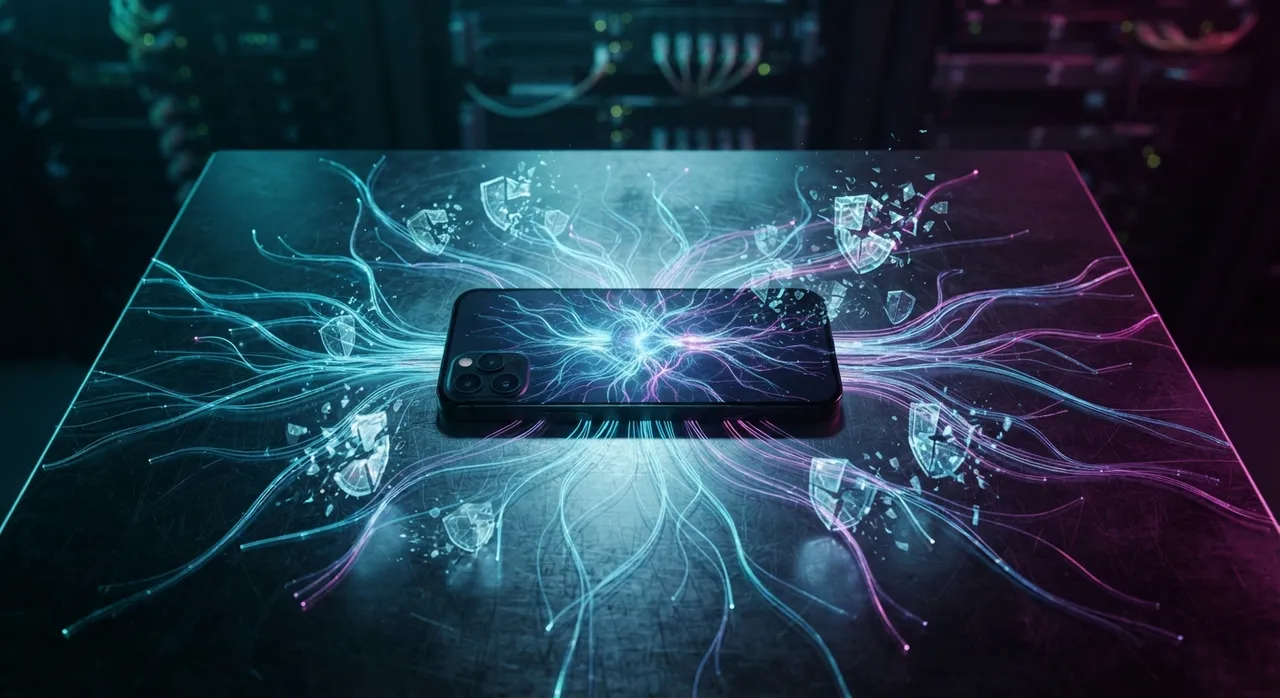
As software-level tracking becomes harder, companies have turned to hardware. A disturbing trend identified in March 2026 involves SensorID—a technique that uses microscopic manufacturing defects in a smartphone’s accelerometer and gyroscope to create a permanent, immutable device ID. Even if you factory reset your phone or use a privacy-hardened OS, these physical “shiver” patterns remain the same.
The “Ninja Editor” recommendation for April 2026 is the adoption of Hardware-Abstracted Enclaves. Privacy-focused devices now offer “sensor fuzzing” at the kernel level, which injects low-level electronic noise into sensor data to mask these manufacturing defects. This is a critical component for anyone aiming for a truly “invisible” browsing configuration.
Strategic Implementation: The 2026 Anonymity Stack
Achieving premier levels of digital privacy today requires a layered approach. Below is the recommended technical stack based on the latest 2026 developments:
1. Network Layer: Use a VPN that supports the OHTTP-MASQUE architecture. This ensures that the VPN provider itself cannot correlate your identity with your destination. Ensure the protocol is set to PQ-WireGuard for quantum resistance.
2. Browser Layer: Utilize a browser that supports Global Privacy Control (GPC) signals by default. Enable “Behavioral Noise Injection” to defeat AI-driven keystroke and mouse-movement fingerprinting. Avoid all non-vetted AI extensions, as these are currently the #1 source of data leaks in enterprise environments.
3. Identity Layer: Leverage Zero-Knowledge Proof (ZKP) identity providers. These allow you to prove you have an account or meet an age requirement without ever sharing your actual PII (Personally Identifiable Information).
4. Footprint Management: Subscribe to an automated erasure service that integrates with the California DROP platform or its European equivalents. This must be a continuous process, as data “regrowth” is a documented phenomenon where brokers re-aggregate your data from public records every 90 days.
The Future of the “Invisible Citizen”
We are entering a period where Digital Anonymity Trends are dictated by the “Right to be Inferred.” As AI becomes more adept at guessing who we are based on our digital shadows, the definition of privacy will shift from “not being seen” to “not being predictable.” The most successful practitioners of digital anonymity in 2026 are those who treat their online presence like a moving target—constantly shifting protocols, fuzzing hardware sensors, and leveraging automated legal tools to scrub the past as quickly as it is written.
The developments of the last 72 hours confirm one thing: Anonymity is no longer a state of being; it is a state of active maintenance. In the world of 2026, you are either the architect of your own invisibility, or you are a permanent resident of the global database.
Written by
TempMail Ninja
Digital privacy and online security expert. Passionate about creating tools that protect users' identity on the internet.