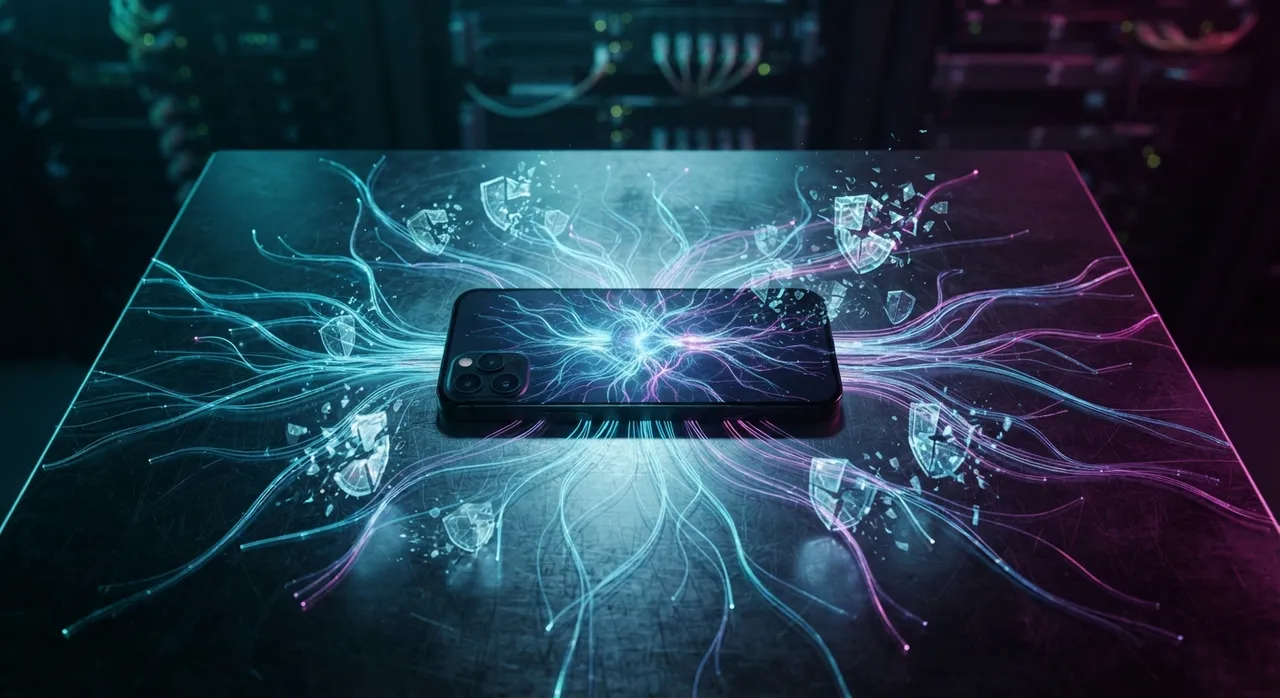
Digital Footprint Erasure: The 2026 Advanced Privacy Playbook
Article Content
The dawn of 2026 has brought with it a sobering realization: the traditional methods of online privacy—using a VPN, clearing cookies, and using “disappearing” messages—are no longer sufficient to protect individuals from state-level forensic scrutiny. As surveillance technology and legal precedents evolve, the concept of digital footprint erasure has shifted from a casual “spring cleaning” of social media to a rigorous, multi-layered technical defense. Privacy specialist Aram Zucker-Scharff, currently a senior staff engineer at The Washington Post, recently released a comprehensive “Spring Cleaning” playbook that advocates for what he calls “Level 3: Collective Defense.” This guide provides a blueprint for the extreme digital hygiene necessary to survive in an era where biometrics are liabilities and even deleted data can be resurrected from the depths of system caches.
The Legal Liability of Convenience: Biometric Deactivation
For years, cybersecurity experts have debated the trade-off between the convenience of biometrics and the security of alphanumeric passcodes. In April 2026, that debate was effectively settled by the “Natanson case,” involving Washington Post reporter Hannah Natanson. While Natanson was not accused of a crime, her devices were seized as part of a federal leak investigation. Court documents revealed that federal agents were authorized to compel her to unlock her devices using her face and fingerprints. Unlike a password, which is considered “testimonial” and protected under the Fifth Amendment’s privilege against self-incrimination, biometrics are increasingly treated by courts as physical evidence, akin to a DNA sample or a fingerprint at a crime scene.
Zucker-Scharff’s playbook makes digital footprint erasure proactive by demanding the total deactivation of Face ID, Touch ID, and other biometric sensors. The technical reasoning is twofold:
- Legal Compulsion: As seen in the Texas terrorism prosecution of 2026, warrants now routinely include “Biometric Unlock” sections that explicitly permit law enforcement to forcibly use a suspect’s fingers or hold a phone to their face.
- Forensic Artifacts: Biometric systems often create unique hardware-level logs that can be used to link a specific individual to a device even if the device’s data is encrypted.
To implement Level 3 defense, users must revert to long, complex passcodes (at least 12–15 characters) and enable “Lockdown Mode” on iOS or the equivalent “Maximum Restrictions” on hardened Android forks like GrapheneOS. In the event of a law enforcement encounter, a password provides a constitutional barrier that a face scan simply cannot.
Purging the “Ghost” Data: The Notification Database Vulnerability
One of the most startling revelations of the early 2026 privacy landscape is the vulnerability of encrypted messaging apps like Signal to push notification caching. A newly reported forensic exploit (referenced in the 404 Media report on the Prairieland ICE detention center case) demonstrated that the FBI could extract “deleted” Signal messages from an iPhone’s internal notification database. This occurred even after the messages had timed out via the “disappearing messages” feature and the Signal app itself had been uninstalled.
The vulnerability, tracked as CVE-2026-28950, stems from how mobile operating systems handle lock-screen previews. When a message arrives, the OS decrypts a portion of the notification to display a preview. This preview is then stored in a system-level SQLite database (the notification_center.db on iOS) that is independent of the app’s own sandbox. Forensics tools like Cellebrite can pull these cached “previews” for weeks or even months after the original message is gone.
Digital Footprint Erasure via Notification Hardening
To counter this, Zucker-Scharff’s playbook outlines a rigorous protocol for manual cache purging and notification hygiene:
- Disable All Previews: Navigate to Settings > Notifications > Show Previews and set it to “Never.” This prevents the OS from ever decrypting the message content for the cache.
- App-Level Redaction: Within Signal or similar apps, set notification content to “No Name or Content.” This ensures that even if a notification is logged, it only indicates that a message was received, not who sent it or what it said.
- Force Cache Overwriting: For users on older OS versions (pre-iOS 26.4.2), a manual system “hard reset” (Volume Up, Volume Down, then hold the side button until the Apple logo appears) can help flush volatile memory, though it does not guarantee the erasure of the persistent SQLite database. The only true solution is a full “Erase All Content and Settings” after backing up non-sensitive data.
Hardware Decoupling and the Rise of Mesh Networks
True digital footprint erasure requires more than just software tweaks; it requires a fundamental rethink of how we connect to the world. Standard smartphones are essentially “digital ankle monitors,” constantly pinging cellular towers and broadcasting unique identifiers like IMEI and IMSI numbers. Zucker-Scharff advocates for “Hardware Decoupling,” moving sensitive communications off the cellular grid entirely.
The primary tool for this strategy is Meshtastic, an open-source platform utilizing LoRa (Long Range) radio hardware. Unlike smartphones that rely on centralized ISP infrastructure, Meshtastic creates a decentralized, local mesh network. Each device acts as a node, relaying encrypted text messages and GPS coordinates over several kilometers without any reliance on cell towers or Wi-Fi.
Technical advantages of Meshtastic for privacy:
- No ISP Footprint: Because communication happens via radio frequency (915 MHz in the US, 868 MHz in Europe), there is no cellular provider logging your location or metadata.
- Hardware Anonymity: LoRa devices do not require a SIM card or a registered data plan, making them nearly impossible to link to a legal identity through purchase records if bought with cash.
- Resilient Encryption: Meshtastic supports AES-256 encryption, ensuring that while the mesh is public, the conversations remain private to the specific channel keys shared within a group.
For those who cannot abandon smartphones entirely, the guide suggests using “burner” hardware—low-cost, secondary devices that never sign into primary iCloud or Google accounts—paired with portable GL.iNet travel routers and hardened VPNs (like Mullvad) to obfuscate the ISP-level entry point.
Metadata Scrubbing and Physical Obfuscation
Even the most secure communication is rendered useless if the media shared contains hidden metadata. EXIF (Exchangeable Image File Format) data is the “smoking gun” of digital forensics, containing the exact GPS coordinates, device serial numbers, and timestamps of when a photo was taken. Digital footprint erasure in 2026 mandates the use of automated metadata scrubbers like ExifEraser or Scrambled EXIF before any file is uploaded to the cloud or sent to a contact.
The Physical-Digital Link: Beacons and ALPRs
Physical movement is now a digital data point. Retail beacons—small Bluetooth transmitters found in malls and stores—interact with your phone’s Bluetooth radio to map your movement through a physical space with centimeter-level precision. This data is often sold to brokers who link your physical presence in a “sensitive” location (such as a doctor’s office or a protest) to your digital ID.
Zucker-Scharff’s “commute rethink” suggests the following physical obfuscation techniques:
- Bluetooth Kill-Switches: Disabling Bluetooth at the OS level is often insufficient, as “Find My” networks continue to use the radio. Physical Faraday bags are recommended for sensitive transits.
- Avoiding ALPRs: License Plate Readers (ALPRs) are now ubiquitous. Advanced privacy advocates are opting for public transit or e-bikes that lack registered plates, effectively “erasing” their physical transit footprint from law enforcement databases.
- Beacon Blocking: Using apps that monitor and alert users to the presence of 2.4GHz tracking beacons, allowing for the strategic deactivation of radios in high-density tracking zones.
Level 3: Why Privacy is a Collective Defense
The most profound shift in the 2026 playbook is the move from individual privacy to “Collective Defense.” Aram Zucker-Scharff argues that digital footprint erasure is not just about protecting yourself, but about protecting your entire network. In the Natanson case, the FBI’s access to one reporter’s device potentially compromised over 1,100 sources. In a world of AI-driven inference, your data can be used to “triangulate” the identities and locations of your friends, family, and colleagues.
Collective defense means establishing “Community Norms” for digital hygiene. This includes:
- Refusing to take photos of others at sensitive events (to prevent facial recognition tagging).
- Using shared, encrypted “dead drops” for file transfers rather than direct messaging.
- Encouraging the adoption of mesh networks within local activist or professional circles to ensure that the “anonymity set” of the network remains large and difficult to penetrate.
Summary Checklist for 2026 Digital Hygiene
To achieve a premier level of digital footprint erasure, follow this tactical roadmap derived from the latest 2026 forensic research:
- Passcodes over Biometrics: Immediately disable Face ID and Touch ID. Transition to a 12-digit alphanumeric passcode.
- Purge Notification Caches: Update to iOS 26.4.2 / Android 16. Disable all lock-screen previews and set app-level notifications to “No Content.”
- Adopt Hardware Decoupling: Invest in Meshtastic nodes for off-grid group communication. Use Faraday bags for all sensitive transits.
- Automate Metadata Stripping: Integrate a metadata scrubber into your mobile share-sheet. Never post or send raw image files.
- Physical Obfuscation: Disable “Find My” and Bluetooth when in public retail spaces. Use public transit or non-registered vehicles for sensitive commutes to avoid ALPR tracking.
As we move deeper into 2026, the era of “passive privacy” is over. Digital footprint erasure is now an active, technical, and collective pursuit. By following the advanced strategies in the Zucker-Scharff playbook, individuals can reclaim their autonomy and ensure that their digital trails are not just hidden, but truly erased.
Written by
TempMail Ninja
Digital privacy and online security expert. Passionate about creating tools that protect users' identity on the internet.