Digital Footprint Erasure: Proton’s Witness Protection Protocol Guide
Article Content
In the quiet corners of the cybersecurity world, the definition of privacy has undergone a radical transformation. While 2024 was the year of “encryption for all,” and 2025 focused on “de-platforming Big Tech,” 2026 has introduced a far more aggressive paradigm: systematic invisibility. On April 22, 2026, Proton, the Swiss-based privacy giant, shattered the conventional understanding of online safety with the release of its “Witness Protection” protocol. This was not just another VPN update; it was a comprehensive technical framework for Digital Footprint Erasure, modeled after the real-world operational security (OPSEC) of an anonymous activist who successfully infiltrated high-risk extremist groups without leaving a trace.
Beyond Privacy: The Architecture of Digital Footprint Erasure
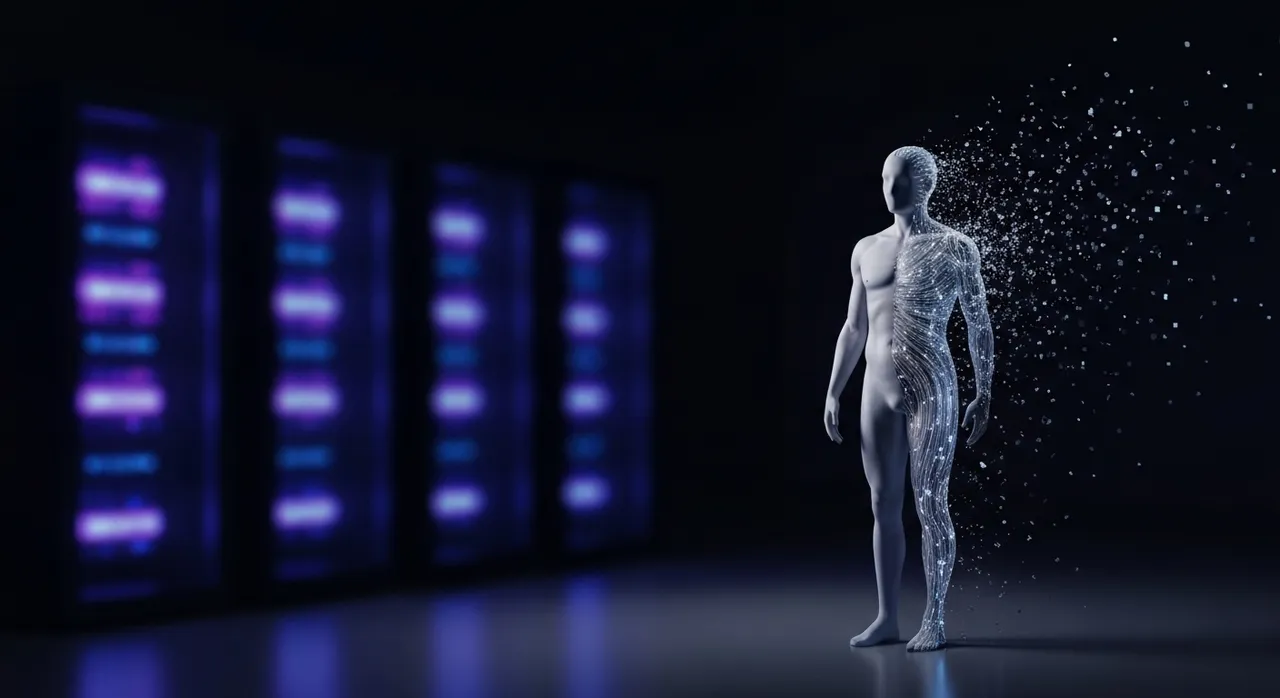
For over a decade, users have been told that a VPN and an encrypted email account were the “gold standard” for privacy. Proton’s latest series suggests these are merely the beginning. The “Witness Protection” protocol introduces the concept of “starving the shadow.” In the digital age, every user casts a “digital shadow”—a trail of metadata, behavioral patterns, and hardware identifiers that persist even if the content of their messages is encrypted. To achieve true Digital Footprint Erasure, one must stop the shadow from forming at the source.
The core of this methodology is behavioral compartmentalization. This involves treating every digital interaction as a unique, non-repeating event. By refusing to let data points “stick” to a centralized identity, the user prevents AI-driven data aggregation from building a reconstructive profile. The protocol is designed specifically for those whose physical safety depends on their digital invisibility, yet it provides a masterclass for any professional seeking to regain control in an era of automated surveillance.
Breaking the Five Primary Digital Anchors
The Proton guide identifies five “anchors” that tether a human being to their digital data. Without breaking these five connections, erasure is impossible. The “Witness Protection” protocol provides a technical roadmap for neutralizing each:
- Email Identities: Using Proton Pass and “hide-my-email” aliases to ensure that no two services ever share the same point of contact. This prevents cross-platform tracking and data breach correlation.
- Phone Numbers: Moving away from SMS-based 2FA and SIM-linked identities toward VoIP and simless, identity-stripped communication layers.
- Payment Chains: Breaking the financial trail by utilizing decentralized payment methods and privacy-focused financial tools, such as the recently integrated Proton Bitcoin wallet, to prevent “spending-habit profiling.”
- Device Fingerprints: Neutralizing the unique hardware signatures (browser headers, canvas fingerprinting, and screen resolution) that identify a device even across different accounts.
- Metadata Routines: Scrubbing the “invisible” data attached to files, specifically targeting EXIF data in images and behavioral patterns like accelerometer routines.
Starving the Shadow: Neutralizing Metadata Routines
One of the most profound revelations in the April 2026 guide is the focus on accelerometer patterns. Most users are unaware that their mobile devices constantly record motion data. Research has shown that these patterns are as unique as a fingerprint; an AI model can identify a person simply by the way they walk or the rhythm of their typing, even if they are using a completely fresh “burner” device. The “Witness Protection” protocol advocates for the use of “digital smoke screens”—software-level noise that spoofs these sensor readings, effectively poisoning the data pool for any surveillance entity attempting to use motion-based Digital Footprint Erasure countermeasures.
Furthermore, the protocol mandates aggressive EXIF scrubbing. Beyond removing GPS coordinates, the guide details how to neutralize “camera signatures”—minute sensor defects unique to every individual camera lens. By stripping these at the OS level before an image is even saved to storage, activists can share visual evidence from high-risk environments without fear of the hardware being traced back to their physical location.
The Rise of Stateless “Burner” Identities
Historically, digital identities were “stateful”—they grew over time, accumulating history, reputation, and data. The “Witness Protection” protocol shifts this toward stateless identities. Under this regime, an identity is created for a single task and discarded immediately afterward. Using ephemeral virtual machines and session-based browser profiles, the protocol ensures that the “activist” mentioned in Proton’s series never exists in the same digital form twice.
This approach to Digital Footprint Erasure leverages Proton’s “Sentinel” program and high-level Key Transparency. By ensuring that public keys are verified and rotated frequently, the system prevents “identity bleeding,” where an old cryptographic key could theoretically link a new identity to a previous one. In the “Witness Protection” video series, Proton demonstrates how this allowed an operative to maintain distinct personas within different militia groups, with no digital overlap that could lead to discovery.
Deploying Digital Smoke Screens Against AI Profiling
As surveillance becomes increasingly automated, the threat is no longer just a human analyst looking at a log—it is a Large Behavioral Model (LBM) aggregating billions of data points to predict user identity. To counter this, the protocol introduces “digital smoke screens.” This technique involves the automated generation of synthetic digital traffic. While the user is performing a sensitive task, a background process generates a high volume of “noise”—fake searches, randomized browsing habits, and simulated app interactions—across multiple virtual identities.
This method doesn’t just hide the user; it floods the surveillance algorithms with false positives. By creating a “multi-shadow” environment, the actual user becomes a needle in a haystack of their own making. This is a critical component of modern Digital Footprint Erasure, shifting the burden from the individual to the aggregator.
OPSEC for the Age of Age Verification
The release of this protocol comes at a politically charged moment. As Proton CEO Andy Yen recently warned, the global push for mandatory age verification represents a “death knell for anonymity.” If governments successfully force every internet user to link their browsing habits to a government-issued ID, the concept of a private digital life will vanish.
Proton’s “Witness Protection” guide serves as a technical resistance manual against this centralization. By emphasizing zero-knowledge architecture and client-side processing, Proton is providing the tools to divorce personal identity from digital utility. The goal is to create a world where a user can prove they are of age or have a valid subscription without ever revealing who they are, where they live, or what they do.
Practical Steps for Systematic Erasure
While the full protocol is designed for high-risk activists, its principles can be applied by anyone. To begin a journey toward comprehensive Digital Footprint Erasure, the guide recommends a phased approach:
- Audit the Primary Anchors: Identify every account linked to your primary phone number and email. Use an alias service to begin migrating these to “disposable” contact points.
- Implement Hardware Isolation: Use a secondary, hardened device for all sensitive communications. Ensure this device never connects to your home Wi-Fi or “talks” to your primary phone via Bluetooth.
- Metadata Sanitation: Adopt tools that automatically scrub EXIF data and documents before they are uploaded to the cloud or sent via email.
- Behavioral Variance: Consciously break your digital routines. Change your browsing times, vary your VPN exit nodes, and avoid the “habitual” use of specific apps that can be used to profile your daily schedule.
The 2026 “Witness Protection” series has set a new benchmark for what it means to be safe online. It acknowledges that in a world of total surveillance, simply locking the door is not enough; you must also ensure that nobody knows the door exists. By focusing on Digital Footprint Erasure at the architectural level, Proton is moving the needle from passive protection to active, tactical invisibility. As the digital and physical worlds continue to merge, the ability to “starve the shadow” may soon become the most valuable skill in a free society.
Written by
TempMail Ninja
Digital privacy and online security expert. Passionate about creating tools that protect users' identity on the internet.