Enhanced 2FA Protocols: New Standards for Global Digital Payments
Article Content
The Great Authentication Reset: Why 2026 Is the Year the OTP Died
As of May 1, 2026, the global landscape of digital commerce has undergone its most significant security metamorphosis since the introduction of the chip-and-pin card. For years, the six-digit One-Time Password (OTP) was the gold standard of “something you have” security. However, as cybercriminals scaled their operations through sophisticated SIM-swap scams, Adversary-in-the-Middle (AitM) attacks, and social engineering, the cracks in the SMS-based foundation became impossible to ignore. Today, under new regulatory mandates, the implementation of enhanced 2FA protocols has officially transitioned from a luxury for high-net-worth accounts to a mandatory baseline for every digital transaction.
This shift, spearheaded by the Reserve Bank of India’s (RBI) 2025 Directions and mirrored by the EU’s updated PSD3 framework, dictates that simple SMS-based verification is no longer sufficient. We have entered the era of multi-layered, dynamic authentication—a system where identity is not just “proven” once, but verified through a continuous, invisible stream of behavioral and cryptographic signals. For the modern consumer, this means the end of fumbling for a text message; for the financial institution, it marks the beginning of absolute liability for system-level failures.
Deconstructing Enhanced 2FA Protocols: The Technical Pillars
The core of the 2026 mandate lies in the requirement for at least two distinct authentication factors that are independent of one another. The goal of these enhanced 2FA protocols is to ensure that even if one factor—such as a password—is compromised, the second factor remains mathematically or biologically inaccessible to an attacker. The new framework categorizes these factors into three distinct “pillars”:
- Knowledge (Something you know): This remains the traditional PIN or complex password. However, under 2026 guidelines, static passwords are increasingly being replaced by “zero-knowledge” proofs where the server never actually stores the secret itself.
- Possession (Something you have): This has evolved from a vulnerable mobile phone number to hardware-based tokens or device binding. In this model, a unique cryptographic key is stored within the Secure Enclave of a user’s smartphone, ensuring the transaction can only originate from that specific, verified piece of hardware.
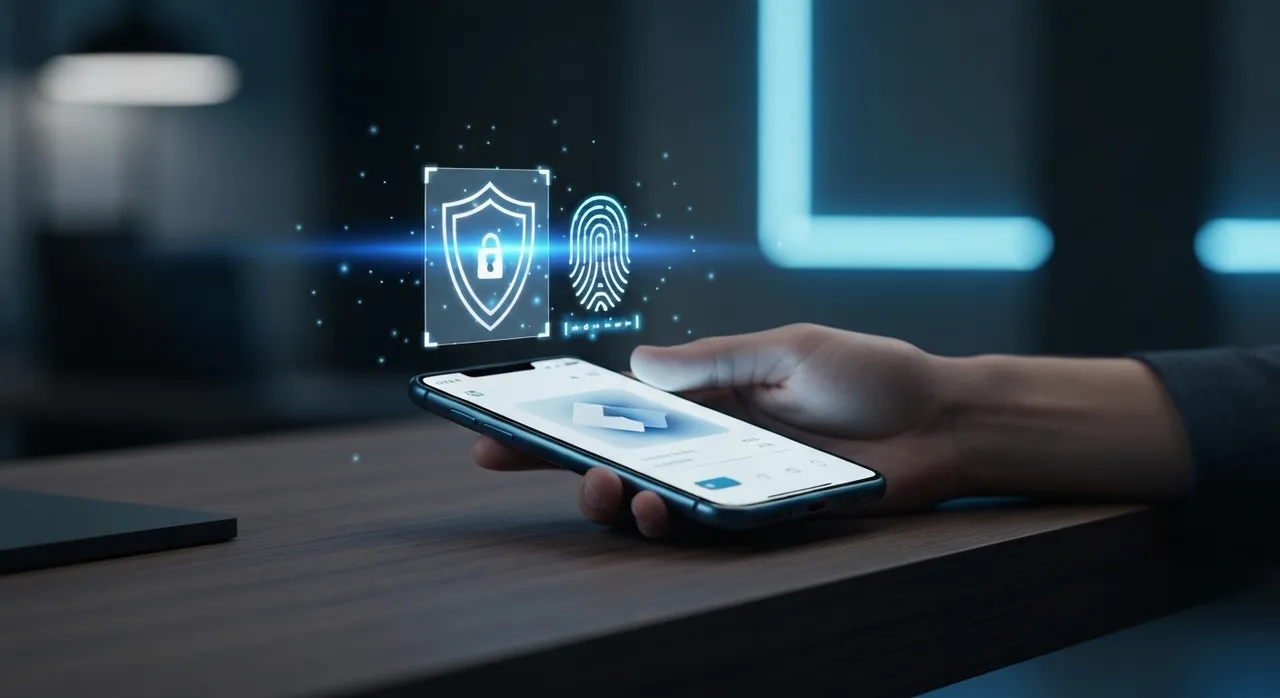
- Inherence (Something you are): Biometrics have moved center stage. Beyond simple fingerprints, 2026 protocols utilize liveness detection to prevent deepfake or “replay” attacks, ensuring that the person authorizing the payment is physically present and conscious.
The Mandate for Dynamic Authentication
Perhaps the most technical requirement of the new regulations is the “Dynamic Factor” rule. For any transaction where a card is not physically present (CNP), at least one authentication factor must be dynamic. This means the proof of identity must be uniquely tied to that specific transaction’s value and recipient. If an attacker intercepts a dynamic factor, it cannot be “replayed” for a different transaction. This is a direct strike against “harvest now, decrypt later” strategies, as the authentication window for these enhanced 2FA protocols is often limited to a single-use session with a lifespan of less than 60 seconds.
The Rise of Phishing-Resistant MFA: FIDO2 and Passkeys
The primary catalyst for the 2026 shift was the systemic failure of SMS-based 2FA. Cyber-intelligence reports from late 2025 showed that 27% of all phishing attempts in the financial sector were successful because they could trick users into providing their OTPs on look-alike websites. To solve this, the industry has pivoted to FIDO2 (Fast Identity Online) standards and Passkeys.
Unlike an OTP, which is a shared secret that both the user and the bank know (and can therefore be stolen), a Passkey uses public-key cryptography. When you authorize a payment, your device uses its private key to “sign” a challenge sent by the bank. The bank uses your public key to verify that signature. At no point is a password or code ever transmitted across the internet. This makes it virtually impossible for a fraudster to “phish” the credential, as there is no secret for the user to inadvertently give away.
Risk-Based Authentication: The “Invisible” Security Guard
While the word “security” often implies “friction,” the 2026 implementation of enhanced 2FA protocols utilizes a risk-based approach (RBA) to keep the user experience seamless. Instead of a “one-size-fits-all” check, financial institutions now use AI-driven engines to score every transaction in real-time. This engine analyzes thousands of metadata points, including:
- Geolocation and IP Velocity: Is the user suddenly attempting a transaction from a country they have never visited, just minutes after a local purchase?
- Device Reputation: Is this a known device with a secure OS, or a “rooted” device commonly used by botnets?
- Behavioral Signals: How is the user holding the phone? Is the typing cadence consistent with the account holder’s historical patterns?
If the risk score is low—for example, a morning coffee purchase from a regular merchant on a trusted device—the system may only require a single, invisible biometric check. However, if the risk score is high—such as a large wire transfer at 3:00 AM—the system triggers a “step-up” authentication, requiring both a hardware token and a facial scan with liveness detection.
Behavioral Biometrics: The Frontier of Continuous Verification
One of the most revolutionary aspects of the current enhanced 2FA protocols is the integration of behavioral biometrics. Unlike traditional biometrics (fingerprint/face), which are “point-in-time” checks, behavioral biometrics offer continuous authentication. Sophisticated machine learning models now analyze the unique “micro-behaviors” of a user, such as:
- Keystroke Dynamics: The rhythm and pressure applied while typing a PIN.
- Touchscreen Gestures: The specific angle and arc of a user’s thumb while scrolling through a payment app.
- Device Orientation: The exact tilt at which a user typically holds their phone during a transaction.
These patterns are nearly impossible for a fraudster to mimic, even if they have stolen the physical device. If a user’s behavioral signature deviates significantly during a session, the system can automatically terminate the transaction or freeze the wallet, providing a level of protection that static passwords never could.
Accountability and the Liability Shift
The regulatory shift of 2026 is not just a technical mandate; it is a legal one. Under the new guidelines, the burden of proof has shifted from the consumer to the Financial Institution (FI). If a user is the victim of fraud resulting from a failure in these enhanced 2FA protocols, the bank or payment provider is now legally required to compensate the user in full, often within a 48-hour window.
This “Liability Shift” has served as a powerful incentive for banks to invest in Zero-PII (Personally Identifiable Information) architectures. By moving away from storing sensitive user data on centralized servers—where it could be leaked in a massive breach—and toward decentralized, device-bound authentication, banks are reducing their own “blast radius.” In 2026, a bank that relies on outdated security is no longer just a target for hackers; it is a massive financial liability for its shareholders.
The Road Ahead: Cross-Border Challenges
While domestic payments in major hubs like India, Singapore, and the EU have achieved near-total compliance with these enhanced 2FA protocols, the final frontier remains cross-border transactions. The October 1, 2026, deadline for international card-not-present (CNP) transactions is looming. Currently, card issuers are working to register Bank Identification Numbers (BINs) with global networks to ensure that an “enhanced 2FA” check triggered in Mumbai can be seamlessly verified by a merchant in New York.
The integration of the Digital ID Wallets (such as the EU’s eIDAS 2.0 or India’s Aadhaar-linked systems) will be critical here. These wallets act as a portable, cryptographically secure identity that “speaks” the same language as the payment protocols, finally bridging the gap between national security standards and the global digital economy.
Conclusion: The New Baseline of Digital Trust
The transition to enhanced 2FA protocols in May 2026 marks the end of an era defined by reactive security. We are no longer waiting for a breach to occur before changing our passwords; instead, we have built a “Zero Trust” infrastructure where every transaction must earn its validity through a multi-layered, dynamic, and behavioral gauntlet. While the “extra step” may occasionally feel like a minor inconvenience, the trade-off is a global financial system that is fundamentally more resilient against the tide of AI-driven cybercrime.
For the consumer, the message is clear: your identity is no longer a six-digit code found in a text message. It is a complex, cryptographic, and biological signature—unique, uncopyable, and finally, truly secure.
Written by
TempMail Ninja
Digital privacy and online security expert. Passionate about creating tools that protect users' identity on the internet.