Ente Auth vs Aegis: The Best Open-Source 2FA Comparison 2026
Article Content
The digital landscape of 2026 has fundamentally shifted. Gone are the days when casual users and security professionals alike would blindly trust proprietary, closed-source giants for their most sensitive credentials. Following the final sunsetting of legacy tools like Authy’s desktop client and the increasing scrutiny over centralized data silos, the “modern ninja” toolkit has undergone a rigorous refinement. As of May 13, 2026, the debate has narrowed down to two definitive champions. For anyone looking to secure their digital life, the primary conflict is no longer about whether to use two-factor authentication (2FA), but rather the definitive choice of Ente Auth vs Aegis.
The Evolution of 2FA: Why the Ente Auth vs Aegis Debate Dominates 2026
In the early 2020s, the average user was content with SMS codes or centralized apps that tied their identity to a phone number. However, the mid-2020s saw a surge in sophisticated SIM-swapping attacks and high-profile breaches of cloud-based authentication providers. This led to a mass migration toward open-source, audited solutions that offer transparency and user sovereignty. The current consensus is clear: if you aren’t in control of your seeds, you aren’t in control of your security.
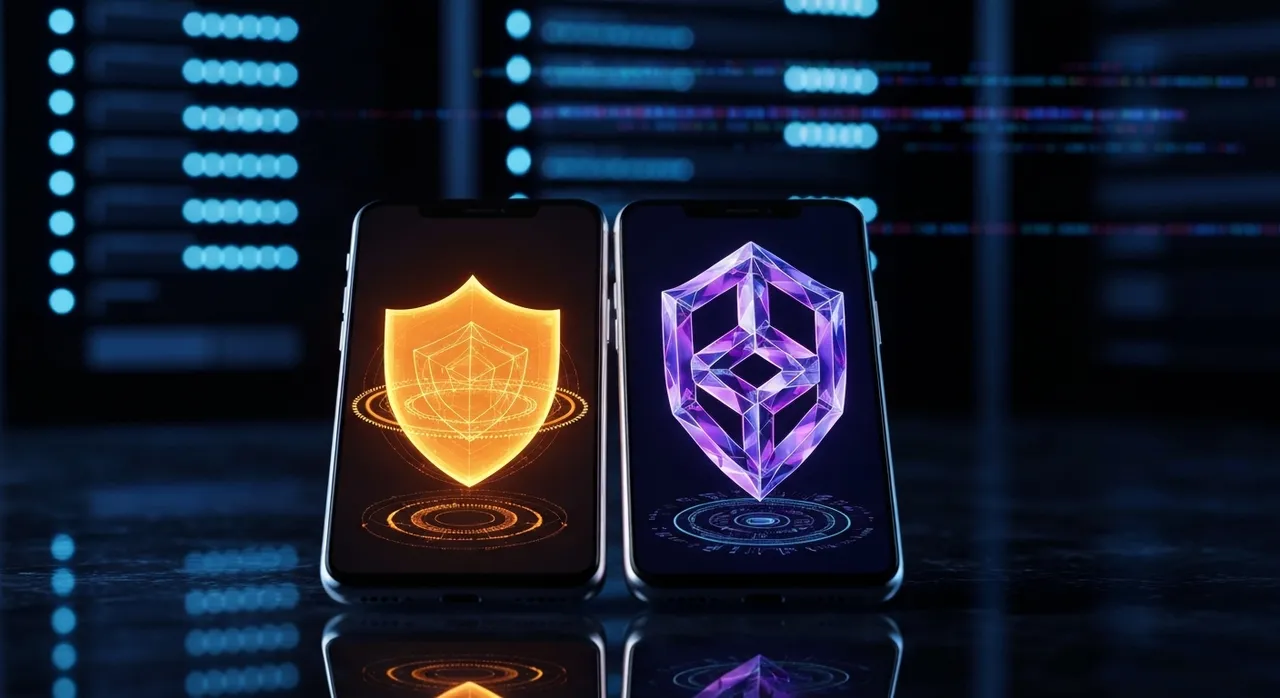
The rivalry between Ente Auth vs Aegis represents a philosophical split in the privacy community. On one side, we have the “Cloud-Sync Revolutionaries” who believe that security and convenience must coexist through end-to-end encryption (E2EE). On the other, we have the “Local-Only Purists” who maintain that any data on a server—encrypted or not—is a potential liability. Understanding which camp you fall into is essential for building a resilient security posture in 2026.
Ente Auth: The Multi-Platform Powerhouse of the Modern Era
Ente Auth has rapidly risen to the top of the recommendation charts, primarily because it solved the “Authy Problem.” When legacy apps discontinued their desktop clients, users were left stranded, unable to access their TOTP (Time-based One-Time Password) codes without their mobile devices. Ente Auth stepped into this vacuum with a robust, cross-platform ecosystem that includes native applications for Windows, macOS, Linux, iOS, and Android.
The Architecture of Seamless Sync
The defining characteristic of Ente Auth is its end-to-end encrypted cloud synchronization. Unlike older cloud authenticators, Ente ensures that your secrets are encrypted on your device using keys that only you possess. When you sync your codes to the Ente cloud, the server sees only encrypted blobs of data. This allows for a “sync-and-forget” experience that is remarkably user-friendly.
For the modern professional who jumps between a MacBook Pro and a custom Linux workstation, the ability to have a native 2FA client pinned to the taskbar is a game-changer. Ente Auth’s desktop apps are not just web-wrappers; they are optimized, performant tools that respect system-level security protocols. This accessibility makes it the premier choice for users who prioritize workflow efficiency and multi-device availability.
Security Audits and Transparency
In the context of Ente Auth vs Aegis, Ente has taken a proactive approach to building trust. Recognizing that cloud-based models require a higher threshold of proof, Ente has undergone multiple third-party security audits. These audits, often conducted by reputable firms like Cure53, verify that their E2EE implementation is sound and that no backdoors exist. For the “ninja” editor or the high-level sysadmin, these public audits provide the empirical data needed to justify the transition to a cloud-synced model.
- Universal Accessibility: Access codes on any device, anywhere.
- E2EE Cloud Recovery: Lose your phone? Simply log in on a new device to restore your vault.
- Open Source: Full transparency of the codebase allows for community verification.
- Trash Feature: Prevents accidental deletion of vital TOTP tokens.
Aegis Authenticator: The Hardened Fortress for Android Purists
While Ente Auth woos the masses with convenience, Aegis Authenticator remains the undisputed heavyweight champion for those who subscribe to a “Zero-Trust” architecture. For Android users with a high-threat profile—journalists, activists, or security researchers—Aegis is the gold standard for localized control.
The Philosophy of Total Sovereignty
Aegis operates on a simple but powerful premise: Your data never leaves your device unless you move it yourself. There are no accounts to create, no servers to trust, and no remote infrastructure to worry about. The app creates a local vault encrypted with AES-256-GCM, protected by a master password or biometric authentication.
This “hardened” approach appeals to the ninja who views every network connection as a potential attack vector. In the Ente Auth vs Aegis comparison, Aegis wins the privacy battle by simply refusing to participate in the cloud economy. It is a “Fortress of Solitude” for your digital keys, ensuring that even if a global cloud provider is compromised, your 2FA seeds remain strictly offline.
Manual Backups and Customization
Aegis offers unparalleled flexibility for users who enjoy tinkering with their security stack. It supports automatic backups to a local directory, which can then be paired with decentralized tools like Syncthing or a private Nextcloud instance. This allows for a “DIY Sync” that avoids third-party servers entirely. Furthermore, Aegis’s import/export capabilities are legendary, allowing users to migrate from almost any other 2FA app with ease.
- Zero-Knowledge Local Storage: Data is encrypted and stored only on the physical device.
- Biometric Hardening: Supports fingerprint and face unlock with fallbacks to high-entropy passwords.
- Custom Icons and Groups: Highly organized interface for managing hundreds of accounts.
- No Internet Permission: The app doesn’t even request network access, eliminating remote leak risks.
Technical Breakdown: Ente Auth vs Aegis Side-by-Side
To truly understand the 2026 landscape, we must look at the technical specifications that differentiate these two powerhouses. When deciding between Ente Auth vs Aegis, the choice often comes down to your specific hardware ecosystem and your appetite for manual management.
| Feature | Ente Auth | Aegis Authenticator |
|---|---|---|
| Primary Platform | Cross-Platform (Mobile/Desktop/Web) | Android Only |
| Data Storage | E2EE Cloud Sync | Local-Only Encrypted Vault |
| Encryption Standard | XChaCha20-Poly1305 / Argon2 | AES-256-GCM |
| Account Requirement | Required (Email/ID) | None (Anonymous) |
| Recovery Method | Cloud Login + Master Key | Manual File Backups |
The “Lost Phone” Strategy: A Critical Decision Factor
One of the most important aspects of the Ente Auth vs Aegis debate is how you plan to recover your accounts if your primary device is lost, stolen, or destroyed. This is where the “ninja” must be honest about their own habits.
The Ente Strategy: If you lose your phone on a Monday, you can buy a new one on Tuesday, download the Ente Auth app, enter your credentials and recovery key, and have all your 2FA codes back instantly. For professionals who cannot afford even an hour of downtime, this resilience is invaluable. The risk is shifted from “physical loss” to “credential compromise,” which is mitigated by strong master passwords and Ente’s own security layers.
The Aegis Strategy: If you lose your phone while using Aegis, your recovery depends entirely on the backups you manually created. If you haven’t exported your vault recently or if your backup drive is also lost, your accounts are effectively gone. However, for the disciplined user who maintains an automated backup pipeline (e.g., Aegis -> Android Folder -> Syncthing -> Home Server), this offers the highest level of security. There is no central server for a hacker to target to get to your data.
Advanced Ninja Workflows: Maximizing Your 2FA Arsenal
In 2026, many power users are no longer choosing just one. The Ente Auth vs Aegis competition has actually led some to adopt a hybrid model. For non-critical social media or entertainment accounts, Ente Auth provides the convenience of cross-device access. For high-stakes accounts like primary email, financial services, or server root access, Aegis on a dedicated, hardened Android device remains the preferred method.
Furthermore, the integration of Passkeys has complicated the 2FA landscape. While both Ente and Aegis are primary TOTP managers, they are evolving to handle the transition to passwordless authentication. Ente’s cross-platform nature gives it a slight edge in the burgeoning Passkey era, as it can synchronize these new credentials across different operating systems more fluidly than a local-only mobile app.
Conclusion: Selecting Your Champion in May 2026
The choice between Ente Auth vs Aegis ultimately comes down to your personal threat model and your hardware ecosystem. In the 2026 “Showdown,” there is no objective loser—only the right tool for the right mission.
Choose Ente Auth if:
- You use multiple devices (Mac, Windows, iPhone) and need your codes everywhere.
- You want a reliable recovery path that doesn’t depend on manual file management.
- You value third-party audits and a “set it and forget it” user experience.
- You are migrating away from Authy and want the closest functional equivalent with better privacy.
Choose Aegis Authenticator if:
- You are an Android power user who demands total sovereignty over your data.
- You refuse to trust any cloud provider, regardless of their encryption claims.
- You have a disciplined backup routine and prefer a “Zero-Trust” local environment.
- You want an app that requires no personal information, not even an email address, to function.
As a Ninja Editor, my final verdict for May 2026 is this: The age of compromising your security for convenience is over. Whether you choose the seamless, audited cloud of Ente Auth or the ironclad, local vault of Aegis, you are taking a definitive step toward digital autonomy. Evaluate your “lost phone” strategy today, and secure your digital arsenal before the next shift in the threat landscape.
Written by
TempMail Ninja
Digital privacy and online security expert. Passionate about creating tools that protect users' identity on the internet.