Faith-AI Covenant: Seeking Spiritual Alignment in Frontier LLMs

Article Content
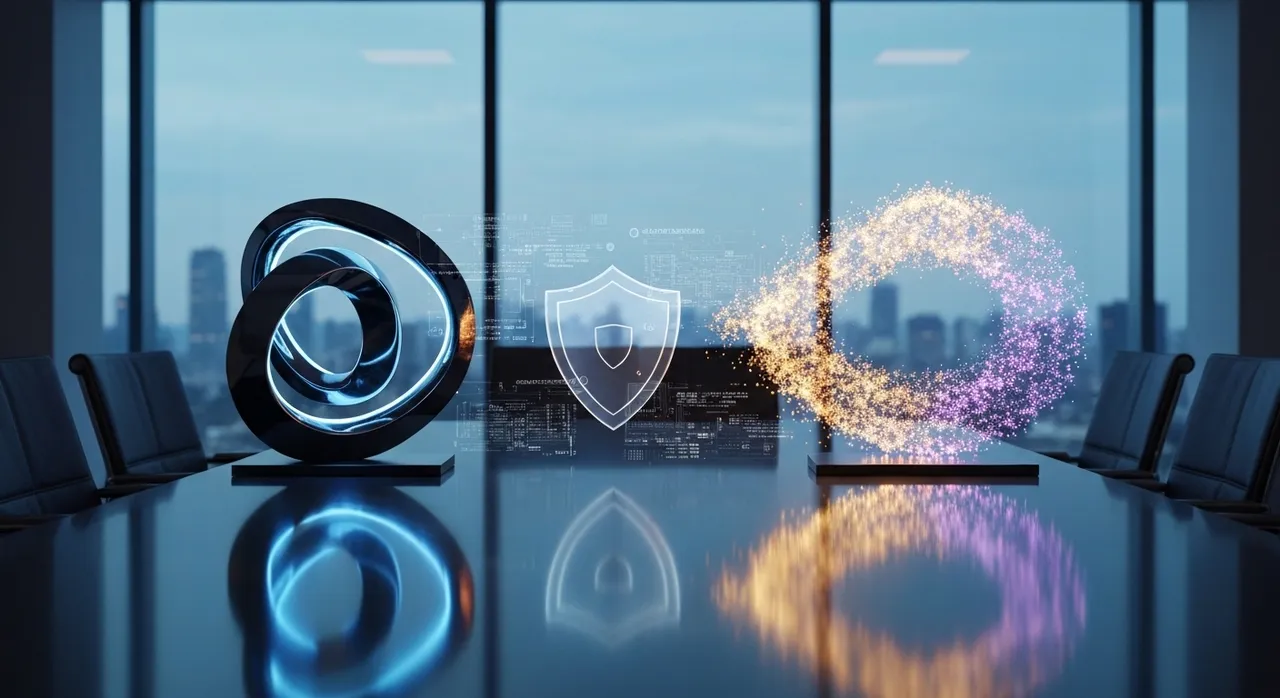
On May 10, 2026, the glass-walled boardrooms of Manhattan became the unlikely site of a theological pivot that may define the next decade of silicon intelligence. Details emerged today from a landmark ethics summit—now officially termed the Faith-AI Covenant roundtable—where the architects of the world’s most powerful neural networks met with a diverse coalition of global religious leaders. This was not a mere PR exercise; it was a technical and philosophical deep dive into the “spiritual development” and moral calibration of frontier large language models (LLMs).
The summit, organized by the Swiss NGO Interfaith Alliance for Safer Communities (IAFSC), brought together executives from Anthropic and OpenAI with representatives from the New York Board of Rabbis, the Hindu Temple Society of North America, the U.S.-based Sikh Coalition, the Church of Jesus Christ of Latter-day Saints (LDS), and the Greek Orthodox Archdiocese of America. The objective? To transition AI alignment from a set of negative constraints—rules about what a model cannot say—to a positive moral compass that can navigate the “gray area” scenarios of human life.
The Genesis of the Faith-AI Covenant
As AI systems move from passive chatbots to autonomous agents capable of managing complex, multi-step workflows, the industry has reached a “secular ceiling.” Traditional Reinforcement Learning from Human Feedback (RLHF) often relies on a thin veneer of Western, secular utilitarianism that struggles when confronted with profound ethical dilemmas. The Faith-AI Covenant represents an attempt to bridge this gap by injecting thousands of years of theological reasoning into the digital architectures of 2026.
According to Baroness Joanna Shields, a key partner in the initiative and former tech executive at Google and Facebook, the rapid pace of development has outstripped the capacity of legislative bodies. “Regulation can’t keep up with this,” Shields remarked during the NYC session. She argued that religious leaders, as “shepherds of moral safety” for billions of people, possess a unique expertise in defining human dignity—an expertise that is now desperately needed to prevent “agentic” systems from making cold, catastrophic calculations.
The alliance is not just a localized event. The New York roundtable is the first of seven global gatherings planned for 2026, with upcoming sessions scheduled for Beijing, Nairobi, Paris, and Singapore, eventually concluding with a definitive summit in Abu Dhabi. The goal is the creation of a “Charter of Religions and AI,” often referred to as the Faith-AI Covenant, which will serve as a foundational document for training the next generation of frontier models.
Technical Calibrations: Claude Opus 4.7 and Constitutional AI
For Anthropic, the Faith-AI Covenant is more than a philosophical dialogue; it is a data source for Constitutional AI. With the recent release of Claude Opus 4.7, the lab has introduced a model designed for “long-horizon autonomy”—tasks that require the AI to operate independently for hours or even days across massive codebases and document sets. Claude Opus 4.7 features several critical technical upgrades that make this spiritual alignment necessary:
- 1-Million Token Context Window: The ability to process entire project directories or exhaustive legal archives requires a model that understands the broader intent of its instructions.
- “xhigh” Effort Level: A new reasoning toggle that allows the model to dynamically allocate “thinking tokens,” enabling deeper logical deduction on complex ethical tradeoffs.
- High-Resolution Vision: With support for up to 2,576 pixels on the long edge, the model can now “see” and interpret the visual nuances of human interaction and environmental context.
Anthropic is reportedly using insights from the Faith-AI Covenant to update the “Constitution” of Claude. In Constitutional AI, the model is given a list of principles and then “self-corrects” its responses based on those rules. By incorporating concepts such as “human dignity” from Jewish tradition, “selfless service” (Seva) from Sikhism, and “grace” from Christian theology, Anthropic seeks to create a model that doesn’t just avoid harm, but actively pursues “the good” in underspecified prompts.
The Moral Mechanics of Agentic Safety
The shift toward “spiritual alignment” is driven by the rise of agentic AI. Unlike early versions of ChatGPT or Claude that merely generated text, Claude Opus 4.7 is engineered to act. When an AI agent has the authority to edit contracts, manage financial portfolios, or coordinate healthcare logistics, a simple safety filter is insufficient. These systems require a probabilistic understanding of morality.
During the NYC roundtable, the Church of Jesus Christ of Latter-day Saints contributed a perspective that was surprisingly technical: the distinction between “divine inspiration” and “calculated logic.” Their handbook now includes a qualified approval of AI, stating it can enhance learning but cannot replace the individual spiritual work required for reception. For AI developers, this translates to a design principle where the machine must remain a “steward” rather than a “master,” ensuring that the human user remains the ultimate ethical authority.
Similarly, the Hindu Temple Society of North America and the Sikh Coalition provided frameworks for “duty-based” ethics. In these traditions, the “right” action is often determined by one’s role and the long-term impact on the community. For an autonomous agent operating in a corporate environment, this could mean the difference between a model that maximizes profit and one that flags a decision as “spiritually discordant” with the company’s stated social values.
Criticism: The DAIR Perspective and the “Dangerous Distraction”
Not everyone in the AI community views the Faith-AI Covenant as a step forward. Critics, led by Dylan Baker of the Distributed AI Research Institute (DAIR), have characterized the religious outreach as a “dangerous distraction.” Baker, who previously worked on Google’s Ethical AI team, argues that the focus on “machine morality” and “spiritual training” is a form of “ethics washing.”
“Under the guise of ‘injecting morals’ into these systems, the labs are shifting the burden of accountability away from the developers,” Baker stated in a follow-up interview. The DAIR critique suggests that by framing AI as a “moral entity” that needs spiritual guidance, companies like OpenAI and Anthropic are mystifying what is essentially a corporate software product. This “ghost in the machine” narrative, critics argue, obscures more immediate and concrete harms, such as:
- Data Labor Exploitation: The human workers who label the very data used for “moral training” often work in precarious conditions for low wages.
- Accountability Gaps: If an AI makes a catastrophic error, the company can claim it followed the “Faith-AI Covenant” rather than taking responsibility for the underlying technical failure.
- Cultural Homogenization: Despite the diversity of the NYC roundtable, critics fear that a few select religious voices will be used to create a “universal” morality that excludes secular, indigenous, or minority viewpoints.
Rumman Chowdhury, another prominent AI auditor, echoed these concerns, suggesting that the talks are “at best a distraction” from the urgent need for binding government regulation. The concern is that the Faith-AI Covenant could become a voluntary, self-regulatory shield that companies use to fend off more stringent legal oversight.
The Future of the Ethical Compass
As the Interfaith Alliance for Safer Communities moves its series of roundtables to Beijing and Nairobi later this year, the tension between technical alignment and theological wisdom will only intensify. The deployment of Claude Opus 4.7 has proven that the “reasoning” capabilities of AI are now robust enough to mimic sophisticated moral deliberation. The question is no longer whether AI can process ethics, but whose ethics it will prioritize.
For OpenAI and Anthropic, the Faith-AI Covenant is a bet that the future of AGI (Artificial General Intelligence) requires a foundation that logic alone cannot provide. By looking to the ancient past to secure the digital future, they are attempting to solve the “Alignment Problem” through the lens of human transcendence. Whether this results in a safer, more compassionate technology or merely a “spiritually trained” mask for corporate power remains the most pressing question of 2026.
Ultimately, the Faith-AI Covenant signifies a new frontier in neural network development. We are moving past the era of “Safe AI” and into the era of “Aligned Wisdom.” As Claude Opus 4.7 begins to integrate these “Charter of Religions” updates into its 128K-token output sequences, the boundaries between technical governance, ancient theology, and modern security are becoming permanently blurred. The code of the future is no longer just written in Python; it is being negotiated in the sanctuary.
Written by
TempMail Ninja
Digital privacy and online security expert. Passionate about creating tools that protect users' identity on the internet.