Gemini Live for Vehicles: Google Launches Generative AI in Millions of Cars
Article Content
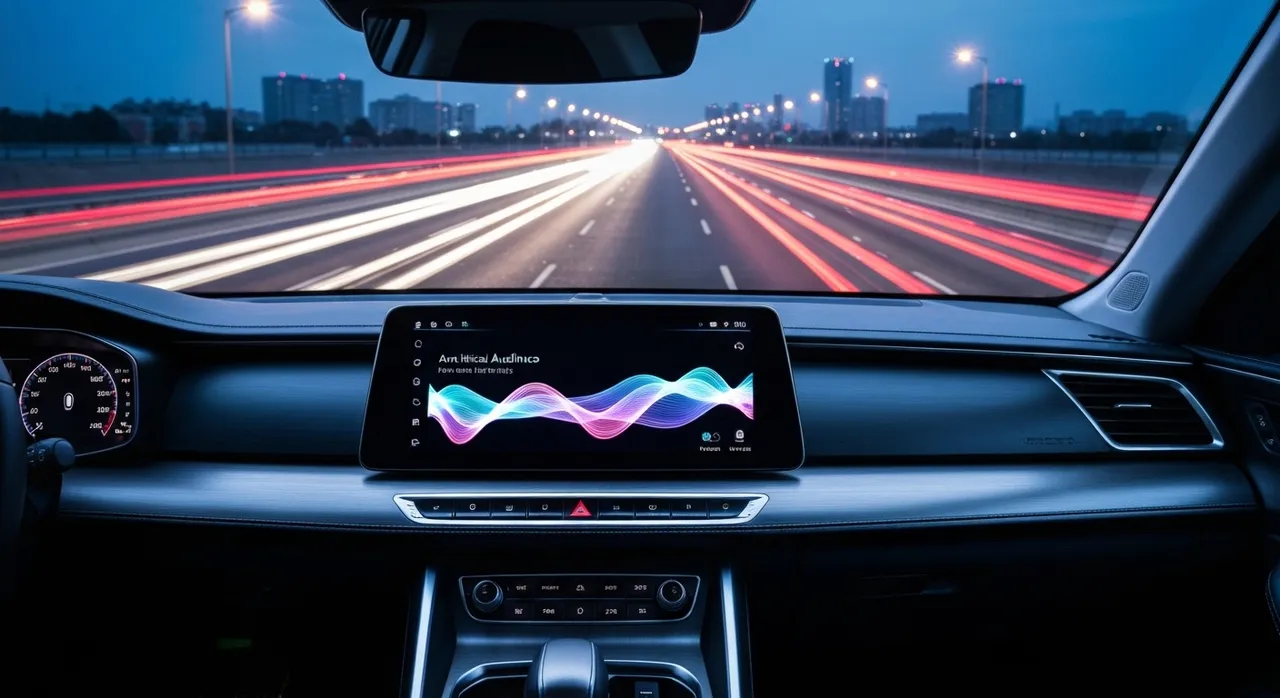
The automotive landscape reached a definitive turning point on April 30, 2026, as Google officially initiated the transition from legacy voice commands to a full-scale generative AI ecosystem. By deploying Gemini Live for vehicles across approximately four million units, Google has effectively retired the traditional Google Assistant in favor of a sophisticated, multimodal AI partner. This rollout, primarily targeting 2022 and newer models from General Motors (GM)—including Cadillac, Chevrolet, GMC, and Buick—alongside luxury EV manufacturer Polestar, represents the largest physical deployment of generative AI in the history of the transportation industry.
The Evolution to Gemini Live for Vehicles
For over a decade, in-car voice technology was defined by rigid syntax and “intent-based” commands. Drivers were required to memorize specific phrases to adjust the thermostat or set a destination. The introduction of Gemini Live for vehicles fundamentally disrupts this paradigm by moving toward a “reasoning-based” architecture. Unlike its predecessor, Gemini does not merely listen for keywords; it understands the nuance of human intent through a Large Language Model (LLM) framework optimized for the unique acoustic environment of a car cabin.
The hallmark of this update is the Gemini Live beta, a feature that allows for free-flowing, multi-turn conversations. Drivers can now activate the system by saying, “Hey Google, let’s talk,” entering a state where the AI remains active and attentive without the need for a repeated wake word. This allows for complex interactions, such as brainstorming travel itineraries or debating philosophical questions during long commutes, all while maintaining a natural, interruptible cadence that mimics human speech.
Technical Architecture: RAG and Vehicle Manual Integration
One of the most technically significant aspects of this rollout is the integration of Retrieval-Augmented Generation (RAG). Google worked directly with OEMs to ingest thousands of pages of manufacturer-provided owner’s manuals and technical documentation into the Gemini knowledge base. This turns the vehicle into a self-aware entity capable of answering hyper-specific queries.
- Model-Specific Knowledge: Instead of general advice, a driver in a Chevrolet Silverado EV can ask, “How do I optimize my towing range for a 5,000-pound trailer?” and receive a response grounded in that specific vehicle’s physics and battery chemistry.
- Interactive Troubleshooting: If a dashboard light appears, a driver can query, “What does the amber snowflake icon mean?” Gemini retrieves the exact definition from the digitized manual and provides immediate context.
- Hardware Synergy: The system leverages the Snapdragon Cockpit Platforms prevalent in 2022+ GM models, balancing on-device processing for low-latency tasks with cloud-based inference for more complex reasoning.
Smarter Navigation with Real-Time Context
The synergy between Gemini and Google Maps has been deepened to provide what Google calls “situational awareness.” Beyond standard traffic data, the AI now cross-references live event data and weather patterns to proactively manage a journey. For instance, if a driver is heading toward a city center during a major stadium event, Gemini Live for vehicles can intervene: “There is a concert ending at the stadium in 20 minutes which will likely gridlock your current route. Should we reroute through the northern corridor to save 15 minutes?”
This level of proactive assistance extends to EV management. Gemini can now synthesize data from the vehicle’s state-of-charge (SoC), ambient temperature, and topographic data from the route to suggest charging stops that aren’t just “available,” but are optimized for the fastest charging speeds based on the vehicle’s current battery pre-conditioning state.
Productivity and Safety: Summarization and Hands-Free Editing
To combat driver distraction while maintaining professional productivity, the Gemini update introduces advanced text thread summarization. In the era of constant connectivity, a flurry of group messages can be overwhelming. Gemini Live for vehicles can listen to an entire thread and provide a concise summary: “Your team is debating the 2:00 PM meeting location; the consensus is currently the downtown office. Would you like me to confirm your attendance?”
The safety benefits are twofold:
- Natural Language Editing: Drivers can dictate long messages, and Gemini will automatically correct grammar, adjust tone (e.g., “Make this sound more professional”), and even translate the message in real-time if the recipient is in a different region.
- Cognitive Load Reduction: By moving away from “command-and-control” interfaces to “conversation,” the cognitive burden of navigating complex menus is replaced by intuitive speech, keeping the driver’s eyes on the road and hands on the wheel.
The Rollout Strategy: GM, Polestar, and Beyond
The massive scale of this deployment is made possible by the Android Automotive OS (AAOS), often referred to by manufacturers as “Google built-in.” Because these vehicles run Google services natively at the system level—rather than as a projection from a smartphone—the update can be delivered Over-the-Air (OTA) without requiring a dealership visit. This highlights the growing importance of the Software-Defined Vehicle (SDV), where a car’s capabilities can be fundamentally transformed years after it leaves the assembly line.
The current rollout is centered in the United States for English-speaking users, covering a vast fleet of GM vehicles including:
- Cadillac: Lyriq, Escalade IQ, and newer CT4/CT5 models.
- Chevrolet: Blazer EV, Equinox EV, Silverado EV, and 2022+ Tahoe/Suburban.
- GMC: Hummer EV, Sierra EV, and Yukon models.
- Buick: The entire Enclave and Encore GX lineup with Google built-in.
Polestar has also joined the vanguard, enabling Gemini Live for the Polestar 2, 3, and 4. The Swedish manufacturer emphasized that this integration allows their vehicles to act as a “digital co-pilot,” capable of translating messages between English and Swedish on the fly, further showcasing the multilingual reach of the underlying Gemini models.
Security, Privacy, and the Path Forward
Deploying generative AI into a moving vehicle raises significant questions regarding data privacy. Google has addressed these concerns by implementing strict microphone-to-action controls. While Gemini Live is active, the data processed is used solely for the immediate conversational context and is not stored to build a permanent user profile unless the user has explicitly opted into personalized features through their Google Account. Furthermore, safety-critical vehicle functions remain partitioned from the generative AI layer to prevent “hallucinated” commands from affecting core driving dynamics.
As the rollout expands globally in the coming months, Google plans to introduce support for over 40 additional languages and integrate more deeply with third-party apps. Developers can now utilize new Android for Cars APIs to allow Gemini to interact with third-party parking, fueling, and weather apps, creating an even more cohesive ecosystem.
Conclusion: The End of the Legacy Assistant
The launch of Gemini Live for vehicles marks the beginning of the end for the “voice command” era. By replacing the static Google Assistant with a reasoning AI, Google and its partners like GM and Polestar are redefining what the interior of a car represents. It is no longer just a space for transport; it is a highly intelligent, conversational environment that anticipates needs, solves problems, and provides companionship on the road. For the four million drivers receiving this update today, the vehicle has just become significantly more than the sum of its mechanical parts.
Written by
TempMail Ninja
Digital privacy and online security expert. Passionate about creating tools that protect users' identity on the internet.