Gmail Client-Side Encryption Now Available on Mobile Devices
Article Content
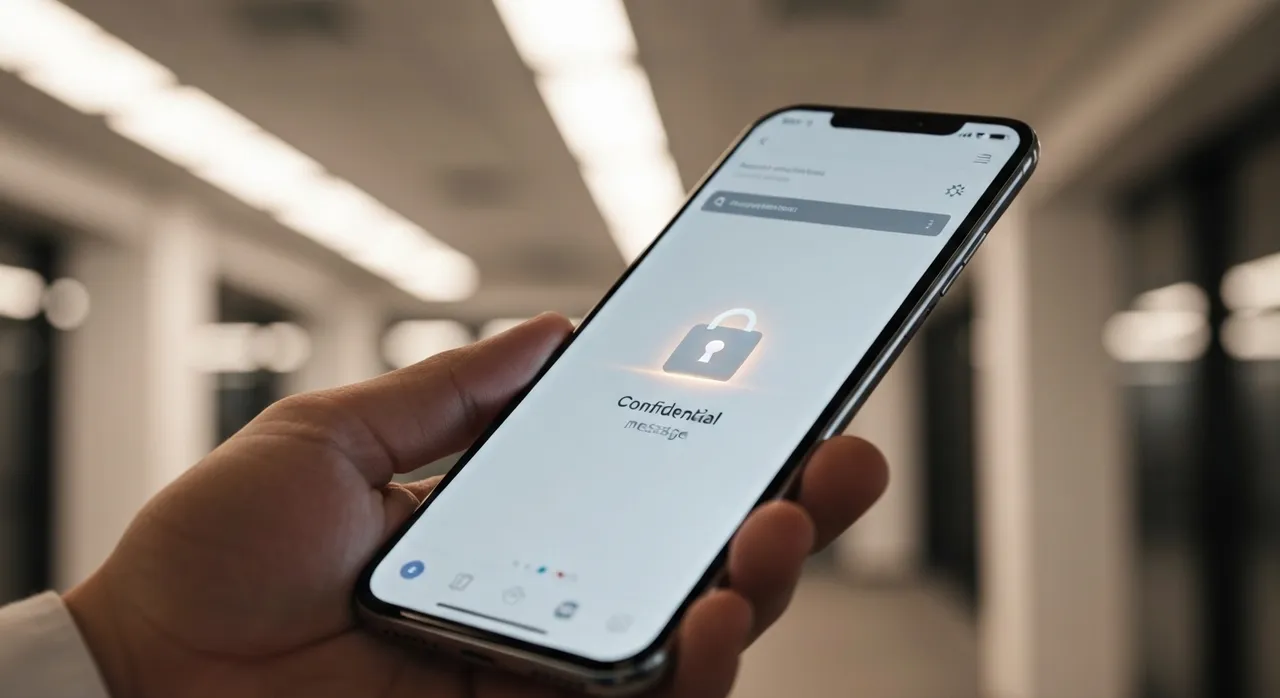
In an era where data sovereignty and digital privacy have transcended from mere “nice-to-haves” to critical operational requirements for enterprise, the latest move by Google marks a significant milestone in secure communications. As of April 2026, Gmail client-side encryption (CSE) is officially available natively on mobile platforms, effectively removing the lingering tether that previously forced mobile professionals to rely on desktop browser sessions for high-security correspondence.
This development is more than just a feature update; it represents the closing of a major security gap for organizations navigating the complexities of modern, mobile-first workflows. For industries bound by stringent regulatory frameworks—such as healthcare, government, and finance—the ability to handle end-to-end encrypted communications directly within the Android and iOS Gmail apps is a game-changer, ensuring that the highest levels of privacy can be maintained on the go.
Understanding the Mechanics of Gmail Client-Side Encryption
To grasp the significance of this update, one must first understand how Google Workspace manages Client-Side Encryption (CSE) compared to standard encryption protocols. While Google has long employed robust encryption for data at rest and in transit using TLS (Transport Layer Security), CSE introduces a superior, zero-knowledge architecture.
In a standard encryption model, the service provider—in this case, Google—possesses the keys necessary to decrypt user data. This is essential for features such as server-side spam filtering, search indexability, and integrated service functionality. However, under the CSE framework, the encryption and decryption processes occur exclusively on the client’s device—the user’s browser or mobile application—before the data is ever transmitted to Google’s cloud servers.
The Key Difference: Who Holds the Keys?
The core philosophy of CSE is “organization-controlled sovereignty.” When an email is encrypted using CSE, the encryption keys are never stored on Google’s infrastructure. Instead, they are held by the organization itself, often utilizing a dedicated, third-party key management service or an internal key management infrastructure (KMI). This means:
- Indecipherability to Google: Because the decryption keys remain outside of Google’s control, the content of the email—including the body, inline images, and attachments—remains entirely unreadable to Google’s servers, even if the data were intercepted or compromised within the cloud storage.
- Granular Compliance: Organizations can maintain their regulatory posture by ensuring that sensitive data is never technically “viewable” by the provider, satisfying requirements under HIPAA, GDPR, and various international data export control regulations.
- Revocability: Since the organization controls the keys, they retain the ability to manage or revoke access to those keys, effectively controlling access to the data even after it has been sent.
The Impact of Native Mobile Integration
Prior to this April 2026 update, the lack of mobile support for CSE was a significant bottleneck. Professionals working in the field—whether auditing sensitive financial documents, reviewing patient records, or managing classified government communications—were essentially hamstrung. They could receive notifications of secure messages on their mobile devices but were forced to find a workstation to securely authenticate and view that content.
By bringing this functionality into the native Android and iOS Gmail applications, Google has effectively synchronized the mobile experience with the desktop standard. This integration removes the friction that often encourages users to circumvent security protocols in favor of convenience. When security is difficult, users find workarounds; when it is seamless, it becomes part of the daily workflow.
User Experience and Workflow
The transition to mobile CSE is designed to be frictionless for both the sender and the recipient:
- Simplified Initiation: Users simply tap the “Message security” or lock icon within the Gmail compose window and toggle on “Additional encryption.”
- Native Rendering: For Gmail users within the same or authorized organizations, encrypted messages appear as standard threads. The decryption happens seamlessly in the background as the message is opened, provided the user has authenticated with their identity provider.
- Cross-Platform Compatibility: When an encrypted email is sent to a recipient outside of the Gmail ecosystem, they are not left out in the cold. They can securely read and reply to these messages via a protected, web-based portal, ensuring that the chain of security remains unbroken regardless of the recipient’s email provider.
Enterprise-Grade Security for Mobile Professionals
This update is exclusively targeted at organizations operating at the highest tier of security, requiring a Google Workspace Enterprise Plus license, often paired with the Assured Controls or Assured Controls Plus add-ons. This is a deliberate design choice, as it ensures the infrastructure required for such deep-level security is properly provisioned and governed by IT administrators.
Administration and Control
IT administrators are given comprehensive oversight of this feature through the Google Workspace Admin Console. Before end-users can leverage mobile CSE, administrators must explicitly enable it within the CSE admin interface. This allows organizations to define the specific security policies, identity providers, and key access lists that govern their data. This centralized management ensures that the ease of mobile use does not come at the expense of organizational oversight.
The “Five Megabyte” Constraint
While the benefits are substantial, professionals must remain aware of certain technical limitations. As noted in current technical documentation, the attachment size limit for messages utilizing client-side encryption is restricted to 5MB. This stands in contrast to the standard 25MB limit for regular Gmail attachments. This constraint is a practical byproduct of the overhead involved in client-side cryptographic processing and should be communicated clearly to users to prevent workflow disruptions.
The Evolving Landscape of Digital Privacy
The addition of Gmail client-side encryption to mobile devices is a testament to the accelerating demand for “provider-independent” security. As cyber threats evolve—ranging from sophisticated, AI-driven phishing attacks to the potential risks of quantum computing on classical encryption—organizations are increasingly prioritizing architectures that reduce their dependency on a single point of failure.
By effectively treating the mobile app as a trusted endpoint, Google has acknowledged that the “workstation” is no longer a physical desk. It is wherever the professional happens to be. As we move forward, the adoption of CSE will likely become a competitive differentiator for organizations that need to prove, not just state, that they are treating their sensitive information with the highest degree of technical protection available.
For the CIO, CISO, and the mobile professional, this update is a welcome relief. It removes the friction between “being secure” and “being productive,” allowing the mobile workforce to remain compliant and protected without sacrificing the agility that mobile devices provide. In the tug-of-war between convenience and security, Google has finally found a way to let both sides win.
Written by
TempMail Ninja
Digital privacy and online security expert. Passionate about creating tools that protect users' identity on the internet.