Healthcare Ransomware Attack on ChipSoft Cripples Dutch Hospitals
Article Content
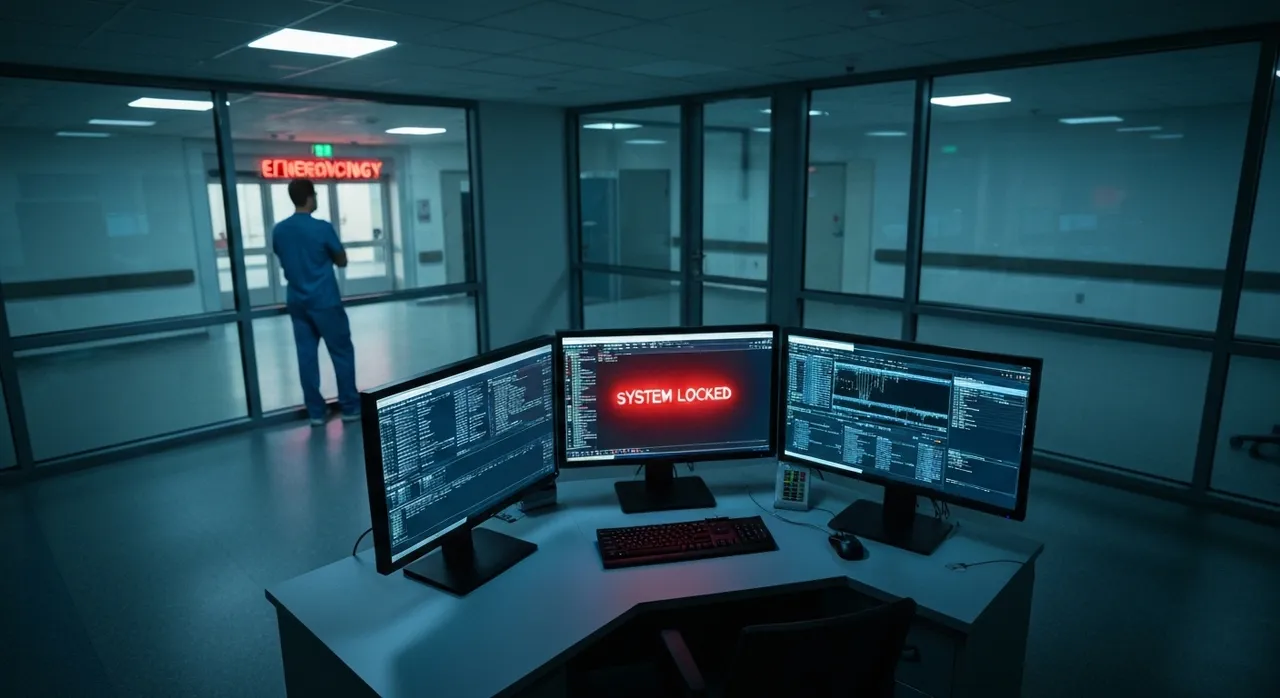
The events of April 10, 2026, will be remembered as a sobering inflection point for national security and digital resilience in the Netherlands. A catastrophic healthcare ransomware attack on ChipSoft, the predominant provider of electronic patient record (EPR) systems, did not merely cause localized IT issues; it triggered a systemic paralysis across the majority of the nation’s hospitals. By targeting the digital foundation upon which modern Dutch healthcare rests, the adversaries successfully weaponized a critical single point of failure, forcing medical facilities to revert to manual, paper-based operations while critically ill patients were diverted and elective surgeries were abruptly postponed.
The Anatomy of a Systemic Collapse
The assault, which began on April 7 and reached its peak of disruption by April 10, struck at the core of the Dutch healthcare digital supply chain. ChipSoft, the provider of the ubiquitous HiX platform, serves an estimated 80% of hospitals in the Netherlands. When the company’s internal systems were compromised, the immediate tactical response—forced by the necessity of preventing further breach propagation—was the proactive disconnection of the HiX platform, Zorgportaal, and HiX Mobile services from the networks of connected healthcare providers.
The operational fallout was immediate and severe:
- Emergency Diversion: Emergency rooms, unable to access real-time patient histories, allergies, or medication lists, were forced to implement diversion protocols, straining surrounding facilities.
- Procedural Halts: Hospitals faced the postponement of elective surgeries and procedures that required access to pre-operative digital records.
- Logistical Strain: Healthcare institutions were compelled to shift to manual workflows, significantly increasing the administrative burden on nursing and medical staff, and slowing clinical decision-making.
- Cross-Border Impact: The ripples of the incident extended into Belgium, where several hospitals relying on ChipSoft systems were similarly forced to take their patient portals offline as a protective measure, illustrating the transnational risks posed by centralized software hubs.
The “Hybrid” Extortion Model
Technically, the ChipSoft incident exemplifies the evolution of modern ransomware into a hybrid extortion model. In prior eras, ransomware operators primarily focused on the encryption of operational assets to force a ransom payment for a decryption key. The goal was restoration of service. The current threat landscape, however, prioritizes data exfiltration as a primary weapon of leverage.
The attackers behind the ChipSoft strike followed a disciplined “pre-encryption” phase. By gaining unauthorized access, the threat actors were able to navigate the network, move laterally to sensitive databases, and siphon vast quantities of Protected Health Information (PHI) before initiating the final encryption payload. This dual-threat mechanism fundamentally changes the leverage dynamic:
- Service Disruption (Availability): The encryption of systems stops revenue-generating activities and operational functions, creating an immediate, time-sensitive pressure to restore systems.
- Data Exposure (Confidentiality): The threat to leak sensitive medical records—including diagnoses, social security numbers (BSN), and treatment histories—ensures that even if the provider can restore systems from backups, the attackers maintain a secondary, highly coercive lever to demand payment to prevent public exposure.
Concentration Risk: The Architected Vulnerability
The ChipSoft incident is a textbook case of concentration risk. This structural phenomenon occurs when an entire sector—in this case, national healthcare—becomes critically dependent on a small number of software vendors or service providers. While such consolidation often brings efficiencies, improved interoperability, and standardized care, it creates a “force multiplier” effect for cyber adversaries.
In a decentralized environment, an attacker might need to breach dozens of separate hospitals to cripple an entire country’s infrastructure. In the current, consolidated paradigm, the attacker needs only to breach the hub. By compromising one node—the vendor—the adversary achieves systemic impact. This structural vulnerability is exacerbated by the following factors:
- Interconnectedness: Modern EPR systems are not isolated; they are deeply integrated with clinical equipment, pharmaceutical ordering systems, and inter-hospital communication networks.
- Third-Party Trust: Hospitals operate on the assumption that their primary software vendors maintain “enterprise-grade” security. The ChipSoft event demonstrates that these vendors are themselves high-value, high-risk targets.
- Lack of Redundancy: The speed at which hospitals were forced to abandon their primary tools highlights a lack of viable, high-fidelity contingency infrastructure capable of supporting modern, high-volume patient care without that core platform.
Strategic Imperatives for Healthcare Resilience
The path forward requires a fundamental shift in how the healthcare sector approaches supply chain security and operational resilience. Defensive strategies must evolve beyond internal perimeter protection to address the reality of a concentrated digital ecosystem.
1. Implementing “Zero-Trust” Architecture
Hospitals must transition toward Zero-Trust network principles, even within their interactions with trusted vendors. This involves segmenting networks so that even if a vendor’s connection is compromised, the breach is contained within a specific, isolated segment, preventing the lateral movement of ransomware into the broader clinical environment.
2. Investing in Operational Redundancy
The reliance on a single vendor necessitates the creation of “break-glass” continuity plans. This includes maintaining disconnected, read-only copies of critical patient data that can be accessed via secure, independent infrastructure during a primary system outage. If a system failure takes 80% of hospitals offline, the ability to rapidly deploy offline or secondary diagnostic and record-access capabilities is a prerequisite for patient safety.
3. Continuous Supply Chain Monitoring
Healthcare providers must treat their software vendors as part of their own attack surface. This entails rigorous, continuous security assessment of vendors, requiring transparency into their incident response plans, and demanding proof of high-fidelity detection capabilities. The current model—based on annual security questionnaires—is insufficient against the rapid, automated tactics of modern ransomware syndicates.
4. Regulatory and Structural Diversification
Governments must consider whether market concentration in critical infrastructure (like EPR systems) constitutes a national security risk. Policies that incentivize, or at least facilitate, technical diversity and the ability for hospitals to maintain vendor-neutral interoperability could mitigate the catastrophic impact of a single vendor failure. If the entire sector is locked into a single technological stack, the sector remains fundamentally fragile.
The ChipSoft ransomware attack serves as a definitive warning. As healthcare continues its digital evolution, the vulnerability landscape will only widen. Security is no longer an IT concern; it is a clinical and national security necessity. The organizations and nations that prioritize deep architectural resilience over mere efficiency will be the ones capable of weathering the inevitable digital storms of the future.
Tags
Written by
TempMail Ninja
Digital privacy and online security expert. Passionate about creating tools that protect users' identity on the internet.