Humanoid Robots Ban Imposed by US FCC Over National Security Risks
Article Content
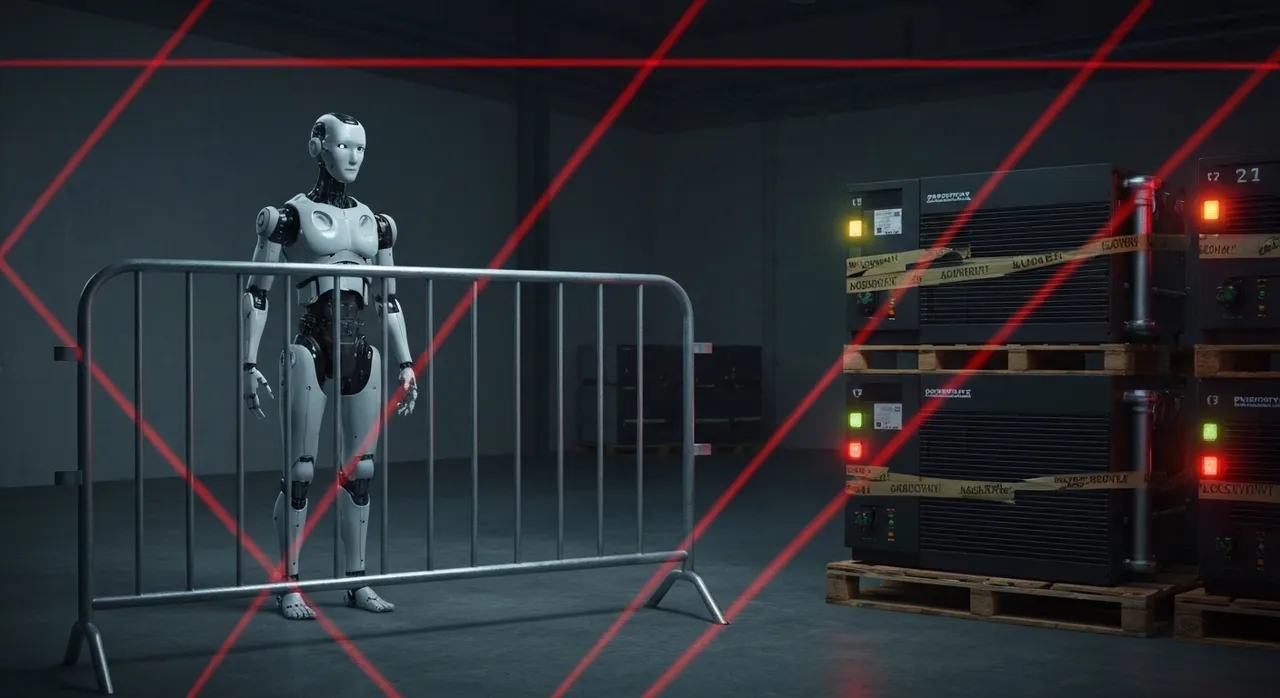
On July 28, 2026, the United States Federal Communications Commission (FCC) enacted a landmark regulatory shift that fundamentally redefines the boundaries of national security and hardware authorization. Expanding its “Covered List” of prohibited technology under executive branch determinations, the commission officially blocked all new foreign-made “advanced robotic devices”—specifically highlighting bipedal humanoids and quadruped platforms—alongside grid-connected power inverters from entering the American market. This comprehensive humanoid robots ban marks a historic transition in telecommunications regulation, shifting the agency’s purview from traditional networking gear like routers and cell towers to autonomous cyber-physical assets and renewable energy infrastructure. By cutting off new equipment authorizations for foreign manufacturers, Washington has signaled that mobile sensor arrays and grid-tied power electronics represent an intolerable attack surface for foreign intelligence services, cyber-sabotage, and supply chain coercion.
The regulatory order effectively targets low-cost foreign manufacturers that have rapidly dominated the commercial robotics and clean energy hardware sectors. Under the updated framework, any uncertified foreign mobile robot or connected power inverter is barred from securing the FCC equipment authorization required for legal importation, marketing, or sale in the United States. While existing previously authorized equipment remains grandfathered for legacy use, the forward-looking restriction creates an aggressive barrier aimed at protecting critical national infrastructure, dismantling hardware vulnerabilities, and forcing the rapid reshoring of an independent domestic U.S. robotics and clean energy industrial base.
The Sensor Threat Vector: Mobile Surveillance and Telemetry Risk
To understand the imperative behind the expanded Covered List, one must look beyond the mechanical dexterity of next-generation robotics and examine their underlying electronic architecture. Modern humanoid and quadruped robots are essentially high-bandwidth, autonomous surveillance and data-collection engines on legs. Outfitted with dense multi-spectral sensor suites—including solid-state LiDAR units, high-resolution RGB-D optical cameras, binaural microphone arrays, ultrasonic rangefinders, and high-frequency inertial measurement units (IMUs)—a single humanoid operating inside a industrial facility, corporate headquarters, or defense supply depot continuously ingests detailed spatial data.
Through Simultaneous Localization and Mapping (SLAM) algorithms, these devices construct millimeter-precise 3D point-cloud maps of their physical environments. They capture structural blueprints, corporate floor plans, proprietary assembly workflows, and physical security measures. When linked to cloud-based artificial intelligence backbones via 5G NR, Wi-Fi 6E, or satellite connectivity, this real-time spatial data is routinely transmitted off-device to optimize motor control models, train vision-language-action (VLA) neural networks, and process over-the-air (OTA) firmware updates.
Under foreign jurisdiction mandates—such as national intelligence laws that compel domestic companies to assist state security apparatuses—these continuous telemetry streams present an extraordinary exfiltration risk. Interagency national security determinations warned that foreign adversary states could leverage these mobile sensor packages to passively surveil American facilities or enhance foreign intelligence capabilities. Beyond passive espionage, federal officials highlighted the severe risk of remote commandeering. An adversary capable of exploiting firmware backdoors or compromising cloud orchestration servers could remotely manipulate mobile robotic fleets, turning industrial workers into physical saboteurs capable of destroying sensitive machinery, triggering industrial accidents, or bridging air-gapped secure networks.
Grid Integrity and the Inverter Vulnerability Vector
While the inclusion of power inverters alongside advanced humanoids may initially seem like an unusual coupling, both technology categories share a critical common denominator: remote digital connectivity coupled with direct physical actuation over critical infrastructure. Connected power inverters serve as the vital electronic intermediaries that convert direct current (DC) generated by solar photovoltaics and battery energy storage systems (BESS) into synchronized alternating current (AC) required by the electrical grid and industrial facilities. In the era of rapid AI expansion, these power conversion systems sit directly at the heart of hyperscale data centers, routing gigawatts of power to train and deploy advanced artificial intelligence models.
Modern smart inverters rely on embedded microcontrollers running complex firmware to execute real-time grid synchronization, maximum power point tracking (MPPT), and dynamic load balancing. Operating with continuous internet connectivity via cellular modems or industrial IoT gateways, these units are routinely managed via remote platforms using industrial protocols like Modbus TCP, DNP3, or proprietary cloud interfaces. Security agencies warned that malicious firmware updates, remote kill switches, or logic bombs hidden within foreign inverter microcontrollers could allow hostile actors to execute coordinated cyberattacks against the U.S. power grid.
By remotely altering phase angles, manipulating voltage frequencies, or triggering simultaneous safety disconnects across thousands of distributed solar arrays and battery sites, threat actors could cause severe frequency instability and induce regional blackout cascades. Disrupting the clean power infrastructure feeding AI data centers could halt domestic compute capacity without firing a kinetic weapon or deploying traditional software malware.
Decoding the Humanoid Robots Ban and Industry Impact
The economic impact of the humanoid robots ban falls squarely on the aggressive commercial robotics ecosystem of China, which has used extensive state subsidies to capture market share in humanoid and quadruped manufacturing. Key market leaders impacted by the order include Chinese firms such as Unitree Robotics, AgiBot, and UBTech. Unitree, in particular, had recently established a strong commercial footprint in North America and Europe, offering high-performance humanoid platforms like the Unitree G1 at aggressive price points around $13,500—a fraction of the $50,000-plus price tag typical of Western development models. Having scaled production to thousands of units with plans to export tens of thousands more in 2026, foreign manufacturers now face an absolute regulatory barrier to the U.S. market.
The regulatory mechanics enforced by the FCC operate through clear, structured parameters:
- New Model Authorization Block: Effective immediately, any unapproved foreign-made humanoid robot, quadruped, or connected power inverter is barred from obtaining FCC equipment authorization. Without this clearance, importing, marketing, or selling the device in the U.S. is illegal under federal law.
- Protection for Existing Equipment: The ban is explicitly forward-looking. Previously authorized models and devices already purchased by U.S. consumers, research labs, or enterprise operators remain fully legal to operate and maintain. Retailers may continue selling remaining stock of previously approved inventory.
- Conditional Approval Exemption Path: Manufacturers seeking market access must submit to an intensive interagency national security review. Applications for robotics exemptions require “Conditional Approval” from the Department of Defense, while power inverter exemptions are vetted by the Department of Homeland Security (DHS) via dedicated review pipelines.
- Statutory Revocation Powers: The FCC retains administrative authority to retroactively revoke prior authorizations should specific legacy models be determined to contain active hardware backdoors or pose imminent security threats.
Reshoring, Industrial Policy, and the Battle for Supply Chain Sovereignty
The expanded Covered List reflects a broader, bipartisan consensus in Washington to enforce supply chain sovereignty across critical technology sectors. By shutting out low-cost foreign hardware, the federal government is erecting a protective regulatory framework around the emerging domestic U.S. robotics and clean energy industrial base. The move aligns with recent defense legislation, such as Section 163 of the National Defense Authorization Act (NDAA) and proposed provisions in the GUARD Act, which restrict foreign autonomous hardware across defense and critical commercial sectors.
For American robotics developers—including Tesla (Optimus), Agility Robotics, Figure AI, and Boston Dynamics—the removal of subsidized foreign competition creates a protected domestic ecosystem. While this policy shift may temporarily increase capital acquisition costs for American logistics, automotive, and manufacturing firms seeking to deploy humanoid automation, it incentivizes venture capital and industrial investments into domestic hardware supply chains. Federal officials have emphasized that economic security is directly tied to national security, asserting that relying on strategic adversaries for the physical labor force and electrical power apparatus of the 21st century introduces an unsustainable national risk.
A Cyber-Physical Perimeter for the AI Era
The FCC’s decisive action on advanced robotics and connected power inverters represents a permanent evolution in international technology policy. The boundary between digital software risks and physical physical infrastructure has effectively vanished; an internet-connected actuator in a bipedal robot or a grid-tied micro-inverter carries structural security implications equivalent to core telecommunications hardware.
By placing mobile robots and grid power electronics on the Covered List, the United States has established a strict cyber-physical perimeter around its economy. As artificial intelligence becomes increasingly embodied in physical machines that navigate human spaces and operate critical infrastructure, verifying the integrity of hardware supply chains, firmware integrity, and telemetry routing is no longer optional. The coming years will demonstrate whether domestic manufacturers can scale fast enough to meet commercial demand, but the era of unchecked foreign hardware in America’s industrial core has officially drawn to a close.
Written by
TempMail Ninja
Digital privacy and online security expert. Passionate about creating tools that protect users' identity on the internet.