Industrial Control Systems: Iranian State-Sponsored Actors Hijacking U.S. Infrastructure
Article Content
On April 19, 2026, a seismic shift in the cyber-physical threat landscape was codified by the issuance of a joint security advisory, AA26-097A. This urgent bulletin, co-authored by the Cybersecurity and Infrastructure Security Agency (CISA), the FBI, and the NSA, details a massive, coordinated campaign by Iranian state-sponsored actors to infiltrate and hijack Industrial Control Systems across the United States. Unlike the high-concept, zero-day exploits typically associated with nation-state espionage, this campaign is defined by its “low-sophistication, high-impact” nature—leveraging simple internet exposure and default credentials to gain direct control over the physical mechanisms of American critical infrastructure.
The Anatomy of the Attack: Industrial Control Systems Under Siege
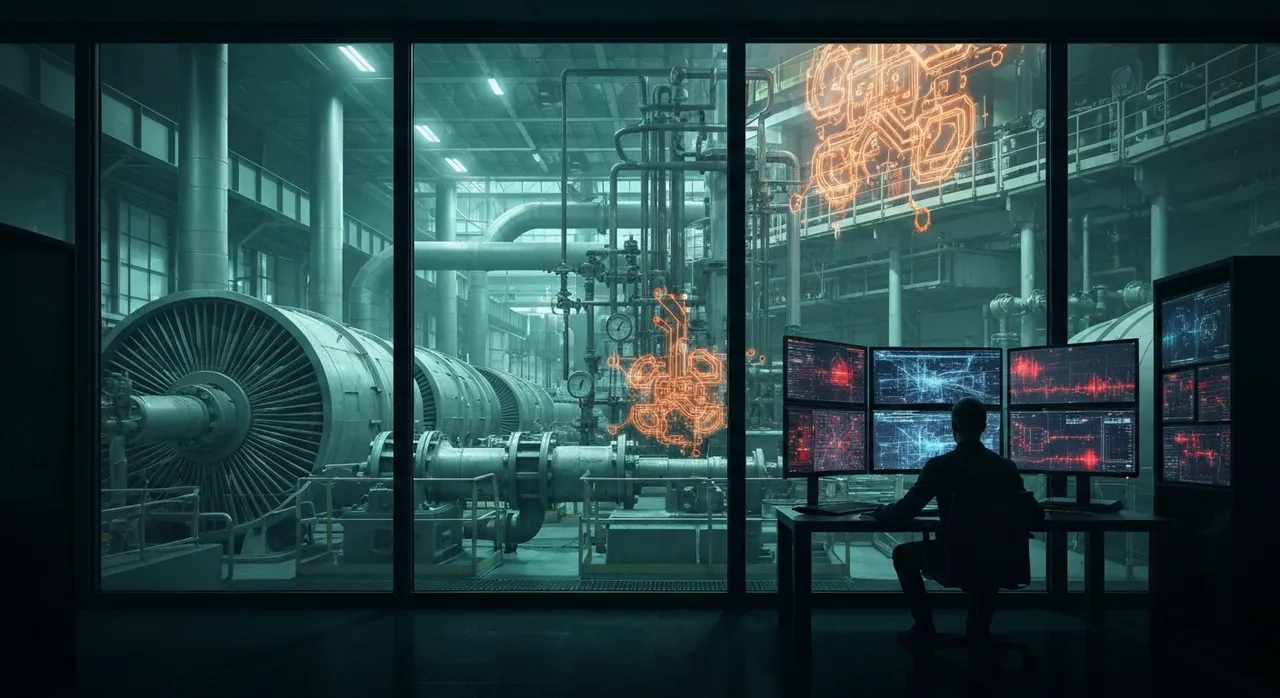
The core of the current crisis lies in the vulnerability of internet-facing Programmable Logic Controllers (PLCs), the digital “brains” that manage everything from water pressure in municipal treatment plants to load balancing in the energy grid. Security agencies have identified a surge in activity originating from Iranian-affiliated Advanced Persistent Threat (APT) groups, specifically targeting Rockwell Automation and Allen-Bradley devices. These systems are the backbone of the North American industrial sector, making their compromise a matter of immediate national security.
The vulnerability is not a flaw in the code itself, but rather a failure of security hygiene at the implementation level. Threat actors are scanning the public-facing web for devices that are either not protected by a firewall or are accessible via common Industrial Control Systems protocols. Once a device is located, the actors utilize “brute-force” or “password-spraying” techniques to exploit default or weak administrative credentials. In many documented cases in 2026, the controllers were found to have no password protection at all, leaving the digital “front door” wide open for foreign adversaries.
Technical Deep Dive: Protocols and Ports in the Crosshairs
The technical mechanics of these intrusions reveal a sophisticated understanding of industrial communication protocols. The attackers primarily target the EtherNet/IP (EIP) protocol, which is the standard for Rockwell and Allen-Bradley hardware. Analysis of the 2026 advisory highlights several key ports that are being actively probed and exploited:
- Port 44818 (EtherNet/IP): Used for session encapsulation and data transfer. Actors use this to establish a legitimate-looking connection to the PLC.
- Port 2222 (Implicit Messaging): Often used for real-time data exchange; its exposure allows actors to sniff or inject traffic into the operational stream.
- Port 102 and 502: While associated with Siemens (S7) and Modbus protocols respectively, Iranian actors are probing these to identify broader industrial footprints beyond Rockwell systems.
- Port 22 (SSH): Actors have been observed deploying Dropbear SSH software on victim endpoints, creating a persistent, encrypted “backdoor” for remote access.
By establishing a foothold through these ports, the threat actors can extract the device’s “project file”—a blueprint of the entire industrial process. Once this file is in their possession, they can reverse-engineer the operational logic and prepare for destructive actions.
The Tools of the Trade: Legitimate Software as a Weapon
Perhaps the most alarming aspect of the 2026 campaign is the use of legitimate engineering software to carry out the sabotage. Iranian actors are not writing custom malware; instead, they are using Rockwell Automation’s Studio 5000 Logix Designer. By using the same tools that plant engineers use to maintain the systems, the attackers can mask their presence, making their modifications appear as routine maintenance or updates.
The “kill chain” of these attacks often follows a specific sequence:
- Initial Access: Exploitation of a public-facing PLC (MITRE ATT&CK T1190) or the use of compromised external remote services (T1133).
- Configuration Manipulation: The actors use Studio 5000 to “go online” with the controller, allowing them to view and modify the “ladder logic” in real-time.
- Operational Sabotage: By altering the logic, attackers can change the state of physical components. For example, they might force a water pump to stay on until it burns out or change chemical dosing levels in a wastewater facility.
- HMI/SCADA Deception: Attackers often manipulate the Human-Machine Interface (HMI) data, ensuring that the control room operators see “normal” readings while the physical system is actually failing.
This “living off the land” approach in Industrial Control Systems security makes detection extremely difficult, as there is no traditional “virus” signature to trigger an alarm.
The Physical Risk: Water, Power, and Public Safety
The transition from “simple defacements” to “active operational sabotage” represents a dangerous escalation. In the early stages of Iranian cyber operations—such as the 2023-2024 attacks attributed to the Cyber Av3ngers group—the primary goal was often psychological: changing an HMI screen to display anti-Israel or anti-U.S. messaging. However, the April 2026 advisory warns that current efforts are focused on physical damage.
In the water and wastewater (WWS) sector, the modification of ladder logic can have catastrophic consequences. By overriding safety interlocks, an attacker could cause an overflow of raw sewage or, conversely, cut off the water supply to a local hospital or fire department. In the energy sector, manipulating the timing of circuit breakers or the speed of cooling fans can lead to equipment fires and localized grid instability. The “low-sophistication” methods are currently yielding “high-impact” results in local municipalities that lack the cybersecurity budget of major metropolitan areas.
Target Spotlight: Rockwell Automation & Allen-Bradley
While the advisory notes that other brands like Siemens are at risk, the focus on Rockwell Automation is strategic. Allen-Bradley PLCs, specifically the CompactLogix and Micro850 series, are among the most widely deployed controllers in the United States. Their ubiquity provides the adversary with a standardized target environment. Iranian APT groups have mastered the specific “project file” formats and communication requirements of these devices, allowing them to scale their attacks across different municipalities with minimal adaptation.
Geopolitical Context: Why Now?
The timing of this surge is intrinsically linked to the heightened geopolitical tensions of 2026. Military analysts point to the ongoing regional conflicts involving Iran, Israel, and the United States as the primary driver for these cyber-offensives. Cyberattacks on Industrial Control Systems serve as an asymmetric tool for the Iranian regime, allowing them to project power and retaliate for kinetic military actions without risking a direct, conventional war.
State-sponsored groups like the “Shahid Kaveh Group” and the IRGC-affiliated “CyberAv3ngers” have been emboldened by the lack of physical repercussions for previous cyber-intrusions. Security officials believe these actors are mapping the U.S. industrial landscape to identify “soft targets”—small utilities with limited defenses—that can be used as leverage during diplomatic or military escalations. The campaign is opportunistic; they are not necessarily targeting the most important facilities, but rather the ones that are the easiest to break into.
Defensive Mandates: Beyond the Digital Perimeter
In response to advisory AA26-097A, CISA and the FBI have issued a set of mandatory mitigations for any organization operating critical infrastructure. The primary directive is the absolute isolation of Industrial Control Systems from the public web. “If it is connected to the internet, it is vulnerable,” the advisory states bluntly.
Crucial Security Steps for OT Defenders:
- Physical Mode Switches: For Rockwell/Allen-Bradley controllers, plant operators must ensure the physical mode switch is in the “RUN” position. This prevents the remote modification of ladder logic, even if an attacker gains access to the software layer.
- Multi-Factor Authentication (MFA): Implement MFA for all remote access points. The use of simple passwords is no longer acceptable for any system that interacts with physical processes.
- Network Segmentation: Ensure that the Operational Technology (OT) network is completely separated from the corporate Information Technology (IT) network. Use a “demilitarized zone” (DMZ) with a proxy for any necessary data transfer.
- Logging and Monitoring: Enable logging for all engineering software connections. Monitor for unauthorized “uploads” or “downloads” of project files, which are a hallmark of an impending logic-modification attack.
Additionally, organizations are encouraged to perform regular “ladder logic” audits. By comparing the currently running code on a PLC to a known-good, offline backup, engineers can detect subtle unauthorized changes that might not be visible on the HMI.
Conclusion: A New Standard for OT Security
The events of April 2026 serve as a final wake-up call for the American industrial sector. The “air gap” that many believed protected their systems has been proven to be a myth in the age of cellular gateways and remote maintenance. As Iranian state-sponsored actors continue to refine their ability to manipulate Industrial Control Systems, the line between “cybercrime” and “warfare” has blurred beyond recognition.
Protecting the nation’s water and energy is no longer just a task for engineers; it is a critical mission for cybersecurity professionals. The low-sophistication nature of these attacks is not a sign of weakness on the part of the adversary, but rather a strategic exploitation of our own negligence. By hardening the digital perimeter and utilizing physical safeguards like the “RUN” switch, U.S. infrastructure can withstand this surge. However, failure to act now will inevitably lead to a physical catastrophe that no firewall can repair.
Written by
TempMail Ninja
Digital privacy and online security expert. Passionate about creating tools that protect users' identity on the internet.