Instagram Encryption Discontinued: Meta Ends E2EE Support for DMs
Article Content
The digital privacy landscape shifted beneath the feet of millions of users today as Meta officially executed a 180-degree turn on its long-touted security roadmap. On May 8, 2026, Instagram encryption discontinued for all Direct Messages (DMs), effectively ending a two-year experiment with optional end-to-end encryption (E2EE) on the platform. This decision marks the first time since late 2023 that Meta has technical access to the private correspondence of its Instagram user base, a move that signals a retreat from the “privacy-focused vision” CEO Mark Zuckerberg famously outlined in 2019.
While the official narrative from Menlo Park cites “low adoption” as the primary driver, the timing suggests a far more complex interplay of regulatory compliance and technical necessity. With the federal “Take It Down Act” looming just eleven days away, Meta’s decision is being viewed by industry analysts not as a response to user apathy, but as a proactive surrender to a new era of mandatory content moderation. For the modern user, the removal of E2EE on Instagram is a stark reminder that in the battle between total privacy and absolute safety, the former is increasingly becoming a luxury the industry can no longer afford to maintain.
The Official Narrative: Why Instagram Encryption Discontinued Due to “Low Adoption”
According to Meta’s official statement released alongside the update, the removal of the E2EE layer was a pragmatic business decision based on usage metrics. Since the introduction of optional encryption in December 2023, only a fraction of Instagram’s two billion monthly active users reportedly utilized the feature. Unlike WhatsApp, where encryption is the invisible, default architecture, Instagram’s E2EE was an opt-in layer—often buried deep within the settings of individual chat threads.
Meta’s spokesperson emphasized that Instagram encryption discontinued because the “complexity of maintaining two separate messaging architectures” outweighed the utility for the average user. By reverting to a standard transport layer security (TLS) model, Meta argues it can offer a more seamless, feature-rich experience, including better cross-device syncing and integrated AI assistance. However, digital rights advocates are quick to point out that “low adoption” is frequently a self-fulfilling prophecy when privacy features are hidden by design rather than enabled by default.
For those who did rely on the secure layer, the deadline was absolute. Users were given until May 7, 2026, to archive their secure message logs. As of today, any un-archived encrypted history has become technically inaccessible, as the cryptographic keys required to unlock those local storage silos have been purged from the app’s active environment. This “hard reset” ensures that Meta’s new scanning protocols can begin with a clean slate, unencumbered by legacy “dark” data.
The Regulatory Hammer: The Take It Down Act of 2026
To understand why Meta would abandon a flagship security feature, one must look toward the United States Capitol. On May 19, 2026, the Take It Down Act (S.146) officially enters its enforcement phase. This bipartisan legislation represents the most significant federal intervention in social media content moderation to date. Its core mandate is uncompromising:
- 48-Hour Removal: Platforms must detect and remove non-consensual intimate imagery (NCII) and AI-generated deepfakes within 48 hours of a verified notification.
- Duplicate Suppression: Once an image is flagged, platforms are legally obligated to make “reasonable efforts” to identify and remove all identical copies (duplicates) across the entire service.
- Criminal Liability: The act criminalizes the knowing publication of NCII, with penalties including prison time for individuals and massive fines for platforms that fail to implement robust notice-and-takedown systems.
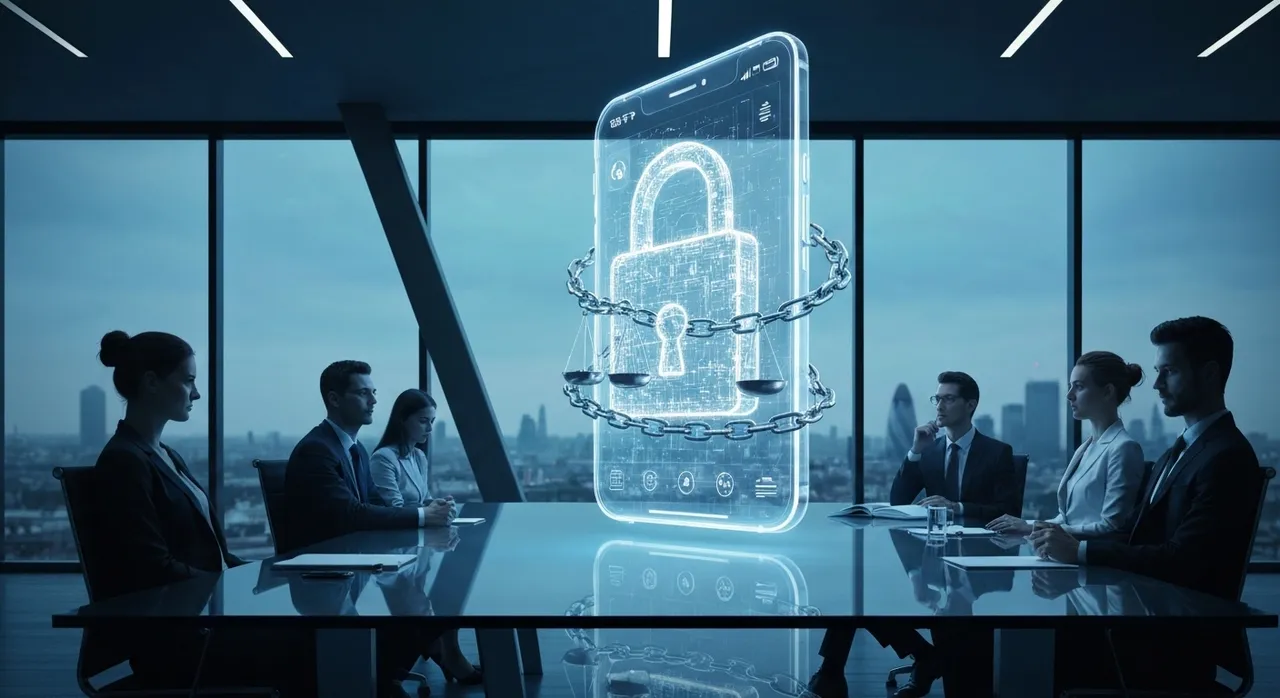
The technical conflict here is binary. End-to-end encryption, by its very definition, ensures that only the sender and the recipient hold the keys to view the content. If a platform cannot see the content, it cannot scan it. If it cannot scan it, it cannot comply with a 48-hour mandate to identify and suppress duplicates. By discontinuing encryption, Meta has essentially re-opened the “envelope” of every DM, allowing its automated hashing and AI-scanning tools to police the platform in real-time, thereby insulating the company from the legal liabilities of the Take It Down Act.
The Technical Divide: Hashing vs. The Signal Protocol
To appreciate the depth of this shift, we must look at the underlying technology. Instagram’s optional E2EE utilized the Signal Protocol, the industry gold standard for asynchronous messaging. This protocol uses a Double Ratchet algorithm to provide perfect forward secrecy, ensuring that even if one message key is compromised, the rest of the conversation remains secure.
However, the Signal Protocol is functionally incompatible with server-side “perceptual hashing”—the technology used to identify NCII. Tools like PhotoDNA or Meta’s own internal AI classifiers require the ability to analyze the visual components of a file to generate a unique digital fingerprint. If that file is encrypted, the server sees only a random string of bits. While “Client-Side Scanning” (CSS) was once proposed as a middle ground—where the phone scans the image before it is encrypted—it was met with such fierce backlash from the cybersecurity community that Meta likely viewed the complete removal of E2EE as the only viable path to full legal compliance under the new 2026 statutes.
Criticism and the “Enshittification” of Digital Privacy
The decision to discontinue Instagram encryption has not gone unchallenged. Groups such as the Electronic Frontier Foundation (EFF) and the Center for Democracy and Technology (CDT) have issued scathing rebukes, arguing that Meta is sacrificing the fundamental human right to private communication on the altar of regulatory convenience.
“Encryption is not just for criminals; it is a vital shield for activists, journalists, and even victims of domestic abuse who need to communicate without fear of surveillance,” noted a lead researcher at the Internet Society. Critics argue that by removing the “digital seal” on DMs, Meta is creating a honeypot for data breaches. Without E2EE, a single breach of Meta’s internal servers could expose years of private conversations, images, and sensitive data to hackers—a risk that was mathematically impossible under the previous encrypted model.
Furthermore, concerns are mounting regarding AI training and data monetization. Without the cryptographic barrier of E2EE, Meta now has the technical capability to feed DM content into its large language models (LLMs) to refine ad-targeting algorithms or train its virtual assistants. While Meta’s current privacy policy may prohibit this, the technical barrier is gone, leaving only the company’s “promise” as a safeguard—a prospect that many privacy advocates find insufficient given the company’s historical record.
The Great Migration: WhatsApp as the “Last Fortress”
In a strategic move to soften the blow, Meta has spent the last 48 hours aggressively promoting WhatsApp as the preferred destination for security-conscious users. By bifurcating its ecosystem, Meta is attempting a “market segmentation” of privacy:
- Instagram/Threads: Positioned as “discovery” and “public-facing” platforms where moderation is prioritized over privacy. These apps will feature no E2EE, full AI integration, and aggressive automated scanning.
- WhatsApp: Positioned as the “utility” and “private chat” tool. Because WhatsApp’s identity is built entirely on the premise of secure communication, Meta appears willing to take the legal and regulatory heat required to keep E2EE the default there—at least for now.
This “Strategic Partitioning” allows Meta to comply with the Take It Down Act on its social platforms while maintaining a high-security alternative to prevent a mass exodus to competitors like Signal or Telegram. However, analysts warn that if the 48-hour takedown requirements of the Take It Down Act prove successful, regulators may soon turn their sights toward WhatsApp, demanding similar scanning capabilities in the name of “safety-by-design.”
Strategic Steps for the Privacy-Conscious User
For users who feel exposed by the fact that Instagram encryption discontinued, the window for immediate action is narrow but critical. Security experts recommend the following protocol to maintain digital hygiene in a post-encryption Instagram environment:
- Audit Your History: Use the “Download Your Information” tool within Instagram settings to secure a local copy of your data. Pay special attention to the “Encrypted Chats” folder if it still appears in your archive request.
- Migrate Sensitive Threads: For conversations involving financial data, medical information, or sensitive personal imagery, move the dialogue to an E2EE-by-default platform like Signal or WhatsApp.
- Disable AI Summaries: In the coming weeks, Instagram is expected to roll out “DM Summaries.” If you value privacy, ensure this feature is disabled, as it requires the AI to process the “unsealed” content of your messages.
- Assume Visibility: The fundamental rule of the new era is to treat Instagram DMs as semi-public spaces. If you wouldn’t want a moderator or an automated algorithm to see it, do not send it via Instagram.
The Paradox of 2026: Safety vs. Sovereignty
The events of May 8, 2026, will likely be remembered as the moment the “Encryption Era” of social media died. For the past decade, the industry moved toward Security-by-Default, a trend sparked by the Snowden revelations and cemented by the rise of the Signal Protocol. Today, that momentum has been reversed by a new priority: Safety-by-Compliance.
The “Take It Down Act” is undeniably a force for good in its intent to eradicate the scourge of deepfake pornography and NCII. No one can argue against the need for rapid response when a victim’s life is being dismantled by viral abuse. However, the cost of this safety is the elimination of the “dark space” where private citizens once communicated outside the gaze of the platform holder.
As Instagram encryption discontinued, we entered a world where the platform is no longer just a neutral pipe, but an active, seeing guardian. Whether this leads to a safer internet or merely a more surveilled one remains to be seen. What is certain is that the “Seal of Privacy” has been broken, and for the two billion users on Instagram, the walls of the digital room have just become transparent.
Written by
TempMail Ninja
Digital privacy and online security expert. Passionate about creating tools that protect users' identity on the internet.