Instagram Encryption Removed: Meta Discontinues E2EE for Direct Messages
Article Content
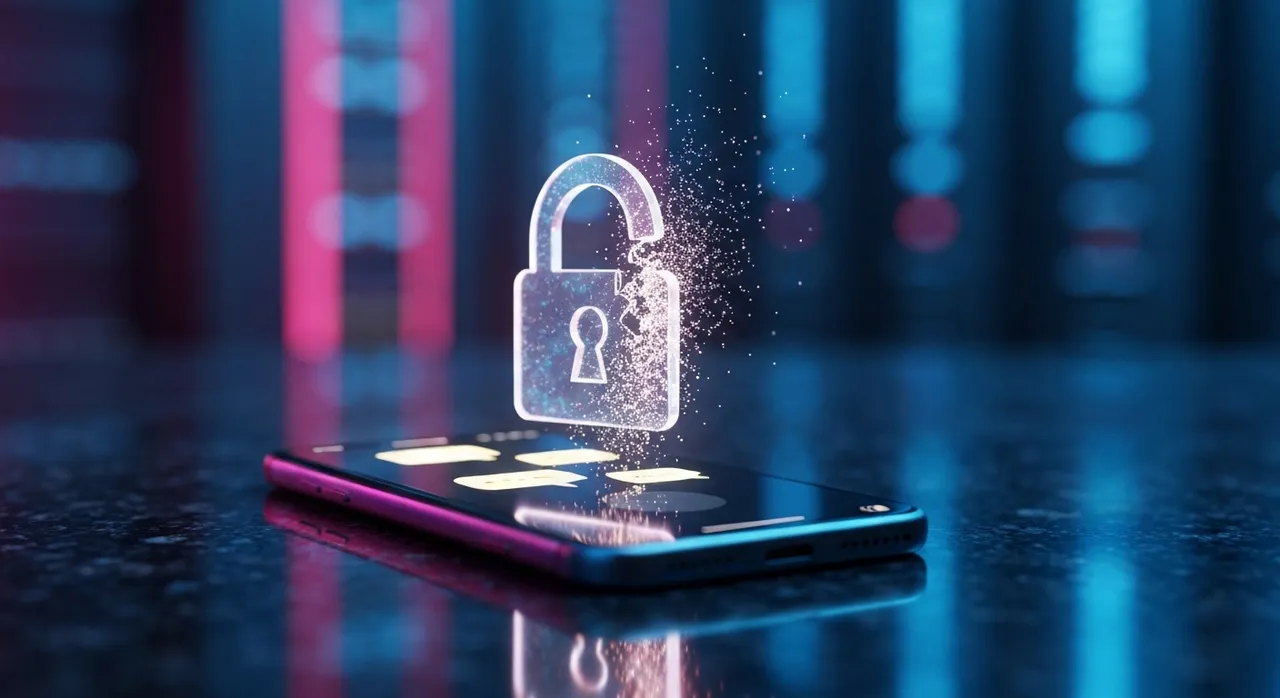
On May 8, 2026, the digital privacy landscape shifted under the weight of corporate pragmatism as Meta officially completed the global phase-out of end-to-end encryption (E2EE) for Instagram direct messages. This move represents a startling 180-degree turn from Mark Zuckerberg’s 2019 “privacy-focused vision,” which promised a unified, secure messaging fabric across Facebook, Instagram, and WhatsApp. With Instagram encryption removed, the platform’s billion-plus users are now entering a new era where “private” conversations are no longer technically shielded from the eyes of the service provider.
The transition marks the end of an era for the optional “Encrypted Chat” mode on Instagram. While WhatsApp continues to operate on a default-E2EE model, Instagram’s encryption was a feature users had to seek out. Meta’s official justification—”low adoption rates”—has been met with skepticism from the cybersecurity community, who suggest the rollback is less about user interest and more about the technical requirements of training next-generation AI and complying with aggressive new legislation like the Take It Down Act, set to take effect later this month.
The Technical Void: What Happens When Instagram Encryption is Removed?
To understand the gravity of this change, one must look at the technical architecture of secure messaging. End-to-end encryption, often utilizing the Signal Protocol and its “Double Ratchet” algorithm, ensures that cryptographic keys are generated and stored only on the sender’s and recipient’s devices. In this model, the service provider (Meta) acts as a blind courier; they can see that a message was sent, but the content remains a ciphertext that cannot be decrypted on their servers.
With Instagram encryption removed, DMs have transitioned to “standard encryption” or encryption-in-transit. This is functionally similar to the TLS (Transport Layer Security) protocols used by Gmail or traditional web browsing. While your data is protected from “man-in-the-middle” attacks by hackers while it travels from your phone to Meta’s data centers, the messages are decrypted at the server level. Once the data resides on Meta’s infrastructure, it exists in a state that the company’s internal systems—and by extension, AI training loops and law enforcement—can access.
Encryption at Rest vs. End-to-End Encryption
- End-to-End (E2EE): Only the participants have the keys. The server never “sees” the content. This is the gold standard for privacy.
- Standard (TLS/SSL): Data is encrypted during transit but “unwrapped” at the server. Meta retains the master keys to access your message history.
- Metadata: Even under E2EE, Meta collected metadata (who you talk to, when, and from where). Without E2EE, they now also collect the semantic content of the chat.
The Business of Behavior: Why Meta Reclaimed Your Data
The timing of this rollback is not coincidental. In early 2026, Meta launched its Model Capability Initiative (MCI), an aggressive program designed to refine its proprietary Large Language Models (LLMs). Training an AI to understand human nuance, sarcasm, and local slang requires massive datasets of “natural” conversation. By removing the encryption barrier on Instagram, Meta has effectively unlocked a gargantuan reservoir of conversational data to fuel its generative AI ambitions.
Furthermore, the Take It Down Act (effective May 19, 2026) imposes strict 48-hour windows for platforms to identify and remove non-consensual intimate imagery (NCII) and deepfakes. Privacy experts argue that Meta cannot feasibly comply with these laws within encrypted environments without implementing “client-side scanning”—a controversial technology that many believe breaks the fundamental promise of E2EE anyway. Rather than navigating the technical minefield of scanning encrypted messages, Meta chose to lower the wall entirely.
Privacy Implications: Surveillance and Lawful Access
The removal of the E2EE layer has immediate consequences for the “Going Dark” debate—a long-standing conflict between tech giants and law enforcement. For years, agencies like the FBI and Interpol have argued that encryption provides a sanctuary for criminal activity. Without E2EE, Meta can now respond to standard legal requests by providing the actual plaintext content of DMs, rather than just metadata.
Critical risks of this “unwalled” system include:
- Search Warrant Accessibility: In jurisdictions where speech or medical privacy (such as reproductive health information) is contested, unencrypted DMs become a primary source of evidence for prosecutors.
- Behavioral Profiling: Meta’s advertising engine can now ingest the sentiment of your private chats. Discussing a specific brand of shoes in a DM could lead to a targeted ad appearing in your feed within minutes.
- Internal Security Vulnerabilities: By centralizing the ability to decrypt messages, Meta creates a higher-value target for state-sponsored actors. If Meta’s internal “master keys” or administrative tools are compromised, every Instagram DM ever sent becomes vulnerable.
How to Reclaim Your Privacy: The 2026 Audit
While the native security of the platform has diminished, users are not entirely powerless. To mitigate the impact of Instagram encryption removed, a multi-layered approach to digital hygiene is required. Experts recommend a “Privacy Audit” to disconnect your metadata trail from Meta’s broader behavioral engine.
1. Migrate Sensitive Chats to Signal
If a conversation requires absolute confidentiality, it should no longer take place on Instagram. Signal remains the industry benchmark, as it is open-source, non-profit, and employs E2EE by default for all communications. Unlike WhatsApp, which is also owned by Meta and shares significant metadata with its parent company, Signal is designed to store the absolute minimum amount of user data possible.
2. Secure Your Archive Before Deletion
Meta has indicated that older encrypted chats may become inaccessible as the infrastructure is decommissioned. Users should immediately export their data to ensure they have a copy of sensitive historical records. Navigate to: Settings > Your Activity > Download Your Information. Select “JSON” format for the most technically portable version of your chat history.
3. Enable the Global Privacy Control (GPC) Signal
As of 2026, the Global Privacy Control (GPC) is a legally recognized standard in many regions, including California and the EU. By enabling the sec-gpc: 1 signal in your browser (now native in Brave, Firefox, and Chromium-based browsers), you send a persistent request to every website you visit—including Meta—to “Do Not Sell or Share” your personal information. While Meta has faced criticism for inconsistent GPC enforcement, it remains a critical legal lever for users seeking to limit tracking.
4. Hardening the Meta Account Center
Meta has recently transitioned many users to the Meta Account system (formerly Account Center). This is the central nervous system for your data across Instagram, Facebook, and Threads. To limit the stitching of your digital identity, take the following steps:
- Disable “Off-Meta Activity”: This prevents Meta from receiving data from third-party websites (like news sites or retail stores) and linking it to your Instagram profile.
- Unlink “Cross-App Tracking”: Disconnect the automated data sharing between your Facebook and Instagram profiles to prevent the creation of a “Unified Behavioral Profile.”
- Review “Ad Topics”: Manually opt out of sensitive ad categories to reduce the profiling engine’s reliance on your chat-derived interests.
The Future of Encryption: A Tiered Internet?
The decision to pull back on Instagram encryption suggests a strategic pivot toward a tiered internet. Meta appears to be positioning WhatsApp as its “secure” utility, while Instagram and Facebook are increasingly treated as “discovery” platforms where user privacy is traded for algorithmic personalization. This bifurcation forces users into a difficult choice: social connectivity or digital sovereignty.
As governments continue to push for “lawful access” and corporations hunger for more data to feed the AI revolution, the era of “privacy-by-default” on major social platforms appears to be receding. The removal of encryption on Instagram is not just a feature change; it is a declaration of intent. It signals that in the eyes of the world’s largest social media company, the value of your data to their AI models now outweighs the value of your right to a private conversation.
In this evolving landscape, the “Ninja Editor” advice is clear: Treat every unencrypted message as a public postcard. If you wouldn’t want a moderator, an AI trainer, or a government official to read it, do not send it through a platform where Instagram encryption removed has become the new standard.
Written by
TempMail Ninja
Digital privacy and online security expert. Passionate about creating tools that protect users' identity on the internet.