Institutional Doxxing Defense: Countering New Mobile Harassment Tactics
Article Content
On April 15, 2026, the campus of Columbia University became the flashpoint for a fundamental shift in how modern society confronts digital vigilantism. While the return of the infamous “doxxing trucks”—mobile LED screens broadcasting the names, faces, and private home addresses of students—was not a new sight, the institutional response marked a radical departure from the past. For years, the burden of digital safety rested on the individual. In the spring of 2026, however, the call for a robust institutional doxxing defense has finally superseded the “privacy hygiene” workshops of the early 2020s, signaling a new era of legal and technical warfare against harassment-for-hire.
The incident at Columbia, which followed a recurring campaign by groups like Accuracy in Media (AIM), highlighted a critical failure in the existing safety net. Despite students following standard protocols—removing their information from data brokers and locking down social media—the “doxxing trucks” leveraged sophisticated data scraping and geofencing to terrorize affiliates. This escalation has prompted academic and corporate leaders to advocate for a multi-layered defense strategy: one that combines individual technical measures with aggressive legal support and platform-level reporting protocols.
The Anatomy of Modern Digital Vigilantism: Beyond the Screen
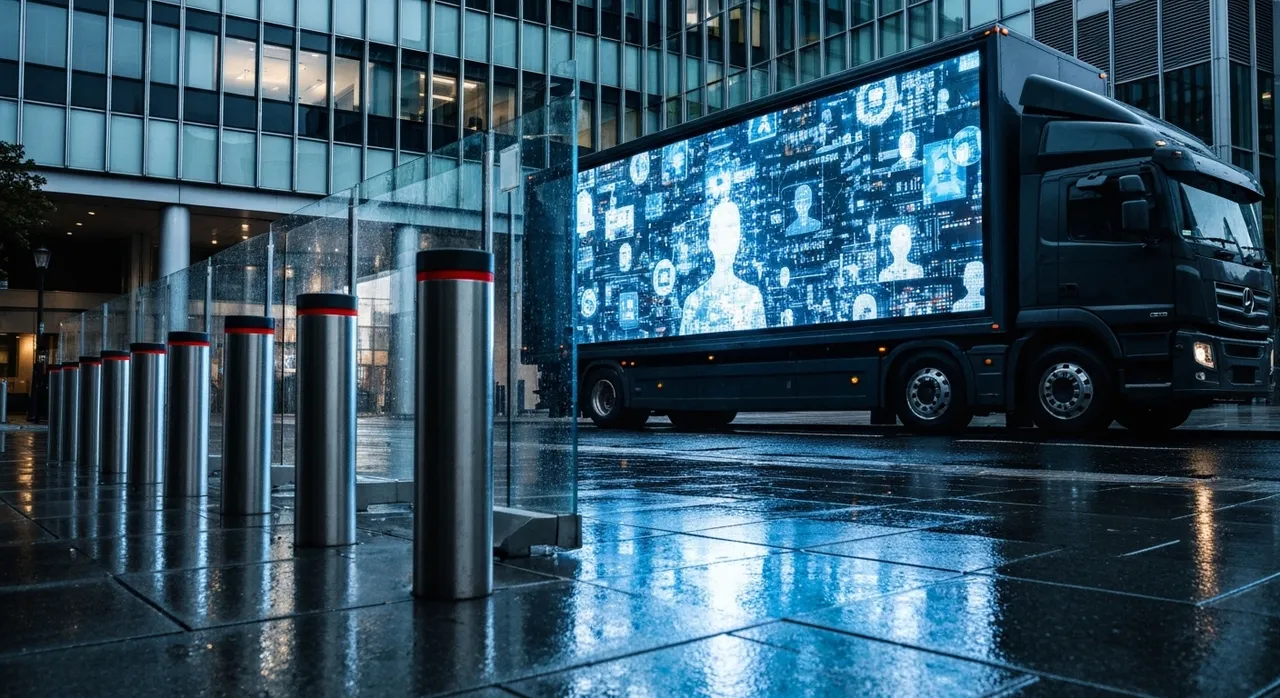
To understand the necessity of an institutional doxxing defense, one must first dismantle the infrastructure of a 2026 doxxing campaign. No longer limited to obscure forums or 4chan threads, doxxing has been professionalized and physicalized. The “doxxing trucks” appearing at Ivy League campuses are high-resolution mobile billboard units equipped with cellular uplinks, often displaying dynamic content that updates in real-time based on social media activity.
The Data Scraping Pipeline
Modern doxxers utilize automated scraping tools that aggregate data from three primary sources:
- Public Records and Data Brokers: Information from Whitepages, Spokeo, and Acxiom. Even if a victim opts out, data “ghosts”—residual information in secondary caches—can be resurrected by AI-driven search algorithms.
- WHOIS Directories: Unmasked domain registration data remains a goldmine. If a student or faculty member once registered a personal blog or professional portfolio without WHOIS privacy protection, their physical address is often permanently archived in historical databases.
- Social Engineering and “QR Bounty Hunting”: The trucks at Columbia on March 2, 2026, featured QR codes that invited the public to “report bad actors.” This crowdsourced harassment creates a feedback loop where misinformation is validated by “digital vigilantes” in real-time.
The Infrastructure of Harassment
The 2026 doxxing model is specifically designed to bypass digital filters. By moving the harassment into the physical world—parking trucks outside the homes of students and university senators like Helen Han Wei Luo—the perpetrators create a state of perpetual psychological siege. Traditional digital hygiene, while necessary, is insufficient against a truck that can follow a target from campus to their private residence.
The Pivot to Institutional Doxxing Defense
For the past decade, universities responded to doxxing with “resource guides” and referrals to pro-bono legal clinics. The April 2026 editorial board of the Columbia Daily Spectator argued that this approach is obsolete. The demand is now for a proactive institutional doxxing defense where the institution itself assumes the legal and financial burden of protection.
Right to Action: The New Legal Standard
The most significant shift in 2026 is the adoption of “Right to Action” protocols. In March 2026, an Illinois court issued a landmark verdict under the state’s Civil Liability for Doxing Act, awarding nearly $46,000 to a victim of a digital smear campaign. This case established that doxxing is no longer just an “internet problem”; it is a legally actionable civil wrong.
Institutions are now integrating these legal precedents into their defense frameworks:
- Independent Counsel for Victims: Providing students and staff with dedicated attorneys to file civil suits against doxxing organizations, specifically targeting the “extreme and outrageous” conduct identified in the Yusuf Hafez vs. AIM case.
- Injunctions Against Vendors: Pursuing legal action not just against the organizers, but against the logistics companies that lease the LED trucks, treating them as accomplices in the distribution of private identifying information (PII).
- State-Level Advocacy: Pushing for the adoption of laws similar to California’s AB 1979, which allows victims to sue for up to $30,000 plus attorney fees, effectively making the cost of doxxing campaigns prohibitively expensive.
Technical Countermeasures: The Individual’s Tactical Stack
While the institution provides the “heavy artillery” of legal defense, the individual must still maintain a rigorous technical defense layer. In 2026, this has evolved beyond simply “going private” on Instagram. It requires a deep understanding of data persistence and network security.
1. WHOIS Data Masking and Domain Privacy
WHOIS privacy protection is no longer optional. Modern doxxing campaigns often target individuals by identifying domains they own. In 2026, experts recommend using “privacy-first” registrars that provide redaction at the registry level. This prevents the “leaking” of registrant data into public directories that doxxers use to find physical addresses associated with professional portfolios or side projects.
2. Advanced Authentication and 2FA Resilience
Account takeovers often accompany doxxing. The 2026 standard for institutional doxxing defense mandates the use of hardware security keys (like YubiKeys) rather than SMS-based 2FA. SMS 2FA is vulnerable to SIM-swapping—a tactic frequently used to hijack the accounts of doxxed individuals to further broadcast their PII from their own profiles.
3. Proactive PII Scrubbing and Google’s “Results About You”
In early 2026, Google expanded its “Results About You” tool to include proactive alerts for government-issued IDs, passport data, and Social Security numbers. A comprehensive defense strategy involves:
- Setting up automated removal requests for any search result that aggregates PII with “intent to harm.”
- Utilizing professional-grade removal services like DeleteMe or BlackCloak, which perform monthly sweeps of over 500 data broker sites.
- Implementing WHOIS masking retroactively by using historical “takedown” requests to purge archives like the Wayback Machine when PII has been exposed.
Dismantling the Infrastructure: Platform-Level Reporting
The third pillar of a premier institutional doxxing defense is the aggressive engagement with digital platforms. Doxxing trucks do not exist in a vacuum; they are fueled by social media amplification. By the time a truck arrives on campus, the PII has usually already been “pre-released” on platforms like X (formerly Twitter) or through dedicated “shame” websites.
The “Right to be Forgotten” in the US Context
While the US lacks a federal “Right to be Forgotten” like the EU’s GDPR, the 2026 legal landscape has created a “de facto” version through harassment statutes. Institutional legal teams are now using DMCA takedowns—not for copyright, but for the unauthorized use of private images (headshots taken from university directories)—to force platforms to delink doxxing sites. If a doxxing site uses a student’s official university portrait without permission, the institution can file a mass-takedown request, effectively blinding the digital side of the campaign.
Reporting “Digital Vigilante” Infrastructure
Institutional defense also involves identifying the payment processors and web hosts that support doxxing websites. By documenting the “incitement of harm” (a standard defined by the National Association of Attorneys General as the malicious exposure of PII), legal teams can pressure service providers to terminate accounts for violating Terms of Service (ToS). This strategy aims to dismantle the digital “homes” of these campaigns, such as the “Columbia Hates America” or “Columbia Hates Jews” domains used in previous years.
Strategic Resilience: The Future of Academic Freedom
The escalation of doxxing trucks is not merely a privacy concern; it is a threat to academic freedom and the safety of the campus community. When students and faculty fear that a controversial research paper or a political statement will result in a truck displaying their home address to thousands, the “marketplace of ideas” collapses into a state of silence.
An effective institutional doxxing defense is, therefore, a defense of the institution’s core mission. This requires a multi-layered defense strategy:
- Legal: Pursuing civil damages and permanent injunctions against doxxing entities.
- Technical: Mandating 2FA, WHOIS privacy, and providing automated PII scrubbing for all affiliates.
- Administrative: Expanding “Doxxing Resource Groups” into fully-funded emergency response teams that include private security for those whose physical safety is compromised.
As we move past the events of April 15, 2026, the message is clear: the era of the “vulnerable individual” is over. Through a combination of Right to Action protocols and sophisticated technical countermeasures, institutions are finally building the walls necessary to protect their people from the digital—and physical—vigilantes of the modern age. The “doxxing truck” may still drive down Broadway, but in 2026, it is met not just with umbrellas and balloons, but with the full, formidable weight of institutional law and technology.
Written by
TempMail Ninja
Digital privacy and online security expert. Passionate about creating tools that protect users' identity on the internet.