Little Snitch Linux Released: Bringing Advanced Firewall Privacy to Open Source
Article Content
For over two decades, the macOS ecosystem has enjoyed a unique luxury: the ability to easily track, inspect, and intercept outgoing network traffic on a per-process basis via Objective Development’s Little Snitch. For Linux users, this level of granular visibility—the ability to see precisely which application is calling home to which server, and to block that connection with a single click—has historically been elusive, often requiring the complex configuration of iptables, nftables, or relying on third-party user-space workarounds. As of April 2026, that landscape has fundamentally shifted.
Objective Development has officially brought the Little Snitch Linux experience to the open-source world. By leveraging cutting-edge eBPF technology and a Rust-based backend, the developers have ported the core philosophy of their famed macOS tool to Linux. This release is more than a mere port; it is an architectural reimagining designed to meet the unique demands and freedoms of the Linux platform.
The Technological Leap: Harnessing eBPF
At the heart of Little Snitch Linux lies eBPF (extended Berkeley Packet Filter). Unlike traditional firewalls that often operate primarily at the network layer or rely on complex, heavy-handed kernel modules, eBPF allows the tool to run sandboxed, high-performance code directly within the Linux kernel. This approach is critical for achieving the high-performance traffic interception required for real-time monitoring without compromising system stability.
The transition to eBPF comes with specific technical prerequisites. The utility requires Linux kernel 6.12 or higher. This constraint is not arbitrary; it stems from significant improvements in the eBPF verifier introduced in the 6.12 release. Specifically, the verifier’s improved capability to track and analyze complex program logic significantly reduces the instruction paths it needs to evaluate, enabling the sophisticated monitoring logic Little Snitch Linux demands. Additionally, the tool requires BTF (BPF Type Format) support to be enabled in the kernel, a mechanism that enables “Compile Once – Run Everywhere” (CO-RE) functionality. This allows the application to remain portable across different kernel versions without the need for manual recompilation—a massive leap forward in usability for a Linux-based tool.
A Shift in Architecture: Why Rust and Web UI?
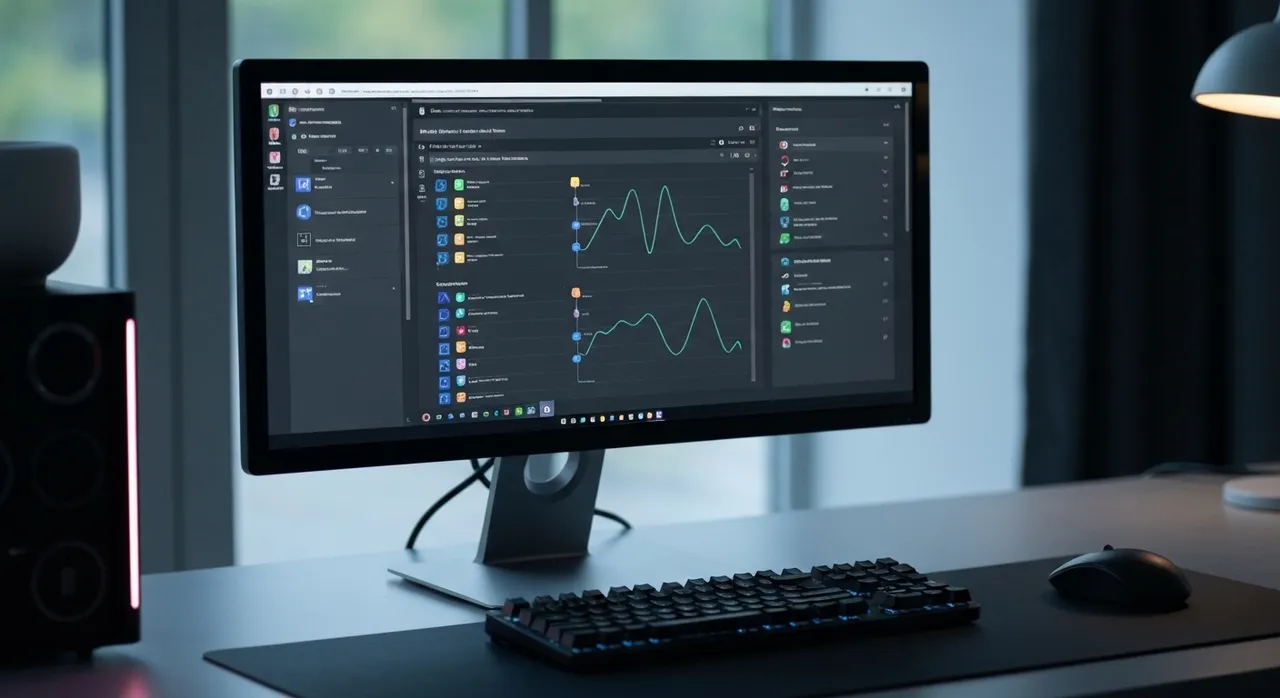
The developers have opted for a modern stack: the core daemon is written in Rust, chosen for its memory safety and performance, while the user interface is delivered via a web-based application. While a web UI might seem like an unconventional choice for a desktop utility, it introduces a massive practical advantage: remote management. By hosting the UI at localhost:3031, the tool becomes equally adept at monitoring a local desktop as it is a headless Linux server located elsewhere on the network. This makes it an invaluable utility for homelab enthusiasts or system administrators who want to audit the telemetry of services like Nextcloud, Home Assistant, or Zammad from the comfort of their own workstations.
Privacy First: Understanding the Scope
It is vital to draw a clear line between the new Little Snitch Linux and its macOS counterpart. The developers are explicit in their positioning: this is a privacy tool, not a security tool. Due to the inherent resource and complexity constraints imposed by eBPF, it is not designed to stop a sophisticated, malicious actor or a process specifically engineered to evade kernel-level firewalls. In theory, a sufficiently motivated adversary could flood the system tables to bypass the filter.
Instead, the tool excels as a transparency layer. It is designed to expose the “silent” network activity of your applications. In an era where software telemetry is pervasive, having the ability to see exactly which applications are connecting to advertising networks, usage tracking servers, or telemetry endpoints is a transformative experience for the privacy-conscious user. During initial testing by the developers, it was revealed that while a typical Linux desktop environment (like Ubuntu) proved relatively quiet—with only about nine system processes making outbound connections over a week—the same system on macOS displayed over 100 processes, highlighting the sheer ubiquity of background data exchange in modern operating systems.
How it Operates: Managing Connections
The core functionality of Little Snitch Linux empowers the user to take control through a simplified, actionable workflow. The interface presents real-time connection data, allowing users to:
- Monitor: View live traffic history and data volumes per process.
- Inspect: Identify the specific domains or IP addresses applications are reaching out to.
- Control: Implement rules to allow or deny connections based on the process, port, or protocol.
The rule management is robust, supporting blocklists in various common formats, including one domain or hostname per line, /etc/hosts-style entries, and CIDR network ranges. For those looking to get started immediately, the tool supports widely used blocklist projects such as Hagezi, Peter Lowe, Steven Black, and oisd.nl. Users should be aware that the rule format (.lsrules) used by the macOS version is not compatible with the Linux iteration, requiring users to rebuild their rule sets specifically for the new environment.
Open Source vs. Proprietary Elements
The release strategy for Little Snitch Linux reflects a “free, functional, and open where it counts” philosophy. The project is comprised of three distinct components:
- eBPF Kernel Component: Open source (GPLv2), allowing for auditability, community-led bug fixes, and potential back-porting to older kernel versions.
- Web UI: Open source (GPLv2), enabling users to contribute to the interface’s development or customization.
- Daemon: The proprietary backend that manages the rules, blocklists, and connection data. While free to use and distribute, this remains a closed-source “black box,” a point that has sparked some debate within the FOSS community regarding the auditability of a privacy tool.
The Road Ahead: Challenges and Opportunities
The current requirement for Linux kernel 6.12+ significantly limits the immediate addressable market to users running the absolute latest distributions, such as the most recent releases of Ubuntu, Fedora, or Arch Linux. However, this is not a permanent state. The developers have noted that compatibility with kernels as old as 5.17 is theoretically achievable through further code refactoring. By inviting community contributions, they have signaled that the barrier to entry may lower significantly as the project matures.
For the “modern ninja,” Little Snitch Linux fills a long-standing void. It provides the visibility required to operate in an increasingly interconnected and telemetry-heavy digital landscape. Whether the user is a privacy advocate concerned about data exfiltration, a developer auditing the network impact of their own applications, or a homelab enthusiast looking to tighten the leash on self-hosted services, this tool provides a powerful, high-performance, and incredibly intuitive way to master one’s own network traffic. Despite the limitations of eBPF and the proprietary nature of its daemon, the release represents a massive milestone in bringing professional-grade network transparency to the Linux desktop.
Written by
TempMail Ninja
Digital privacy and online security expert. Passionate about creating tools that protect users' identity on the internet.