Lost Doctor Who Episodes Recovered and Released to Public
Article Content
For more than six decades, a shadow has hung over the legacy of Doctor Who. The BBC’s mid-20th-century practice of “wiping” or “junking” television masters—erasing and reusing expensive videotapes to free up storage space—resulted in the systematic destruction of nearly 100 episodes from the series’ inaugural years. For fans, these weren’t just tapes; they were lost chapters of a cultural phenomenon, leaving narrative gaps that forced generations to rely on audio reconstructions and static tele-snaps to visualize the First Doctor’s adventures. However, as of April 2026, the silence has finally been broken. The recovery of two lost Doctor Who episodes, “The Nightmare Begins” and “Devil’s Planet,” has sent ripples of excitement through the global fan community, marking the first major discovery of its kind in 13 years.
The Resurrection of The Daleks’ Master Plan
The two recovered installments are essential pieces of the puzzle that is The Daleks’ Master Plan, a sprawling 12-part epic originally broadcast between late 1965 and early 1966. Starring William Hartnell as the First Doctor and Peter Purves as his companion, Steven Taylor, the serial was long considered a holy grail for collectors due to its length and significance in establishing the Daleks as a persistent, lethal threat in the series’ early mythology.
The discovery includes:
- Episode 1: “The Nightmare Begins” – The premiere installment, which sets the dark and gritty tone for the arc.
- Episode 3: “Devil’s Planet” – The third installment, following the Doctor and his companions as they flee the Daleks’ reach.
With the 2004 recovery of Episode 2, “Day of Armageddon,” the first three chapters of this complex 12-part story are now, for the first time in 60 years, available for public viewing. This recovery is not merely a triumph for nostalgia; it provides scholars and fans with a clearer understanding of the production values, acting styles, and directorial choices that defined the Hartnell era.
A Mission of Preservation: The Role of Film is Fabulous!
This momentous find was facilitated by the charitable trust Film is Fabulous!, an organization dedicated to the preservation of vulnerable film and television collections. Unlike entities that operate solely as treasure hunters, Film is Fabulous! focuses on the delicate work of managing private film archives that are often left without clear guidance after a collector passes away. Their approach is rooted in deep respect for the collector’s history while prioritizing the professional preservation of media that might otherwise be lost to decay or ignorance.
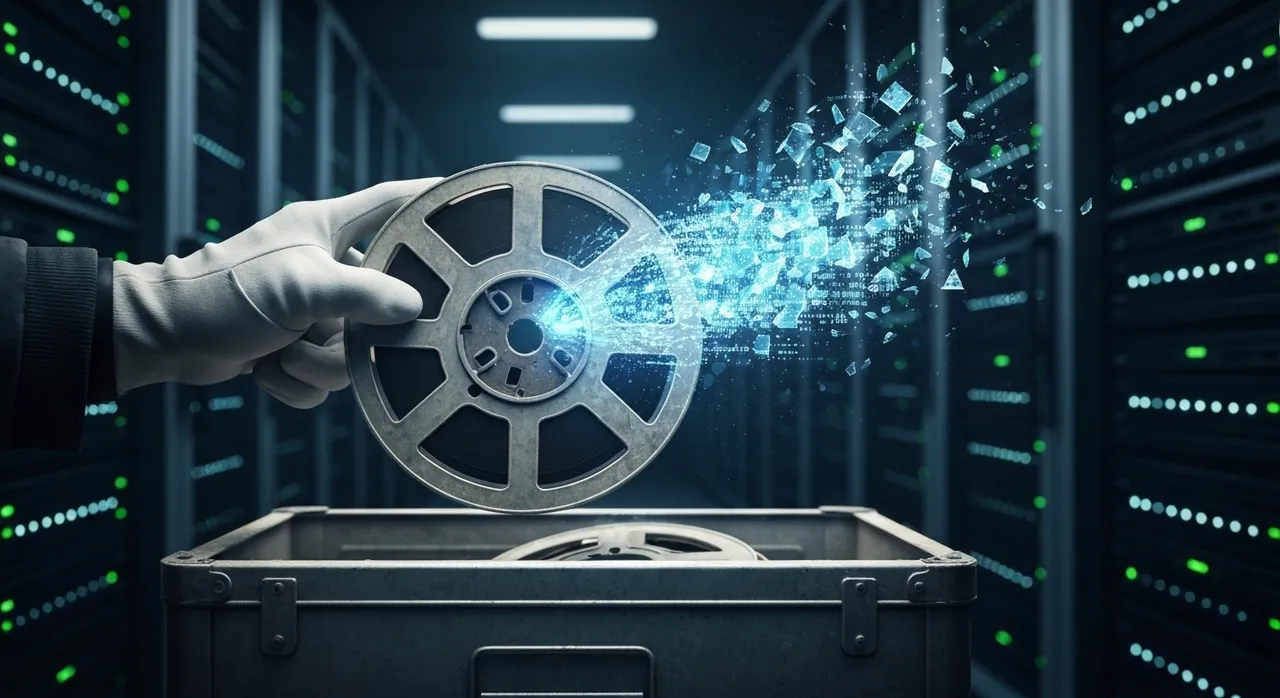
The recovery process for these specific episodes was handled with “kid gloves,” emphasizing that the physical media—the original 16mm telerecordings—were in a precarious state. By acting as a bridge between private ownership and the BBC’s formal archive, the trust ensured that these materials were not just located, but properly stabilized, digitized, and returned to the public domain in the highest possible quality.
Technical Depth: The Art of Restoration
Restoring 60-year-old 16mm film is an exercise in meticulous technical precision. When these episodes were found in a private collection, they were subject to the ravages of time: dust, film grain, and potentially chemical degradation. The restoration team employed by BBC Archives utilized high-end digital signal processing and frame-by-frame cleaning to bring these episodes to modern standards.
Key technical considerations included:
- Digital Clean-up: Removing physical artifacts such as scratches, splices, and dust that often plague older film prints.
- Resolution Stabilization: Using algorithms to mitigate the jitter and unstable frame rates common to early television film transfers.
- Audio Restoration: Separating the original broadcast mono tracks from background hiss, ensuring that dialogue—delivered by giants of the era like William Hartnell—remains crisp and intelligible.
This technical rigor is what separates a “lost” finding from an accessible archive item. It is not enough to simply “find” the film; the transformation into a digital file that can stream on 4K displays is where the modern magic of media archeology occurs.
Hope for the Future: Are There More?
The recovery of these episodes, while monumental, leaves 95 episodes from the 1960s still missing from the BBC archives. However, the success of this project has injected a new sense of optimism into the community. The fact that these episodes were identified as “cutting copies”—prints used for internal technical review before mass duplication—suggests that the reach of original broadcast material was wider than previously estimated.
If copies of these highly specific technical prints were held by a private individual for decades, it stands to reason that other collections, perhaps currently mislabeled or gathering dust in remote storage, could contain further lost gems. The legacy of Doctor Who is essentially being written in real-time as these disparate film cans emerge from obscurity.
Global Accessibility and Cultural Impact
The BBC’s strategy for the release of these episodes serves as a benchmark for how rediscovered media should be handled. By debuting “The Nightmare Begins” and “Devil’s Planet” on BBC iPlayer for domestic viewers and simultaneously launching them on the official Doctor Who Classic YouTube channel for an international audience, the corporation has prioritized transparency and inclusivity.
The cultural impact of this return cannot be overstated. For Peter Purves, who saw the episodes for the first time in six decades during a private surprise screening, the event was deeply emotional. It serves as a reminder that the actors and crew members who built the foundations of this global franchise are still with us, and the ability to reunite them with their work is as vital as the preservation of the footage itself.
In the digital age, where content is often viewed as transient, the Doctor Who community’s decade-long “pixel-hunting” and dedicated archival work prove that television history is as precious as any fine art. Every frame recovered from a dusty can is a testament to the fact that, even in the era of streaming, the past is never truly closed. As we look toward future discoveries, the success of Film is Fabulous! serves as a beacon for all who believe that the lost stories of television are worth fighting to bring home.
Tags
Written by
TempMail Ninja
Digital privacy and online security expert. Passionate about creating tools that protect users' identity on the internet.