Meta AI Privacy Scandal: 1,100 Trainers Fired Over Intimate Data Harvesting
Article Content
On May 1, 2026, the fragile intersection of wearable technology and personal privacy suffered a seismic fracture. What is now being termed the Meta AI privacy scandal reached a fever pitch following the mass termination of over 1,100 AI trainers at Sama, a third-party data annotation firm based in Nairobi, Kenya. The fallout from these terminations has pulled back the curtain on a disturbing reality: the “privacy-by-design” promises of Meta’s Ray-Ban smart glasses may have been little more than a marketing veneer, concealing a vast pipeline of intimate data harvesting used to fuel the company’s generative AI models.
The scandal erupted when whistleblowers from within Sama revealed the nature of the content they were tasked with reviewing. Despite Meta’s repeated assurances that user data is anonymized and handled with the strictest security protocols, contractors reported being “forced to watch” high-definition footage of users in their most vulnerable moments. This included encounters in bathrooms, individuals undressing, sexual activity, and high-clarity captures of sensitive banking information—all recorded by the glasses and transmitted to the cloud for human oversight.
The Anatomy of the Meta AI Privacy Scandal
The Meta AI privacy scandal centers on the technical architecture of Meta’s “AI-on” ecosystem. Unlike traditional smart glasses that act primarily as passive recording devices, the latest generation of Ray-Ban Meta glasses utilizes a multimodal AI assistant. This system is designed to “see” what the wearer sees in real-time to provide proactive assistance, such as identifying landmarks, translating text, or offering fashion advice. However, the technical implementation of this feature requires a persistent media and metadata trail to be sent to Meta’s servers for processing.
According to whistleblower testimonies first brought to light by the Swedish investigation of Svenska Dagbladet and Göteborgs-Posten, the “AI-on” feature effectively creates a continuous loop of data ingestion. This data is not always processed purely by algorithms. When the AI encounters “low-confidence” scenarios—visual data it cannot easily categorize—it triggers a human-in-the-loop (HITL) review process. It is within this pipeline that the 1,100 terminated Sama workers operated, acting as the manual “labelers” for the world’s most intimate data sets.
Unmasking the “AI-on” Harvesting Loop
The technical core of the breach lies in how the Meta View app manages “Cloud Processing.” While Meta markets the glasses as having “on-device intelligence,” the reality is that the processing power required for advanced Generative AI and Multimodal Large Language Models (LLMs) frequently exceeds the capacity of the hardware’s onboard chipset. Consequently, a significant portion of the environmental data is offloaded to the cloud.
- Persistent Media Trails: Every time a user invokes the AI with “Hey Meta, look at this,” a high-resolution snapshot or video snippet is uploaded.
- Metadata Ingestion: Along with the visual feed, the system harvests GPS coordinates, biometric movement signatures, and proximity data from other Bluetooth devices.
- The Anonymization Failure: Whistleblowers claim that Meta’s touted “face-blurring” and “anonymization” tools frequently failed, allowing contractors to see the faces of both the wearers and unsuspecting bystanders in private settings.
Inside the Review Room: Whistleblower Claims of Intimate Exposure
The human cost of the Meta AI privacy scandal is perhaps its most harrowing chapter. The 1,108 workers at Sama were not merely viewing street scenes or public landmarks. They were assigned “buckets” of raw data that included the most private spheres of human life. One whistleblower described the experience as “surveillance of the soul,” noting that they were often required to label the specific contents of a user’s bedroom or identify the specific medication being handled by a wearer in a bathroom mirror.
The psychological toll on these contractors has led to claims of secondary trauma, mirroring previous scandals involving content moderators. However, the critical difference here is the lack of consent. Many of the subjects captured in the footage appeared to have no idea they were being recorded. Because the Ray-Ban smart glasses are designed to look identical to standard eyewear, the “privacy-by-design” philosophy was fundamentally subverted by the very nature of the product’s form factor.
The Fallacy of the Hardware Privacy LED
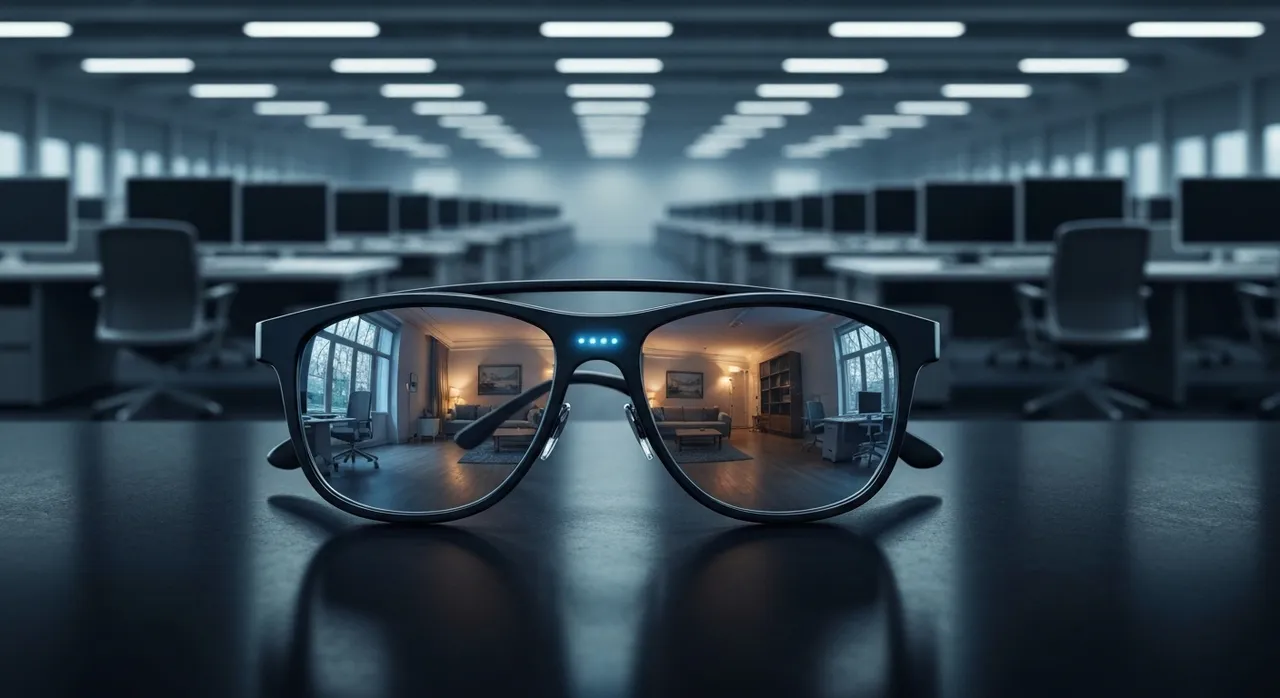
Meta has long pointed to the recording LED—a small light on the frame that glows when the camera is active—as its primary safeguard against surreptitious recording. However, the 2026 scandal has proven this measure to be woefully insufficient. Whistleblowers revealed that the “AI-on” background tasks often involve data captures so brief or so frequent that the LED remains virtually unnoticeable to bystanders, or is easily obscured by the wearer’s hair or environment.
Furthermore, the Meta AI privacy scandal highlights that the LED only signals *active* recording, not the *background processing* or the subsequent *human review*. Users who believed they were only using a “visual assistant” were often unaware that their interactions were being archived in a “training pool” where a stranger halfway across the globe could eventually view the footage to “improve model accuracy.”
Corporate Retaliation or Quality Control? The Sama Termination
The timing of the termination of 1,100 trainers has sparked a global debate over whistleblower protections in the AI era. Meta officially cut ties with Sama on May 1, 2026, stating that the contractor “failed to meet Meta’s rigorous quality and security standards.” However, the Africa Tech Workers Movement and several legal advocates argue that the move was a direct act of retaliation. The terminations occurred just weeks after workers began internalizing their concerns and speaking to journalists about the intimate data harvesting they were witnessing.
Sama has publicly rejected Meta’s characterization, asserting that it had consistently met all operational benchmarks and had received no prior warnings regarding “substandard” work. This discrepancy has fueled a $1.6 billion legal shadow, with class-action lawsuits gaining momentum in both the United States and Kenya. The core of these legal challenges rests on False Advertising and Invasion of Privacy—arguing that Meta’s marketing of “controlled by you” was a material misrepresentation of the device’s actual data pipeline.
The Regulatory Fallout: FTC and GDPR Intervene
The Meta AI privacy scandal has triggered immediate investigations by the Federal Trade Commission (FTC) in the U.S. and the Information Commissioner’s Office (ICO) in the UK. Regulators are focusing on whether Meta’s “Terms of Service” provided “meaningful consent” for human review of intimate footage. Under GDPR Article 35, companies must perform a Data Protection Impact Assessment (DPIA) for high-risk processing; critics argue that recording in bathrooms and bedrooms without explicit, per-instance consent constitutes a gross violation of these mandates.
Legal experts suggest that Meta may face record-breaking fines if it is proven that the company knew its anonymization tools were failing while continuing to ship data to Sama. The scandal also raises questions about the California Privacy Rights Act (CPRA), which grants users the right to limit the use of “sensitive personal information.” In the context of this breach, visual data from a wearable device likely falls under the highest tier of sensitive data.
How to Reclaim Your Privacy: The Meta View App Audit
In light of these revelations, privacy advocates are urging all “Big Tech” users—and specifically owners of Meta’s wearables—to perform an immediate privacy audit. To prevent your daily physical interactions from becoming AI training data, you must navigate the hidden settings within the Meta View app. Reclaiming your privacy requires a manual opt-out of the very features Meta markets as the “future of intelligence.”
- Disable AI Training: Open the Meta View app, go to Settings > Privacy > Data for AI, and toggle off the “Share Data to Improve AI” setting. This stops your footage from being sent to the human review pipeline.
- Audit Cloud Processing: Within the Privacy menu, look for “Cloud Processing.” If you value privacy over speed, consider disabling features that require the AI to “constantly look” at your environment.
- Clear Your Voice and Visual Logs: Frequently use the “Activity” tab to delete the history of your interactions. Meta stores transcripts and snapshots of your “Hey Meta” requests; deleting these removes them from the training pool.
- Physical Safeguards: For high-privacy areas (bathrooms, bedrooms), consider the “low-tech” solution of physically covering the camera lens or turning the device off entirely.
Conclusion: The Erosion of the Private Sanctuary
The Meta AI privacy scandal of 2026 serves as a definitive warning: as AI moves from our screens into our spectacles, the traditional boundaries of the home are disappearing. The termination of 1,100 workers at Sama was not just a labor dispute; it was a revelation of the human machinery required to sustain the illusion of “seamless” AI. When we wear devices that are “always on,” we are not just users; we are unwittingly becoming the data sensors for a global experiment in surveillance capitalism.
The path forward for Meta and its competitors—Apple, Google, and Samsung—must involve more than just brighter LEDs or longer Terms of Service agreements. It requires hardware-level privacy that ensures data never leaves the device without explicit, transparent, and granular consent. Until then, the “smart” in smart glasses will continue to stand for a sophisticated system of harvesting, leaving the user—and their most intimate moments—exposed to the world.
Written by
TempMail Ninja
Digital privacy and online security expert. Passionate about creating tools that protect users' identity on the internet.