Minnesota Water Utilities Cyberattack Targets Operational Technology
Article Content
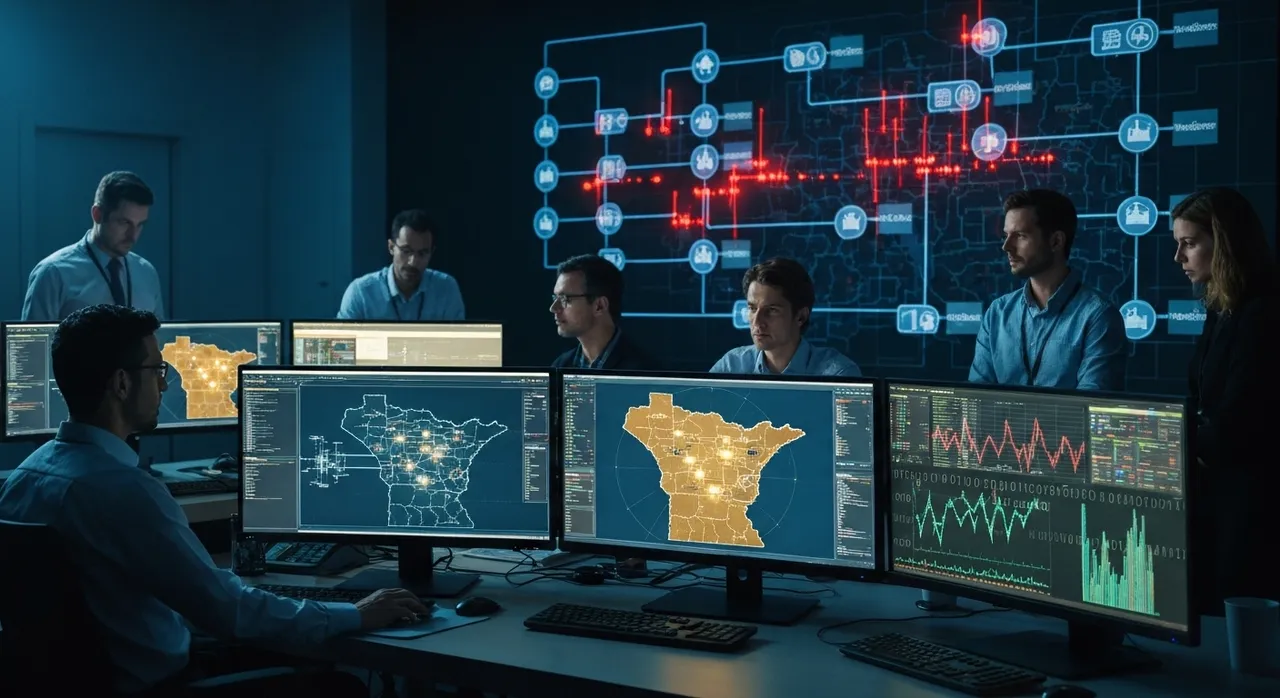
The digital perimeter safeguarding North America’s physical infrastructure was severely tested between July 26 and July 27, 2026, when a sophisticated, multi-pronged campaign breached operational technology (OT) networks across the Upper Midwest. The Minnesota water utilities cyberattack, which disrupted automated industrial control systems (ICS) and communication pathways at more than 30 community water and wastewater facilities, represents one of the most widespread multi-jurisdictional strikes against municipal utility infrastructure in United States history. Spearheaded by unknown threat actors whose tactics mirror state-sponsored disruption campaigns, the incident triggered an immediate whole-of-government emergency response led by Minnesota IT Services (MNIT) in close coordination with the Federal Bureau of Investigation (FBI), the Cybersecurity and Infrastructure Security Agency (CISA), and the U.S. Environmental Protection Agency (EPA). Although swift intervention and offline manual fail-safes prevented toxic contamination or prolonged supply failures, the breach exposes systemic vulnerabilities in small-to-medium municipal OT deployments reliant on cellular telemetry and internet-exposed Programmable Logic Controllers (PLCs).
Deconstructing the Minnesota Water Utilities Cyberattack: Scope and Operational Impact
The geographical and operational distribution of the intrusions demonstrates a high degree of pre-operational intelligence and tactical synchronization. Over a 48-hour period, automated supervisory systems in disparate municipalities began reporting telemetry failures, uncommanded state changes, and localized controller lockouts. While Minnesota IT Services confirmed that over 30 community water systems sustained varying degrees of impact, public disclosures from four representative jurisdictions highlight the broad spectrum of operational disruption endured across the state:
- City of Braham: In this east-central Minnesota municipality of approximately 1,700 residents, threat actors directly compromised computerized operating controls, forcing the primary well pump and central water treatment facility offline. Municipal engineers were compelled to isolate the plant and rely exclusively on limited emergency water tower reserves, prompting local authorities to issue emergency water conservation directives until manual overrides restored normal filtration two hours later.
- City of Plymouth: Serving a major suburban population of 80,000 west of Minneapolis, Plymouth experienced targeted disruption across its remote cellular communication infrastructure. Cyber adversaries targeted cellular modems linking two municipal water towers and several wastewater lift stations. To halt active threat progression, Plymouth IT staff physically disconnected all cellular-connected equipment, transitioning field crews to 24/7 manual oversight.
- City of Maple Plain: Facing automated control system anomalies, Maple Plain municipal leadership declared a formal local state of emergency. This procedural mechanism allowed public works officials to mobilize emergency technical resources, bypass compromised automated sequences, and execute physical hand operations without interrupting supply continuity.
- City of South St. Paul: Automated control nodes governing portioned utility functions were compromised, triggering automated alerts. Public works operators immediately activated legacy contingency protocols, severing network links and managing pump controls manually to prevent wastewater overflow or pressure drops.
Despite the severity of the operational disruption, public health authorities—including the Minnesota Department of Health and the EPA—confirmed that drinking water quality remained uncompromised throughout the ordeal. The resilience demonstrated by affected municipalities was largely attributable to hard-wired physical interlocks, backflow prevention systems, and the rapid transition to manual operation by vigilant public works personnel. However, the event serves as a stark warning: physical safety was preserved not by digital perimeter defenses, but by human intervention and offline engineering redundancy.
Technical Anatomy of the OT Compromise: PLCs, Cellular Gateways, and Logic Manipulation
To understand the mechanics of the Minnesota water utilities cyberattack, one must examine the architectural vulnerabilities that plague modern municipal operational technology. Small and mid-sized water authorities routinely deploy remote telemetry units (RTUs), human-machine interfaces (HMIs), and Programmable Logic Controllers (PLCs) across geographically distributed infrastructure, such as elevated storage tanks, wellheads, and remote lift stations. To avoid the high capital expense of dedicated fiber-optic or licensed radio links, utilities overwhelmingly depend on cellular modems and gateways to transmit Modbus TCP, EtherNet/IP, or DNP3 protocol traffic back to central SCADA (Supervisory Control and Data Acquisition) servers
Written by
TempMail Ninja
Digital privacy and online security expert. Passionate about creating tools that protect users' identity on the internet.