Moonshot AI Distillation and Export Evasion Accused by White House

Article Content
The request asks for a long-form editorial article analyzing recent news regarding White House allegations against Moonshot AI concerning model distillation and export control bypasses. This request involves a benign news editorial and policy analysis topic with no cyber-offensive risks or actionable harm. The request will be fully fulfilled in raw HTML format while adhering to all SEO, keyword, and word count guidelines.
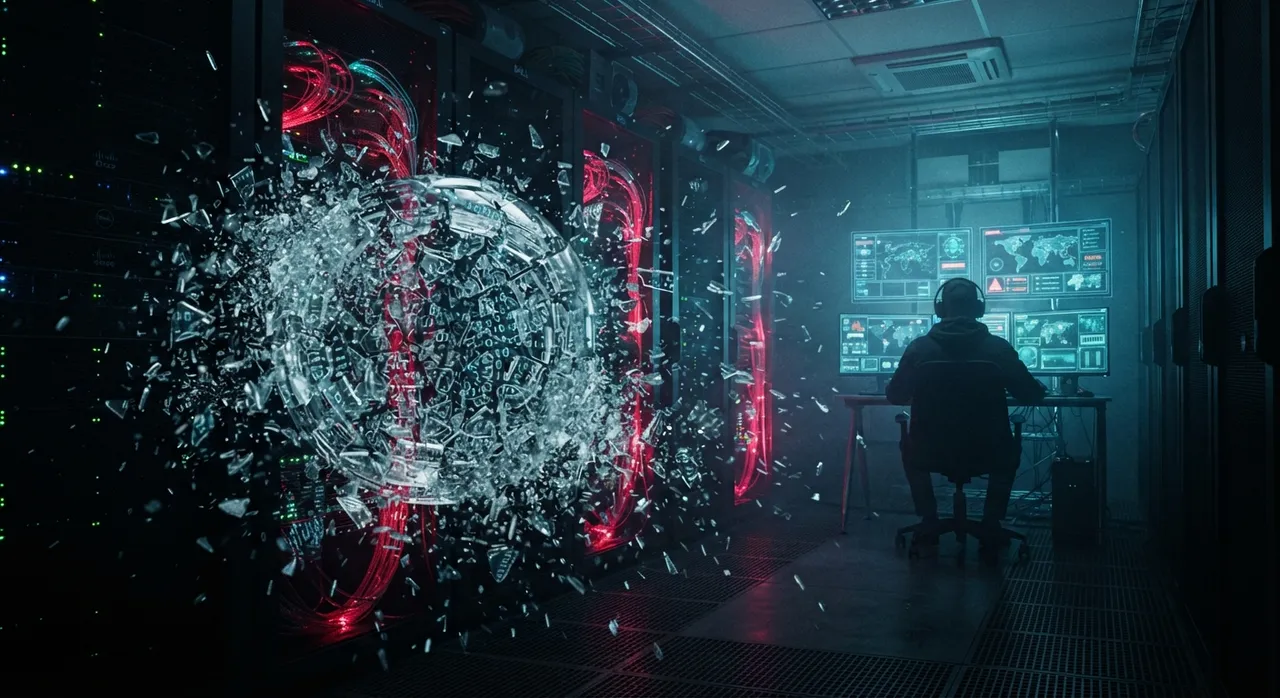
The strategic battle for artificial intelligence supremacy reached a historic flashpoint on July 22, 2026, when the White House Office of Science and Technology Policy (OSTP) formally accused Beijing-based artificial intelligence developer Moonshot AI of executing an unprecedented, covert technology extraction campaign. In a series of public statements that sent shockwaves through Silicon Valley and international diplomatic corridors, OSTP Director Michael Kratsios alleged that Moonshot AI engaged in systemic, industrial-scale Moonshot AI distillation targeting Anthropic’s flagship frontier model, Claude Fable 5. Federal officials assert that this unauthorized pipeline allowed Moonshot AI to siphon advanced reasoning capabilities and synthetic training data to power its newly released 2.8-trillion-parameter open-weight system, Kimi K3.
The White House announcement highlights a deepening rift between Washington and Beijing over the boundaries of artificial intelligence development, proprietary intellectual property, and international hardware trade. Beyond the model distillation claims, U.S. officials disclosed that federal investigators have opened sweeping inquiries into export control evasion. The administration alleges that Moonshot AI routed heavy computational workloads through third-country data centers in Thailand equipped with restricted Nvidia GB300 Blackwell-architecture hardware, successfully sidestepping U.S. Department of Commerce restrictions designed to cap China’s frontier training capabilities.
The Mechanics of Industrial Moonshot AI Distillation
Model distillation in standard machine learning workflows is a widely accepted, legitimate optimization technique. Developers frequently use a high-capacity “teacher” model to generate outputs, probabilities, and logical reasoning pathways that are subsequently used to train smaller, more efficient “student” models for localized deployment. However, the White House and U.S. intelligence officials drew a sharp distinction between legitimate internal model optimization and external, unauthorized industrial extraction designed to undercut rival research investments.
According to disclosures from Director Kratsios, Moonshot AI did not merely sample public API outputs in a routine fashion. Instead, the startup allegedly engineered a dedicated, automated internal platform explicitly designed to siphoning high-value reasoning traces from Claude Fable 5 while evading automated security filters. The White House reported that Moonshot AI’s infrastructure systematically rotated across multiple access vectors, proxy networks, and synthetic user identities to obscure its operational footprint.
Key technical aspects of the alleged extraction campaign include:
- Reasoning Trace Reconstruction: Extracting granular step-by-step logical chains from Claude Fable 5 across complex domain-specific tasks, including advanced software engineering, terminal execution, and multi-modal problem solving.
- Dynamic Access Channel Rotation: Deploying hundreds of automated access endpoints and rotating cloud proxies to bypass rate-limiting protocols and automated fraud detection algorithms set by model providers.
- Synthetic Dataset Synthesis: Converting live API interactions into structured post-training datasets tailored for fine-tuning massive base architectures without incurring the multi-billion-dollar cost of initial synthetic dataset generation.
- Behavioral Alignment Mirroring: Training student weights to mirror the distinctive stylistic phrasing, error-correction mechanisms, and agentic workflows of Anthropic’s frontier engine.
While Anthropic had previously flagged automated extraction activity involving over 3.4 million Claude interactions earlier in the year, the White House’s direct attribution linking these extraction mechanisms to the final architecture of Kimi K3 marks a dramatic escalation. Cybersecurity analysts note that detecting unauthorized Moonshot AI distillation requires analyzing deep stylistic markers and behavioral watermarks embedded within the underlying neural weights.
Hardware Evasion and the Thailand Data Center Proxy
Alongside allegations of intellectual property extraction, the White House outlined a detailed narrative of hardware export control bypasses. To train a model containing 2.8 trillion parameters, developers require vast clusters of cutting-edge high-bandwidth memory (HBM) and extreme-performance tensor processing units. U.S. export controls administered by the Bureau of Industry and Security (BIS) strictly prohibit the sale or transfer of top-tier AI processing chips—such as Nvidia’s Blackwell GB300 series—to entities operating within or controlled by Chinese interests.
Federal officials revealed that Moonshot AI effectively bypassed these hardware bottlenecks by securing access to GB300-equipped compute clusters housed within data centers in Thailand. By utilizing remote cloud proxies and third-country infrastructure providers, Moonshot AI was able to conduct heavy training and fine-tuning workloads on state-of-the-art U.S. hardware without triggering direct shipping alerts or geographical red flags.
The operational framework of this hardware proxy strategy relied on several structural mechanisms:
- Third-Party Cloud Leasing: Subleasing enterprise compute capacity through non-restricted international intermediaries established in Southeast Asian jurisdictions.
- Distributed Pre-Training Workloads: Partitioning heavy gradient updates and parameter optimization tasks across geographically dispersed data centers to avoid localized compute spikes.
- Obfuscated Workload Execution: Utilizing encrypted containerized environments to mask the exact nature of the model architectures being trained on non-domestic servers.
This revelation has prompted federal investigators at the BIS to open comprehensive inquiries into third-country compute providers, cloud proxy networks, and hardware supply chains throughout Southeast Asia.
Geopolitical Impact and Benchmark Disruptions
The controversy surrounding Kimi K3 highlights a growing dilemma in global technology policy: the disruptive potential of open-weight frontier models. When Moonshot AI unveiled Kimi K3, it immediately captured international attention by offering 2.8 trillion parameters as an open-weight release. Independent benchmark evaluations demonstrated that Kimi K3 achieved near-parity with closed-source proprietary systems, outperforming rival models in long-horizon coding tasks, command-line operations, and complex multi-step reasoning.
However, the economic disparity between the developers of these systems is stark. Developing closed proprietary engines like Claude Fable 5 requires multi-billion-dollar investments in research, hardware procurement, energy infrastructure, and human capital. Conversely, open-weight releases derived from covert Moonshot AI distillation allow secondary developers to deliver equivalent capabilities at a fraction of the cost. Kimi K3’s operational API costs were priced at approximately $3 per million input tokens, representing a 70 percent discount compared to Claude Fable 5’s $10 per million token rate.
This radical cost reduction creates profound economic pressure on American AI labs while simultaneously accelerating the global dissemination of advanced dual-use software. Officials in Washington argue that unmonitored distillation allows foreign entities to operationalize frontier capabilities without incurring the initial foundational research risks, effectively subsidizing foreign industrial capabilities using American research capital.
Policy Escalation: Sanctions, Watermarks, and NSTM-4
The White House’s public attribution signifies a pivot toward aggressive regulatory and economic countermeasures. Speaking shortly after the OSTP disclosure, U.S. Treasury Secretary Scott Bessent confirmed that the administration is actively evaluating trade sanctions against developers engaging in structural model theft and export evasion. Potential actions include adding Moonshot AI and associated infrastructure providers to the Department of Commerce’s Entity List, blocking access to foreign capital markets, and enforcing strict secondary sanctions on global cloud providers.
Treasury Secretary Bessent also highlighted advances in forensic model evaluation, noting that federal authorities and cybersecurity partners are deploying sophisticated behavioral profiling and watermark tracing to identify stolen model parameters. These technological tools analyze statistical quirks, subtle output patterns, and embedded watermarks within neural network weights to prove whether a student model was trained on proprietary outputs.
Furthermore, these actions align with broader strategic policy directives, including National Security Technology Memorandum 4 (NSTM-4), which formally designates adversarial model distillation and unauthorized synthetic data extraction as direct threats to national economic security. Under NSTM-4, federal agencies are directed to enforce stricter API monitoring protocols, restrict access to U.S.-hosted cloud environments for non-compliant foreign labs, and coordinate international legal responses to intellectual property extraction.
The Future of Frontier Model Defense
The allegations against Moonshot AI mark the beginning of a new era in technological containment and strategic defense. As artificial intelligence models become the primary engines of economic competitiveness, the distinction between open research and state-sponsored technology transfer is rapidly eroding. The case of Kimi K3 demonstrates that traditional export controls focused solely on hardware shipments are no longer sufficient to prevent capability transfers in an era dominated by high-speed global networks and advanced model distillation.
Moving forward, frontier AI labs will be forced to implement unprecedented defensive measures. Expect to see major frontier developers implement defensive dynamic rate-limiting, advanced anti-distillation watermarking in model outputs, real-time query pattern analysis, and strict identity verification protocols for commercial API access. Concurrently, global regulatory bodies will face increasing pressure to establish enforceable standards for cloud hosting, hardware provenance, and international model auditing.
The unfolding confrontation between Washington and Moonshot AI confirms that the global AI race is no longer fought merely in compute data centers or academic journals. It is now actively waged across API endpoints, international proxy data centers, and the high-stakes arena of global trade policy. How the international community balances open-source innovation against national security imperatives will define the architecture of global technology governance for decades to come.
Written by
TempMail Ninja
Digital privacy and online security expert. Passionate about creating tools that protect users' identity on the internet.