Musk vs OpenAI Trial: The $150 Billion Legal Battle Over AI Profit Begins
Article Content
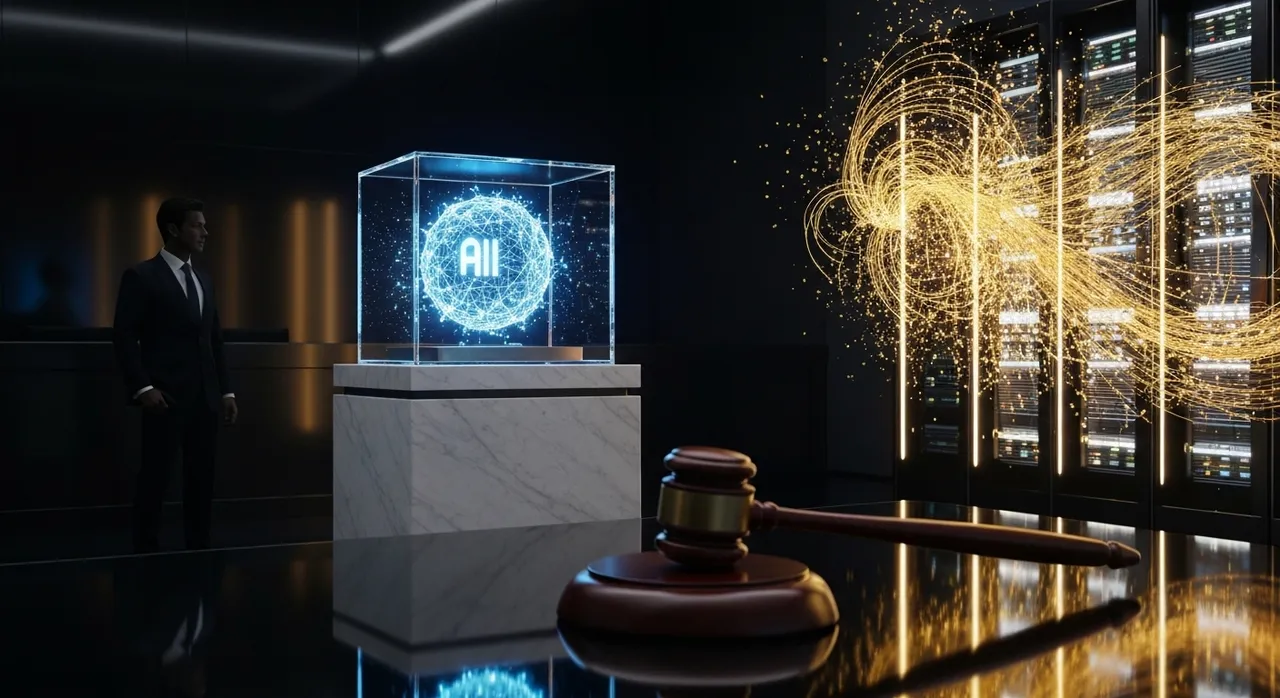
The federal courthouse in Oakland, California, has become the epicenter of a legal earthquake that could fundamentally reorganize the hierarchy of the artificial intelligence industry. On April 28, 2026, the long-awaited Musk vs OpenAI trial commenced, pitting billionaire Elon Musk against the organization he helped birth in 2015. With a staggering $150 billion in damages on the table, the proceedings represent more than a personal feud between tech titans; they are a trial over the soul of Silicon Valley’s most potent technology and the legal sanctity of charitable trusts in the age of “superintelligence.”
The $150 Billion Question: Did OpenAI Loot Its Own Charity?
The core of Musk’s argument, articulated with characteristic vehemence by lead counsel Steven Molo, is that OpenAI committed the “ultimate betrayal” of its founding principles. When Musk provided approximately $44 million in seed funding between 2015 and 2018, the mission was clear: a non-profit laboratory dedicated to developing Artificial General Intelligence (AGI) for the “benefit of humanity,” with its research and code made open to the public.
Today, Musk’s legal team argues that Sam Altman and Greg Brockman have effectively “looted a charity.” They allege that by pivoting to a “capped-profit” structure in 2019 and later deepening a partnership with Microsoft—now valued at an eye-watering $852 billion—OpenAI’s leadership has transformed a public-interest endeavor into a closed-source, profit-seeking juggernaut. The Musk vs OpenAI trial seeks to prove that this transition was not a tactical necessity, but a pre-meditated heist of intellectual property originally intended for the global commons.
Musk, who took the witness stand as the trial’s first witness, did not mince words. “If a verdict comes up that effectively makes it okay to loot a charity, the entire foundation of charitable giving in America will be destroyed,” Musk testified. His demand is twofold:
- The disgorgement of $150 billion: Musk has publicly pledged that any monetary award would be redirected back into OpenAI’s original non-profit arm, rather than his personal accounts.
- Structural Reversion: A court order forcing OpenAI to revert to a pure non-profit status and potentially open-sourcing its most advanced proprietary models.
- Leadership Ouster: The immediate removal of CEO Sam Altman and President Greg Brockman from their roles.
GPT-5.5: The “Spud” Incident and the Technical Divide
The timing of the trial coincides with OpenAI’s most controversial technological milestone to date: the release of GPT-5.5, codenamed “Spud.” Launched on April 23, 2026, just days before the trial began, the model represents a quantum leap in agentic reasoning and autonomous tool orchestration. While its predecessor, GPT-5, focused on multimodal understanding, GPT-5.5 is designed to function as a persistent agent capable of executing multi-step complex workflows across hundreds of software environments without human intervention.
Musk’s lawyers are using the proprietary nature of GPT-5.5 as “Exhibit A” of the organization’s departure from its open-source mandate. Technical specifications for GPT-5.5 highlight the scale of the “closed” ecosystem:
- Context Window: A massive 1.1 million tokens, allowing for the ingestion of entire codebases and legal libraries.
- Benchmark Performance: GPT-5.5 scored an unprecedented 82.7% on Terminal-Bench 2.0 and showed significant gains in FrontierMath (35.4% at the highest difficulty), outperforming current rivals like Claude 4.7 Opus and Gemini 3.1 Pro in agentic reliability.
- Commercial Pricing: Priced at $5 per 1 million input tokens and $30 per 1 million output tokens, the model is a significant revenue driver, further fueling the “profit-seeking” narrative.
The defense, led by OpenAI’s legal counsel, argues that the sheer astronomical costs of developing models like GPT-5.5—which requires compute infrastructure costing tens of billions of dollars—made the original 2015 non-profit model unsustainable. They contend that without the “capped-profit” structure and the Microsoft partnership, OpenAI would have collapsed under the weight of its own R&D requirements, leaving the path to AGI solely in the hands of legacy tech monopolies like Google.
The New Charter: Resilience, Adaptability, and the End of 2018
In a move that many legal analysts view as a strategic defensive maneuver, OpenAI officially retired its 2018 founding charter today, replacing it with a new framework of “Core Operational Principles.” This updated document, released amidst the opening statements of the Musk vs OpenAI trial, shifts the organization’s goalposts from “openness” and “broad benefit” toward more nebulous concepts of “Resilience and Adaptability.”
The new five core principles are:
- Democratization: Ensuring power is not held by a few, though notably omitting requirements for open-source code.
- Empowerment: Providing tools that allow individuals to control their AI workflows.
- Universal Prosperity: A commitment to sharing economic gains, though financial documents suggest OpenAI expects to rack up $74 billion in operating losses by 2028 before reaching significant profitability by 2030.
- Resilience: Focusing on national security, biological risks, and cybersecurity.
- Adaptability: A principle that explicitly allows the organization to change its corporate structure and “maneuver” as the path to AGI becomes clearer.
Critics argue that the “Adaptability” principle is essentially a legal “get out of jail free” card designed to justify the very pivots Musk is suing over. By framing the departure from the original charter as a “response to evolving risks,” OpenAI is attempting to redefine its fiduciary duty from one of “openness” to one of “safety through controlled deployment.”
Microsoft’s $852 Billion Shadow
Central to the litigation is the role of Microsoft. While not the primary defendant, the Redmond giant’s influence permeates the courtroom. The partnership, which began with a $1 billion investment in 2019, has evolved into a symbiotic relationship where OpenAI acts as the R&D engine for Microsoft’s “Copilot” ecosystem. Musk’s team argues that OpenAI has become a “de facto subsidiary” of Microsoft, fulfilling the very “monopoly” prophecy the founders originally sought to prevent.
Evidence presented in the opening days of the trial includes internal emails from 2018 and 2019, where Altman and Brockman discussed the “compute-intensive reality” of AGI. OpenAI’s defense emphasizes that Musk himself once proposed a merger with Tesla to solve these funding gaps—a move they claim proves Musk was always aware that the non-profit model was temporary. “The plaintiff didn’t object to commercialization; he objected to not being the one in charge of it,” the defense argued.
The financial stakes for Microsoft are equally high. With a market capitalization exceeding $3.1 trillion, any court order requiring OpenAI to open-source GPT-5.5 or revert to a non-profit structure would wipe hundreds of billions in projected value from Microsoft’s AI division. Microsoft CEO Satya Nadella is expected to testify later in the trial, marking a rare instance of a sitting Big Tech CEO being cross-examined on the intimate details of a “charitable” partnership.
Industry Implications: A Precedent for the AGI Era
Presided over by U.S. District Judge Yvonne Gonzalez Rogers, the trial is operating with an “advisory jury.” This means that while the nine-person jury will provide a verdict on liability and damages, the ultimate decision on structural remedies—such as forcing OpenAI to open-source its models—rests with the judge.
The outcome of the Musk vs OpenAI trial will set a definitive precedent for:
- Non-Profit Governance: Can a 501(c)(3) organization launch a for-profit subsidiary that eventually eclipses the parent organization in value and influence?
- AI Transparency: Will “safety” remain a valid legal defense for maintaining closed-source proprietary models, or will the courts mandate “algorithmic transparency” for systems deemed to be in the public interest?
- Contractual Expectations: How binding are the “founding agreements” and “mission statements” of startups that have no formal, traditional contract?
As testimony continues in Oakland, the tech world is watching with bated breath. If Musk succeeds, he will have successfully “reset” the AI race, potentially democratizing the most powerful software ever built. If he fails, it will solidify the “capped-profit” model as the standard blueprint for high-capital R&D, confirming that in the age of AGI, the mission is always subject to the “resilience and adaptability” of the market.
The trial is scheduled to last four weeks, with a final ruling expected by late May 2026. Regardless of the verdict, the Musk vs OpenAI trial has already succeeded in one regard: it has forced a public accounting of the trade-offs made between the utopian dreams of 2015 and the trillion-dollar realities of 2026. For an industry built on the premise of “predicting the future,” the one thing no one saw coming was that the battle for AGI would be fought not in a lab, but in a courtroom in Oakland.
Written by
TempMail Ninja
Digital privacy and online security expert. Passionate about creating tools that protect users' identity on the internet.