Neanderthal and Sapiens Interaction: New Discovery at Tinshemet Cave
Article Content
For decades, the prevailing narrative of human evolution has been dominated by the imagery of separation. We have been taught to visualize early humans—specifically Neanderthals and Sapiens—as distinct entities, isolated by geography, culture, and perhaps even intellect, occasionally passing each other like ghosts in the archaeological record. However, a seismic shift in this understanding has emerged from the depths of the Tinshemet Cave in central Israel. Published findings from The Hebrew University of Jerusalem not only challenge the established isolationist paradigm but dismantle it, revealing that our ancestors were far more interconnected, cooperative, and culturally complex than previously dared to imagine.
The Tinshemet Revelation: Beyond Coexistence
The Tinshemet Cave, which has been under rigorous excavation since 2017, has yielded what many experts are calling the most significant Paleolithic discovery in over half a century. Located in the Levant—a region long recognized as a crucial crossroads for hominin dispersal—the site offers a rare, high-resolution snapshot of the mid-Middle Paleolithic period, roughly 130,000 to 80,000 years ago. The research, led by Professor Yossi Zaidner, Professor Israel Hershkovitz, and Dr. Marion Prévost, provides, for the first time, definitive archaeological evidence that Neanderthals and Sapiens were not merely temporal roommates in the region, but active participants in a shared social and cultural sphere.
The significance of this discovery lies in the rejection of “behavioral discreteness.” Previous theories posited that these different hominin groups maintained distinct tool-making traditions, hunting strategies, and social rituals. Tinshemet Cave forces a radical reconsideration: the archaeological assemblage suggests a “behavioral uniformity” that could only have been achieved through sustained, meaningful, and direct inter-population interaction.
Data-Driven Proof: What the Cave Tells Us
To understand the depth of this interaction, one must look at the specific technical markers found at the site. The research team focused on four key pillars of behavioral evidence: stone tool production (lithic technology), faunal remains indicating hunting strategies, symbolic behavior, and social complexity manifested in burial practices.
- Lithic Technology: The stone tools recovered from Tinshemet show a convergence of features previously attributed separately to Neanderthals or Homo sapiens. This suggests a transmission of skills, where technical innovations were not held in silos but were exchanged and adopted across groups.
- Hunting Strategies: The faunal assemblage, dominated by large ungulates, reveals consistent processing techniques. The presence of similar cut marks on bones across different stratigraphic layers implies a shared ecological knowledge and potentially cooperative hunting practices.
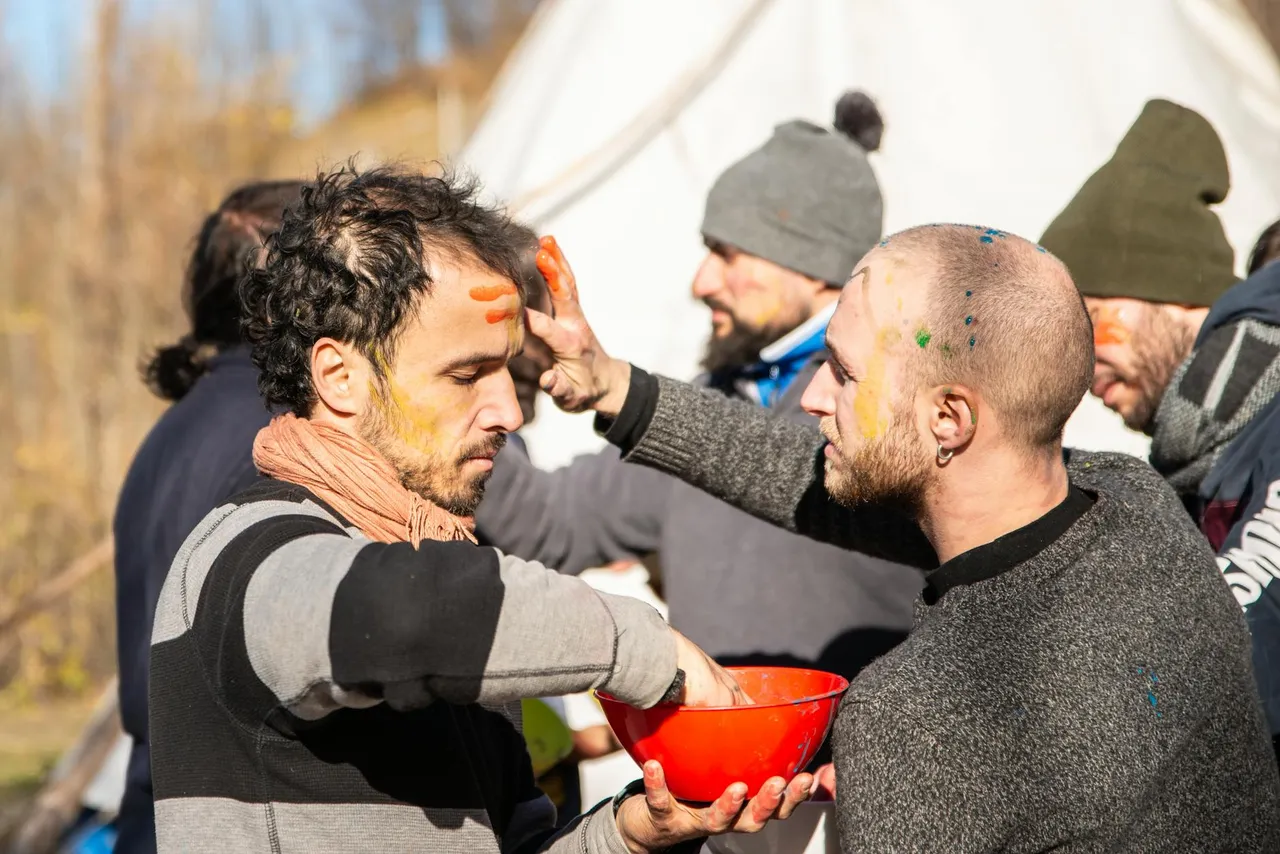
- Symbolic Behavior: Perhaps the most striking evidence is the extensive use of ochre. The recovery of mineral pigments, which were likely used for body decoration or ritual, points to a shared symbolic vocabulary. This use of color indicates a sophisticated capacity for communication and the construction of identity that transcended biological lineage.
- Burial Customs: The cave produced several formal human burials—the first mid-Middle Paleolithic burials discovered in over fifty years. The intentional positioning of bodies—often in a fetal or resting posture—coupled with the presence of faunal remains, suggests a level of ritualization that was practiced by both groups, potentially in a shared ceremonial space.
The Levant as a Cultural Crossroads
The Levant has long been viewed as a bridge between Africa and Eurasia, but Tinshemet Cave clarifies that this was not merely a thoroughfare. Instead, it functioned as a “melting pot.” During the mid-Middle Paleolithic, climatic improvements likely increased the region’s carrying capacity, leading to demographic expansion. As different human taxa converged in this hospitable environment, the pressure and opportunity for interaction intensified.
This interaction was not accidental; it was fundamental to the developmental trajectory of early humans. The “isolationist” theory of evolution suggested that progress—cultural, technological, and cognitive—occurred within closed groups. The Tinshemet evidence suggests the exact opposite: innovation was a product of connection. By sharing knowledge, these groups accelerated the development of complex social structures. The “behavioral uniformity” observed by the research team is the signature of a period where human connections acted as a catalyst for cognitive and social evolution.
Challenging the Archeological Narrative
The “Internet Archaeology” narrative, which often oversimplifies findings into black-and-white categories of “superior” or “inferior” hominins, is profoundly challenged by these findings. We are moving away from a hierarchical view of human evolution toward a more nuanced, network-based model. When Neanderthals and Sapiens met, they did not necessarily engage in conflict; they engaged in an exchange of ideas.
The findings emphasize that the human experience has always been defined by social fluidity. The very fact that these groups shared burial rituals—arguably the most intimate and symbolic of human behaviors—suggests that they recognized each other as sentient, social beings. This interaction fundamentally shifted the cultural landscape, allowing for the transmission of behaviors that were far more advanced than those seen in isolated populations.
Future Directions: The Search for Human Origins
The ongoing work at Tinshemet Cave is only the beginning. By utilizing advanced analytical techniques to examine these artifacts, the team at The Hebrew University of Jerusalem is setting a new standard for how we reconstruct the lives of our ancestors. The site is a reminder that the archaeological record is not a static list of objects, but a dynamic story of people—some of whom are our direct ancestors, and others who represent the fascinating, complex diversity of the human lineage.
As we continue to analyze the residues, lithic sequences, and faunal records from the cave, we are likely to find even more granular evidence of these interactions. Are we seeing the traces of collaborative hunting parties? Is the ochre usage related to inter-group signaling or group cohesion? These are the questions that will define the next chapter of Paleolithic research.
Conclusion: The Necessity of Connection
The discovery at Tinshemet Cave serves as a profound reminder of the fundamental nature of the human species. Whether 110,000 years ago or in the modern era, our history is not one of solitary evolution but of entanglement. By interacting, sharing, and potentially even co-existing in shared burial spaces, these early groups defied the limitations of their biology to create a rich, shared culture.
We are no longer looking at Neanderthals and Sapiens as disparate players on a lonely stage. We are looking at a dynamic, interconnected network of populations that shaped the foundation of modern human society. This discovery is a definitive debunking of the isolationist theory, proving that when different human groups met in the Levant, they did not just occupy the same space—they shared the world, and in doing so, they collectively forged the path that would lead to us.
Written by
TempMail Ninja
Digital privacy and online security expert. Passionate about creating tools that protect users' identity on the internet.