Phishing-Resistant Authentication: The New Standard for 2026 Security
Article Content
The cybersecurity landscape of April 2026 has reached a definitive crossroads. For over a decade, the industry’s primary defense against credential theft was a simple mantra: “Enable MFA.” But as we cross into the second quarter of 2026, that advice has become dangerously incomplete. The emergence of sophisticated, AI-driven automation and the industrialization of session-hijacking tools have rendered traditional multi-factor authentication (MFA)—specifically SMS codes, voice calls, and standard Time-based One-Time Password (TOTP) apps—functionally “legacy.”
In their place, a new gold standard has emerged. According to the latest joint guidance from the CISA (Cybersecurity and Infrastructure Security Agency) and the FIDO Alliance, organizations must transition to phishing-resistant authentication to survive an era where “logging in” has replaced “breaking in” as the primary threat vector. This shift is not merely a preference; it is a cryptographic necessity driven by the failure of shared secrets in the face of modern Adversary-in-the-Middle (AiTM) infrastructure.
The Fall of Legacy MFA: Why 2026 Is Different
To understand why 2026 marks the end of traditional 2FA, we must look at the tools currently dominating the dark web. The identifying marker of this year’s threat landscape is the “Storm” platform—a next-generation infostealer-as-a-service that has revolutionized how attackers bypass security. Unlike previous generations of malware that decrypted browser credentials locally on the victim’s machine—an action easily flagged by modern Endpoint Detection and Response (EDR) tools—Storm represents a “silent” evolution.
Storm operates by exfiltrating encrypted browser files, including session cookies and Google Refresh Tokens, and shipping them to attacker-controlled infrastructure for server-side decryption. This avoids the telemetry spikes that EDRs look for. Furthermore, Storm’s capability to handle both Chromium-based browsers (Chrome, Edge) and Gecko-based browsers (Firefox, Waterfox) in real-time means that no major desktop environment is immune. When an attacker captures a session cookie via Storm, they don’t need your password or your six-digit SMS code; they simply “become” you in the eyes of the server, effectively bypassing the entire authentication ceremony.
The Rise of the AiTM Industrial Complex
The commoditization of Adversary-in-the-Middle (AiTM) attacks has scaled this threat beyond nation-state actors. Tools like EvilTokens and the refined Tycoon 2FA kits now allow even low-skill attackers to deploy sophisticated reverse proxies. The anatomy of these attacks is chillingly efficient:
- The Proxy Lure: A victim is directed to a look-alike login page that is actually a transparent proxy.
- The Real-Time Relay: As the user enters their credentials, the proxy relays them to the actual service (e.g., Microsoft 365 or Okta) in real-time.
- The Factor Intercept: When the service prompts for an SMS code or a TOTP token, the user enters it into the fake page, and the proxy immediately passes it to the real service.
- The Session Harvest: The moment the real service issues a valid session cookie, the attacker captures it and drops the victim’s connection.
According to 2026 threat reports, AiTM incidents have surged by over 140% in the last year alone. Because these attacks relay the second factor as it is generated, traditional MFA offers zero protection. The only defense is an authentication method that is cryptographically bound to the specific domain being visited—a core requirement of phishing-resistant authentication.
Defining Phishing-Resistant Authentication in 2026
In the current regulatory environment, specifically under the NIST SP 800-63-4 standards finalized in 2025, “phishing-resistant” is no longer a marketing term; it is a technical classification. For a method to be truly phishing-resistant, it must meet three cryptographic criteria:
- Origin Binding: The credential must be cryptographically bound to the specific domain (e.g., `login.microsoft.com`). If a user attempts to authenticate on a spoofed domain (e.g., `login.micros0ft.com`), the authentication protocol will fail at the hardware level because the “Origin” does not match the registered credential.
- Public-Key Cryptography: There are no “shared secrets” (like passwords or TOTP seeds) sent over the wire. Instead, the user’s device proves it possesses a private key by signing a unique challenge sent by the server.
- User Intent: The process must require a physical action—a biometric scan or a button press—to ensure the authentication isn’t being triggered by a remote attacker (preventing “push bombing”).
The two primary technologies meeting these standards in 2026 are FIDO2/WebAuthn (Passkeys) and PIV/CAC Smartcards. For most modern enterprises, the focus has shifted entirely to the WebAuthn standard due to its native support in all major operating systems and browsers.
The Passkey Revolution: Synced vs. Device-Bound
As we navigate the 2026 standards, the industry has differentiated between two types of FIDO credentials, both of which fall under the umbrella of phishing-resistant authentication but serve different security levels (AAL2 vs. AAL3).
1. Platform Passkeys (Synced Credentials)
Integrated into ecosystems like Apple iCloud, Google Password Manager, and Windows Hello, platform passkeys allow credentials to be synchronized across a user’s devices. These have revolutionized user experience by eliminating the need for passwords entirely. In 2026, CISA recommends platform passkeys for general workforce use and consumer-facing applications where the goal is to eliminate 99% of phishing risk while maintaining high usability.
2. Roaming/Hardware Security Keys (Device-Bound Credentials)
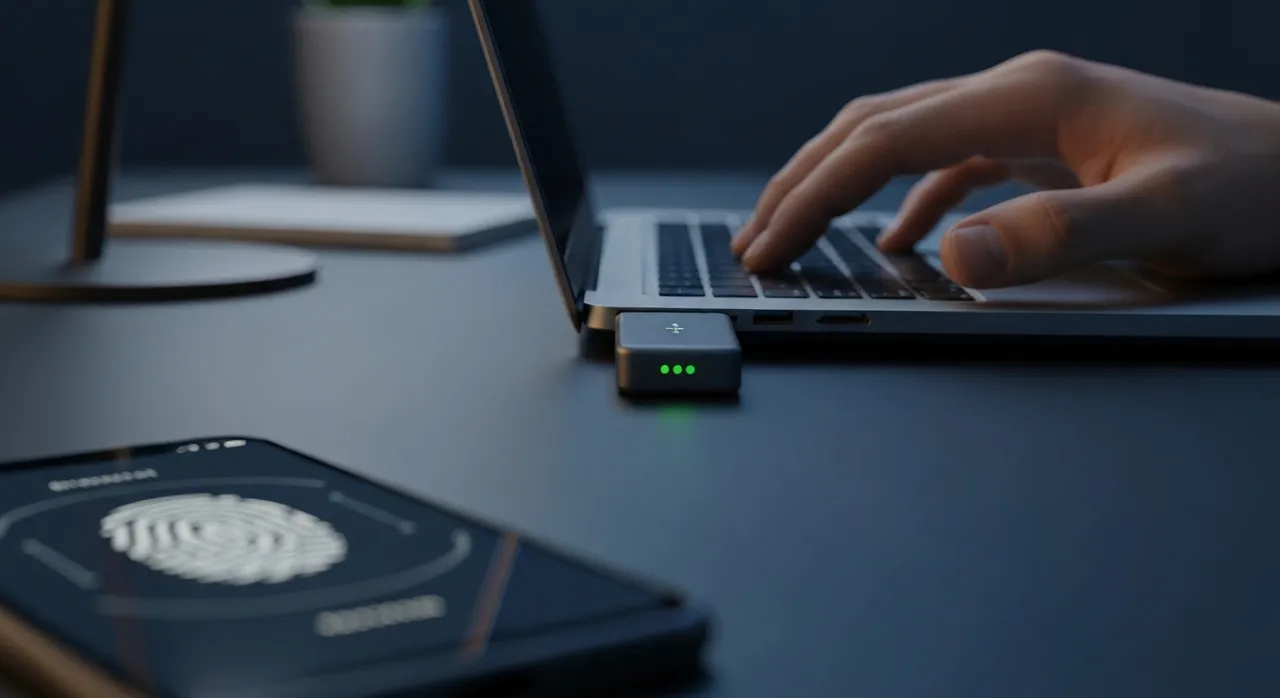
For high-value targets—such as system administrators, financial officers, and developers with access to source code—the standard remains device-bound credentials (e.g., YubiKeys). These keys do not sync. The private key is generated within a secure element (TPM or SE) on the physical hardware and can never be exported. Under NIST SP 800-63-4 AAL3, these are the only acceptable form of authentication for critical infrastructure and federal systems because they provide “hardware-backed” assurance that the key cannot be cloned, even if the user’s primary device is compromised by an infostealer like Storm.
Implementation: Moving Toward a Passwordless 2026
The transition from legacy MFA to phishing-resistant authentication is not a “flip-of-the-switch” event but a strategic migration. Leading organizations in 2026 are following a structured roadmap to eliminate the vulnerabilities inherent in shared secrets.
Step 1: Identity Provider (IdP) Modernization
The first move is ensuring the centralized identity provider—whether Microsoft Entra ID, Okta, or Ping Identity—is configured to support the FIDO2/WebAuthn “Discoverable Credentials” flow. This allows the IdP to act as the Relying Party, handling the cryptographic handshake directly with the user’s device.
Step 2: Phasing Out SMS and TOTP
In 2026, progressive security policies no longer offer SMS or TOTP as an option for “high-risk” logins. Organizations are increasingly using “Conditional Access” policies to require a FIDO2 credential when a user is accessing sensitive data or authenticating from a new location. If the user does not have a registered passkey, they are prompted to enroll one using a secure, verified onboarding process (often involving a one-time “Bootstrap” code provided via a secure channel).
Step 3: Addressing the Recovery Gap
One of the most significant challenges in 2026 is the “Recovery Trap.” If a user loses their physical security key or their device, they often fall back to legacy methods (like email codes) to reset their access. Attackers are currently exploiting this by targeting the recovery flow. The 2026 standard for recovery is Identity Proofing or “Vouching,” where a colleague or a help-desk agent must cryptographically verify the user’s identity before a new phishing-resistant credential can be issued.
Technical Depth: The WebAuthn Ceremony
At the heart of phishing-resistant authentication is the WebAuthn ceremony. When a user logs in, the server (Relying Party) sends a “Challenge” to the browser. This challenge includes the RP ID (the domain). The browser, communicating via the Client to Authenticator Protocol (CTAP), passes this to the hardware authenticator.
The authenticator looks for a private key bound to that specific RP ID. If found, it prompts the user for a biometric (User Verification). Once verified, the authenticator signs the challenge using the private key and returns the signature to the server. Because the server holds the corresponding Public Key, it can verify the signature. Crucially, if an AiTM proxy tries to relay this, the browser will detect that the RP ID in the challenge doesn’t match the actual URL in the address bar, and the authenticator will refuse to sign. This “Domain Binding” is what makes the technology immune to the “Storm” infostealer and similar proxy-based attacks.
Conclusion: The Future is Bound, Not Shared
The shift to phishing-resistant authentication in 2026 represents the final move in the decades-long battle against credential theft. We are moving from a world of shared secrets (passwords and codes that both you and the server know) to a world of asymmetric proof (where only you hold the key, and the server only holds the lock).
For the “Ninja Editor” and the modern security professional, the directive is clear: Legacy MFA is a liability. Every day an organization relies on SMS or TOTP is a day they are vulnerable to the automated session hijacking of platforms like Storm. By embracing Passkeys and FIDO2 standards, we aren’t just making passwords stronger—we are making them irrelevant. In 2026, true security is found not in what you know, but in the cryptographic integrity of the device you hold.
Written by
TempMail Ninja
Digital privacy and online security expert. Passionate about creating tools that protect users' identity on the internet.