Physical AI and Robotics: Advancements Reshaping Industries in 2026
Article Content
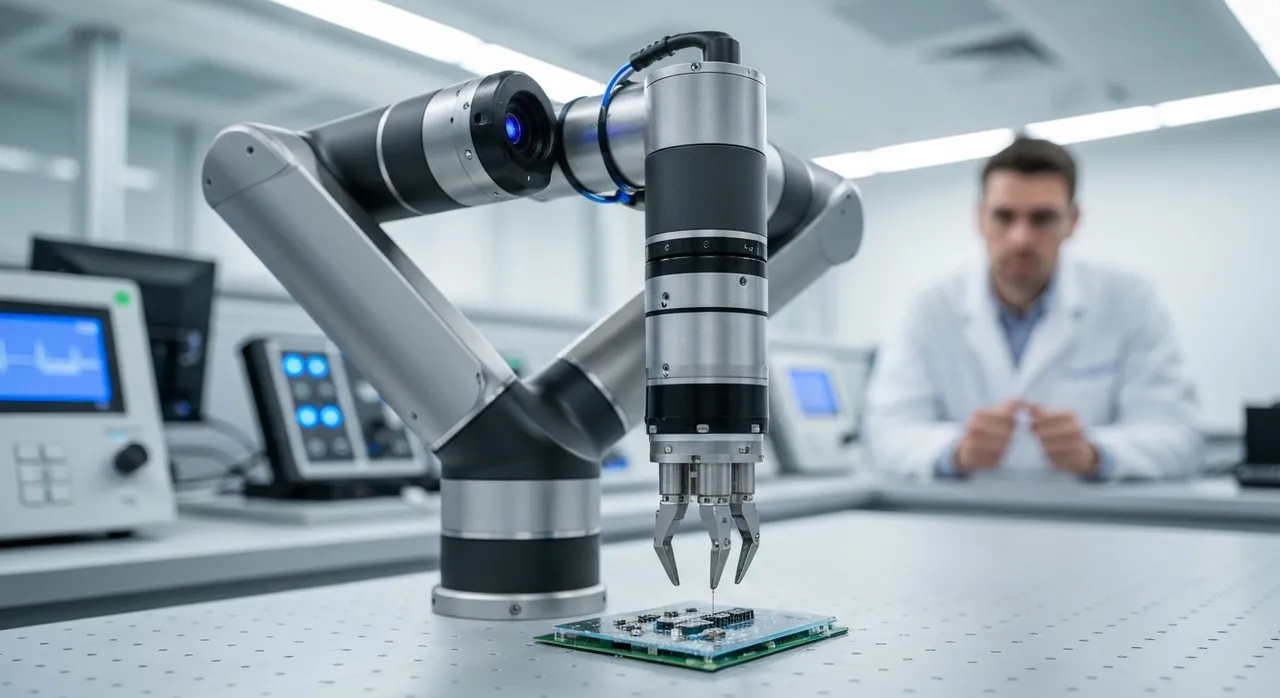
The landscape of artificial intelligence is undergoing a profound metamorphosis, shifting its core from the purely digital realm of software applications to the tangible world of atoms and motion. This pivotal transition marks the advent of the Physical AI and Robotics era, where intelligent machines are no longer confined to virtual simulations or static data processing but are actively perceiving, reasoning, and operating within our physical environments. This paradigm shift, highlighted by a surge in sophisticated humanoid robots and autonomous systems, promises to redefine industries, address critical labor shortages, and fundamentally alter our interaction with technology.
The Dawn of Physical AI: Bridging the Digital and Tangible Worlds
What is Physical AI?
At its essence, Physical AI refers to artificial intelligence systems that transcend software, engaging directly with the physical world through a combination of AI models, sensors, actuators, and advanced control systems. Unlike its digital counterpart, which primarily processes and generates digital data (such as text, images, or recommendations), Physical AI systems perceive their surroundings via diverse sensory inputs, make real-time decisions, and execute actions that directly influence the physical state of the world. This distinction is crucial: errors in software AI might be reversible with a ‘rollback’ feature, but physical AI errors carry tangible consequences, demanding an unprecedented level of safety, reliability, and precision.
The foundation of Physical AI lies in its ability to integrate complex machine learning, natural language processing (NLP), and computer vision technologies with physical controllers. These systems are designed to process and interpret multimodal inputs, including images, videos, text, speech, and real-time sensor data, enabling them to analyze physical spaces and dynamic conditions with a depth previously unattainable by conventional automation.
A key enabler for advanced Physical AI is the concept of Agentic AI, where systems are designed to operate semi- to fully-autonomously within defined parameters. This allows robots to make goal-oriented decisions and take actions with minimal or no human intervention, essentially simulating human-like decision-making in real-world scenarios.
Enabling the Revolution: Simulation, Digital Twins, and NVIDIA’s Vision
The rapid acceleration of Physical AI is inextricably linked to breakthroughs in simulation and digital twin technologies, championed prominently by industry giants like Nvidia. At its GTC conference, Nvidia and global robotics leaders showcased how these technologies are critical for bringing physical AI to fruition at a production scale.
Digital twins, which are high-fidelity virtual replicas of physical assets, play a transformative role. They allow for the comprehensive design, testing, and optimization of robot fleets and AI agents within physically accurate simulated environments before any physical deployment. This approach significantly de-risks development, reduces costs, and accelerates time-to-market.
Nvidia’s contributions extend to a full-stack platform encompassing computing, open models, and software frameworks. Key announcements at GTC 2026 included new NVIDIA Isaac simulation frameworks and the introduction of NVIDIA Cosmos and NVIDIA Isaac GR00T open models. These are designed to empower developers to create, train, and deploy the next generation of intelligent robots. Furthermore, Nvidia introduced a modular, library-based architecture for Omniverse, exposing core components like RTX rendering, PhysX-based simulation, and data storage pipelines as standalone APIs. This allows seamless integration of advanced simulation capabilities into existing industrial and robotics software stacks, eliminating the need for extensive architectural overhauls.
The NVIDIA Isaac Lab 3.0, built on the new Newton physics engine 1.0 and the NVIDIA PhysX software development kit, offers faster, large-scale robot learning and improved support for complex, dexterous manipulation. These advancements are crucial for overcoming the persistent “sim-to-real” gap, where the performance of robots in simulation often differs from their real-world performance due to approximated physics models.
Collaborative Innovation: Accelerating Safe Deployment
The complexity of developing and deploying physical AI systems necessitates strong collaborative efforts across the technology ecosystem. These partnerships are proving instrumental in accelerating the safe and efficient integration of intelligent machines into daily operations.
Texas Instruments and NVIDIA: Sensor Fusion for Safer Humanoids
A significant collaboration highlighted recently is between Texas Instruments (TI) and Nvidia, aimed squarely at accelerating the safe deployment of humanoid robots. This partnership combines TI’s expertise in real-time motor control, sensing, radar, and power technologies with Nvidia’s advanced robotics compute platforms, including NVIDIA Jetson Thor, Ethernet-based sensing, and simulation technologies.
A cornerstone of this collaboration is the integration of TI’s mmWave radar technology, specifically the IWR6243 sensor, with NVIDIA Jetson Thor via the NVIDIA Holoscan Sensor Bridge. This sensor fusion solution is designed to provide low-latency, 3D perception and enhanced safety awareness for humanoid robots. This is particularly vital because while cameras are ubiquitous in robotics, they have inherent limitations in challenging environments. Radar technology effectively addresses these by enabling reliable object detection and tracking in conditions such as low light, bright glare, fog, dust, and even the presence of transparent obstacles like glass doors, which often prove problematic for camera-only systems. By combining these diverse sensing modalities, developers can validate perception, actuation, and safety more accurately and earlier in the development cycle, moving faster from virtual prototyping to production-ready, safety-compliant systems.
Humanoid Robotics: From Research Platforms to Real-World Impact
The vision of humanoid robots moving beyond laboratories and into everyday environments is rapidly materializing, driven by significant investments and technological leaps.
Amazon’s Strategic Acquisitions: Fauna Robotics and Sprout
In a clear signal of the growing importance of consumer-facing physical AI, Amazon acquired New York-based humanoid robot developer Fauna Robotics at the end of March 2026. Fauna Robotics is known for its 42-inch-tall bipedal humanoid robot named Sprout. Sprout is primarily designed as a research and developer platform, intended for social interaction in spaces like homes and schools. It features a lightweight design, a soft exterior to minimize pinch points, and is powered by a 64GB Nvidia Jetson AGX Orin, an AI supercomputer for edge computing.
This acquisition, coming less than a week after Amazon also acquired RIVR, a company developing quadruped delivery robots, highlights Amazon’s accelerating strategy to expand its robotics ambitions beyond its well-established warehouse automation. By integrating Fauna Robotics into its Personal Robotics Group, Amazon aims to explore new consumer and service-oriented robotics use cases, potentially complementing its Alexa voice platform and broader smart home initiatives.
Broader Humanoid Landscape
Beyond Amazon’s moves, the humanoid robotics sector is abuzz with innovation. Companies are pushing the boundaries of agility, dexterity, and practical application:
- Boston Dynamics Electric Atlas: Unveiled at CES 2026, the all-new Electric Atlas marks a significant shift towards real-world industrial tasks, from material handling to order fulfillment, while maintaining its reputation for agility and balance.
- Figure 03: Demonstrates near-human dexterity, powered by its Helix AI, with ambitious plans for large-scale production.
- Tesla Optimus V3: Positioned as the first model designed for mass production, with a focus on vision-based AI learning and a long-term production target of up to one million robots per year.
- 1X NEO: Presented as a home-ready humanoid robot, indicating a growing focus on consumer accessibility.
- XPENG IRON: Showcases advanced artificial muscles and 62 joints, enabling remarkably human-like movement.
- Westlake Robotics Titan01: Unveiled in March 2026, powered by an in-house General Action Expert (GAE) foundation model, allowing real-time imitation of human movements and the ability for a single operator to control multiple robots simultaneously.
These developments signify a clear shift from research prototypes and acrobatic demonstrations to robust, commercially viable machines capable of performing diverse tasks in unpredictable, human-centric environments.
Transforming Industries: Physical AI in Action
The real-world deployment of Physical AI and Robotics is already yielding tangible benefits across several critical sectors, addressing operational challenges and enhancing service delivery.
Urban Logistics: Autonomous Delivery Revolution
In urban logistics, autonomous delivery robots are rapidly transitioning from pilot programs to widespread deployment. Serve Robotics, for instance, has partnered with White Castle and Uber Eats to roll out autonomous sidewalk delivery robots in various U.S. cities, including Los Angeles, Miami, Fort Lauderdale, Alexandria, Dallas-Fort Worth, Atlanta, and Chicago.
Serve’s third-generation robots are specifically engineered to handle substantial, temperature-sensitive orders, ensuring that items like White Castle’s sliders and “Crave Cases” maintain optimal warmth and quality during transit. This expansion underscores a growing consumer demand for autonomous delivery, offering a new blend of convenience, technology, and sustainability.
The broader impact of physical AI on logistics is profound. It enables AI-powered route optimization that replaces static planning with continuously adaptive systems, re-planning delivery sequences in real-time based on live traffic and delivery windows. Studies suggest such optimization can reduce delivery times by 20% and fuel costs by 15%, alongside improved on-time delivery rates. Furthermore, autonomous warehouse systems optimize space by 30% and reduce fulfillment times by 25%, translating into significant cost reductions and operational efficiency.
Beyond external delivery, Serve Robotics’ acquisition of Diligent Robotics in January 2026 signals an expansion into indoor service robots for hospitals, showcasing the versatile application of autonomous systems.
Healthcare: Enhancing Patient Care and Operational Efficiency
The healthcare sector is another arena where physical AI is making a significant difference, particularly in alleviating the physical burden on care staff and improving patient experience. Able Innovations is deploying robotic patient transport systems in hospitals, epitomized by their ALTA Platform®.
The ALTA Platform® is a physical AI-powered system designed to automatically detect and adjust to the surface from which a patient is being moved, adapting to the specific needs of both the patient and the healthcare professional. This results in smoother, safer, and more efficient transfers, which are crucial for preserving patient dignity and reducing physical strain and fatigue for care teams.
Beyond patient transport, AI-native robots are being integrated into hospitals to manage clinical logistics, such as autonomously handling delivery, restocking supplies, and routing within predefined limits. This minimizes disruptions for clinical teams, enhances workflow efficiency, and allows healthcare professionals to focus more on direct patient care rather than administrative or physically demanding tasks.
In Japan, institutions like the University of Tsukuba Hospital are already conducting proof-of-concept tests with humanoid robots like the Unitree G1, which performs autonomous walking, obstacle avoidance, voice guidance, and item transport within hospital environments. Such advancements represent a significant step in how AI can directly support human beings in critical care settings.
Japan’s National Imperative: Addressing Labor Shortages with Physical AI
Perhaps nowhere is the adoption of Physical AI and Robotics more critical and accelerated than in Japan. Facing a severe demographic crisis characterized by a continuously declining population and a shrinking working-age demographic, Japan is deploying AI-powered robots not merely for efficiency, but as a national survival strategy.
The country’s Ministry of Economy, Trade and Industry (METI) has set an ambitious target to capture 30% of the global physical AI market by 2040. This push is driven by the stark reality that there are simply not enough people to fill critical roles across industries. Robots are being deployed in:
- Factories and Warehouses: Maintaining industrial productivity and managing logistics operations.
- Infrastructure: Supporting critical services that would otherwise lack human workers.
- Home Health and Senior Care: Addressing the immense demand for care in an aging society, filling jobs that human workers are increasingly unwilling or unable to perform.
Japan’s long-standing cultural openness to robotics and its established expertise in mechatronics and hardware provide a strong foundation for this accelerated adoption. The motivation has shifted from seeking basic efficiency to ensuring industrial survival, highlighting physical AI as an indispensable tool for maintaining societal functions.
Challenges and the Road Ahead for Physical AI and Robotics
Despite the immense promise, the widespread deployment of Physical AI and Robotics is not without significant challenges. These hurdles span technical, economic, and societal dimensions that developers and policymakers must address collectively.
Technical Complexities
- Sim-to-Real Gap: Bridging the disparity between simulated environments and real-world performance remains a challenge due to approximated physics models and the sheer unpredictability of physical environments.
- Data Acquisition and Management: Training physical AI demands vast amounts of high-quality, real-world data, which is time-consuming and expensive to collect, unlike easily scraped digital data.
- Model Lightweighting and Computational Load: Large AI models require substantial computational power, making real-time deployment on power-constrained edge devices or robot controllers challenging. Efforts are needed to lightweight these models for efficient execution at the edge.
- Policy Transfer Limitations: AI policies trained in one specific environment often struggle to adapt to new tasks or highly variable conditions in different environments.
- Latency and Control Loops: Physical AI systems require instantaneous decision-making and precise control. Delays (latency) in perception, reasoning, or actuation can have critical safety implications.
- Interoperability: As diverse fleets of robots and autonomous systems from multiple vendors become common, ensuring seamless communication and coordination across proprietary protocols presents a significant challenge.
Economic and Societal Considerations
- High Costs: The development, manufacturing, and maintenance of advanced physical AI systems, including specialized hardware, chips, and complex integration, remain a significant economic barrier, particularly for smaller enterprises.
- Cybersecurity Risks: Physical AI introduces new attack surfaces that bridge digital and physical domains, creating vulnerabilities that could lead to malicious control or compromise of sensitive data and systems.
- Trustworthiness and Safety: Ensuring the unwavering trustworthiness and safety of autonomous systems operating in human environments is paramount. Even minor errors can lead to physical damage or injury, necessitating stringent regulatory compliance and comprehensive risk assessments.
- Job Displacement vs. Evolution: While physical AI promises to automate dangerous or repetitive tasks, concerns about job displacement persist. Experts generally predict an evolution of roles towards human-robot collaboration, where humans focus on creative problem-solving and complex decision-making.
The journey from the “software era” to the “physical AI era” is not merely a technological upgrade; it represents a fundamental rethinking of how intelligence can augment our physical reality. From bustling urban logistics networks to critical healthcare environments and nations grappling with demographic shifts, the imperative for Physical AI and Robotics is becoming undeniable. The advancements spearheaded by companies like Nvidia and the strategic partnerships fostering safer deployments are paving the way for a future where intelligent machines are collaborative, indispensable partners in shaping our world. Overcoming the inherent complexities will require continued innovation, ethical foresight, and a concerted global effort, but the trajectory towards a more automated, efficient, and physically intelligent future is now irreversible.
Tags
Written by
TempMail Ninja
Digital privacy and online security expert. Passionate about creating tools that protect users' identity on the internet.