Printed Artificial Neurons Enable Direct Communication with Brain Cells
Article Content
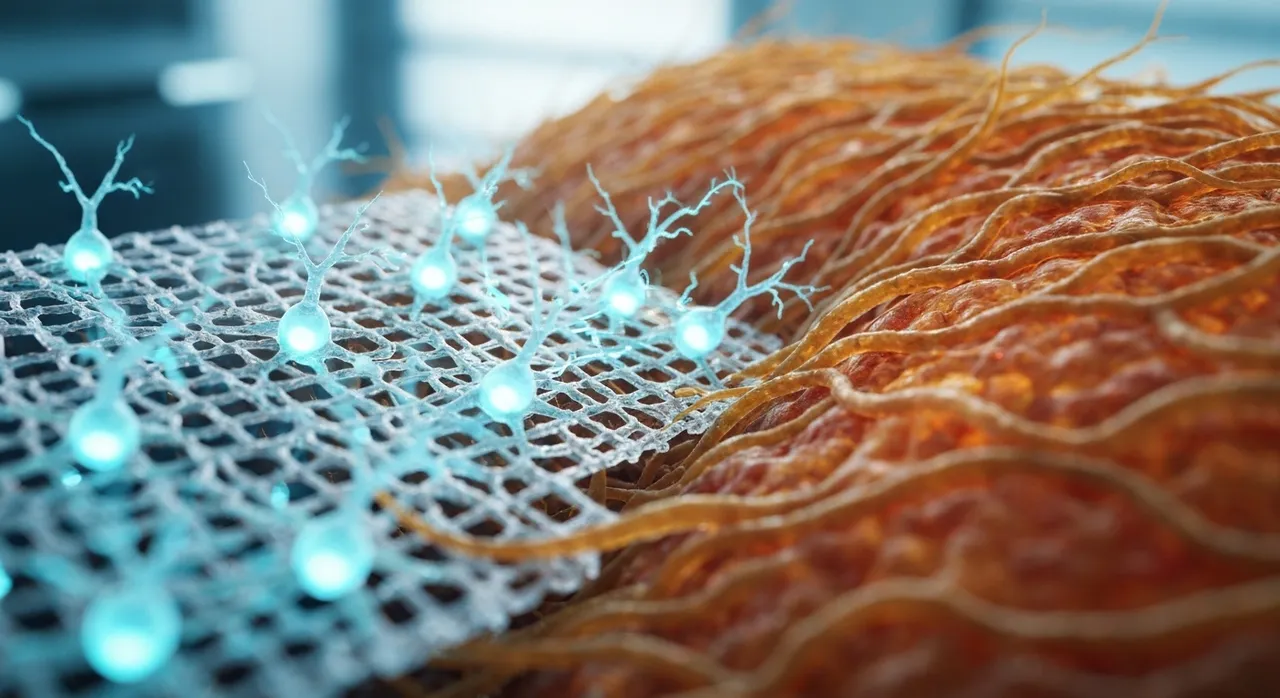
On April 18, 2026, the boundary between biological intelligence and synthetic architecture underwent a fundamental shift. Engineers at Northwestern University announced a milestone in the field of bioelectronics: the development of printed artificial neurons that can engage in seamless, two-way communication with living brain cells. This achievement, published in a landmark study, represents more than a mere technical iteration in neural interfacing; it is the first time a man-made device has replicated the electrical “language” of the brain with such fidelity that biological circuits cannot distinguish the artificial signal from the natural one.
The implications of this breakthrough ripple across two distinct but converging fields: neuroprosthetics and neuromorphic computing. By utilizing advanced additive manufacturing and high-performance electronic inks, the research team has moved past the era of rigid, power-hungry silicon implants. Instead, they have ushered in a new paradigm of flexible, energy-efficient systems that do not merely record brain activity, but participate in it. For patients suffering from neurodegenerative diseases or traumatic injuries, these printed artificial neurons offer a roadmap toward restoring lost sensory and motor functions with a level of organic integration previously relegated to science fiction.
The Engineering Behind the Breakthrough: Aerosol Jet Printing and Electronic Inks
At the heart of this innovation is a sophisticated fabrication process known as aerosol jet printing. Traditional semiconductor manufacturing relies on high-heat, vacuum-sealed environments and rigid substrates, making them fundamentally incompatible with the soft, saline-rich environment of the human brain. The Northwestern team bypassed these limitations by developing specialized electronic inks composed of organic polymers and carbon nanotubes.
The aerosol jet printing process allows for the deposition of these inks with micrometer-scale precision on flexible, biocompatible surfaces. This method offers several technical advantages over traditional lithography:
- Material Versatility: The ability to print multiple layers of conducting, semiconducting, and insulating inks allows for the creation of complex “synaptic” junctions within a single device architecture.
- Low-Temperature Fabrication: Unlike silicon processing, these printed artificial neurons are manufactured at near-room temperatures, preserving the integrity of the flexible substrates and the organic electronic materials.
- Customizable Geometry: Engineers can tailor the physical layout of the artificial neurons to match the specific topography of a patient’s neural tissue, ensuring optimal electrode-to-neuron proximity.
These devices utilize Organic Electrochemical Transistors (OECTs), which are uniquely suited for biological interfaces. Unlike standard transistors that rely solely on electron flow, OECTs can handle both electronic and ionic signals. Since the human brain communicates primarily through the movement of ions (such as sodium, potassium, and calcium), these printed artificial neurons act as a perfect translator, converting digital data into ionic fluxes and vice versa.
Matching the “Spike”: Biological Fidelity in Neural Signaling
The true “holy grail” of neural interfacing is the replication of the Action Potential—the characteristic electrical spike that neurons use to transmit information. Previous attempts at artificial neurons often produced “square waves” or jagged electrical pulses that, while functional, lacked the temporal and morphological nuances of natural signaling. Such discrepancies often lead to “neural fatigue” or the eventual rejection of the device by the biological circuit.
The Northwestern researchers achieved a breakthrough by fine-tuning the capacitance and resistance of their printed circuits to mimic the exact spike shape and temporal range of mammalian neurons. In tests involving mouse brain tissue, the printed artificial neurons were able to trigger biological responses that were indistinguishable from those triggered by neighboring living cells. This “biological mimicry” is critical for several reasons:
- Signal Integration: Because the artificial spikes match the duration (roughly 1-2 milliseconds) and amplitude of natural spikes, the living neural network can “summate” these signals correctly, allowing the artificial neuron to participate in the brain’s natural logic gates.
- Reduced Toxicity: By operating at the same low voltages as biological cells, the devices minimize the risk of “electroporation”—the accidental tearing of cell membranes caused by high-voltage artificial stimulation.
- Two-Way Dialogue: The devices are not just “transmitters”; they are “transceivers.” They can sense the neurotransmitters released by biological synapses and adjust their own firing rates in response, creating a genuine feedback loop between man and machine.
Neuromorphic Computing: Toward LLMs with the Power of a Lightbulb
Beyond the clinical applications, the development of printed artificial neurons provides a physical blueprint for a new era of “neuromorphic” computing. Currently, the most advanced Artificial Intelligence models, such as Large Language Models (LLMs), require massive GPU clusters that consume megawatts of electricity. This is a stark contrast to the human brain, which performs far more complex cognitive tasks while consuming approximately 20 watts—barely enough to power a dim LED bulb.
The energy efficiency of the brain stems from its “event-driven” nature. In a standard computer, the processor is always “on,” constantly cycling through clock cycles. In the brain, neurons only fire when they receive a specific threshold of input. The printed artificial neurons from Northwestern replicate this event-driven architecture.
The End of the Von Neumann Bottleneck
Modern computers suffer from the “Von Neumann bottleneck,” where data must be constantly moved back and forth between the processor and the memory. This movement accounts for the majority of energy consumption in AI training. Neuromorphic systems built with printed artificial neurons integrate processing and memory within the same physical structure, much like a biological synapse. This allows for:
- Massive Parallelism: Each artificial neuron operates independently, allowing for trillions of simultaneous operations without the need for a centralized clock.
- In-Memory Computing: The “weight” of a neural connection is stored in the physical conductance of the printed material, eliminating the need for external RAM during inference tasks.
- Extreme Scalability: Because these devices are printed, they can be produced in large-area formats at a fraction of the cost of silicon wafers, potentially allowing for “smart skins” or “intelligent surfaces” that process information locally rather than in the cloud.
Neuroprosthetics: Restoring the Senses
The most immediate human impact of printed artificial neurons will likely be seen in the field of advanced prosthetics. While current prosthetic limbs can move based on muscle signals, they lack the “sensory feedback” that allows a person to feel the texture of an object or the pressure of a handshake. By integrating these artificial neurons into prosthetic fingertips, engineers can create a synthetic nervous system that sends “real” neural spikes back to the wearer’s brain.
The flexible nature of the printed electronics allows them to be wrapped around peripheral nerves or implanted directly into the somatosensory cortex. Because the devices “talk” the same language as the brain, the learning curve for the patient is significantly reduced. The brain does not have to learn to interpret a foreign digital signal; it simply receives a familiar ionic spike that it recognizes as “touch” or “pressure.”
Challenges and the Path to Human Clinical Trials
Despite the optimism surrounding the April 2026 announcement, several hurdles remain before printed artificial neurons become a standard of care. The most pressing challenge is long-term stability. The “wet” environment of the brain is highly corrosive to electronic components. While organic polymers are biocompatible, they can degrade over months or years when exposed to the body’s immune response and the constant flux of ions.
Furthermore, the “two-way communication” demonstrated in mouse tissue must be scaled up to the complexity of the human brain, which contains approximately 86 billion neurons and trillions of synapses. Mapping the correct “addresses” for artificial-to-biological connections requires a level of surgical and computational precision that is still being refined. However, the Northwestern team is already exploring the use of “bio-hybrid” interfaces, where the printed neurons are coated with living proteins to encourage natural neurons to grow toward and dock with the artificial terminals.
Conclusion: The Dawn of the Bio-Digital Era
The 2026 breakthrough at Northwestern University marks a definitive end to the era where “artificial intelligence” was purely a software concept. With the advent of printed artificial neurons, AI has found a physical form that is compatible with our own biology. This technology does not merely mimic the brain; it invites a merger.
As we look toward the 2030s, the distinction between a “silicon chip” and a “biological circuit” will continue to blur. Whether used to bypass a damaged spinal cord, provide a direct neural link to the internet, or power the next generation of hyper-efficient AI, these printed devices are the first brushstrokes on a new canvas of human evolution. The ability to print “life-like” intelligence at scale ensures that the future of computing will not just be faster—it will be more human.
Written by
TempMail Ninja
Digital privacy and online security expert. Passionate about creating tools that protect users' identity on the internet.