Printed Artificial Neurons Successfully Interface with Living Brain Tissue
Article Content
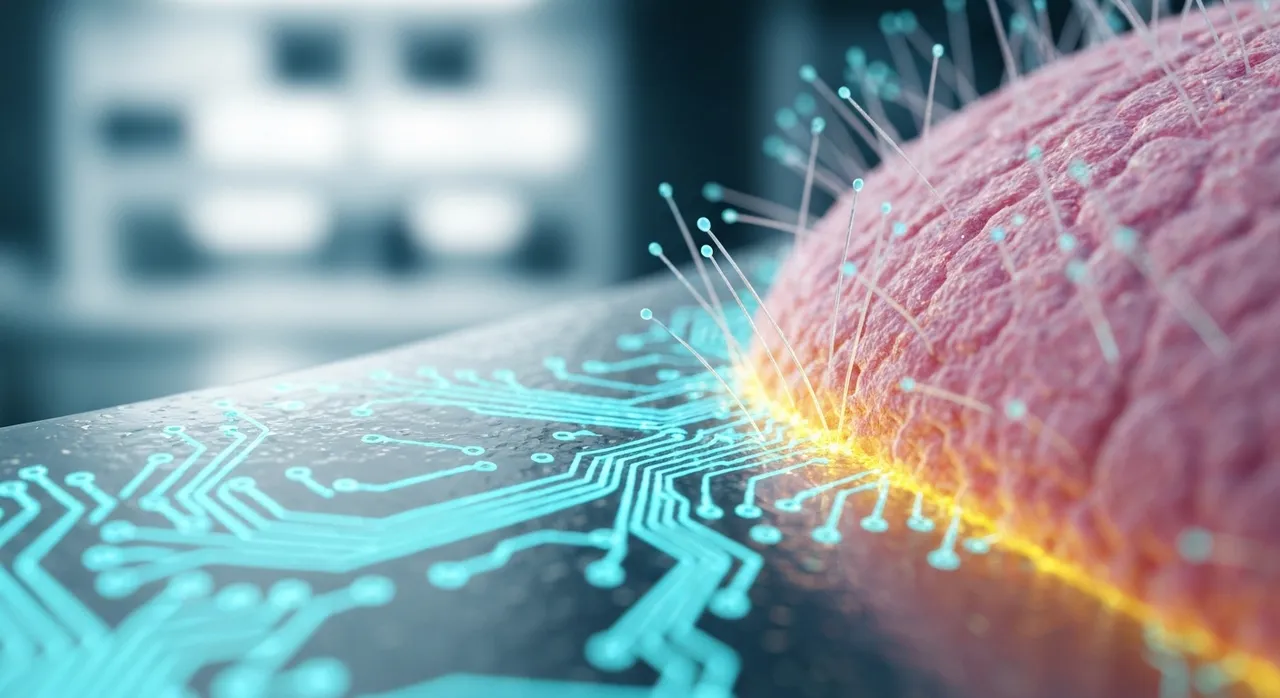
The dawn of a new era in bio-integrated electronics arrived on April 30, 2026, as researchers at Northwestern University unveiled a revolutionary development: printed artificial neurons that can “talk” directly to living brain cells. This breakthrough, published in Nature Nanotechnology, represents more than a simple feat of engineering; it is the first time synthetic, printed hardware has demonstrated the ability to stimulate biological neural circuits with the temporal precision and signal morphology required to mimic natural “spiking” behavior.
Led by materials science pioneer Mark C. Hersam and neurobiologist Indira M. Raman, the team successfully bridged the gap between rigid silicon-based computing and the soft, dynamic “wetware” of the human brain. By utilizing advanced 2D materials and additive manufacturing, the researchers have created a platform that could simultaneously solve the energy crisis facing modern Artificial Intelligence and usher in a new generation of neuroprosthetics capable of restoring lost sensory or motor functions.
The Architecture of Printed Artificial Neurons: MoS2 and Graphene
At the heart of this milestone is a sophisticated material stack that moves away from the traditional constraints of semiconductor fabrication. To create these printed artificial neurons, the Northwestern team developed a specialized set of electronic inks composed of two primary nanomaterials:
- Molybdenum Disulfide (MoS2) Nanosheets: A transition metal dichalcogenide that acts as a high-performance semiconductor. Its atomic thinness allows it to be extremely flexible while maintaining superior electron mobility.
- Graphene: Used as the conductive backbone and electrode material. Graphene’s exceptional conductivity and biocompatibility make it the ideal interface for delivering electrical signals to biological tissue without the toxicity often associated with heavy metals.
Unlike conventional microchips, which are etched onto rigid silicon wafers in multi-billion-dollar cleanrooms, these devices are manufactured using aerosol-jet printing. This additive process allows for the precise deposition of nanomaterial inks onto flexible polymer substrates, enabling the electronics to conform to the irregular, soft surfaces of biological organs like the brain.
Intentional Imperfections: The Secret to Neural Mimicry
One of the most technically profound aspects of the Northwestern study involves the role of the stabilizing polymer binder within the ink. In traditional printed electronics, this polymer is considered a contaminant and is typically “burned off” to ensure maximum conductivity. However, Hersam’s team discovered that by partially decomposing the polymer rather than removing it entirely, they could create a “current-constricted filament” mechanism.
These microscopic filaments allow the device to exhibit memristive switching—the ability to change resistance based on previous history, much like a biological synapse. This architecture enables a single printed device to produce complex, multi-order spiking patterns that would otherwise require a massive network of hundreds of silicon transistors. The result is a synthetic neuron that doesn’t just send a simple “on/off” pulse, but rather a sophisticated electrical spike that mirrors the action potentials of a living cell.
Interfacing with the Living Brain: The Cerebellar Breakthrough
To validate the efficacy of these printed artificial neurons, the researchers moved from dry-lab testing to biological trials. They collaborated with Professor Indira M. Raman’s lab to interface the devices with slices of mouse cerebellar tissue—a region of the brain critical for motor control and sensory integration.
The experiment targeted Purkinje neurons, the primary output cells of the cerebellar cortex. The technical challenge was immense: biological neurons operate on a millisecond timescale and respond only to specific voltage shapes. Signals that are too fast (common in metal-oxide electronics) or too slow (common in organic polymers) fail to trigger a biological response.
The Northwestern devices achieved a “Goldilocks” level of precision:
- Temporal Alignment: The artificial spikes were tuned to frequencies of up to 20 kHz, perfectly matching the timing of natural neural firing.
- Signal Morphology: The “shape” of the electrical pulse—its rise and fall time—was indistinguishable from a biological action potential.
- Bi-Directional Communication: In laboratory trials, the printed devices successfully triggered the firing of real neurons, effectively “injecting” information into a biological circuit.
“You can see the living neurons respond to our artificial neuron,” Hersam noted in the official announcement. “We have demonstrated signals that are not only the right timescale but also the right spike shape to interact directly with living neurons.”
Neuromorphic Computing: A Solution to the AI Energy Crisis
Beyond the medical implications, the development of printed artificial neurons addresses a critical existential threat to the tech industry: the AI energy and water crisis. Current AI models, such as Large Language Models (LLMs), run on traditional Von Neumann architectures where the processor and memory are physically separated. This leads to massive energy waste as data is constantly moved back and forth—a bottleneck that the human brain avoids entirely.
The human brain is the most energy-efficient computer in the known universe, consuming approximately 20 watts—less than a common lightbulb—to perform tasks that would require a small city’s worth of electricity for a modern data center. The printed artificial neurons mimic this efficiency through spiking neural networks (SNNs).
Energy Efficiency Metrics
By mimicking the event-driven, “asynchronous” nature of biological brains, this hardware only consumes power when it “spikes” or processes information. Traditional silicon chips are “always on,” drawing power even when idle. The advantages of this new paradigm include:
- Power Consumption: Potential reduction in energy use by 1,000x to 10,000x compared to current GPU-based AI hardware.
- Sparsity: Because the network is event-driven, only the active neurons use electricity, drastically reducing heat generation and the need for water-intensive cooling systems.
- Sustainability: The additive printing process used for these neurons produces significantly less chemical waste than traditional photolithography, making it a “greener” manufacturing method.
Future Horizons: From Neuroprosthetics to the Internet of Bodies
The success of the Northwestern trial opens several immediate frontiers in brain-machine interfaces (BMI). Currently, most BMIs rely on passive electrodes that merely record or roughly stimulate tissue. The printed artificial neurons are different because they are active processing nodes. They can “compute” signals before passing them to the brain, serving as a smart bridge between the digital and biological worlds.
Restoring Vision and Hearing
For patients with damaged optic nerves or auditory pathways, these printed neurons could act as “synthetic relays.” By converting camera or microphone data into authentic neural spikes, the devices could bypass damaged tissue and communicate directly with the visual or auditory cortex. Because the materials are flexible and thin, they could be implanted as a “mesh” that conforms to the brain’s surface without causing the inflammatory response often triggered by rigid silicon probes.
The Rise of “Edge Intelligence”
In the consumer electronics space, this technology paves the way for advanced AI that lives entirely on-device. Imagine a wearable health monitor or a prosthetic limb that processes data locally using a tiny, ultra-low-power neuromorphic chip. This “Edge AI” would not require a connection to a central server, ensuring data privacy and real-time response speeds that are currently impossible with cloud-dependent systems.
Conclusion: A Paradigm Shift in Human-Machine Symbiosis
The Northwestern University breakthrough is a definitive turning point in the history of bioelectronics. By moving from imitation to interfacing, Hersam and Raman have proven that the language of the brain—complex, stochastic electrical spikes—can be spoken fluently by synthetic materials like molybdenum disulfide and graphene.
As we look toward the 2030s, the integration of printed artificial neurons into the fabric of our lives seems inevitable. Whether it is solving the catastrophic energy demands of the AI revolution or providing a voice to the silent neural circuits of the injured, this technology represents a profound step toward a future where the distinction between biological life and synthetic intelligence becomes increasingly, and beautifully, blurred.
Written by
TempMail Ninja
Digital privacy and online security expert. Passionate about creating tools that protect users' identity on the internet.