Proton Mail Upgrades Easy Switch to Integrate Gmail Seamlessly
Article Content
The process of “de-Googling”—or systematically reclaiming one’s digital autonomy from the pervasive surveillance engines of Big Tech—is a modern-day necessity that has historically been stymied by immense logistical friction. Migrating away from Gmail is particularly painful. For the average user, a legacy email address acts as the structural anchor for hundreds of online identities, subscriptions, financial services, and personal contacts. However, on May 28, 2026, Swiss privacy champion Proton Mail shattered this transition barrier by rolling out a major, dual-directional upgrade to its “Easy Switch” migration utility. No longer just a static, one-time backup tool, the utility has been transformed into a dynamic, live operational bridge. This means users can now seamlessly send and receive Gmail messages directly from within the secure Proton Mail ecosystem, allowing them to phase out Google at their own pace without breaking their daily communication workflows.
Breaking the Moat: Why Leaving Gmail Has Been Historically Difficult
For over two decades, Google has maintained an ironclad grip on consumer email through Gmail. While the service is marketed as free, the true cost of admission is your personal data. Google scans activity, processes messages, and monitors telemetry to build comprehensive advertising profiles that follow users across the internet. Despite being fully aware of these privacy-invasive practices, many users remain trapped in the Google ecosystem due to the high “cost of switching”.
To fully migrate to a privacy-first alternative, a user must traditionally complete several grueling steps:
- Identify and log into every digital service—from online banking to streaming platforms—and manually update their registered email address.
- Inform hundreds of personal and professional contacts of their new email coordinates.
- Export years of historical communications, folder hierarchies, and metadata without losing critical documents.
- Monitor both the old and new inboxes simultaneously during a prolonged transition period to ensure no critical notifications are missed.
This overwhelming friction is Google’s competitive moat. By forcing an “all-or-nothing” approach to email migration, Big Tech has successfully disincentivized millions from moving to encrypted alternatives. The upgraded Easy Switch utility from Proton is designed specifically to drain this moat, turning a hostile, abrupt departure into a smooth, managed off-ramp.
The Evolution of the Proton Mail “Easy Switch” Utility
Previously, the Easy Switch tool in Proton Mail operated primarily as a localized, administrative import wizard. It allowed users to connect their Google, Outlook, Yahoo, or Apple accounts to execute a one-off import of historical IMAP directories, contacts, and calendar databases. While effective for archiving past data, it did not solve the continuous operational problem: once the import was finished, the user still had to keep checking Gmail for incoming traffic and reply using Google’s interface.
The May 2026 update radically redefines this utility. The “Easy Switch” tool has evolved into an active, bi-directional gateway. Under this new paradigm, users enjoy a suite of dynamic capabilities directly from their Proton interface:
- Live Inbox Synchronization: Proton automatically fetches your most recent Gmail history and ensures that all new incoming mail sent to your legacy Gmail address appears instantly inside your Proton inbox.
- Native Send-As Integration: You can compose, reply to, and send emails using your `@gmail.com` address directly from the Proton Mail app or web client.
- Tracker and Ad Elimination: All incoming Gmail traffic routed through Proton is automatically subjected to Proton’s strict security protocols, instantly stripping out spy pixels and blocking tracking elements.
- Asymmetrical Synchronization: Actions taken in your Proton interface—such as archiving, deleting, or sorting messages into custom folders—are handled locally and are not reflected back in Google’s database, preserving a clean workspace.
System Architecture: How the One-Way Privacy Firewall Works
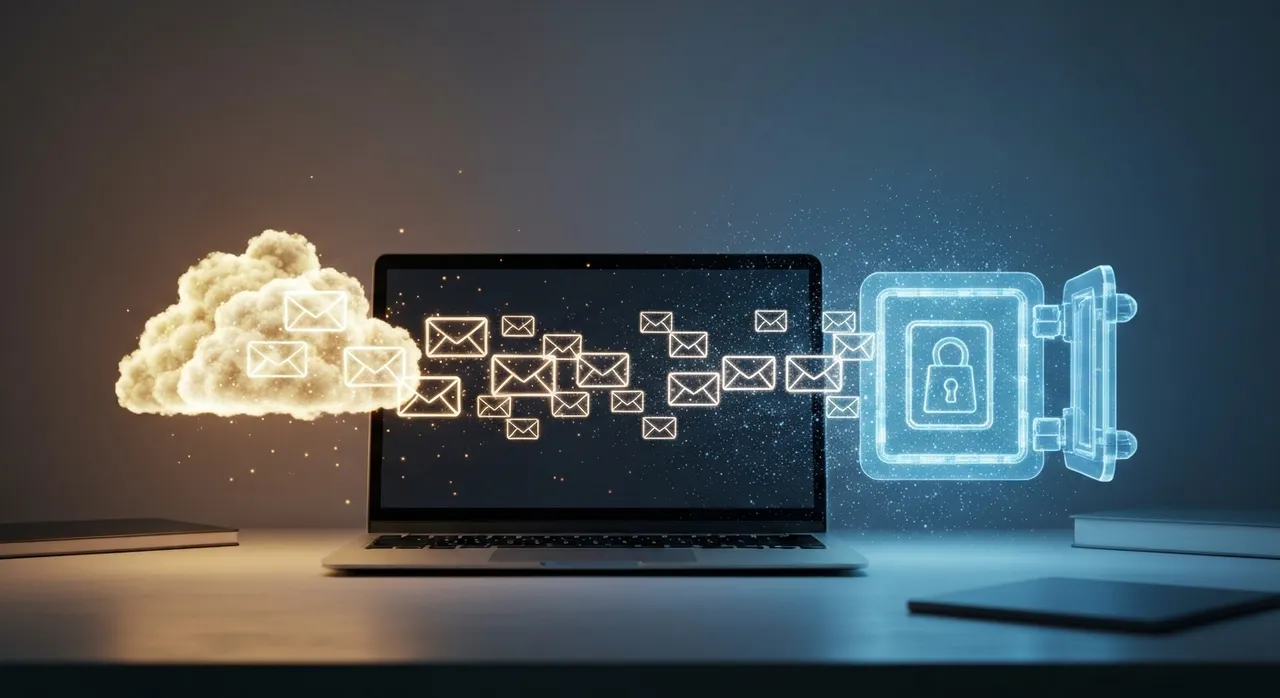
From a technical standpoint, integrating a privacy-focused, zero-knowledge platform with a data-harvesting legacy provider like Google presents unique security challenges. Proton has solved this by implementing a strict, unidirectional data-flow architecture.
When you link your Google account to Proton Mail, the authorization is handled securely via Google’s OAuth 2.0 protocol. You grant Proton permission to access your Gmail backend through secure, restricted API tokens. This gives Proton the necessary clearance to retrieve your incoming messages and send outgoing emails through Google’s SMTP relays.
Crucially, this data pipeline is entirely one-directional. While Proton has authorized access to read and transmit Gmail data on your behalf, Google is granted absolutely zero access or visibility into your native Proton Mail inbox. Your secure, zero-access encrypted Proton messages, custom PGP keys, and native `@proton.me` correspondence remain locked behind local, client-side encryption. Google’s trackers cannot cross this digital threshold, establishing an unbreachable privacy firewall between your old digital life and your new one.
Neutralizing Google’s Data Profiling: Immediate Privacy Wins
Even though your legacy emails are still technically associated with a Google address, managing them through the Proton interface delivers immediate, substantial privacy benefits over using the native Gmail application or web client.
First, Gmail’s native applications are notorious for gathering exhaustive telemetry. According to app privacy disclosures, the Google email client tracks approximate user location, device IDs, search history, and user interactions to target ads. By abandoning the Gmail app and accessing your mail strictly via the Proton Mail app, you immediately sever this telemetry pipeline. Google can no longer monitor which emails you click on, how long you dwell on a message, or what physical location you are occupying when checking your inbox.
Second, Proton’s backend actively scrubs incoming Gmail traffic. Most marketing emails today are embedded with “spy pixels”—invisible 1×1 tracking images that report back to advertisers the moment an email is opened. Proton blocks these remote images by default and strips out tracking parameters from links, isolating you from corporate surveillance networks.
Third, this integration unlocks an extraordinary cryptographic edge case: automatic end-to-end encryption for Gmail addresses. Normally, PGP encryption is only available when both parties use secure providers. However, if User A and User B have both connected their legacy Gmail accounts to Proton Mail, any emails exchanged between them are automatically encrypted with PGP on the client side before they are ever sent. To Google’s servers, these messages look like garbled, unreadable ciphertext, completely blinding Google’s automated scanning and AI-training algorithms.
The Technical Catch: Google’s Servers Still Loom
While this updated migration bridge is a massive leap forward for consumer privacy, Proton is remarkably transparent about its technical limitations. This feature is designed to be an off-ramp, not a permanent, hybrid security solution.
Because the emails are still bound to your `@gmail.com` domain, any communication sent to or from that address must still traverse Google’s infrastructure. When an external sender emails your legacy address, the message lands on Google’s servers first before Proton’s Easy Switch fetches it. Similarly, when you send an email “from” your Gmail address inside Proton, it is routed through Google’s outbound SMTP servers.
Consequently, Google can still scan and analyze the content of these messages as they rest on its servers. For truly sensitive, confidential communications, users must use their native, end-to-end encrypted `@proton.me` addresses. The true value of this new tool is organizational: it allows you to centralize your operations, protect your usage telemetry, clean up tracker scripts, and steadily migrate your logins to Proton without ever having to log into Google’s interface again.
Step-by-Step: Activating the Dynamic Gmail Sync in Proton Mail
Configuring the new dynamic integration is straightforward and can be completed in just a few minutes through the Proton web interface:
- Log into your account at mail.proton.me using a web browser.
- Click on the Settings gear icon in the top right corner and select All settings.
- In the left-hand navigation menu, select Import via Easy Switch.
- Click on the Google / Gmail option.
- When prompted, authenticate using your Google credentials through the secure OAuth pop-up window.
- Review and approve the specific permissions, allowing Proton to securely fetch and send emails on behalf of your Gmail address.
- Select which elements you wish to synchronize (such as inbox history, calendars, and contacts).
- Click Start Import to initiate the continuous, dynamic background synchronization.
Once activated, the synchronization process runs seamlessly in the background. You can close the browser tab or use your computer normally while Proton builds your new, consolidated workspace.
A Gradual Rollout and a Broader Strategic Vision
Proton officially launched this upgraded Easy Switch functionality on May 28, 2026, starting with immediate access for legacy Visionary tier subscribers. The company is executing a gradual, phased rollout to the rest of its user base to ensure server stability and seamless API performance.
This release is a key milestone in Proton’s broader 2026 roadmap, which focuses on making privacy-focused alternatives practical for mainstream users. Rather than expecting consumers to make drastic sacrifices in convenience to protect their data, Proton is building a comprehensive suite of secure productivity tools. With recent expansions including an encrypted AI writing assistant (Proton Scribe), a secure 2FA authenticator (Proton Pass), private video calling, and encrypted collaborative spreadsheets, Proton is systematically dismantling the excuses to stay with Big Tech. By turning Gmail into a fully manageable extension of the Proton inbox, they have delivered the most powerful tool yet for anyone looking to reclaim their digital sovereignty.
Written by
TempMail Ninja
Digital privacy and online security expert. Passionate about creating tools that protect users' identity on the internet.