QR code phishing surges 146% in Microsoft Q1 2026 Threat Report
Article Content
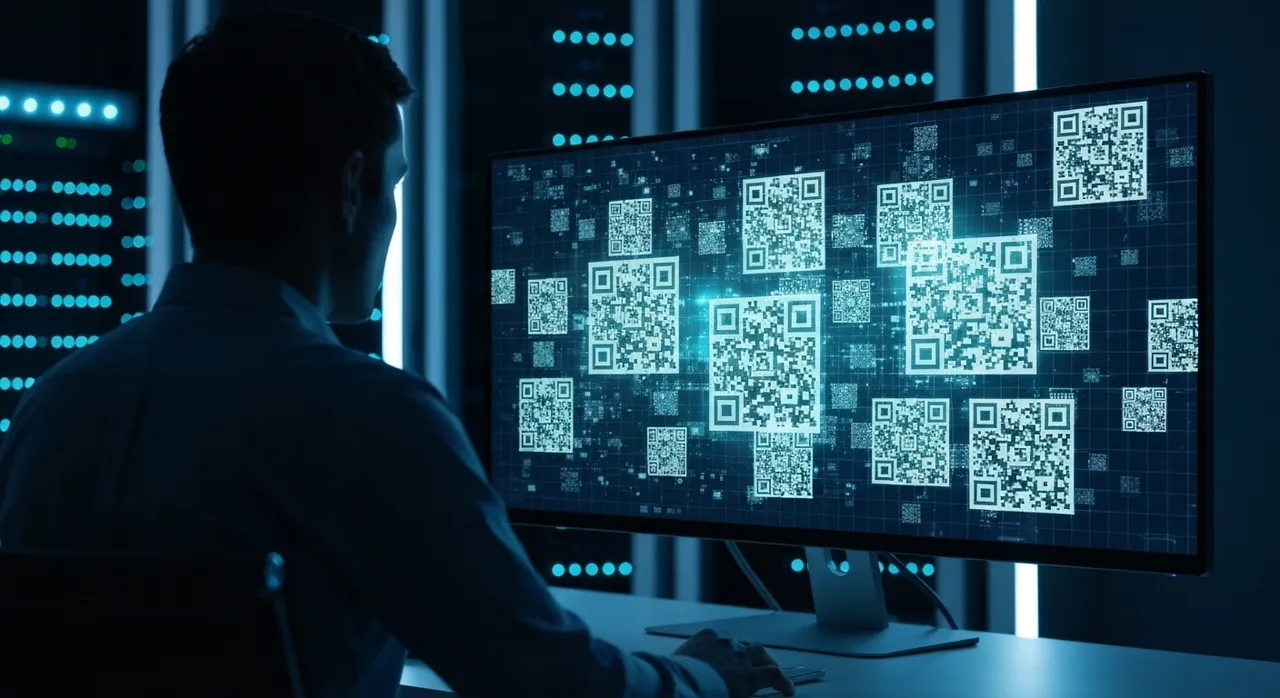
The first quarter of 2026 has marked a definitive paradigm shift in the global cyber-threat landscape. According to the Microsoft Q1 2026 Threat Report, published on May 1, 2026, the era of simple link-based email deception has been superseded by a more insidious, multi-layered approach. The headline revelation of the report is a staggering 146% explosion in QR code phishing, frequently referred to as “quishing,” which has moved from the fringes of cybercrime to the center of the adversarial playbook. Between January and March 2026, the volume of these attacks surged from 7.6 million to over 18.7 million monthly incidents, signaling a tactical maturation that legacy security infrastructures are struggling to contain.
The Anatomy of the 2026 QR Code Phishing Surge
The rapid escalation of QR code phishing is not merely a matter of volume; it is a calculated response to the increased efficacy of automated email security. For years, Secure Email Gateways (SEGs) have relied on text-parsing and URL reputation checks to identify malicious intent. By transitioning the malicious payload into an image-based QR code, threat actors have effectively “blinded” these traditional filters. The Microsoft report highlights that 94% of all observed link-based phishing in Q1 2026 specifically targeted employee credentials for high-value cloud services, most notably Microsoft 365 and Google Workspace.
The tactical advantage of a QR code is twofold. First, it bypasses the static analysis of the email body. Second, it forces a “cross-device migration.” When an employee scans a QR code with their personal mobile device, the attack moves from a managed corporate environment—complete with EDR (Endpoint Detection and Response) and web proxies—to an unmanaged, often unprotected mobile browser. This allows the attacker to operate outside the perimeter of corporate DNS filtering and internal monitoring systems.
The Rise of “Trojan” Attachments: PDF and DOCX Dominance
In Q1 2026, the method of delivering these QR codes has become increasingly sophisticated. Rather than embedding the image directly in the email body—a method that is now increasingly flagged by advanced OCR (Optical Character Recognition) scanners—attackers are hiding them within secondary containers. The data reveals a clear preference for document-based delivery:
- PDF Attachments (70%): The most common vector, where the QR code is often presented as a “Secure Document” or “HR Policy Update” that requires a mobile scan to view.
- DOCX Attachments (24%): A resurgent vector using the familiarity of Microsoft Word to build trust, often mimicking internal memos or invoices.
- Direct Email Embeds (5%): Though smaller in total share, this method saw a 336% spike in March as actors experimented with high-velocity, low-persistence bursts.
By nesting the QR code inside a PDF, attackers exploit the “scanning gap” of many security tools that perform deep-packet inspection on links but lack the computational resources to perform real-time OCR on every page of every attachment. This layered approach ensures that the malicious URL remains hidden until the moment of human interaction.
CAPTCHA-Gated Phishing: The Human-in-the-Loop Blindfold
Parallel to the rise of quishing, Microsoft identified a 125% increase in CAPTCHA-gated phishing pages. This technique represents a “human-in-the-loop” requirement that is specifically designed to defeat automated security crawlers and sandboxes. When a security scanner attempts to follow a suspicious link, it is met with a CAPTCHA (such as Cloudflare Turnstile or a custom-built puzzle). Because the automated scanner cannot solve the puzzle, it never reaches the actual phishing payload, causing the scanner to report the site as “clean” or “inaccessible.”
For the human victim, however, the CAPTCHA serves as a psychological decoy. In a world where legitimate services frequently require human verification, the presence of a CAPTCHA actually increases the perceived legitimacy of the site. Victims are lulled into a false sense of security, believing they are entering a protected environment, when in reality, they are clearing the path for the attacker’s credential-harvesting script.
The “ClickFix” Evolution and Technical Evasion
A particularly dangerous variant of this trend identified in the report is the “ClickFix” technique. Unlike traditional phishing, which asks for a password, ClickFix lures users into executing malicious commands under the guise of “fixing” a browser error or completing a “human verification” step. For example, a fake CAPTCHA page might instruct a user to press Windows+R and paste a specific string of text. In reality, this string is a base64-encoded PowerShell script that installs malware or captures session tokens directly from the browser’s memory.
The Industrialized PhaaS Ecosystem: Tycoon2FA and Beyond
The sophistication observed in Q1 2026 is largely fueled by the professionalization of the Phishing-as-a-Service (PhaaS) market. Microsoft’s Threat Intelligence team noted that even as some platforms were disrupted, others evolved with unprecedented speed. The report identifies several key “kits” that have dominated the quarter:
- Tycoon2FA: Despite international law enforcement actions in early 2026, Tycoon2FA has demonstrated remarkable resilience. The platform has migrated over 41% of its infrastructure to the .ru TLD and adopted more aggressive evasion tactics, such as session-token theft via Adversary-in-the-Middle (AiTM) techniques.
- SneakyLog (Kratos): A specialized kit that gained traction in Q1 by focusing on tax-themed lures. SneakyLog is designed to generate unique, per-user QR codes that include the victim’s email address in the encoded URL, allowing the phishing page to pre-populate and look significantly more authentic.
- Saiga 2FA: An emerging framework built on the Next.js web application architecture. Saiga does not use static HTML; it generates phishing content dynamically on the fly, making it nearly impossible for signature-based detection to flag. It also features “developer tool detection,” which redirects the page to a benign site like Google if it detects a security researcher is trying to inspect the code.
These kits have commodified QR code phishing, allowing low-skill actors to launch high-sophistication campaigns for as little as $150 per month. This “democratization” of advanced evasion is the primary driver behind the 8.3 billion total email threats detected by Microsoft in the first three months of the year.
Targeting the Cloud Identity: M365 and Workspace Under Siege
The ultimate objective of 94% of these campaigns is identity compromise. In the modern enterprise, the identity is the new perimeter. If an attacker can successfully harvest a Microsoft 365 or Google Workspace credential, they gain access not just to email, but to SharePoint, OneDrive, Teams, and often the entire corporate network via SSO (Single Sign-On).
Microsoft’s telemetry indicates that Business Email Compromise (BEC) remains the primary monetization route following a successful quishing or CAPTCHA-gated attack. In Q1 2026 alone, Microsoft detected 10.7 million BEC attacks. These often begin with a “low-effort” contact, such as a message asking, “Are you at your desk?” once an internal account has been compromised. Because the email originates from a legitimate internal account, it bypasses almost all traditional filters, leading to fraudulent financial transactions or sensitive data exfiltration.
Strategic Defensive Recommendations for the 2026 Landscape
As QR code phishing and CAPTCHA-gated techniques continue to evolve, the Microsoft report emphasizes that traditional reactive security is no longer sufficient. Organizations must transition toward an “Identity-First” security posture. Key recommendations include:
- Adopt Phishing-Resistant MFA: Move beyond SMS and OTP (One-Time Password) codes, which are easily intercepted by AiTM kits. Implement FIDO2-based hardware keys or certificate-based authentication (CBA) to eliminate the risk of credential harvesting.
- Enable Advanced Image Analysis: Security teams should ensure their email protection suites are configured for OCR-based QR code extraction and sandboxing. This allows the system to follow the encoded link before the email reaches the user’s inbox.
- Zero-Hour Auto Purge (ZAP): Utilize real-time threat intelligence to retroactively remove malicious emails from user inboxes even after delivery, as many 2026 campaigns use “time-bombed” URLs that only become malicious minutes after delivery.
- Conditional Access for TLDs: Given the migration of PhaaS kits to specific top-level domains, organizations should consider stricter conditional access policies for traffic originating from or heading to high-risk TLDs like .ru or .su, unless there is a legitimate business need.
Conclusion: The 2026 Security Blind Spot
The findings of the Microsoft Q1 2026 Threat Report serve as a stark warning: the “security blind spot” created by QR code phishing and human-interactive evasion is being exploited at an industrial scale. The surge from 7.6 million to 18.7 million monthly attacks in just 90 days represents more than just a trend—it is a strategic pivot by global threat actors. For enterprises to survive this new era of credential theft, the focus must shift from protecting the “inbox” to protecting the “identity,” ensuring that even when a user scans a malicious code, the underlying authentication remains unbreakable.
Written by
TempMail Ninja
Digital privacy and online security expert. Passionate about creating tools that protect users' identity on the internet.