Quantum-Safe Network Launched in Florida by IonQ and FLR
Article Content
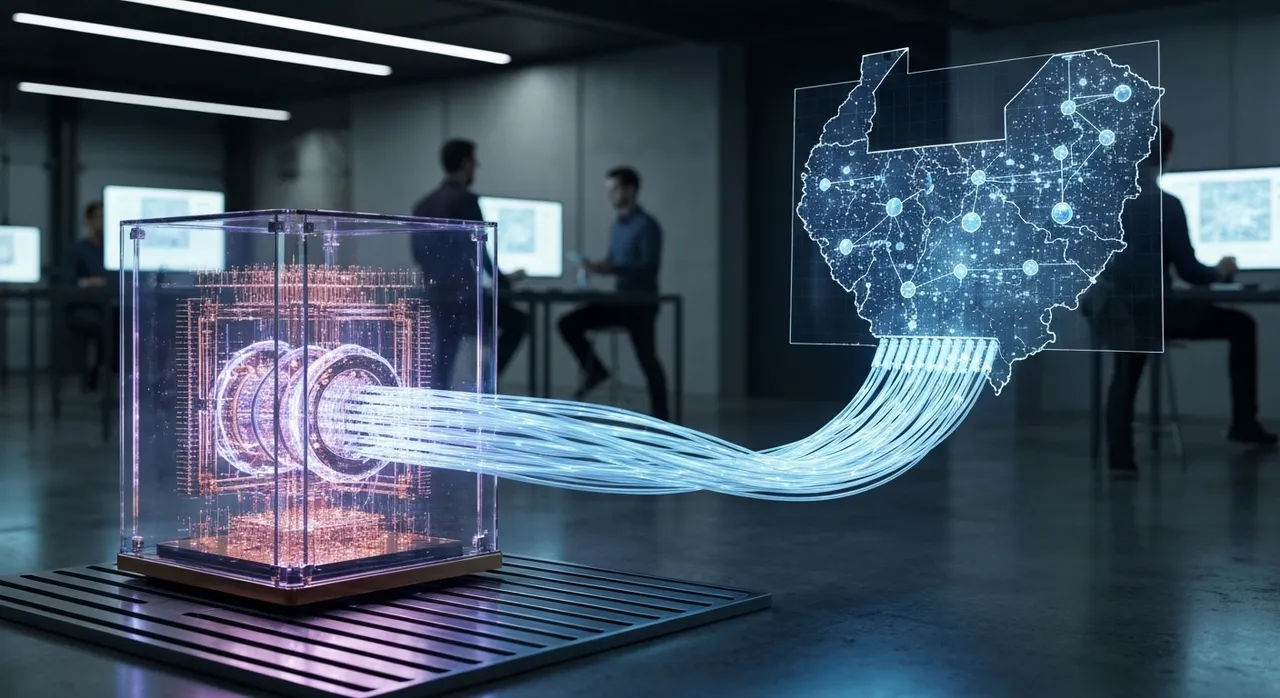
The digital defense landscape underwent a seismic shift on April 27, 2026, as IonQ and Florida LambdaRail (FLR) formally announced a Master Service Agreement to launch the first statewide quantum-safe network initiative in the United States. Unveiled at the 2026 eMerge Americas Conference + Expo in Miami, this project establishes a nearly 100-mile quantum-secure corridor connecting premier research and education institutions from Palm Beach County to Miami-Dade. By integrating IonQ’s industry-leading trapped-ion technology with Florida’s extensive 1,540-mile dark fiber infrastructure, the partnership effectively moves quantum communication out of the experimental lab and into a live, high-stakes operational environment.
This initiative arrives at a critical juncture for global cybersecurity. As quantum computers approach the threshold of breaking the RSA and Elliptic Curve Cryptography (ECC) protocols that underpin almost all modern digital commerce, the need for a quantum-safe network has transitioned from a theoretical luxury to a national security imperative. The Florida corridor represents a physical realization of “Physics-Based Security,” a model that does not rely on the perceived difficulty of mathematical problems, but on the immutable laws of quantum mechanics to protect data-in-transit.
The Looming Crisis: Harvest Now, Decrypt Later (HNDL)
One of the primary drivers behind the Florida initiative is the specific threat profile known as “Harvest Now, Decrypt Later” (HNDL). While a commercially viable, cryptographically relevant quantum computer (CRQC) capable of running Shor’s algorithm is still on the horizon, the risk to data is immediate. Nation-states and sophisticated criminal syndicates are currently intercepting and archiving massive volumes of encrypted traffic from sensitive sectors, including finance, healthcare, and defense.
The strategy is simple yet devastating: store the encrypted data today and wait for quantum processors to mature. Once a sufficiently powerful quantum computer is built, these “harvested” archives can be retroactively decrypted, exposing trade secrets, personal health information, and classified government intelligence. For data that must remain confidential for 10, 20, or 50 years, the quantum-safe network is the only viable defense. By the time standard encryption is officially “broken,” the damage from HNDL will have already been done to any data not protected by quantum-resistant methods today.
The QKD Solution: Security Through Observation
At the heart of the IonQ and Florida LambdaRail partnership is Quantum Key Distribution (QKD). Unlike traditional encryption, which sends a key that an observer could potentially copy without detection, QKD utilizes the unique properties of quantum states—specifically photons—to exchange cryptographic keys. The security of a quantum-safe network utilizing QKD is rooted in two fundamental principles of quantum physics:
- The No-Cloning Theorem: It is physically impossible to create an identical copy of an arbitrary unknown quantum state. Any attempt by an eavesdropper to intercept or “measure” the photons in transit will irreversibly alter their state.
- Heisenberg’s Uncertainty Principle: The act of observing a quantum system changes that system. In a QKD-enabled network, any interception attempt introduces a detectable error rate (Quantum Bit Error Rate or QBER).
In the Florida implementation, if an unauthorized actor attempts to tap the fiber optic line, the legitimate senders and receivers will detect the anomaly in real-time. The compromised key is immediately discarded, and a new one is generated, ensuring that the quantum-safe network remains unbreachable even by an adversary with infinite computing power.
The 100-Mile Corridor: Mapping Florida’s Quantum Backbone
The first phase of the rollout focuses on a three-node corridor linking major research hubs between West Palm Beach and Miami. This 100-mile stretch is not merely a proof-of-concept; it is a high-bandwidth, production-ready environment designed to serve the Florida LambdaRail’s 13 university partners and 58 affiliates. By leveraging existing “dark fiber”—fiber optic cables that are already laid but currently unlit—the initiative minimizes the cost and complexity of the transition to a quantum-safe network.
The strategic selection of this corridor is noteworthy. The South Florida region is home to a burgeoning “Silicon Coast,” featuring a high concentration of aerospace firms, biotechnology labs, and international financial institutions. Connecting institutions like Florida Atlantic University (FAU), the University of Miami, and Florida International University (FIU) creates a localized ecosystem where researchers can test real-world applications of quantum-secure data transfer in sectors ranging from telemedicine to autonomous vehicle telemetry.
Expanding the Statewide Vision
While the initial 100-mile corridor is the flagship project, the Master Service Agreement outlines a comprehensive roadmap for a truly statewide quantum-safe network. Florida LambdaRail’s 1,540-mile footprint reaches from the Panhandle to the Keys. As future funding and stakeholder participation scale, the QKD nodes will expand to connect:
- Government Agencies: Securing municipal data and emergency response communications against state-level cyber threats.
- K-12 Education and Public Universities: Creating a “Quantum Internet” sandbox for the next generation of cybersecurity experts and physicists.
- Critical Infrastructure: Protecting the power grid and water management systems from sophisticated ransomware that could utilize quantum-enhanced intrusion techniques.
IonQ’s Trapped-Ion Advantage in Networking
The success of a quantum-safe network depends heavily on the underlying hardware’s ability to generate, manipulate, and detect quantum states with extreme precision. IonQ’s trapped-ion architecture offers distinct advantages for networking compared to the superconducting qubit approach favored by other industry giants. In 2025, IonQ achieved a world-record 99.99% two-qubit gate fidelity, a metric that translates directly into lower error rates during the key generation process.
Furthermore, IonQ’s recent milestone in photonic interconnects (announced in early April 2026) is the “missing link” for scalable quantum communications. By successfully interconnecting two independent trapped-ion systems via photons, IonQ has demonstrated that quantum computers can not only compute in isolation but can also share quantum entanglement over a distance. This capability is the foundational requirement for building a “Quantum Repeater,” which will eventually allow the quantum-safe network to span thousands of miles without the signal degradation that currently limits fiber-based QKD to shorter distances.
Technical Specifications of the FLR-IonQ Deployment
The Florida deployment utilizes IonQ’s specialized QKD hardware, which is designed for seamless integration with standard Dense Wavelength Division Multiplexing (DWDM) fiber systems. This means that the quantum-safe network can coexist on the same fiber strands that carry traditional internet traffic, using separate “channels” or wavelengths for the quantum keys. Key technical highlights include:
- Real-Time Intrusion Detection: Automated alerts that trigger a protocol shift if the QBER exceeds a 5-10% threshold.
- High Key-Rate Generation: Optimized to support the massive data throughput requirements of research institutions transferring multi-terabyte datasets.
- Interoperability: Designed to work alongside emerging Post-Quantum Cryptography (PQC) standards, providing a “defense-in-depth” strategy that combines algorithmic security with physical security.
Global Context: Florida Leads the United States
With this launch, Florida joins an elite group of global regions taking proactive steps to secure their digital futures. Similar initiatives are currently active in Switzerland and Romania, but the scale of the Florida LambdaRail project makes it one of the most ambitious in the United States. While the federal government has released roadmaps for PQC migration, Florida is the first to implement a large-scale quantum-safe network using physical layer QKD protection over state-spanning research infrastructure.
According to Niccolo de Masi, Chairman and CEO of IonQ, this milestone is about “strengthening innovation ecosystems and improving resiliency.” By establishing this infrastructure now, Florida is positioning itself as a global hub for the “Quantum Economy,” attracting talent and investment from companies that prioritize long-term data sovereignty.
Conclusion: The Architecture of Resilience
The launch of the 100-mile quantum-safe corridor in Florida is more than a technical upgrade; it is a fundamental redesign of how we define trust in a digital age. As we march toward the era of quantum supremacy, the “math-only” security models of the past are becoming obsolete. The quantum-safe network established by IonQ and Florida LambdaRail proves that we can stay ahead of the threat curve by building on the laws of physics.
For the researchers, educators, and public sector leaders in Florida, the message is clear: the data of today is protected against the computers of tomorrow. As this network expands across the 1,540-mile FLR backbone, it will serve as a blueprint for other states, signaling the beginning of a nationwide transition toward a secure, quantum-resistant internet. In the fight against “Harvest Now, Decrypt Later,” Florida has officially struck the first blow, securing its place at the forefront of the quantum frontier.
Written by
TempMail Ninja
Digital privacy and online security expert. Passionate about creating tools that protect users' identity on the internet.