Ransomware Wars: Krybit and 0APT Doxxing Leads to Massive Leaks
Article Content
In the digital underworld of 2026, the concept of “honor among thieves” has not only been discarded—it has been weaponized. As of April 24, 2026, the global cybersecurity landscape is reeling from the explosive culmination of the ransomware wars, a high-stakes conflict between two of the most aggressive syndicates currently in operation: Krybit and 0APT. While these groups typically spend their resources infiltrating corporate fortresses and extorting multi-million dollar payouts, they have spent the last 48 hours engaged in a scorched-earth campaign of mutual destruction. This inter-group warfare has led to the most significant internal data leaks in the history of cybercrime, offering security researchers an unprecedented look into the proprietary machinery of modern extortion.
Inside the Escalation of the 2026 Ransomware Wars
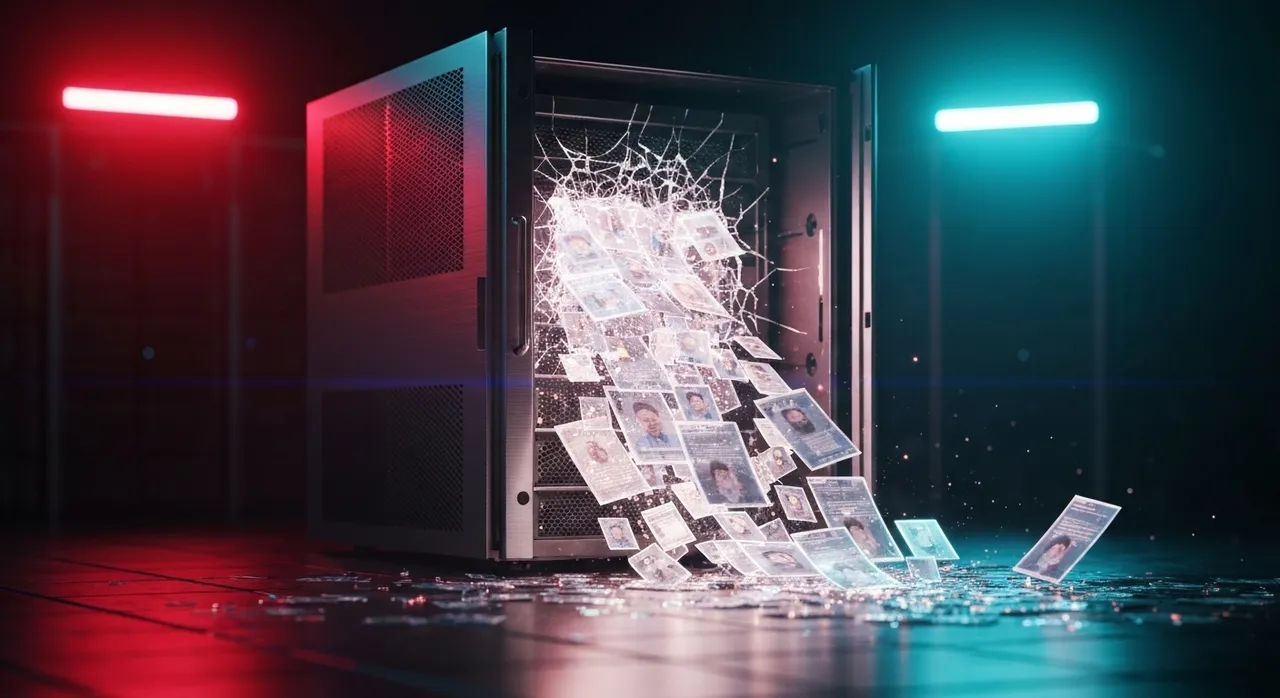
The conflict reached its peak today when the group known as 0APT followed through on a series of escalating threats to “unmask” the operators of Krybit. In what security analysts at Barricade and The Cyber Post are calling a definitive turning point in the ransomware wars, 0APT published the entirety of Krybit’s internal operational database. This was not a mere sampling of victim data, but a comprehensive “brain dump” of the syndicate’s backend infrastructure. The leak included victim negotiation logs, plaintext credentials for the group’s administrative panels, and a verified list of Bitcoin wallet addresses linked to over $400 million in illicit transactions.
The retaliation from Krybit was swift and devastating. Within 48 hours of the initial doxxing, Krybit’s “counter-intelligence” unit successfully compromised 0APT’s primary Command and Control (C2) servers. In a humiliating display of technical superiority, Krybit defaced 0APT’s public-facing leak site—replacing their victim list with 0APT’s own internal source code, system logs, and Nginx configurations. By listing 0APT as “Victim #1” on their own platform, Krybit has signaled that the era of tactical alliances in the Ransomware-as-a-Service (RaaS) ecosystem is effectively over.
The Anatomy of a Syndicate Breach: Plaintext and Tokens
The technical depth of these leaks provides a rare forensic goldmine for the defensive community. According to reports from The Cyber Post, the data spilled by 0APT contains a 56MB exfiltration file inventory. This inventory is a meticulously organized manifest of every file stolen by Krybit over the last six months. For incident responders, this is the “Holy Grail” of forensics, allowing companies to verify exactly what data was compromised without relying on the attackers’ often-dishonest claims. The inventory reveals that Krybit had a particular focus on Intellectual Property (IP) and Personally Identifiable Information (PII), categorized by the level of “leverage” each file provided during negotiations.
Furthermore, the inclusion of encryption tokens in the leak is a catastrophic blow to Krybit’s business model. In modern ransomware architectures, these tokens serve as the unique identifiers or “seeds” for the generation of decryption keys. Security researchers are currently analyzing whether these tokens can be reverse-engineered to create universal decryptors for Krybit’s most recent victims. If successful, this would represent a massive “market correction” in the ransomware economy, potentially saving hundreds of organizations from paying ransoms.
- Internal Database: Contains the real-world identities and XMPP handles of high-level Krybit affiliates.
- Plaintext Credentials: Access keys to the “Krybit Portal,” the web interface used to manage victim communications and automated malware deployments.
- Encryption Tokens: Metadata required to reconstruct decryption keys, potentially neutralizing the ransomware’s primary threat.
- 56MB Inventory: A granular list of exfiltrated data from 127 different corporate entities.
Technical Retaliation: Krybit’s Scorched-Earth Response
Not to be outdone, Krybit’s counter-strike against 0APT has exposed the vulnerability of even the most sophisticated threat actors. By gaining access to 0APT’s system logs and bash history, Krybit has effectively provided a “how-to” guide for law enforcement agencies to track 0APT’s movements. The leaked source code for 0APT’s latest ransomware variant reveals the use of highly advanced DLL sideloading techniques and the exploitation of CVE-2026-27175—a critical command injection vulnerability in smart automation platforms that 0APT had been using as a stealthy entry point into corporate networks.
The published Nginx logs have also revealed the IP addresses of the “jump boxes” 0APT used to mask their origins. While many of these are likely compromised residential proxies or VPNs, the sheer volume of data allows for complex traffic analysis that could lead to the physical location of the group’s server clusters. This level of transparency is unheard of in the cybercrime world, where “opsec” (operational security) is usually the highest priority. The ransomware wars have forced these groups to prioritize revenge over survival, a mistake that the global security community is eager to exploit.
The Shift from Corporate Extortion to Inter-Group Doxxing
Why have these groups turned on each other with such vitriol? Analysts at Halcyon suggest that the ransomware wars are a symptom of a shrinking market. As global law enforcement continues to disrupt major payment channels and companies improve their backup and recovery resilience, the “easy money” of the 2021-2024 era has vanished. In 2025, reports indicated a 47% increase in attack volume but a corresponding decrease in actual ransom payouts. This financial pressure has led to a fractured ecosystem where groups compete for the same pool of talented affiliates and “initial access” vulnerabilities.
Doxxing has become the ultimate weapon in this fight. By exposing the identities of rival members, groups like 0APT and Krybit are not just settling a score; they are effectively ending their rivals’ careers. Once a threat actor’s real identity or even their specific coding “style” is linked to a major ransomware operation, they become a liability to any other group. The “Leak Bazaar,” a recently discovered post-exfiltration service layer, has further fueled these fires by providing a platform where stolen data from one group can be sold to or analyzed by another, turning the cybercrime underground into a circular economy of betrayal.
The Intelligence Goldmine: Why Doxxing Benefits Defense
While the ransomware wars are a chaotic display of criminal hubris, they provide the security industry with insights that would otherwise take years of infiltration and reverse-engineering to obtain. The Cyber Post notes that the “proprietary tools” leaked during these 48 hours include custom-built scanning engines and automated “negotiation bots” that use AI to optimize ransom demands based on a victim’s public financial records. Strong encryption remains the backbone of these attacks, but the leaked source code allows defenders to see exactly how these groups bypass modern EDR (Endpoint Detection and Response) systems.
- Code Attribution: Security firms can now definitively link specific malware behaviors to 0APT or Krybit, improving attribution and threat actor profiling.
- Vulnerability Intelligence: The leaks revealed several “Zero-Day” exploits that were being held in reserve by these groups, allowing vendors to issue patches before the exploits become mainstream.
- Financial Tracking: The Bitcoin wallet addresses provided by 0APT are already being blacklisted by major exchanges, making it nearly impossible for Krybit to move their existing funds without detection.
The Future of the Ransomware Ecosystem
As the dust settles on this latest skirmish in the ransomware wars, the long-term implications are clear. The RaaS model is undergoing a painful transformation. The centralization of power in “super-groups” like Conti or LockBit has been replaced by a highly fragmented, highly volatile landscape of smaller, more aggressive entities. These groups are faster, less disciplined, and far more likely to engage in “asymmetric doxxing” to eliminate their competition.
For corporate defenders, the lesson of April 24, 2026, is one of cautious optimism. While the threats are becoming more personal and the tactics more ruthless, the internal stability of the threat actors themselves is at an all-time low. The ransomware wars prove that the greatest threat to a cybercriminal syndicate might not be the FBI or Europol, but the rival group in the next chat room over. As Krybit and 0APT continue to tear each other apart, the digital world watches, waiting for the next data dump that might finally provide the keys to dismantling these operations for good.
Conclusion: The events of today mark a paradigm shift. We are no longer just defending against external threats; we are witnessing a self-cannibalizing underground. The data recovered from these retaliatory leaks will likely fuel cybersecurity research for the remainder of the decade. As these groups focus on doxxing and internal destruction, they provide us with the very weapons we need to defeat them. The ransomware wars have only just begun, but for the first time, the “bad guys” are doing our jobs for us.
Written by
TempMail Ninja
Digital privacy and online security expert. Passionate about creating tools that protect users' identity on the internet.