State of AI Engineering 2026: Multi-Model Norms and Agentic Workflows
Article Content
The transition from experimental AI prototypes to industrial-grade production systems has officially reached its tipping point. According to the State of AI Engineering 2026 report released by Datadog on April 21, 2026, the industry has moved past the “single-model” era. We are now witnessing a fundamental shift where operational reliability, multi-model orchestration, and autonomous agentic workflows define the competitive landscape. For the modern enterprise, the primary challenge is no longer the raw intelligence of a model, but rather the ability to control and observe that intelligence at scale.
The State of AI Engineering: Navigating the Multi-Model Norm
In 2026, model monoculture is dead. The latest data reveals that 69% of organizations now utilize three or more distinct models simultaneously. While OpenAI maintains a commanding 63% market share, the narrative of 2026 is one of rapid diversification. Google Gemini and Anthropic Claude have emerged as formidable contenders, seeing adoption growth of 20% and 23% respectively over the past twelve months. This diversification isn’t just about avoiding vendor lock-in; it is a strategic response to the specific strengths of different architectures.
Organizations are increasingly treating models as specialized commodities within a broader portfolio. The State of AI Engineering suggests that engineering teams are now selecting models based on a complex matrix of variables:
- Latency Requirements: Using smaller, faster models for real-time interface interactions.
- Cost Optimization: Routing routine tasks to high-efficiency models while reserving “frontier” models for complex reasoning.
- Operational Risk: Maintaining model redundancy to ensure system uptime during provider-specific outages.
- Task Specificity: Utilizing Gemini’s massive context windows for legal analysis while leveraging Claude’s coding “routines” for automated CI/CD workflows.
The Rise of the Model Gateway
To manage this multi-model complexity, the “Model Gateway” has become a central pillar of the modern AI stack. These gateways act as an abstraction layer, providing unified APIs, centralized rate-limiting, and automated fallbacks. By 2026, the implementation of model gateways is no longer optional; it is the mechanism that allows teams to swap underlying providers without rewriting application logic, effectively future-proofing their infrastructure against the rapid release cycles of the “Big Three” providers.
From Generative AI to Autonomous Agentic Workflows
Perhaps the most transformative finding in the Datadog report is the doubling of agent framework adoption year-over-year. We have entered the era of Autonomous Agentic Workflows, where AI is no longer a passive recipient of prompts but a proactive participant in business processes. The shift from “GenAI” (Generating content) to “Agentic AI” (Executing goals) marks the maturation of the AI Engineer’s role.
This transition is fueled by the maturation of frameworks like LangGraph, Pydantic AI, and the Vercel AI SDK. These tools have moved beyond simple “chaining” to support complex, stateful loops where agents can:
- Self-Correct: Analyze their own output and retry failed tool calls.
- Collaborate: Delegate sub-tasks to other specialized agents (Agent-to-Agent protocols).
- Iterate: Refine a codebase or document over multiple passes without human intervention.
The report highlights that the number of services utilizing these frameworks has more than doubled. However, this autonomy introduces “invisible drift.” Unlike traditional software, an agent’s path to a solution can vary with every execution, making AI observability the most critical skill set for 2026.
Technical Deep Dive: Parallelism and Unattended Execution
The practical updates coinciding with this shift demonstrate how providers are catering to the agentic trend. Two major technical milestones identified in the 2026 landscape are Google’s “subagents” and Anthropic’s “routines.”
Google Gemini CLI: The Subagent Architecture
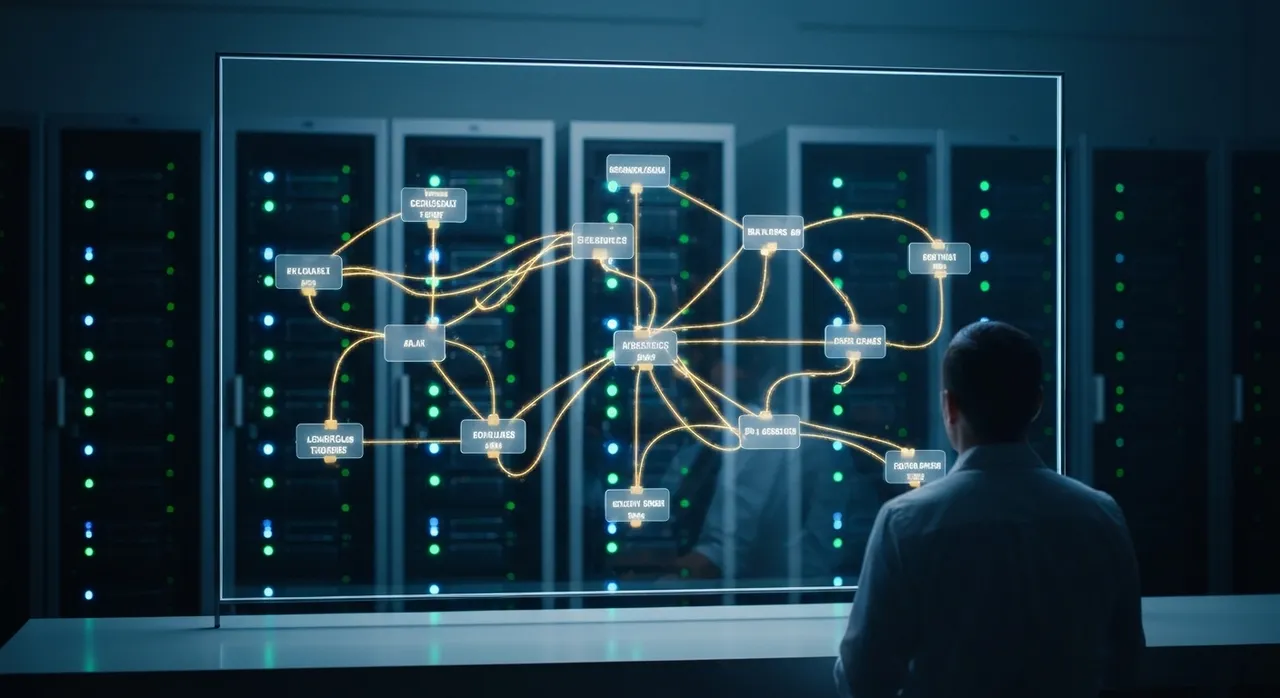
Google’s addition of subagents to the Gemini CLI has introduced a “Hub-and-Spoke” model for parallel coding. In this architecture, a primary “Manager” agent orchestrates several specialized “Subagents.”
Technical Mechanics: When a developer issues a complex command—such as refactoring a distributed system—the Manager agent dispatches specialized subagents to handle isolated tasks in parallel. For instance, one subagent may perform a security audit of the authentication layer, while another updates the API documentation, and a third generates unit tests for the new logic. Because each subagent operates in an isolated context loop, the primary session avoids context pollution and remains fast. Once the specialists return their concise summaries, the massive intermediate tool logs are purged, keeping the main context window lean.
Anthropic Claude Code: Cloud-Native Routines
Simultaneously, Anthropic has solved the “unattended execution” problem with Claude Code Routines. Previously, running a recurring AI task required a local machine to remain active or complex custom DevOps work to containerize the agent. Routines shift the execution environment to Anthropic’s managed cloud infrastructure.
Developers can now define “routines” for scheduled agentic tasks, such as nightly bug triaging or weekly documentation drift detection. These routines are triggered by:
- Schedules: Standard cron-style intervals (e.g., “Run every weekday at 2 AM”).
- GitHub Events: Automatically triggering an agent to review a Pull Request the moment it is opened.
- API Calls: External systems POSTing to a routine’s dedicated HTTP endpoint to start a session.
This “fire and forget” capability is a major leap toward the State of AI Engineering goal of truly autonomous digital employees.
The Capacity Bottleneck: 5% Production Failure Rate
Despite the rapid progress in model intelligence, the 2026 report issues a stark warning: the infrastructure is struggling to keep up. For the first time, scaling has hit a tangible “capacity bottleneck.” Datadog’s telemetry indicates that 5% of all production AI requests now fail, with nearly 60% of those failures attributed to infrastructure limits and rate-limiting errors.
The cause of this bottleneck is two-fold. First, the average number of tokens per request has more than doubled for median users and quadrupled for heavy users. As prompts grow to include extensive retrieval-augmented generation (RAG) data, multi-step tool outputs, and complex guardrails, the load on inference servers has become unsustainable. Second, the rise of agentic loops creates a “multiplier effect” on requests; a single human goal may now trigger twenty or thirty hidden agent-to-model calls.
The Shift to Context Engineering
To combat this, the State of AI Engineering highlights a pivot from “managing tokens” to “Context Engineering.” Leading teams are no longer trying to fit more data into a context window. Instead, they are focusing on retrieval quality—ensuring that agents receive only the most high-signal information. This includes the use of “context pruning” and “dynamic prompt compression” to reduce the strain on infrastructure while maintaining agent accuracy.
Operational Control: The New Enterprise Priority
The central thesis of 2026 is that operational control is now more critical than raw model intelligence. Yanbing Li, Chief Product Officer at Datadog, notes that AI is currently following the trajectory of early cloud adoption. The cloud made systems programmable but significantly more complex to manage; AI is now doing the same to the application layer.
To succeed in this environment, enterprises are investing heavily in the “AI Observability” stack, which focuses on three core pillars:
1. Real-Time Telemetry
Teams are moving beyond simple latency monitoring. Modern telemetry tracks “agent traces,” allowing engineers to visualize every step an agent took, which tools it called, and why it made a specific decision. This is essential for debugging non-deterministic failures in Autonomous Agentic Workflows.
2. Online Evaluations (LLM-as-a-Judge)
Static benchmarks (like MMLU) are being replaced by “online evals.” Organizations are using specialized models to grade the output of their production agents in real-time, flagging hallucinations or safety violations before they reach the end user. This “eval-driven development” cycle has become the standard for maintaining governance in a multi-model environment.
3. Cost and Capacity Governance
With 5% of requests failing due to capacity, governance tools are now being used to prioritize “mission-critical” AI calls. State of AI Engineering practices now include setting token budgets per business unit and implementing “intelligent retries” that can switch models if the primary provider hits a rate limit.
Conclusion: The Road Ahead for AI Engineering
As we look toward the remainder of 2026, the “Wild West” of AI experimentation has been replaced by a disciplined engineering rigour. The State of AI Engineering report makes it clear: the winners of this era will not be the companies that find the “best” model, but the companies that build the most resilient systems around them. By embracing multi-model norms, mastering autonomous agentic workflows, and prioritizing operational observability, organizations can finally bridge the gap between AI potential and production-scale reality. The future of software is no longer just written by humans—it is orchestrated by engineers and executed by a team of autonomous subagents working in parallel, 24/7, across the global cloud.
Written by
TempMail Ninja
Digital privacy and online security expert. Passionate about creating tools that protect users' identity on the internet.