TestFlight Phishing and QR Code Lures Rise in VIPRE Q1 2026 Report
Article Content
The cybersecurity landscape has reached a critical inflection point where technical prowess is secondary to the weaponization of legitimate digital ecosystems. On April 23, 2026, VIPRE Security Group released its Q1 2026 Email Threat Trends Report, revealing a sophisticated pivot in cybercriminal methodology. The report, which analyzed over 1.8 billion emails in the first three months of the year, underscores a primary theme: the “greenlighting” of malicious content through trusted domains. At the forefront of this evolution is the rising threat of TestFlight phishing and the innovative use of QR-encoded PDF attachments, both designed to bypass traditional Secure Email Gateways (SEGs) by hiding in plain sight.
The Apple Ecosystem Breach: Understanding TestFlight Phishing
One of the most alarming findings in the VIPRE report is the surge in TestFlight phishing. Apple’s TestFlight is an official platform designed to allow developers to distribute beta versions of their applications to up to 10,000 testers before a formal App Store release. Because the platform is hosted on the testflight.apple.com domain, traditional email security scanners often “auto-whitelist” these links, viewing them as inherently safe due to their association with Apple’s infrastructure.
Cybercriminals are exploiting this trust by creating seemingly legitimate beta applications—often masquerading as cryptocurrency exchanges, corporate productivity tools, or internal HR platforms. The technical execution involves a two-stage social engineering attack:
- The Invitation: Victims receive a professional-looking email inviting them to join an “exclusive” beta test. The email contains a genuine TestFlight link, which passes all domain-based reputation checks.
- The Payload: Once the user installs the TestFlight app, they are effectively side-stepping the rigorous App Store review process. These beta apps are often “wrappers” that, once installed, reach out to malicious Command & Control (C2) servers to download further payloads or present credential-harvesting interfaces that look indistinguishable from real login screens.
According to VIPRE’s technical analysis, TestFlight phishing is particularly effective because it preys on the “vanguard effect”—the human desire to be part of an exclusive group of early adopters. In Q1 2026, this tactic was frequently observed in campaigns targeting financial services and tech-savvy sectors, often utilizing fake versions of apps like BTCBOX or BitFury to drain digital assets from unsuspecting users.
The PDF Quishing Pivot: Why QR Codes are the New Malicious URL
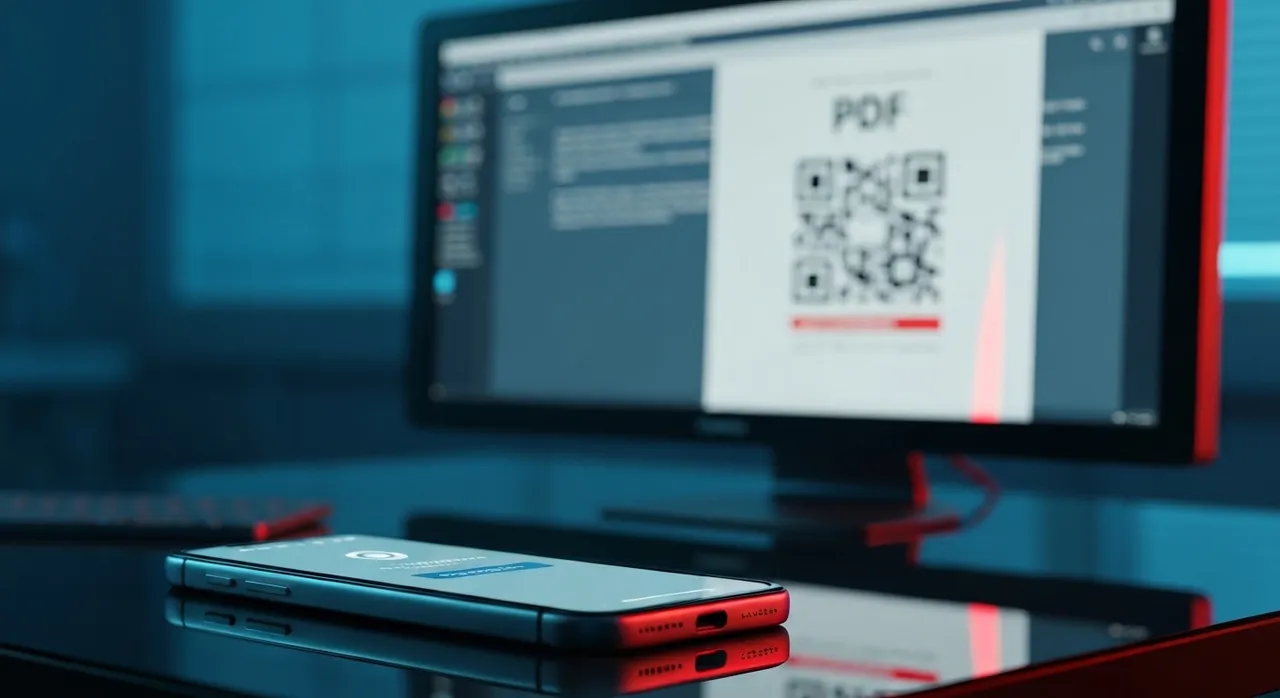
While link-based delivery remains the dominant vector—accounting for 84% of malspam in Q1 2026—the report highlights a “sharp rise” in QR code-embedded PDF attachments, a tactic colloquially known as “Quishing” (QR Phishing). Historically, attackers placed QR codes directly in the body of an email. However, as modern security tools became capable of performing Optical Character Recognition (OCR) on email bodies, threat actors moved the codes inside PDF files.
The technical rationale for this shift is multifaceted:
- Detection Blind Spots: Many legacy email filters are optimized to scan for text-based URLs and known malicious file signatures. They often fail to parse the visual data within an attached PDF, effectively rendering the malicious link invisible to the gateway.
- Mobile Device Transition: A QR code forces the user to switch from their managed corporate workstation to a personal mobile device to “scan” the code. This move takes the victim away from the protection of corporate web proxies, DNS filters, and endpoint detection and response (EDR) systems.
- Human Psychology: A PDF attachment titled “Q1 Payroll Adjustment” or “Urgent Tax Review” carrying a QR code for “secure access” provides a false sense of security and professional polish.
VIPRE’s data shows that PDF files continue to dominate malicious attachments, representing 63% of the total volume. In these campaigns, the QR code often leads to a “phishing-as-a-service” (PhaaS) platform, such as the RaccoonO365 infrastructure, which mimics Microsoft 365 login pages with startling accuracy.
Q1 2026 By The Numbers: A Statistical Breakdown
The VIPRE report provides a granular look at the current state of email threats, revealing that cybercriminals are favoring US-based infrastructure and widely targeted brands. Below is a summary of the key metrics identified in the first quarter of 2026:
- Phishing Prevalence: Phishing now accounts for 25.87% of all detected spam.
- Delivery Vectors: 50.59% of phishing attempts used embedded links, 26.69% utilized attachments, and 19.17% relied on callback schemes.
- Targeted Brands: Microsoft remains the #1 spoofed brand, followed by Apple and DHL.
- Geographic Origin: Nearly 66% of all spam originated from US-based infrastructure, with Ireland and the UK following as secondary hubs.
- File Type Trends: Beyond PDFs (63%), attackers are increasing their use of image-based attachments (JPG at 6% and PNG at 4%) to evade text-based detection tools.
The Decline of the “CEO Scam” and the Rise of “Chain of Command” Realism
A fascinating trend noted by VIPRE is the decline of C-suite impersonation. While the executive level remains a target, the popularity of CEO impersonation dropped from 73% in Q1 2025 to 54% in Q1 2026. This suggests that attackers are moving away from the “hair-on-fire” urgency of a fake CEO email and toward more realistic, mid-level “chain of command” scenarios.
Instead of a CEO demanding a wire transfer, a victim might receive an email from a “Senior Project Manager” or an “HR Specialist” regarding a mundane but necessary task, such as a benefits update or a budget review. These personalized deception tactics are often fueled by AI, which allows attackers to harvest public data from LinkedIn and company websites to craft messages that mirror the specific tone and vocabulary of the targeted organization.
The Persistence of Callback Phishing
Another “human-centric” tactic highlighted in the report is callback phishing (also known as BazaCall). This scheme bypasses technical filters entirely because the email contains no malicious links or files—only a fraudulent support number. Victims are told their account has been charged for a subscription (e.g., Norton, Geek Squad, or a Microsoft Enterprise license) and are urged to call a number to dispute the charge.
Once on the phone, a “support agent” uses social engineering to trick the victim into installing remote desktop software (like AnyDesk or TeamViewer) under the guise of “processing a refund.” This allows the attacker to gain full control of the workstation, bypass multi-factor authentication (MFA), and deploy ransomware or steal sensitive data directly from the browser.
Technical Evasion: Cloudflare and Open Redirects
Cybercriminals are not just stealing trust through domains like Apple’s; they are also weaponizing the tools meant to protect the internet. The report notes that many threat actors now leverage Cloudflare’s CAPTCHA and bot-protection mechanisms to hide their phishing pages. When a security scanner attempts to follow a phishing link, it is blocked by the CAPTCHA, which only a human can solve. This ensures that the malicious landing page remains hidden from automated analysis while appearing more legitimate to the user.
Additionally, the use of open redirects remains a persistent issue. Attackers find legitimate websites with poorly configured redirect parameters (e.g., https://trusted-site.com/redirect?url=malicious-site.com). Because the URL begins with a trusted domain, the email scanner “greenlights” the message, and the user is redirected to the phishing page only after they have clicked.
Forging a Defense: Beyond Traditional Filtering
The VIPRE Q1 2026 report serves as a stark reminder that legacy security models based on blocklists and simple signature matching are no longer sufficient. To combat TestFlight phishing and the rise of quishing, organizations must adopt a multi-layered, AI-driven defense strategy.
Modern defenses must include:
- Computer Vision and OCR: Security tools must be capable of “looking” at attachments like PDFs and images to identify and decode QR codes in real-time.
- Intent Analysis: Rather than looking for a “bad link,” AI models must analyze the intent and sentiment of the message. Does a request for a “testflight” install match the user’s role or the company’s typical communication patterns?
- URL Rewriting and Time-of-Click Protection: Even if a link is greenlighted at the gateway, it must be inspected every time a user clicks it, as many attackers “flip” a benign link to a malicious one hours after the email is delivered.
- Enhanced Security Awareness Training (SAT): Employees must be trained specifically on these new vectors. Most users are taught to “hover over a link,” but few know how to verify a TestFlight invitation or the destination of a QR code within a PDF.
In conclusion, the VIPRE Security Group’s latest findings highlight a shift from technical exploits to trust-based social engineering. By hijacking the reputation of platforms like Apple and exploiting the blind spots of traditional scanners with QR codes and callback schemes, threat actors are successfully navigating the perimeter. For the remainder of 2026, the mandate for IT leaders is clear: treat every “trusted” platform with the same scrutiny as an unknown sender, and invest in detection technologies that can see through the mask of legitimacy.
Written by
TempMail Ninja
Digital privacy and online security expert. Passionate about creating tools that protect users' identity on the internet.