Utah VPN Law: The Nation’s First Liability Trap for Digital Privacy
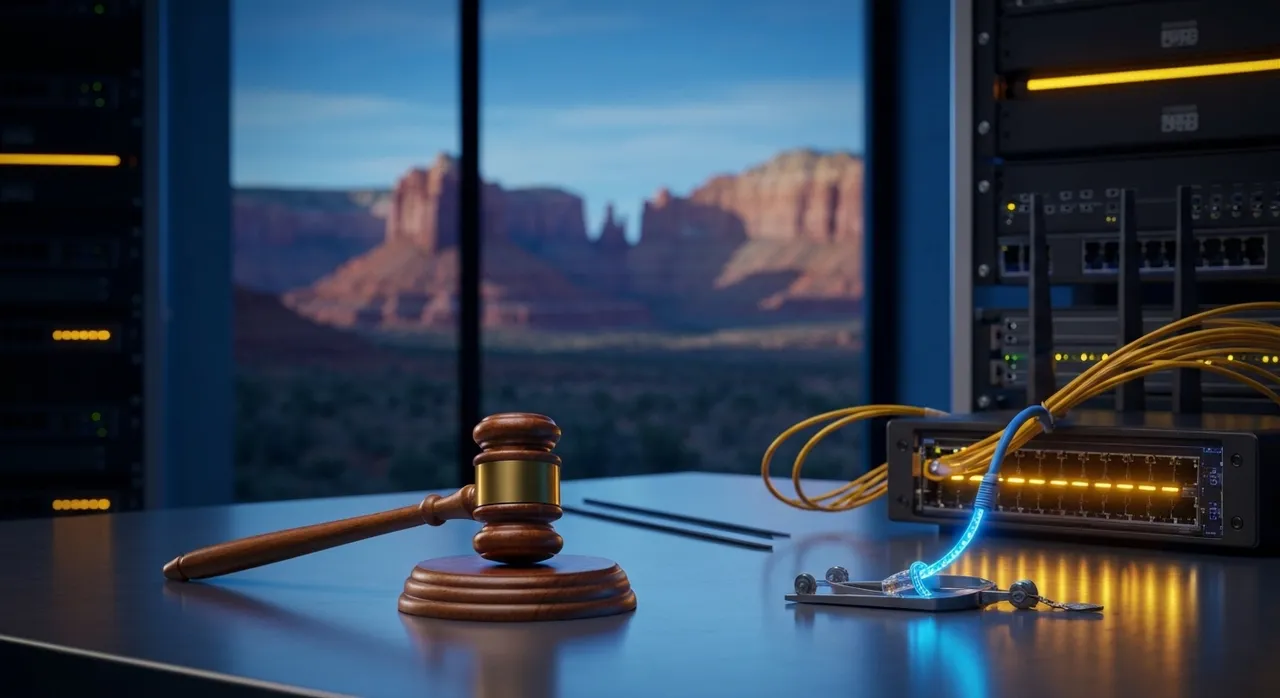
Article Content
On May 6, 2026, the digital border around the Beehive State will officially harden. While the legal battles over online age verification have raged for years, the implementation of the Utah VPN law, formally known as Senate Bill 73 (SB 73), represents a tectonic shift in the relationship between state sovereignty and internet architecture. For the first time in United States history, a state has moved beyond merely requiring age gates; it has actively engineered a “liability trap” designed to neutralize the primary tool used by citizens to maintain their digital privacy: the Virtual Private Network (VPN).
Signed into law by Governor Spencer Cox in March 2026, SB 73 is the culmination of a multi-year crusade to regulate “material harmful to minors.” However, its technical implications reach far beyond the borders of Utah. By holding global platforms legally responsible for identifying users physically located within the state—regardless of the IP-masking technology they employ—Utah has created a compliance paradox that threatens to end the era of anonymous browsing not just for its residents, but for any user of a platform that wishes to avoid catastrophic legal risk.
The Architecture of the Utah VPN Law: A Strategic Liability Trap
The core of the Utah VPN law lies in its aggressive amendment of Section 78B-3-1002 of the Utah Code. Previous iterations of age-verification mandates across the country often contained a technical “out” for platforms: if a user appeared to be in a non-regulated jurisdiction via their IP address, the platform was generally considered to be in “good faith” compliance. SB 73 explicitly removes this shield.
Under the new statute, a commercial entity is liable if an individual physically located in Utah accesses restricted content without undergoing a rigorous age-verification process. The law specifically states that this liability persists “regardless of whether the individual is using a virtual private network, proxy server, or other means to disguise or misrepresent the individual’s geographic location.” This phrasing transforms the act of geo-fencing from a best-effort technical hurdle into a strict liability mandate.
Experts at the Electronic Frontier Foundation (EFF) and major privacy providers like NordVPN have dubbed this the “Liability Trap.” If a website cannot with 100% certainty distinguish a VPN user in Salt Lake City from one in London, the legal risk of a $2,500 fine per violation—plus attorney fees and damages—incentivizes a ” scorched earth” approach to compliance. Platforms are left with three unenviable choices:
- Global Mandates: Require every single visitor to the site, worldwide, to submit to invasive identity checks (such as government ID uploads or facial biometrics) to ensure none of them are “stealth” Utah residents.
- Total VPN Bans: Implementing a blanket ban on all known VPN and proxy IP addresses, effectively barring millions of legitimate, privacy-conscious users from accessing their services.
- Market Exit: Geofencing the entire United States or shutting down services to avoid the administrative and legal nightmare of state-by-state digital enforcement.
Technical Realities: The “Whack-a-Mole” of IP Geolocation
From a technical standpoint, the Utah VPN law ignores the fundamental physics of the internet. IP geolocation is not a perfect science; it relies on massive databases (like MaxMind or IP2Location) that map IP addresses to physical locations. VPNs function by routing a user’s traffic through a remote server, replacing the user’s local IP with the server’s IP. When a Utah resident connects to a VPN server in Chicago, the target website sees a Chicago visitor.
To comply with SB 73, websites must now employ sophisticated VPN detection services. These services use several methods to identify “disguised” traffic:
- IP Reputation Scoring: Identifying IP ranges known to belong to data centers and VPN providers (e.g., M247, Datacamp).
- MTU Analysis: Examining the Maximum Transmission Unit size; VPN encapsulation often reduces packet size, which can be a tell-tale sign of a tunnel.
- DNS Leak Detection: Checking if the user’s DNS requests are coming from a different provider than their IP address.
However, these methods are notoriously prone to false positives and negatives. Business travelers using corporate VPNs, journalists protecting sources, and survivors of domestic abuse using privacy tools for safety will find themselves caught in the crossfire. Furthermore, “residential proxies”—which route traffic through home IP addresses rather than data centers—remain almost impossible for websites to distinguish from legitimate local traffic, making the law technically unenforceable for savvy users while penalizing those using standard commercial privacy tools.
Muzzling the Web: The “Anti-Instruction” Provision
Beyond the liability of access, SB 73 introduces a secondary, and perhaps more chilling, restriction. The law prohibits commercial entities that host a “substantial portion of material harmful to minors” from facilitating or encouraging the use of a VPN to bypass age-verification gates. This includes a ban on:
- Providing instructions on how to set up or use a VPN.
- Linking to VPN providers or “unblocking” guides.
- Offering technical support that suggests location-masking as a solution to access issues.
This provision represents a significant escalation in the war on digital speech. Privacy advocates argue that muzzling a company from discussing a lawful, ubiquitous technology like a VPN violates the First Amendment. By preventing platforms from providing “truthful, non-misleading information” about privacy tools, Utah is essentially demanding that the internet remain silent about its own architecture. This “Don’t Ask, Don’t Tell” enforcement model creates a vacuum where users are left without guidance on how to protect their data while navigating the mandatory “identity gates” required by the state.
The Privacy Paradox: Trading Anonymity for Verification
The ultimate irony of the Utah VPN law is that in the name of “protecting” residents, it forces them to expose more sensitive data than ever before. To satisfy the state’s requirement that platforms “know” their users are adults, websites are increasingly turning to third-party identity providers like Yoti or Clear. These services often require:
- Government-Issued IDs: Scanning passports or driver’s licenses.
- Facial Recognition: Live “liveness” checks and biometric mapping.
- Credit Card Verification: Using financial records to establish age.
This creates a massive central repository of sensitive data that is a prime target for hackers. While SB 73 includes language requiring the deletion of this data after verification, the history of digital “safe harbors” is littered with breaches. By making VPNs a legal liability, the state is effectively funneling its population into a regime of mandatory digital surveillance, where the price of entry to the “free” web is the surrender of one’s biometric or governmental identity.
Global Fallout: The Balkanization of the American Internet
Utah is not an island, yet SB 73 attempts to treat it as one. The Utah VPN law sets a dangerous precedent for what digital rights experts call “internet balkanization.” If California, New York, and Florida each implement their own contradictory VPN liability laws, the unified global internet will fragment into a patchwork of “digital fiefdoms.”
For a global platform, the cost of managing 50 different sets of technical requirements for VPN detection is unsustainable. This will likely lead to the “darkening” of certain regions—where platforms simply refuse to serve users in states with high-liability laws—or the implementation of a national ID-gate for the entire United States. Utah’s move to target the *circumvention* of these laws, rather than just the *lack* of them, signals that lawmakers are aware of the technological futility of their mandates and are willing to use legal threats against infrastructure to achieve their goals.
Economic Implications and the Excise Tax
It is also worth noting that SB 73 is not just about morals; it is about revenue. The bill introduces a 2% excise tax on the revenues of covered adult content entities, effective October 1, 2026. The funds are earmarked for the “Minor Mental Health Restricted Account” and enforcement activities. By forcing platforms to identify Utah users (even those behind VPNs), the state is ensuring it can accurately levy this tax. The Utah VPN law, therefore, serves as a financial enforcement mechanism, ensuring that no “shadow traffic” escapes the state’s taxing authority.
Conclusion: The Sunset of Invisible Browsing
The “Ninja Editor” verdict is clear: Utah’s SB 73 is a watershed moment in the erosion of digital privacy. By moving the goalposts from “verify who you know is in your state” to “verify anyone who *might* be in your state regardless of what their IP says,” Utah has effectively declared war on the concept of an anonymous internet.
The Utah VPN law will not stop the determined. Within hours of the law taking effect, users will likely pivot to decentralized VPNs, residential proxies, and encrypted tunnels that current detection methods cannot catch. The “technical whack-a-mole” will continue, but the victims will not be the “bad actors.” The victims will be the millions of ordinary citizens who lose the ability to browse the web without a government-sanctioned digital leash. As Utah’s “Liability Trap” goes live, the rest of the nation watches closely, wondering if the era of the “invisible” user has finally reached its end.
Written by
TempMail Ninja
Digital privacy and online security expert. Passionate about creating tools that protect users' identity on the internet.