Vibe Coding Phishing: AI-Powered Softr Exploits Rise in 2026
Article Content
The cybersecurity landscape of 2026 has hit a definitive inflection point. According to the latest Cisco Talos Incident Response (IR) report released on April 22, 2026, phishing has reclaimed its throne as the primary initial access vector for cyberattacks. While 2025 was dominated by the “ToolShell” wave—a massive surge in the exploitation of public-facing applications like on-premises Microsoft SharePoint servers—the first quarter of 2026 has seen a tactical retreat into the mailbox. However, this is not the phishing of yesteryear. The emergence of vibe coding phishing represents a fundamental shift in how adversaries build, host, and execute credential harvesting campaigns.
The Resurgence of Phishing in Q1 2026
For the first time since mid-2025, phishing has accounted for more than one-third of all successful compromises where initial access could be determined. The decline in vulnerability exploitation—which dropped from a peak of 62% to just 18% in Q1 2026—is largely credited to the broad availability of emergency patches and matured detection coverage for legacy CVEs. But as the window for exploiting unpatched servers closed, a new door opened: the democratization of high-fidelity web development through Artificial Intelligence.
The Talos report highlights a specific, alarming trend: the use of AI-powered “no-code” platforms to lower the technical barrier for attackers. In a documented engagement targeting a public administration organization, threat actors utilized the Softr platform to deploy a sophisticated infrastructure that was virtually indistinguishable from legitimate enterprise portals. This marks the first time a specific AI-driven development tool has been confirmed in an enterprise-level phishing engagement, signaling the dawn of the vibe coding phishing era.
Understanding Vibe Coding Phishing
To understand the threat, one must first understand the development philosophy it weaponizes. “Vibe coding” refers to the practice of building functional software and web applications using natural language prompts rather than manual syntax. Popularized by AI researchers and the “no-code” movement in 2025, it allows a user to describe a “vibe”—a conceptual UI, a specific workflow, or a visual style—and allows the AI to generate the underlying logic and interface blocks instantly.
Vibe coding phishing leverages this speed to create pixel-perfect replicas of login screens for Microsoft Exchange and Outlook Web Access (OWA). Unlike traditional phishing kits that often contain “code smells”—clunky PHP scripts, outdated CSS, or suspicious Javascript obfuscation—AI-generated sites are built on clean, modern, and high-reputation frameworks. The attacker does not need to be a developer; they simply need to be a “viber” who can describe the target’s environment to an AI agent.
The Technical Mechanics of the Softr Attack
In the campaign analyzed by Cisco Talos, the attackers exploited the core features of the Softr platform to create a frictionless data harvesting pipeline. The technical execution involved three primary pillars:
- AI-Driven UI Generation: Using Softr’s “vibe coding” block and AI co-builder, the threat actors prompted the system to generate a “secure client portal” that mirrored the branding and layout of the victim’s internal Microsoft login page. Because Softr uses pre-built, secure blocks for its interface, the resulting site was fully responsive and functionally robust.
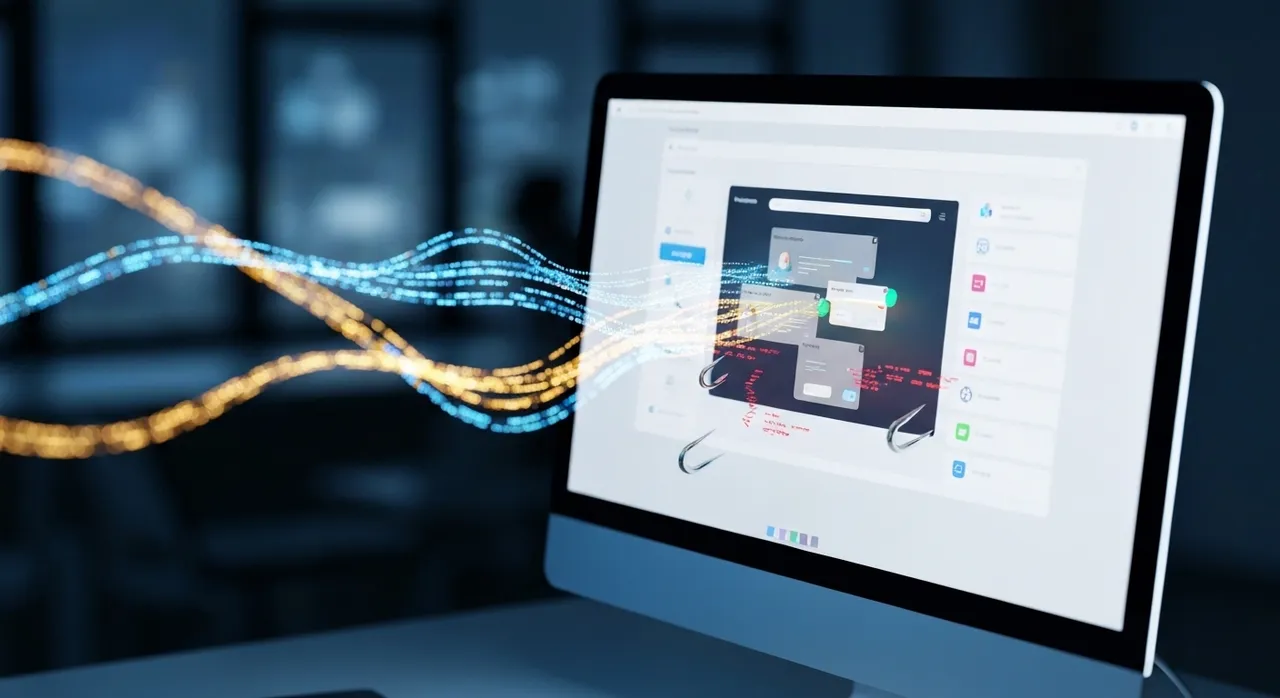
- Integrated Data Funneling: Softr’s native integrations allow users to connect web forms directly to external databases. The attackers configured the site to funnel stolen credentials directly into Google Sheets. This bypasses the need for a traditional Command and Control (C2) server, which would likely be flagged by threat intelligence feeds.
- Real-Time Automation: The platform’s built-in workflow logic was used to set up automated email alerts. Every time a new victim entered their credentials, the attacker received a real-time notification via the platform’s legitimate notification service, allowing for immediate secondary exploitation or MFA fatigue attacks.
The Paradigm Shift: From Visual Clones to Workflow Mimicry
The danger of vibe coding phishing extends beyond visual accuracy. We are seeing a transition toward workflow mimicry. Legacy email security gateways (SEGs) are trained to look for suspicious URLs and malicious attachments. However, when an attacker uses a platform like Softr, the entire attack infrastructure is hosted on a legitimate, high-reputation domain (e.g., softr.app). To a security filter, the phishing page looks like a legitimate business application because, technically, it is one.
Furthermore, because the AI handles the “logic” of the page, the phishing sites are not static. They can include functional elements such as “Forgot Password” links that redirect to the real service, or dynamic error messages that appear if a user enters a weak password, adding a layer of psychological legitimacy that standard phishing kits lack. This level of sophistication, which once required a team of professional web developers, can now be achieved by a single “prompt kiddy” in under thirty minutes.
Vulnerabilities in the AI-Native Supply Chain
The Talos report emphasizes that the abuse of these tools is not an isolated incident. Malicious actors have been experimenting with Softr and similar platforms (such as n8n and Airtable) since at least May 2023. As AI agents become more integrated into the development lifecycle, the “security debt” is mounting. Recent data suggests that approximately 24.7% of AI-generated code contains security flaws, and in some cases, up to 87% of AI-generated pull requests introduce new vulnerabilities.
In the context of vibe coding phishing, the “vulnerability” is the platform’s own ease of use. When a platform is designed to be “AI-native” and “user-agnostic,” it inadvertently becomes a force multiplier for social engineering. The attackers are not “hacking” Softr; they are using it exactly as intended—to build a functional web application—but with malicious intent. This is the “evil twin” of development speed: the collapse of the barrier to entry for cybercrime.
Top Security Gaps Identified in Q1 2026
The return of phishing as the top threat coincides with persistent weaknesses in identity management. Cisco Talos identified several critical security gaps that allowed these campaigns to succeed:
- MFA Weaknesses: Multi-factor authentication (MFA) issues appeared in 35% of all engagements this quarter. Attackers are increasingly using “MFA bypass” techniques, such as registering their own devices to compromised accounts before the user notices the breach.
- Identity Proximity: In several cases, attackers configured Outlook clients to connect directly to Exchange servers, sidestepping third-party MFA requirements like Duo entirely by exploiting legacy protocol access.
- Exposed Management Ports: Vulnerable infrastructure, including exposed WinRM management ports and unpatched Cisco IOS XE devices, provided secondary routes for attackers who had already secured credentials via vibe coding phishing.
Targeting the Pillars of Society: Public Admin and Healthcare
The 2026 data shows that attackers are not casting a wide net; they are spear-phishing high-value targets with surgical precision. Public administration and healthcare were the most targeted sectors in Q1 2026, each representing 24% of IR engagements. For public administration, this marks the third consecutive quarter as the primary target. These sectors are particularly vulnerable to vibe coding phishing because they often rely on a mix of modern cloud portals and legacy back-ends, making a “new” AI-generated login portal seem like a plausible IT upgrade to unsuspecting employees.
The “Crimson Collective,” a cyber-extortion group that emerged in late 2025, has been noted as a frequent user of these AI-driven tactics. Their methodology involves using tools like TruffleHog to scan for exposed secrets once they have gained initial access through a “vibe-coded” landing page. By combining the speed of AI development with the precision of automated secrets scanning, they can move from initial compromise to full Azure cloud exfiltration within hours.
Defense Strategies in the Age of Vibe Hacking
Traditional defense-in-depth strategies must evolve to counter vibe coding phishing. Since attackers are leveraging legitimate, high-reputation SaaS ecosystems, “blocking the domain” is no longer a viable long-term strategy. Organizations must shift their focus to behavioral identity analysis and zero-trust architecture.
Mandatory Defensive Controls for 2026:
- SaaS Interaction Monitoring: Security teams must implement tools that monitor not just where users are going, but what they are doing on no-code platforms. Unusual patterns of data flow from a corporate identity to a new Softr or Google Sheets instance should trigger immediate alerts.
- FIDO2-Based MFA: To combat the sophisticated MFA bypasses seen this quarter, organizations should move away from push-based or SMS-based MFA and toward hardware-backed, phishing-resistant credentials.
- Runtime Protection for AI Code: For companies using these tools internally, implementing Infrastructure-Level Isolation (using NGINX or Cloudflare Zero Trust) can gate entry points to applications even if the AI-generated code is inherently insecure.
- The “Why-Secure” Protocol: When using AI agents to build internal tools, developers should be required to prompt the agent for its security reasoning, forcing an audit trail for generated logic.
Conclusion: The Future of the “Vibe” Threat
The Cisco Talos report of April 22, 2026, serves as a stark warning. The “democratization” of software development via AI has arrived, but it has brought a shadow with it. Vibe coding phishing is no longer a theoretical threat; it is a battle-tested reality that has already compromised public institutions. As attackers continue to move away from writing code and toward “coding a vibe,” defenders must stop looking for malicious files and start looking for malicious logic hidden within legitimate workflows. In the world of 2026, the vibe is the weapon—and your identity is the target.
Written by
TempMail Ninja
Digital privacy and online security expert. Passionate about creating tools that protect users' identity on the internet.