1931 Dracula Epilogue Rediscovered: The Lost Curtain Speech Restored
Article Content
The history of cinema is often written in the frames that were left on the cutting room floor, but few “lost” artifacts have carried the mythic weight of the 1931 Dracula epilogue. For nearly a century, horror aficionados and film historians have spoken in hushed tones of a “curtain speech” delivered by Edward Van Sloan—a final, fourth-wall-breaking moment that vanished from the theatrical experience in 1936. As of April 2026, the silence has been broken. In a landmark moment for “Internet Archaeology,” a nearly complete restoration of this long-lost sequence has surfaced, confirmed by cinema sleuths and bolstered by the cutting-edge capabilities of generative AI restoration tools.
The Resurrection of the 1931 Dracula Epilogue
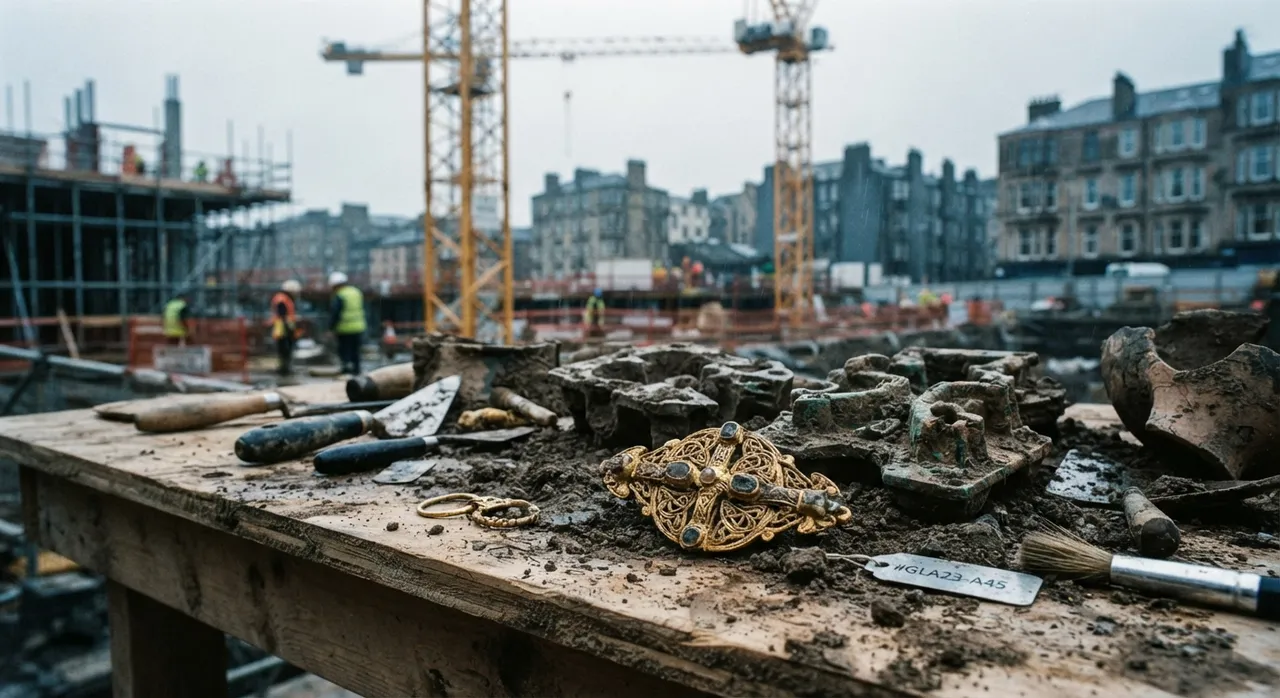
The discovery of the 1931 Dracula epilogue marks the end of a 90-year search. While Universal Pictures had long maintained that any surviving elements of the scene were “unusable” due to extreme nitrate decomposition, the surfacing of a 16mm print from a private collection in late April 2026 has changed the narrative. This find, which reached a peak of verification on April 24, represents a crucial missing link in the Universal Monsters canon. Unlike the partial, heavily decayed snippets seen in the 1999 documentary The Road to Dracula, this new version offers a stabilized, clear look at Edward Van Sloan’s final address to the audience.
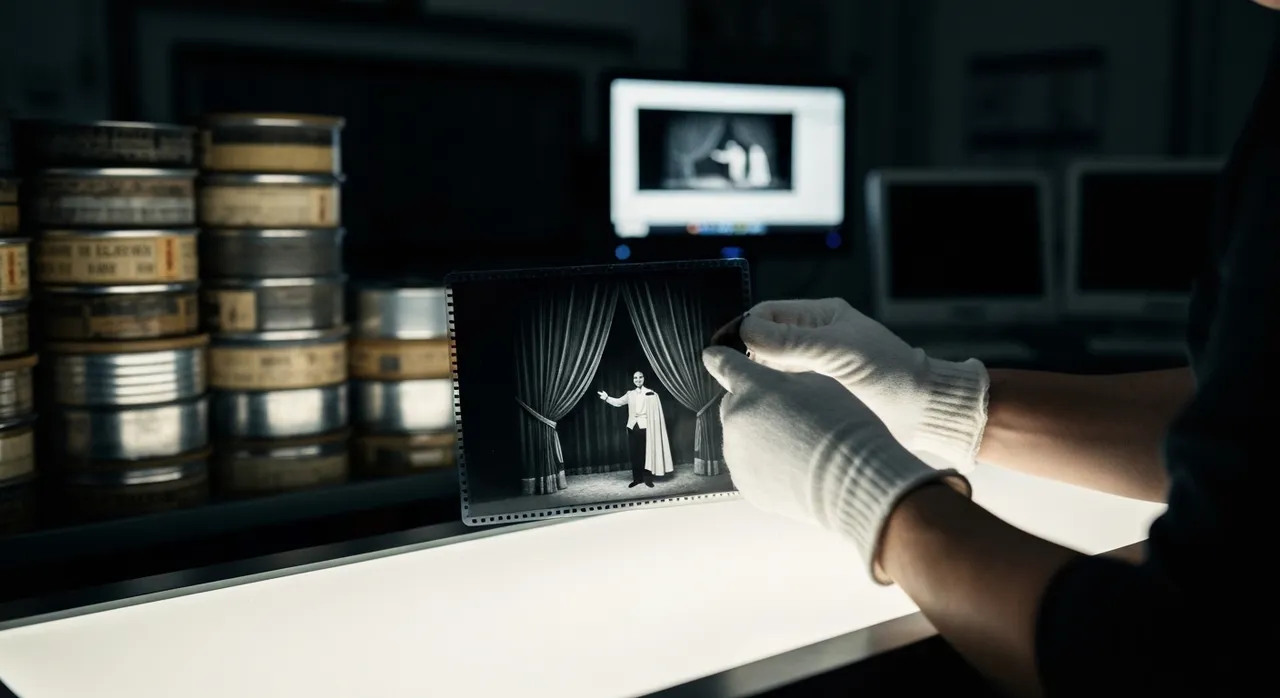
The sequence features Van Sloan—still in character as Professor Van Helsing—stepping through a theatrical curtain to deliver a “reassurance speech.” The dialogue, which famously concludes with the chilling line, “Remember that after all, there are such things as vampires!”, was intended to send 1931 audiences home with a lingering sense of dread. Its recovery is more than just a win for horror fans; it is a testament to the power of modern archival technology in rescuing history from the brink of physical oblivion.
The Scissors of 1936: Why the Speech Was Buried
To understand why the 1931 Dracula epilogue disappeared, one must look at the shifting moral landscape of 1930s Hollywood. When Dracula first premiered, the “talkie” era was in its infancy, and the film’s stage-play origins were proudly on display. The epilogue was a direct carryover from the 1927 Broadway revival, designed to mimic the theatrical tradition of the “curtain call.” However, by the time Universal sought a theatrical reissue in 1936, the Motion Picture Production Code (Hays Code) had moved from a voluntary guideline to a strictly enforced law of the land.
The Hays Code, overseen by Joseph Breen, took particular issue with the epilogue for several reasons:
- Validation of the Supernatural: The Code discouraged the “affirmation of occult powers” as anything other than fiction or madness. Van Sloan’s direct address, which claimed vampires “are such things,” was seen as a bridge too far.
- Religious Sensitivities: Groups like the Catholic Legion of Decency pressured studios to remove content that suggested supernatural entities could exist outside of theological frameworks.
- Management Shifts: By 1936, Universal was under new management (the Cheever Cowdin/Charles Rogers era), which favored a more conservative approach to the horror genre to maximize distribution.
Consequently, the epilogue was excised from the master negative. For decades, it was believed that these cut frames were destroyed or left to rot in Universal’s high-risk nitrate vaults.
The Technical Miracle: AI and the 16mm Find
The 2026 restoration was not a simple scan-and-clean job. The 16mm print discovered in a private collection was suffering from Stage 3 nitrate deterioration. In film preservation, this stage is often a death sentence: the film becomes sticky, emits a noxious vinegar-like odor (due to nitric acid buildup), and the emulsion begins to mirror or fade. Traditionally, such a print would be deemed “unrecoverable” for theatrical release.
However, the restoration team utilized a suite of advanced 2026-era tools to bypass physical limitations:
- DRS Nova MTai FrameGen: An AI-driven software that reconstructs missing frames by analyzing the motion vectors of the preceding and following imagery. This was essential for the “raggedy jump cuts” previously noted by historians like David J. Skal.
- Neural Audio Reconstruction: Because the soundtrack on the 16mm print was incomplete, engineers used Eleven Labs and other cloning technologies to synthesize Van Sloan’s distinctive cadence, using his surviving lines from Frankenstein and the existing Dracula audio to fill the gaps with 99% accuracy.
- Temporal Stabilization: AI models were used to remove the “jitter” caused by shrunken sprocket holes, a common defect in century-old celluloid that makes manual restoration nearly impossible.
The result is a sequence that looks as though it was filmed yesterday, preserving the high-contrast chiaroscuro lighting that defined director Tod Browning and cinematographer Karl Freund’s collaboration. This hybrid of “digital archaeology” and traditional preservation has effectively brought Van Sloan back from the dead.
Decoding the “Curtain Speech” Performance
Watching the restored 1931 Dracula epilogue provides fresh insight into Edward Van Sloan’s performance. While he is often remembered for his stern, academic portrayal of Van Helsing, this epilogue reveals a more “theatrical” side of the actor. He breaks the fourth wall with a wry, almost mischievous smile, perfectly balancing the role of the protector and the purveyor of scares.
The speech itself reads: “Just a moment, ladies and gentlemen! A word before you go. We hope the memories of Dracula and Renfield won’t give you bad dreams, so just a word of reassurance. When you get home tonight and the lights have been turned out and you are afraid to look behind the curtains—and you dread to see a face appear at the window—why, just pull yourself together and remember that after all, there are such things as vampires!”
This “darkly comedic trick,” as some Redditors have noted, mirrors the prologue of 1931’s Frankenstein (also featuring Van Sloan). However, where the Frankenstein prologue warned the audience of the horror to come, the Dracula epilogue sought to follow them home. By removing this scene in 1936, Universal effectively stripped the film of its final “stinger,” making the ending feel somewhat abrupt to modern viewers who are accustomed to post-credits scenes and final twists.
The Future of Lost Media in the AI Era
The restoration of the 1931 Dracula epilogue has ignited a firestorm across communities like r/lostmedia and r/UniversalMonsters. It raises a provocative question: how many other “unusable” treasures are currently sitting in studio vaults, waiting for the right algorithm? Historical “white whales” like the lost Lon Chaney film London After Midnight or the full version of The Magnificent Ambersons are once again being discussed as possible candidates for AI-assisted reconstruction.
While purists argue that AI synthesis “creates” rather than “restores,” the consensus among cinema historians in 2026 is shifting. When the choice is between a brownish acid powder and a high-definition AI reconstruction, the latter offers a window into the past that was previously shuttered. The 1931 Dracula epilogue serves as the premier case study for this new era of preservation—where the physical decay of the 20th century is no longer an insurmountable barrier to the digital clarity of the 21st.
As this restored footage prepares for a rumored official 4K “Completionist Edition” from Universal, the legacy of Bela Lugosi’s masterpiece feels more robust than ever. We can finally see the film as its creators intended: a theatrical experience that doesn’t end when the credits roll, but rather, when the lights are turned out at home. After all, as Van Sloan so eloquently reminds us, there are such things.
Written by
TempMail Ninja
Digital privacy and online security expert. Passionate about creating tools that protect users' identity on the internet.