AI Brain Rot and the Psychophysiology of Human Attention
Article Content
By April 30, 2026, the digital landscape has shifted from traditional social media consumption to a high-velocity, algorithmically governed environment dominated by AI brain rot. This term, once a niche slang for low-quality internet memes, has evolved into a clinical and sociological classification for a specific genre of synthetic media. Characterized by surrealist imagery, non-linear narratives, and sensory-overload aesthetics, AI brain rot represents a significant departure from human-authored content. As these videos flood platforms like TikTok, YouTube Shorts, and Instagram Reels, researchers are beginning to map the profound impact this content has on the human psychophysiology of attention.
The Anatomy of AI Brain Rot: From Surrealism to Synaptic Capture
At its core, AI brain rot is defined by its detachment from reality. Utilizing advanced generative video models, creators produce clips that feature “impossible” scenarios: oranges with human mouths debating existentialism, hyper-realistic cats performing complex surgical procedures, or liquid landscapes that defy the laws of physics. Unlike traditional animation, which follows established physics or artistic styles, AI-generated content often contains “hallucinations”—shimmering edges, morphing limbs, and illogical spatial transitions—that the human brain struggles to process.
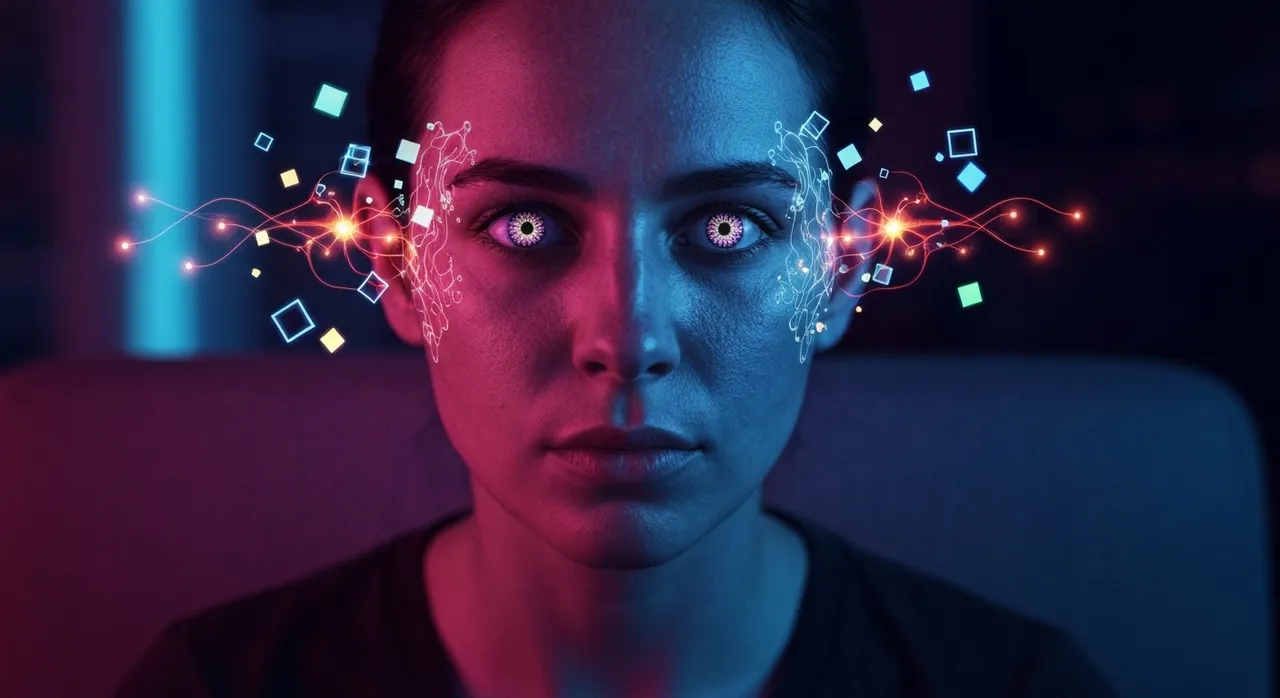
The Oxford Internet Institute has noted that the appeal of this content lies in its “uncanny” nature. The human visual cortex is evolved to recognize patterns and predict movements. When presented with AI brain rot, the predictive processing mechanisms of the brain are forced into a state of hyper-vigilance. Because the content is unpredictable and visually dense, the “novelty reflex” is triggered repeatedly. This constant stream of novelty hits prevents the prefrontal cortex from engaging in critical analysis, keeping the viewer locked in a state of passive, yet high-intensity, stimulation.
The Psychophysiological Mechanism: Dopamine and Novelty Loops
The “brain rot” phenomenon is not merely a metaphor for low-brow entertainment; it describes a specific neurological state. Psychologists have identified several key mechanisms that make AI brain rot particularly effective at capturing and holding attention:
- Predictive Coding Failure: The brain constantly attempts to predict the next frame of a visual sequence. AI content often breaks these predictions, forcing the brain to exert more energy to “re-map” the scene, which paradoxically leads to increased engagement.
- Rapid Dopaminergic Spiking: Because the clips are short (often 5 to 15 seconds) and packed with visual “shocks,” they deliver a concentrated dose of dopamine. This creates a “speed-run” of emotional highs that traditional long-form media cannot match.
- The Uncanny Valley Bridge: AI content often straddles the line between the familiar and the grotesque. This “cognitive itch” compels the viewer to keep watching in an attempt to resolve the visual dissonance.
The Erosion of Deep Work and Cognitive Endurance
As of 2026, the long-term effects of chronic exposure to AI brain rot are becoming apparent in professional and academic settings. The primary concern among neuroscientists is the reduction in “cognitive endurance”—the ability to maintain focus on a singular, complex task over an extended period. The instant gratification provided by AI-driven algorithms trains the brain to expect a reward every few seconds. When faced with deep work, such as writing a technical report or reading a dense manuscript, the brain, now accustomed to high-velocity stimulation, perceives the lack of immediate “novelty hits” as a signal to disengage.
Studies conducted throughout 2025 and early 2026 indicate a measurable decline in the “attentional blink” recovery time among heavy users of synthetic short-form media. This suggests that the brain is becoming faster at switching tasks but significantly worse at sustaining focus. The result is a workforce and a student body that is highly reactive but struggles with synthesis and critical thought. The AI brain rot cycle creates a feedback loop: as attention spans shorten, the demand for even more stimulating, chaotic content increases, prompting AI models to generate even more extreme imagery to break through the noise.
Technical Drivers: The Role of Algorithmic Feedback Loops
The proliferation of AI brain rot is not an accident of culture but a direct result of algorithmic evolution. Modern recommendation engines are optimized for watch time and retention rate. AI-generated content is uniquely suited to these metrics for several technical reasons:
- Zero-Cost Iteration: Creators can generate thousands of variations of a “viral” concept using API-driven video tools, allowing for the rapid evolution of content styles that maximize engagement.
- Emotional Extremism: AI tools can be prompted to prioritize high-arousal emotions—fear, shock, or confusion—which are statistically more likely to prevent a user from scrolling past.
- Aesthetic Density: Generative AI can pack a single frame with more detail and movement than a human editor could feasibly manage in the same timeframe, leading to “overstimulation by design.”
The “Speed-Run” of Human Emotions
One of the most unsettling aspects of AI brain rot is its ability to bypass the narrative logic required for emotional resonance. Traditionally, an emotional response is built through character development and plot. AI content, however, uses “aesthetic triggers” to bypass the intellect and strike the limbic system directly. A 10-second clip of a crying vegetable with a human face can evoke a reflexive empathetic or disturbed response without the viewer knowing why.
This “emotional speed-run” is particularly concerning for developmental psychologists. For younger generations, the constant bombardment of synthetic emotions may lead to a form of emotional desensitization. When real-world interactions fail to provide the same level of intensity or visual novelty as AI brain rot, they may be perceived as dull or unrewarding. This shift in emotional processing is fundamentally altering the psychophysiology of how we relate to digital media and, by extension, each other.
Strong neural pathways are formed through repetition. If the dominant form of visual consumption is characterized by chaos and lack of logic, the brain’s internal architecture may begin to prioritize these patterns. Researchers are now investigating whether “synthetic-media-induced ADHD” is a viable clinical diagnosis for those whose primary information source is AI-generated noise.
Mitigating the Impact: The Future of Attentional Hygiene
In response to the surge of AI brain rot, a new movement focused on “attentional hygiene” has emerged in 2026. This movement advocates for a “slow media” approach, emphasizing the importance of human-authored content and analog experiences. Some technological solutions include “AI filters” that strip away the hyper-stimulating elements of videos or “focus-mode” browsers that block short-form video feeds entirely during work hours.
However, the challenge remains systemic. As long as the digital economy is built on the commodification of attention, AI brain rot will likely remain a dominant force. The ease of production and the high engagement rates make it an irresistible tool for advertisers and influencers alike. To combat the erosion of our collective focus, a fundamental shift in how we value and protect our cognitive resources is required.
- Education: Teaching digital literacy that includes the psychological impact of algorithmic content.
- Regulation: Proposed “Attention Labels” on content that uses high-velocity AI editing techniques.
- Design: Encouraging platforms to prioritize “meaningful interaction” over raw watch time.
The phenomenon of AI brain rot serves as a cautionary tale of what happens when technology outpaces our biological capacity to process information. While the imagery may be surreal and often humorous, the underlying impact on the human brain is a matter of serious scientific concern. As we move further into 2026, the ability to resist the pull of the “novelty hit” and reclaim our deep attention may become one of the most vital skills of the modern era.
Ultimately, AI brain rot is more than just a genre of content; it is a mirror reflecting our own neurological vulnerabilities. By understanding the psychophysiology of how these videos capture our minds, we can begin to build defenses against the constant noise and preserve the capacity for deep thought, creativity, and genuine human connection in an increasingly synthetic world.
Written by
TempMail Ninja
Digital privacy and online security expert. Passionate about creating tools that protect users' identity on the internet.