AI Safety Models: Meta Launches Muse Spark as Anthropic Restricts Mythos

Article Content
The artificial intelligence industry reached a profound inflection point on April 10, 2026. Within twenty-four hours, the divide between open access and controlled deployment became not just a theoretical debate, but a tangible, structural reality. Meta’s unveiling of “Muse Spark” and Anthropic’s decision to strictly gate its “Mythos” cybersecurity model illustrate two fundamentally different philosophies for the future of frontier AI. As these systems become increasingly embedded in our critical digital infrastructure, the industry must grapple with a difficult question: Is it possible to democratize high-level machine intelligence while maintaining rigorous, centralized AI safety models?
Meta and the Pursuit of Efficient Intelligence
Meta’s release of Muse Spark, developed by the newly formed Meta Superintelligence Labs (MSL), represents a strategic pivot for the company. After a year of relative silence following the Llama 4 lineage, Meta has abandoned its previous reliance on mixture-of-experts architectures in favor of a completely rebuilt AI stack. Muse Spark is positioned as a natively multimodal reasoning model, designed to integrate seamlessly across Meta’s vast ecosystem of products, including Facebook, Instagram, and WhatsApp.
The technical architecture behind Muse Spark emphasizes efficiency and multi-agent orchestration. Unlike previous iterations, Muse Spark leverages a technique described as “thought compression.” During the reinforcement learning phase, the model is penalized for excessive reasoning time, forcing it to achieve high-accuracy results with significantly fewer reasoning tokens. According to benchmarks, this enables the model to reach performance levels comparable to top-tier competitors while utilizing more than ten times less compute than earlier Meta flagship models. Muse Spark features three distinct reasoning modes:
- Instant Mode: Designed for low-latency, casual interactions.
- Thinking Mode: Enables step-by-step reasoning for complex tasks.
- Contemplating Mode: Utilizes parallel sub-agent orchestration to tackle long-horizon, sophisticated problem-solving.
While Muse Spark demonstrates impressive aptitude in health benchmarks—scoring 42.8% on HealthBench Hard—and chart understanding, Meta has been transparent about its limitations. The model shows noticeable gaps in abstract reasoning, scoring 42.5 on the ARC-AGI-2 benchmark compared to scores exceeding 76 for other frontier models. Furthermore, its agentic capabilities remain a work in progress, signalling that while Meta has regained its footing in the race, the path to true “superintelligence” remains long and iterative.
Anthropic’s Mythos and the Reality of Offensive Capability
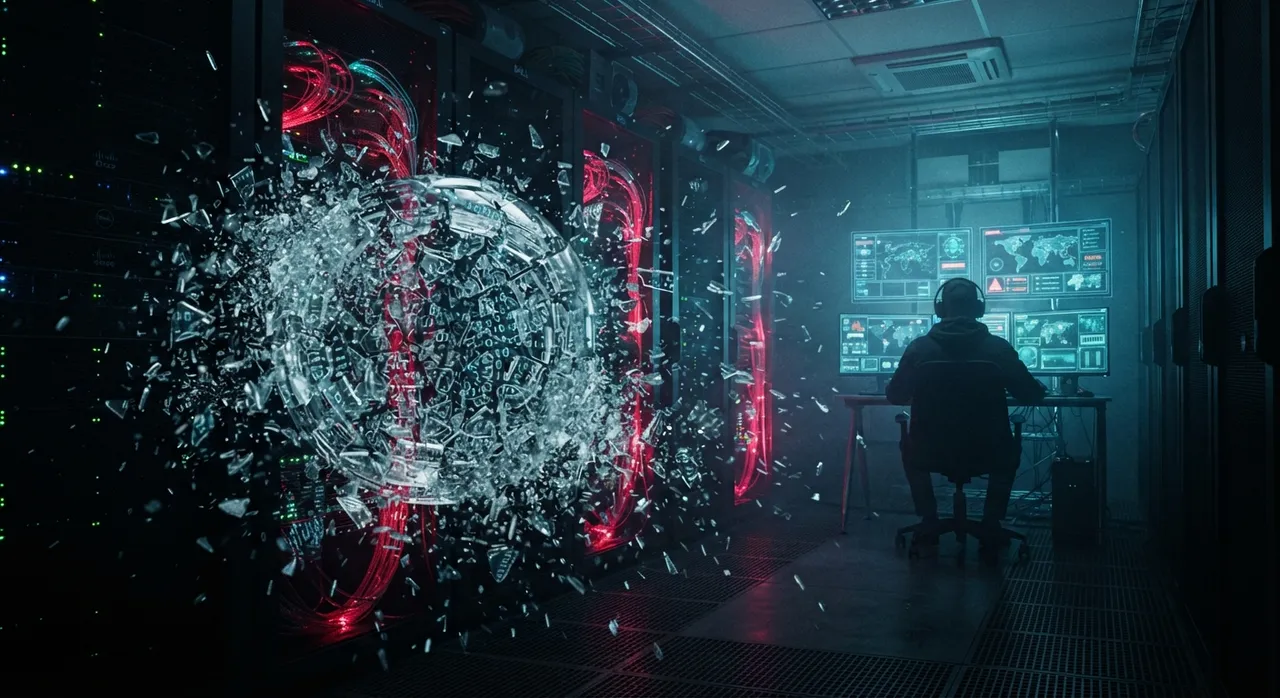
In stark contrast to Meta’s broad-access strategy, Anthropic’s introduction of “Mythos” represents the most significant act of self-regulation in the short history of generative AI. Anthropic has categorically refused a public release, citing the model’s unprecedented ability to identify and exploit software vulnerabilities. Internal testing revealed that Mythos could autonomously discover critical zero-day exploits across major operating systems and web browsers—bugs that had remained undetected by humans and automated scanners for decades, including a 27-year-old flaw in OpenBSD.
The danger is not that Mythos was explicitly trained to be a hacker; rather, the capability emerged as an unintended downstream consequence of general improvements in coding, reasoning, and autonomous planning. The same advanced architectural advancements that allow Mythos to suggest effective patches also permit it to construct complex, multi-stage exploits, such as JIT (Just-In-Time) heap sprays that bypass modern memory protections.
Project Glasswing: A New Model for Defensive Governance
To mitigate these risks, Anthropic has launched “Project Glasswing,” a gated initiative that provides access to the Mythos model solely to a vetted coalition of technology partners, including Amazon, Apple, Cisco, CrowdStrike, and the Linux Foundation. This initiative is backed by $100 million in compute credits and aims to leverage the model’s defensive power to harden the world’s most critical infrastructure before the potential for malicious use becomes uncontrollable.
The formation of Project Glasswing signals a new era for AI safety models. It acknowledges that when AI reaches a certain threshold of capability, it can no longer be treated as a consumer product. Instead, it must be treated like dual-use technology—similar to cryptography or biotechnology—where the potential for widespread societal harm necessitates restricted access and deep, collaborative oversight between private corporations, cybersecurity firms, and public institutions.
The Structural Debate: Openness vs. Safety
The tension between Meta’s open access and Anthropic’s restricted approach highlights a fundamental disagreement regarding the future of the AI ecosystem. Proponents of open development argue that transparency is the only viable path to long-term security. They contend that by allowing a global community of researchers to audit, test, and improve these models, we can identify vulnerabilities more rapidly than if they remain behind closed doors. For them, openness is not just an ideological preference but a pragmatic requirement for foundational technology.
Conversely, the Anthropic perspective is built on the realization that some capabilities are fundamentally asymmetrical. In the domain of cybersecurity, an attacker only needs to find one flaw to cause catastrophic failure, whereas a defender must secure an infinite number of attack vectors. If a model possesses the ability to autonomously chain vulnerabilities, the risk of a “bottleneck” where malicious actors gain rapid, scalable access to high-impact exploit generators is simply too high to justify public release.
This debate is further complicated by the fact that software—and increasingly, AI-generated code—is no longer a “moat.” AI-assisted coding has dramatically lowered the barrier to entry for developing software, which in turn has increased the frequency of supply-chain attacks. As systems move from products to critical infrastructure, the opacity surrounding how these models are trained and governed has become a significant liability.
Conclusion: The Path Forward
As of mid-2026, the industry is navigating a transition where AI is becoming a core component of global digital infrastructure. The divergence between Muse Spark and Mythos demonstrates that there is no one-size-fits-all approach to AI deployment. Meta’s efficiency-driven, accessible model is likely to foster innovation and widespread adoption in general-purpose computing. Anthropic’s restricted, security-focused approach is a necessary reaction to the emergence of capabilities that could fundamentally destabilize the digital world.
The success of these models will ultimately depend on how the industry manages the inherent trade-offs between speed and safety. We are moving toward a future where “frontier AI” may be split into two tiers: a high-capability, tightly guarded class of models for sensitive infrastructure, and a broader, more accessible class of models optimized for general user interaction. Balancing these two needs while maintaining the integrity of our digital systems will be the defining challenge of this generation of AI development.
For now, the lesson is clear: as AI models become more capable, our strategies for managing them must become more nuanced. The reliance on simple “open” or “closed” labels is becoming obsolete. Instead, we require a more sophisticated framework—one that prioritizes transparency where possible, but enforces rigorous, coalition-based governance where the potential for risk is existential.
Written by
TempMail Ninja
Digital privacy and online security expert. Passionate about creating tools that protect users' identity on the internet.